The Nissan Sylphy (B17): A Global Compact Sedan
The Nissan Sylphy (B17) 1.6 (116 Hp) represents the third generation of Nissan’s popular compact sedan, a vehicle primarily designed and marketed for Asian, Middle Eastern, and Latin American markets. Produced from 2012 to 2016, the B17 generation, often recognized for its blend of practicality, comfort, and fuel efficiency, cemented its position as a strong contender in the highly competitive C-segment. While not directly sold in the United States under the Sylphy nameplate, its platform and underlying philosophy are shared with global Nissan models, reflecting the brand’s strategy for offering reliable and accessible transportation solutions worldwide. The Sylphy (B17) was engineered to provide a comfortable ride, spacious interior, and economical performance, making it a popular choice for families and urban commuters in its target regions.
This iteration of the Nissan Sylphy succeeded the G11 generation and brought with it a more modern design language and updated powertrain options. Its market positioning focused on delivering value, durability, and low running costs, attributes highly sought after in emerging and established automotive markets outside of North America. The 1.6-liter variant, in particular, offered a balanced combination of adequate power for daily driving and commendable fuel economy, making it a workhorse in many households and fleets. Its development underscored Nissan’s commitment to catering to diverse global needs with a single, adaptable platform.
Engine and Performance Characteristics of the Nissan Sylphy (B17)
The heart of the Nissan Sylphy (B17) 1.6 (116 Hp) is its HR16DE engine, a naturally aspirated 1.6-liter inline-four gasoline (petrol) unit. This engine is a well-regarded member of Nissan’s HR engine family, known for its reliability, smooth operation, and efficiency. With a displacement of 1598 cubic centimeters (97.52 cubic inches), the engine generates a respectable 116 horsepower at 6000 revolutions per minute (rpm). This power output, combined with the engine’s multi-port manifold injection system and DOHC (Double Overhead Camshaft) valvetrain, ensures responsive acceleration and consistent performance across the rev range.
Torque delivery is another key aspect of the HR16DE. It produces 154 Newton-meters (113.58 pound-feet) of torque at 4000 rpm. This moderate torque figure, available at a relatively accessible engine speed, contributes to the Sylphy’s ease of driving in urban environments and provides sufficient grunt for highway cruising. The engine’s front, transverse layout, coupled with front-wheel drive, is a standard configuration for compact sedans, optimizing interior space and manufacturing efficiency. The B17 Sylphy 1.6 (116 Hp) was typically paired with a 5-speed manual transmission, offering drivers direct control over the power delivery and often slightly better fuel economy compared to automatic counterparts available in other trims. This powertrain architecture emphasizes practicality and economical operation over outright performance, aligning perfectly with the vehicle’s primary market objectives.
The weight-to-power ratio of 10.3 kg/Hp (97.5 Hp/tonne) and a weight-to-torque ratio of 7.7 kg/Nm (129.4 Nm/tonne) indicate a vehicle designed for efficient movement rather than aggressive acceleration. These figures are typical for a compact sedan focused on daily usability and fuel consciousness. The engine’s bore of 78 mm (3.07 in.) and stroke of 83.6 mm (3.29 in.) suggest a slightly long-stroke design, which often contributes to better low-end torque and fuel efficiency, characteristics beneficial for a family sedan.
Design and Features
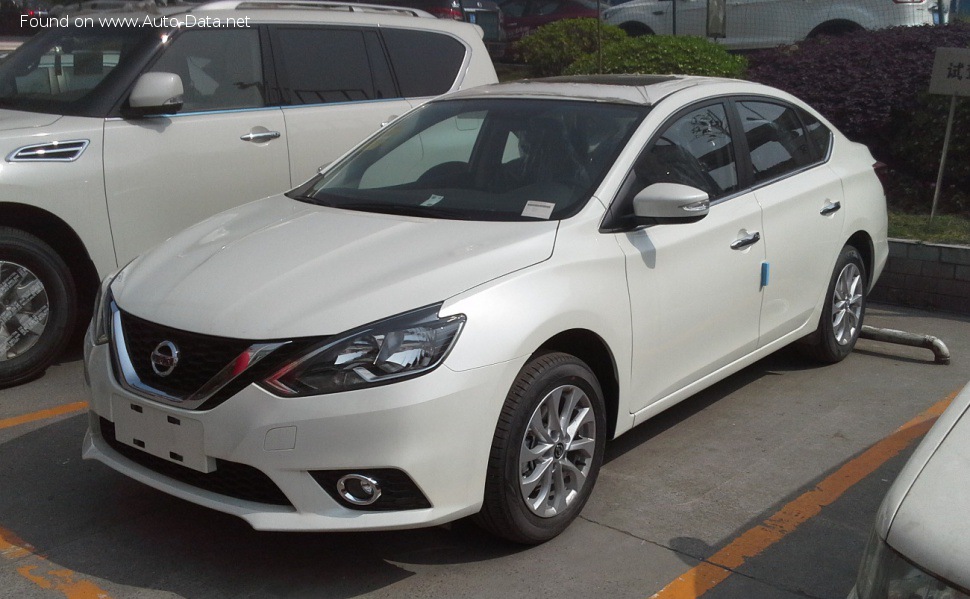
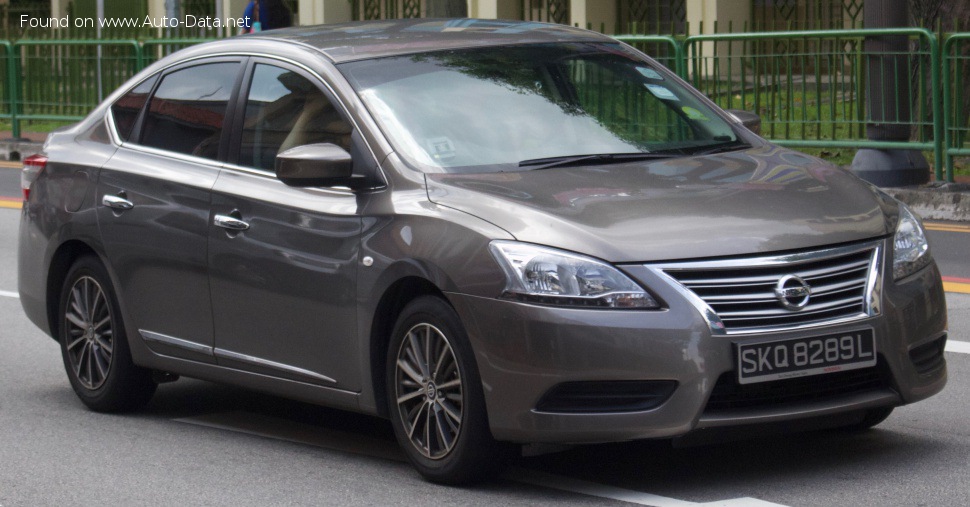
The Nissan Sylphy (B17) embodies a classic sedan silhouette, characterized by its four doors and comfortable seating for five occupants. Its design language for the B17 generation was a departure from its predecessor, featuring smoother lines, a more aerodynamic profile, and a sophisticated yet understated aesthetic. The overall dimensions—4615 mm (181.69 in.) in length, 1760 mm (69.29 in.) in width, and 1495 mm (58.86 in.) in height—contribute to its presence on the road while maintaining maneuverability in congested city conditions.
A significant highlight of the Sylphy (B17) is its generous interior space, particularly the legroom for rear passengers, which was often lauded in its segment. The wheelbase of 2700 mm (106.3 in.) is quite substantial for a compact car, directly translating to a more spacious cabin and improved ride comfort. Trunk space is also impressive, offering 510 liters (18.01 cubic feet) of cargo volume, making it highly practical for family trips, grocery runs, or business use. The fuel tank capacity of 52 liters (13.74 US gallons) ensures a good driving range, further enhancing its suitability for long commutes or travel.
In terms of chassis and safety, the Sylphy (B17) featured a robust foundation. The front suspension utilized an independent McPherson strut setup with coil springs and an anti-roll bar, providing a balance of comfort and stable handling. The rear suspension employed a semi-independent design with coil springs, a common and cost-effective solution for compact sedans that offers adequate ride quality. Braking performance was handled by ventilated discs at the front and disc brakes at the rear, complemented by an Anti-lock Braking System (ABS) for enhanced safety during emergency stops. The steering system was a rack and pinion type, offering predictable and responsive control. Standard tires were 195/60 R16, mounted on 16-inch wheel rims, providing a good compromise between ride comfort and grip.
Technical Specifications
| Category | Specification | US Equivalent / Notes |
|---|---|---|
General Information |
||
| Brand | Nissan | |
| Model | Sylphy | |
| Generation | Sylphy (B17) | |
| Type (Engine) | 1.6 (116 Hp) | |
| Start of production | 2012 year | |
| End of production | 2016 year | |
| Powertrain Architecture | Internal Combustion engine | |
| Body type | Sedan | |
| Seats | 5 | |
| Doors | 4 | |
Performance Specs |
||
| Fuel Type | Petrol (Gasoline) | Gasoline |
| Weight-to-power ratio | 10.3 kg/Hp | 97.5 Hp/tonne |
| Weight-to-torque ratio | 7.7 kg/Nm | 129.4 Nm/tonne |
Engine Specs |
||
| Power | 116 Hp @ 6000 rpm | |
| Power per liter | 72.6 Hp/l | |
| Torque | 154 Nm @ 4000 rpm | 113.58 lb.-ft. @ 4000 rpm |
| Engine layout | Front, Transverse | |
| Engine Model/Code | HR16DE | |
| Engine displacement | 1598 cm3 | 97.52 cu. in. |
| Number of cylinders | 4 | |
| Engine configuration | Inline | |
| Cylinder Bore | 78 mm | 3.07 in. |
| Piston Stroke | 83.6 mm | 3.29 in. |
| Number of valves per cylinder | 4 | |
| Fuel injection system | Multi-port manifold injection | |
| Engine aspiration | Naturally aspirated engine | |
| Valvetrain | DOHC | |
| Engine oil capacity | 3 l | 3.17 US qt |
| Engine oil specification | Not specified in data | |
| Coolant | 6.6 l | 6.97 US qt |
Space, Volume and Weights |
||
| Kerb Weight | 1190 kg | 2623.5 lbs. |
| Trunk (boot) space – minimum | 510 l | 18.01 cu. ft. |
| Fuel tank capacity | 52 l | 13.74 US gal |
Dimensions |
||
| Length | 4615 mm | 181.69 in. |
| Width | 1760 mm | 69.29 in. |
| Height | 1495 mm | 58.86 in. |
| Wheelbase | 2700 mm | 106.3 in. |
| Front track | 1540 mm | 60.63 in. |
| Rear (Back) track | 1540 mm | 60.63 in. |
Drivetrain, Brakes and Suspension Specs |
||
| Drivetrain Architecture | ICE drives front wheels | Internal Combustion engine (ICE) drives the front wheels of the vehicle. |
| Drive wheel | Front wheel drive | |
| Number of gears and type of gearbox | 5 gears, manual transmission | |
| Front suspension | Independent, type McPherson with coil spring and anti-roll bar | |
| Rear suspension | Semi-independent, coil spring | |
| Front brakes | Ventilated discs | |
| Rear brakes | Disc | |
| Assisting systems | ABS (Anti-lock braking system) | |
| Steering type | Steering rack and pinion | |
| Tires size | 195/60 R16 | |
| Wheel rims size | 16 | |
Legacy and Market Impact of the Nissan Sylphy (B17)
The Nissan Sylphy (B17) 1.6 (116 Hp) carved out a significant niche in the global compact sedan market, particularly across Asia, the Middle East, and parts of Latin America. Its legacy is one of a dependable, cost-effective, and family-friendly vehicle that met the practical needs of a broad customer base. In markets where affordability, fuel efficiency, and interior space are paramount, the Sylphy consistently performed well, often competing directly with stalwarts like the Honda City/Civic, Toyota Corolla, Hyundai Elantra, and other regional offerings.
The B17 generation’s reputation was built on its strong value proposition. It offered a comfortable ride quality, a spacious cabin that belied its compact exterior dimensions, and a proven powertrain that promised longevity and low maintenance costs. While it may not have boasted segment-leading performance or cutting-edge technology compared to some rivals, its strength lay in its balanced approach. Nissan’s HR16DE engine, in particular, contributed to its positive image, being a widely recognized and trusted engine for its efficiency and reliability. This made the Sylphy an attractive option for both private buyers seeking a no-nonsense daily driver and fleet operators looking for economical and durable vehicles.
Its historical significance stems from its role as a global compact sedan, demonstrating Nissan’s capability to tailor a single platform to diverse market demands. The Sylphy’s success in its primary markets highlighted a demand for traditional sedans even as crossovers began to gain popularity. It proved that a well-packaged, conventional sedan, focused on core competencies like space, comfort, and economy, could still be a best-seller. The B17 generation’s production run from 2012 to 2016 saw it contribute significantly to Nissan’s sales volumes in key regions, reinforcing the brand’s presence and market share in the compact segment before the introduction of its successor. The Nissan Sylphy (B17) stands as a testament to Nissan’s strategy of providing accessible and reliable mobility solutions on a global scale.