Nissan Sylphy (B17, facelift 2016)
The Nissan Sylphy (B17, facelift 2016) represents a significant iteration of Nissan’s global compact sedan, a model widely recognized and popular in various international markets, particularly across Asia and parts of the Middle East, though it was not typically offered in the United States under the Sylphy nameplate. Known for its practicality, fuel efficiency, and comfortable ride, the B17 generation, originally launched in 2012, received a notable facelift in 2016 to refresh its styling and enhance its appeal. This particular variant, equipped with a 1.6-liter engine producing 126 horsepower, positioned the Sylphy as a reliable and economical choice within the highly competitive compact sedan segment from its production start in 2016 until its conclusion in 2019.
The Sylphy, often marketed as the Sentra in North America or Pulsar in Australia, embodies Nissan’s philosophy of offering well-rounded, accessible vehicles designed for daily commuting and family use. The B17 generation, specifically the 2016 facelift, saw updates aimed at aligning its aesthetics with Nissan’s contemporary design language, while maintaining its core strengths of interior space and operating cost effectiveness. This article delves into the technical specifications, performance attributes, and market positioning of this specific 1.6-liter variant of the B17 facelift.
Engine and Performance of the Nissan Sylphy (B17, facelift 2016)
Under the hood, the Nissan Sylphy (B17, facelift 2016) 1.6-liter model is powered by Nissan’s well-proven HR16DE inline-four engine. This naturally aspirated gasoline engine, with a displacement of 1598 cubic centimeters (approximately 97.52 cubic inches), delivers a respectable 126 horsepower at 5600 rpm. Its power output translates to 78.8 horsepower per liter, indicating a balanced approach to performance and efficiency.
Torque output stands at 154 Newton-meters (equivalent to 113.58 lb.-ft.) at 4000 rpm. This torque figure, achieved at a relatively accessible engine speed, ensures adequate responsiveness for city driving and highway cruising. The engine’s layout is front, transverse, driving the front wheels, a common and efficient configuration for compact sedans. Power is delivered through a 5-speed manual transmission, offering direct driver engagement and contributing to the vehicle’s overall fuel economy.
In terms of outright performance, the Sylphy 1.6 (126 Hp) is designed more for practical everyday driving than for spirited acceleration. It achieves 0 to 60 mph in a calculated 11.2 seconds, with 0 to 100 km/h taking 11.8 seconds. The maximum speed is rated at 190 km/h (approximately 118.06 mph). Fuel efficiency is a strong suit, with an extra-urban consumption figure of 5.2 liters per 100 km, translating to an impressive 45.2 US mpg. This efficiency is a direct result of the HR16DE engine’s design, which features a DOHC valvetrain and multi-port manifold injection, optimized for smooth operation and economical fuel use.
The engine’s compression ratio of 9.8:1, combined with four valves per cylinder, ensures efficient combustion. The use of a naturally aspirated engine means predictable power delivery without the complexities or additional costs associated with turbocharging. With an engine oil capacity of 3 liters (3.17 US quarts) and a coolant capacity of 6.6 liters (6.97 US quarts), maintenance is straightforward and cost-effective, further enhancing its appeal as a practical family vehicle.
Design and Features
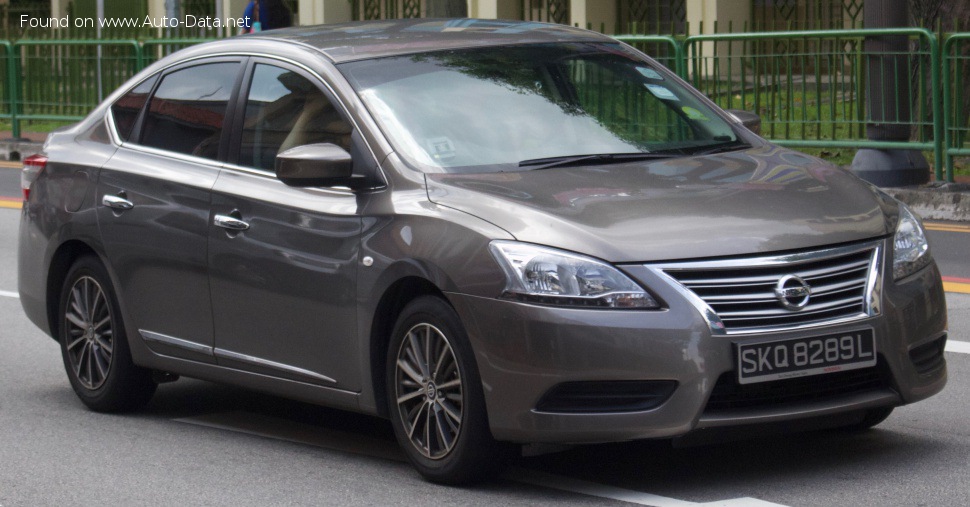
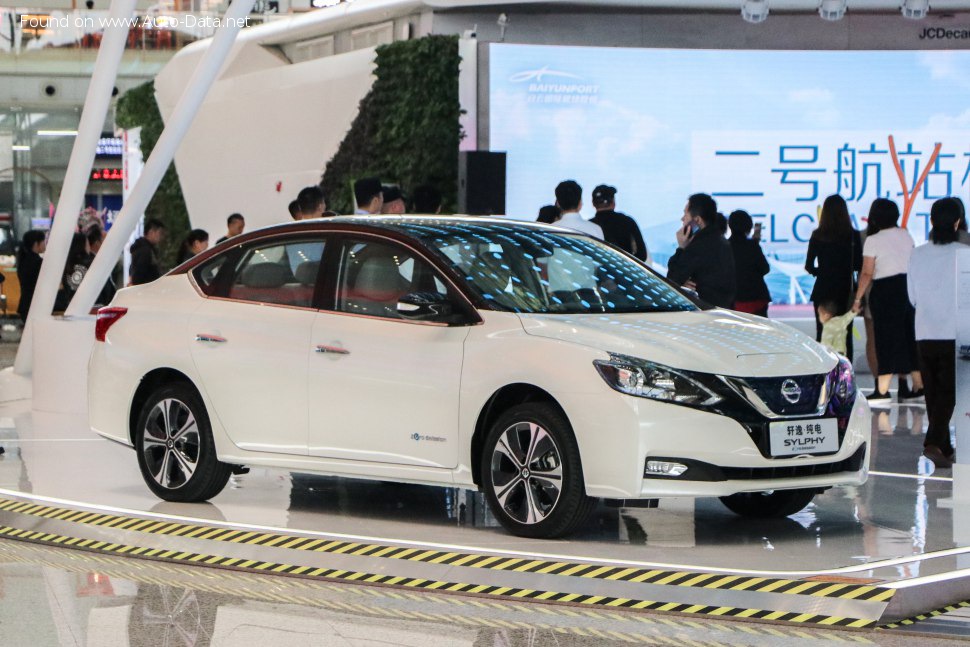
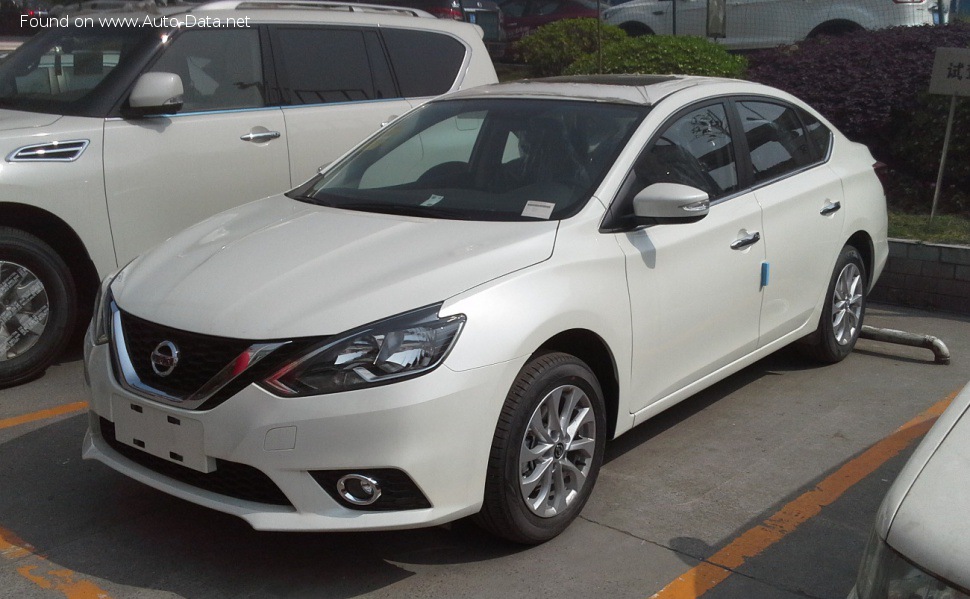
The 2016 facelift of the Nissan Sylphy (B17) brought subtle yet impactful changes to its exterior design, giving it a more modern and upscale appearance. As a four-door sedan with seating for five, it adheres to the classic proportions of its segment. The facelift typically incorporated Nissan’s “V-motion” grille, more sculpted headlights, and revised bumper designs, aligning it with the brand’s contemporary aesthetic seen in models like the Altima and Maxima. These changes aimed to give the Sylphy a more dynamic and refined presence on the road.
Dimensionally, the Sylphy (B17, facelift 2016) measures 4631 mm (182.32 inches) in length, 1760 mm (69.29 inches) in width, and 1503 mm (59.17 inches) in height. Its generous wheelbase of 2700 mm (106.3 inches) is a key factor in its renowned interior spaciousness, particularly for rear-seat passengers, offering ample legroom that often rivals larger sedans. The front and rear tracks are identical at 1540 mm (60.63 inches), contributing to stable handling.
The Sylphy’s practical nature extends to its cargo capacity, boasting a minimum trunk space of 510 liters (18.01 cubic feet), which is highly competitive within its class and capable of accommodating family luggage or grocery runs with ease. The fuel tank capacity of 52 liters (13.74 US gallons) ensures a good driving range, complementing its fuel-efficient engine.
Underneath, the Sylphy features an independent McPherson strut front suspension with coil springs and an anti-roll bar, providing a comfortable ride and predictable handling. The rear employs a semi-independent suspension system with coil springs, a common setup for this segment, balancing cost-effectiveness with ride comfort. Braking duties are handled by ventilated discs at the front and disc brakes at the rear, complemented by an Anti-lock Braking System (ABS) for enhanced safety during emergency stops. The electric power steering system, a rack and pinion type, offers light and easy maneuverability, especially in urban environments and for parking. The vehicle rides on 195/60 R16 tires fitted on 16-inch wheel rims, providing a good balance of grip and ride comfort.
Technical Specifications
| Category | Specification | US Equivalent |
|---|---|---|
| General Information | ||
| Brand | Nissan | |
| Model | Sylphy | |
| Generation | Sylphy (B17, facelift 2016) | |
| Type (Engine) | 1.6 (126 Hp) | |
| Start of Production | 2016 year | |
| End of Production | 2019 year | |
| Powertrain Architecture | Internal Combustion engine | |
| Body type | Sedan | |
| Seats | 5 | |
| Doors | 4 | |
| Performance Specs | ||
| Fuel consumption (extra urban) | 5.2 l/100 km | 45.2 US mpg |
| Fuel Type | Petrol (Gasoline) | |
| Acceleration 0 – 100 km/h | 11.8 sec | |
| Acceleration 0 – 62 mph | 11.8 sec | |
| Acceleration 0 – 60 mph (Calculated) | 11.2 sec | |
| Maximum speed | 190 km/h | 118.06 mph |
| Weight-to-power ratio | 9.4 kg/Hp | 106.1 Hp/tonne |
| Weight-to-torque ratio | 7.7 kg/Nm | 129.6 Nm/tonne |
| Engine Specs | ||
| Power | 126 Hp @ 5600 rpm | |
| Power per liter | 78.8 Hp/l | |
| Torque | 154 Nm @ 4000 rpm | 113.58 lb.-ft. @ 4000 rpm |
| Engine layout | Front, Transverse | |
| Engine Model/Code | HR16DE | |
| Engine displacement | 1598 cm3 | 97.52 cu. in. |
| Number of cylinders | 4 | |
| Engine configuration | Inline | |
| Cylinder Bore | 78 mm | 3.07 in. |
| Piston Stroke | 83.6 mm | 3.29 in. |
| Compression ratio | 9.8:1 | |
| Number of valves per cylinder | 4 | |
| Fuel injection system | Multi-port manifold injection | |
| Engine aspiration | Naturally aspirated engine | |
| Valvetrain | DOHC | |
| Engine oil capacity | 3 l | 3.17 US qt |
| Engine oil specification | (Not Specified) | |
| Coolant | 6.6 l | 6.97 US qt |
| Space, Volume and Weights | ||
| Kerb Weight | 1188-1204 kg | 2619.09 – 2654.37 lbs. |
| Trunk (boot) space – minimum | 510 l | 18.01 cu. ft. |
| Fuel tank capacity | 52 l | 13.74 US gal |
| Dimensions | ||
| Length | 4631 mm | 182.32 in. |
| Width | 1760 mm | 69.29 in. |
| Height | 1503 mm | 59.17 in. |
| Wheelbase | 2700 mm | 106.3 in. |
| Front track | 1540 mm | 60.63 in. |
| Rear (Back) track | 1540 mm | 60.63 in. |
| Ride height (ground clearance) | 166 mm | 6.54 in. |
| Minimum turning circle (diameter) | 10.4 m | 34.12 ft. |
| Drivetrain, Brakes and Suspension Specs | ||
| Drivetrain Architecture | Internal combustion engine (ICE) drives the front wheels. | |
| Drive wheel | Front wheel drive | |
| Number of gears and type of gearbox | 5 gears, manual transmission | |
| Front suspension | Independent, type McPherson with coil spring and anti-roll bar | |
| Rear suspension | Semi-independent, coil spring | |
| Front brakes | Ventilated discs | |
| Rear brakes | Disc | |
| Assisting systems | ABS (Anti-lock braking system) | |
| Steering type | Steering rack and pinion | |
| Power steering | Electric Steering | |
| Tires size | 195/60 R16 | |
| Wheel rims size | 16 | |
Legacy and Market Impact
The Nissan Sylphy, particularly the B17 generation with its 2016 facelift, carved out a significant niche for itself in the global compact sedan market. While it was largely absent from the North American market under the Sylphy name, its success in regions like Southeast Asia, China, and the Middle East underscores its strong appeal. In these markets, the Sylphy was a direct competitor to popular models such as the Toyota Corolla, Honda Civic (non-US variants), Hyundai Elantra, and various offerings from local manufacturers.
Its reputation was built on a foundation of reliability, fuel economy, and exceptional interior space. For families and individual buyers seeking a dependable and affordable daily driver, the Sylphy delivered consistently. The 1.6-liter engine, while not a powerhouse, provided ample performance for typical driving conditions in its target markets and was praised for its robust nature and low running costs. The 5-speed manual transmission offered a more engaging driving experience and often better fuel economy compared to automatic options, catering to a segment of buyers who still preferred manual control.
The 2016 facelift ensured the Sylphy remained fresh and competitive against newer rivals, incorporating Nissan’s evolving design language and subtle interior refinements. Its large trunk capacity and comfortable ride made it an ideal choice for both urban commuting and longer journeys. The Sylphy’s mechanical simplicity, featuring a naturally aspirated engine and well-understood suspension components, contributed to its ease of maintenance and overall ownership value, which are crucial factors in developing markets.
Historically, the Sylphy series has been a cornerstone of Nissan’s global sales strategy, demonstrating the brand’s commitment to providing practical and accessible transportation solutions worldwide. The B17 generation, with its 2016 refresh, played a vital role in maintaining Nissan’s presence and competitiveness in the compact sedan segment during its production run. Its legacy is one of a no-nonsense, dependable vehicle that efficiently met the diverse needs of a wide international customer base, embodying Nissan’s global engineering prowess in a practical, everyday package.