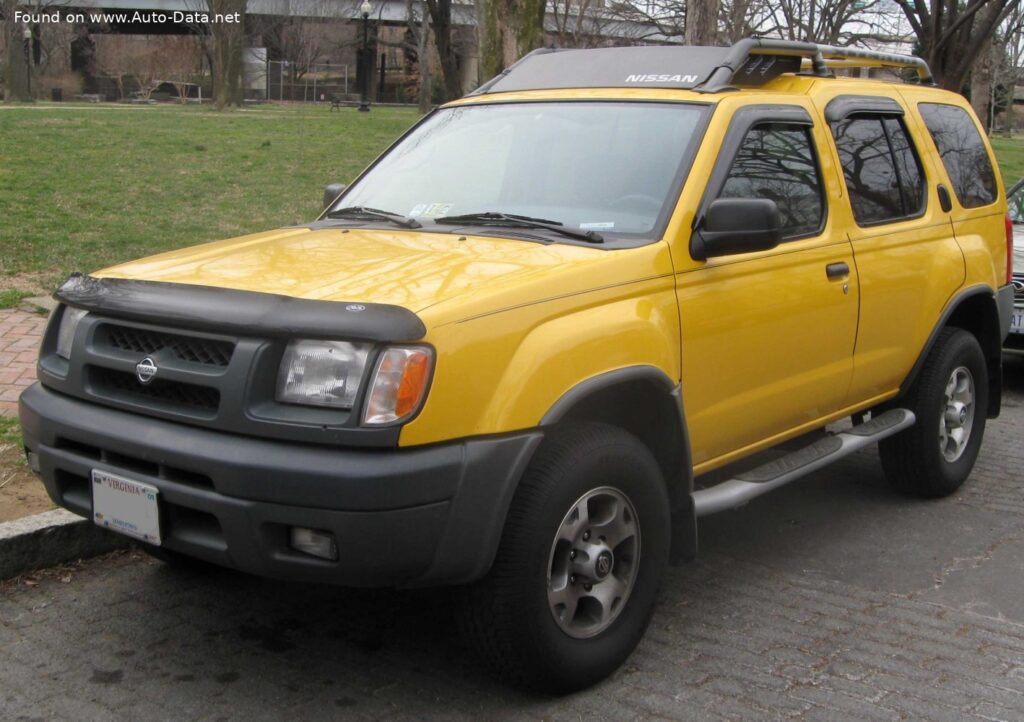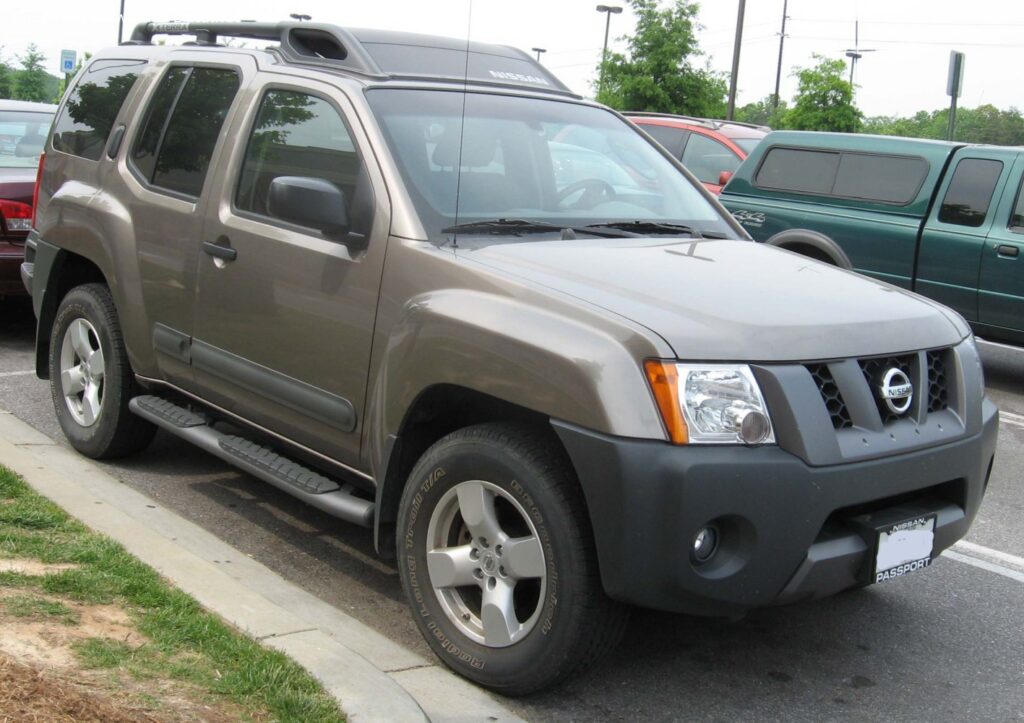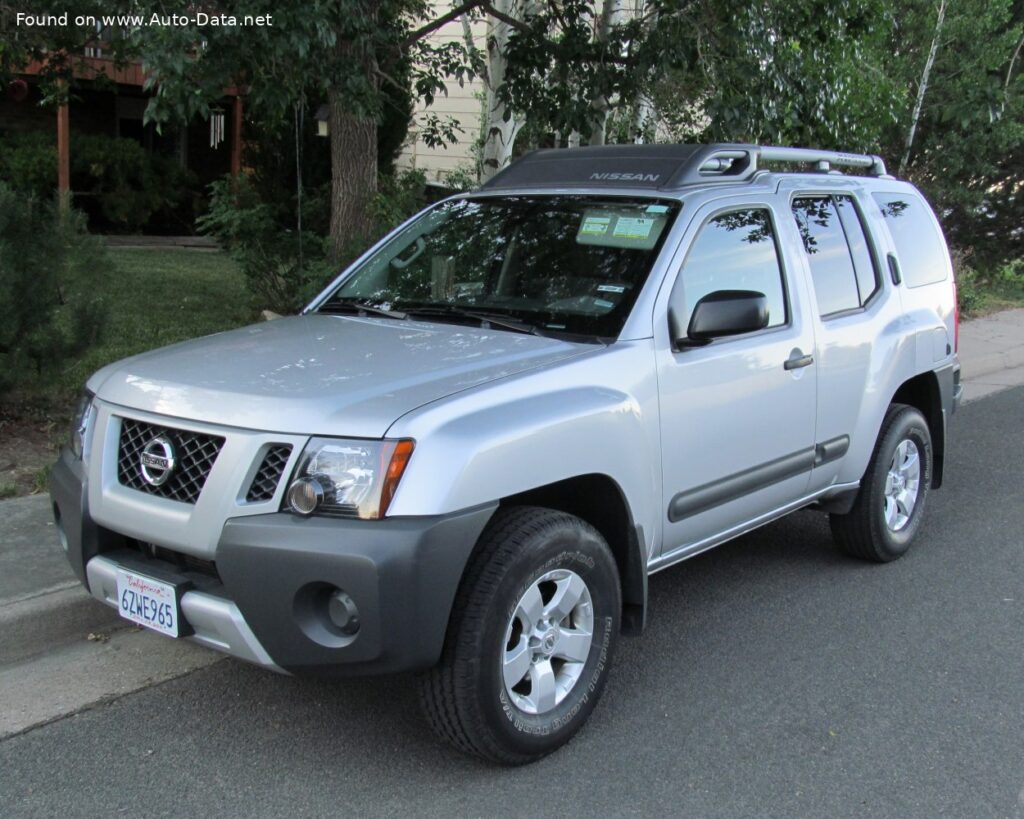
The Nissan Xterra II, specifically the facelifted model introduced in 2008, represented a rugged and purpose-built mid-size SUV designed primarily for the North American market. Positioned as an authentic off-road vehicle, the {original_title} carved out a niche for adventure seekers and outdoor enthusiasts. Unlike many of its contemporaries that were transitioning to more car-like unibody platforms, the Xterra steadfastly maintained its body-on-frame construction, sharing its F-Alpha platform with the Nissan Frontier pickup truck. This foundation underscored its commitment to durability and capability, distinguishing it from crossover SUVs that prioritized on-road comfort. The 2008 facelift brought subtle but meaningful updates, ensuring the Xterra remained competitive and relevant in a segment that demanded both practicality for daily use and uncompromising performance when venturing off the beaten path. Its design ethos was centered around functionality, with features tailored to accommodate an active lifestyle, from its distinctive roof rack to its robust powertrain.
Engine and Performance of the Nissan Xterra II (facelift 2008) 4.0 V6 (261 Hp) 4×4 Automatic
At the heart of the Nissan Xterra II (facelift 2008) 4.0 V6 (261 Hp) 4×4 Automatic lies the formidable VQ40DE engine, a 4.0-liter naturally aspirated V6 powerplant renowned for its robust performance and durability. This engine, a staple in Nissan’s truck and SUV lineup, delivers a healthy 261 horsepower at 5600 rpm, providing ample power for both highway cruising and demanding off-road excursions. Torque production is equally impressive, peaking at 281.01 lb.-ft. at 4000 rpm, which is crucial for tackling steep inclines, towing, and maintaining traction in challenging terrain. The VQ40DE features a V-engine configuration with 6 cylinders, a DOHC (Double Overhead Camshaft) valvetrain, and four valves per cylinder, ensuring efficient breathing and power delivery across the rev range. Fuel is delivered via a multi-port manifold injection system, contributing to its responsive throttle feel.
Power is routed through a 5-speed automatic transmission, a reliable unit well-suited to the Xterra’s rugged character. The drivetrain architecture is a sophisticated part-time 4×4 system, where the internal combustion engine permanently drives the rear wheels, with the front wheels engaging via an electrically or mechanically operated clutch when additional traction is required. This setup offers flexibility, allowing for improved fuel efficiency in 2WD mode on paved surfaces and superior grip in 4WD mode for off-road conditions. The Xterra’s weight-to-power ratio stands at 7.6 kg/Hp (132 Hp/tonne), and its weight-to-torque ratio is 5.2 kg/Nm (192.6 Nm/tonne), indicating a well-balanced power-to-weight profile for its class. The vehicle operates on gasoline and meets the LEV2-ULEV emission standard, reflecting its compliance with environmental regulations of its production era.
While designed for capability, the Xterra’s fuel economy figures reflect its robust nature and body-on-frame construction. The combined fuel consumption is rated at 17 US mpg, with urban driving yielding approximately 15 US mpg and extra-urban driving reaching around 19.9 US mpg. These figures, though not class-leading by modern crossover standards, were acceptable for a dedicated off-road SUV of its time. The engine oil capacity is 5.1 liters, and the cooling system holds 10.2 liters, indicative of the substantial mechanical systems required for a vehicle built for rigorous use.
Design and Features of the {original_focus_keyword}
The design of the Nissan Xterra II (facelift 2008) 4.0 V6 (261 Hp) 4×4 Automatic is unmistakably utilitarian and rugged, a visual testament to its off-road prowess. As an SUV with five doors and seating for five, its exterior styling is characterized by a boxy, muscular stance. This aesthetic is not merely for show; it serves a functional purpose, maximizing interior volume and facilitating durability. Key exterior features include a prominent roof rack with a built-in gear box, a signature element of the Xterra that highlighted its appeal to adventurers who needed to transport outdoor equipment. The robust body lines, pronounced fender flares, and substantial ground clearance further emphasize its readiness for challenging environments.
Measuring 178.7 inches in length, 72.8 inches in width, and 74.88 inches in height, with a generous wheelbase of 106.3 inches, the Xterra provides a substantial footprint. Its off-road geometry is particularly impressive, with an approach angle ranging from 30.5 to 33.2 degrees, a departure angle of 27.3 to 29.4 degrees, and a ramp-over (brakeover) angle of 22.9 to 24.6 degrees. These figures, combined with a ride height (ground clearance) of 8.19 to 9.49 inches, ensure the Xterra can navigate obstacles and uneven terrain with confidence. The front and rear tracks are both 61.81 inches, contributing to a stable and planted feel.
Inside, the Xterra’s cabin prioritizes practicality and durability. While not overtly luxurious, the materials and layout are designed to withstand the rigors of an active lifestyle. The seating for five is comfortable enough for long journeys, and the cargo area is exceptionally versatile. With the rear seats in place, the trunk space offers a generous 26.31 cubic feet (745 liters), expanding to an impressive 65.69 cubic feet (1860 liters) when the rear seats are folded down. This expansive cargo capacity, along with a fuel tank capacity of 21.13 US gallons (80 liters), makes the Xterra well-suited for extended trips and carrying bulky gear. Furthermore, its towing capability is significant, with a permitted trailer load of 5000.08 lbs (2268 kg) with brakes, underscoring its utility.
The Xterra’s chassis and suspension systems are engineered for both on-road comfort and off-road resilience. The front suspension employs a double wishbone setup with a transverse stabilizer, providing precise steering and control. The rear utilizes a rigid axle suspension with leaf springs and a transverse stabilizer, a robust configuration known for its ability to handle heavy loads and absorb impacts from rough terrain. Braking is handled by ventilated discs at both the front and rear, complemented by an Anti-lock Braking System (ABS) for enhanced safety and control during emergency stops. Steering is managed by a hydraulic rack and pinion system, offering direct feedback to the driver. The vehicle rides on either 265/70 R16 or 265/75 R16 tires mounted on 7J x 16 wheel rims, providing a good balance of road manners and off-road grip.
Technical Specifications
| Brand | Nissan |
| Model | Xterra |
| Generation | Xterra II (facelift 2008) |
| Type (Engine) | 4.0 V6 (261 Hp) 4×4 Automatic |
| Start of production | 2008 year |
| End of production | 2015 year |
| Powertrain Architecture | Internal Combustion engine |
| Body type | SUV |
| Seats | 5 |
| Doors | 5 |
| Fuel consumption (economy) – urban | 15.7 l/100 km (15 US mpg) |
| Fuel consumption (economy) – extra urban | 11.8 l/100 km (19.9 US mpg) |
| Fuel consumption (economy) – combined | 13.8 l/100 km (17 US mpg) |
| Fuel Type | Petrol (Gasoline) |
| Emission standard | LEV2-ULEV |
| Weight-to-power ratio | 7.6 kg/Hp (132 Hp/tonne) |
| Weight-to-torque ratio | 5.2 kg/Nm (192.6 Nm/tonne) |
| Power | 261 Hp @ 5600 rpm. |
| Power per litre | 66 Hp/l |
| Torque | 381 Nm @ 4000 rpm (281.01 lb.-ft. @ 4000 rpm) |
| Engine layout | Front, Longitudinal |
| Engine Model/Code | VQ40DE |
| Engine displacement | 3954 cm3 (241.29 cu. in.) |
| Number of cylinders | 6 |
| Engine configuration | V-engine |
| Cylinder Bore | 95.5 mm (3.76 in.) |
| Piston Stroke | 92 mm (3.62 in.) |
| Compression ratio | 9.7:1 |
| Number of valves per cylinder | 4 |
| Fuel injection system | Multi-port manifold injection |
| Engine aspiration | Naturally aspirated engine |
| Valvetrain | DOHC |
| Engine oil capacity | 5.1 l (5.39 US qt) |
| Coolant | 10.2 l (10.78 US qt) |
| Kerb Weight | 1978-2009 kg (4360.74 – 4429.09 lbs.) |
| Trunk (boot) space – minimum | 745 l (26.31 cu. ft.) |
| Trunk (boot) space – maximum | 1860 l (65.69 cu. ft.) |
| Fuel tank capacity | 80 l (21.13 US gal) |
| Permitted trailer load with brakes (12%) | 2268 kg (5000.08 lbs.) |
| Length | 4539 mm (178.7 in.) |
| Width | 1849 mm (72.8 in.) |
| Height | 1902 mm (74.88 in.) |
| Wheelbase | 2700 mm (106.3 in.) |
| Front track | 1570 mm (61.81 in.) |
| Rear (Back) track | 1570 mm (61.81 in.) |
| Ride height (ground clearance) | 208-241 mm (8.19 – 9.49 in.) |
| Approach angle | 30.5-33.2° |
| Departure angle | 27.3-29.4° |
| Ramp-over (brakeover) angle | 22.9-24.6° |
| Drivetrain Architecture | ICE drives rear wheels permanently, front wheels driven through an electrically or mechanically operated clutch if necessary. |
| Drive wheel | All wheel drive (4×4) |
| Number of gears and type of gearbox | 5 gears, automatic transmission |
| Front suspension | Double wishbone, Transverse stabilizer |
| Rear suspension | Rigid axle suspension, Transverse stabilizer, Leaf spring |
| Front brakes | Ventilated discs |
| Rear brakes | Ventilated discs |
| Assisting systems | ABS (Anti-lock braking system) |
| Steering type | Steering rack and pinion |
| Power steering | Hydraulic Steering |
| Tires size | 265/70 R16; 265/75 R16 |
| Wheel rims size | 7J x 16 |