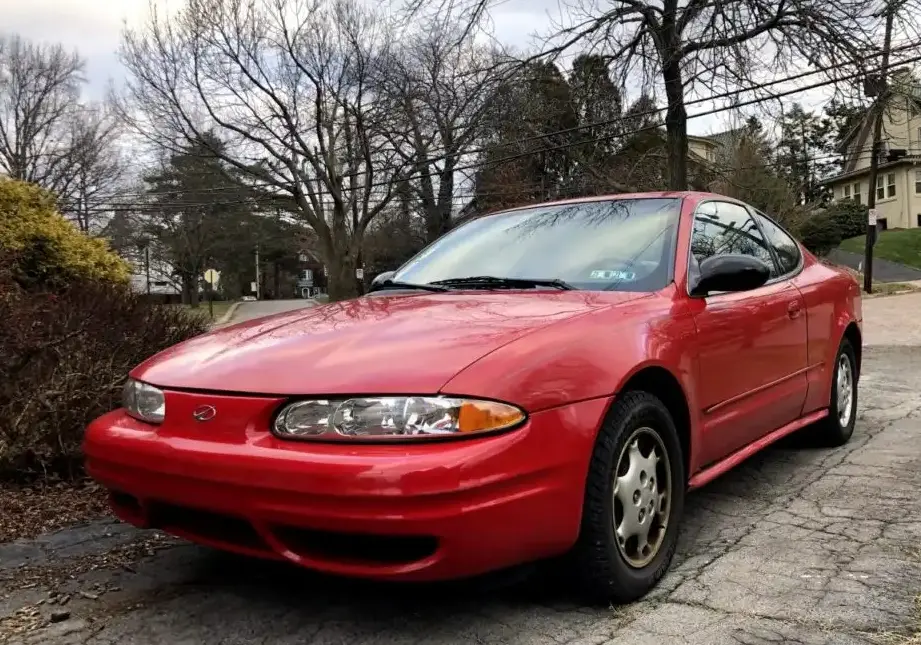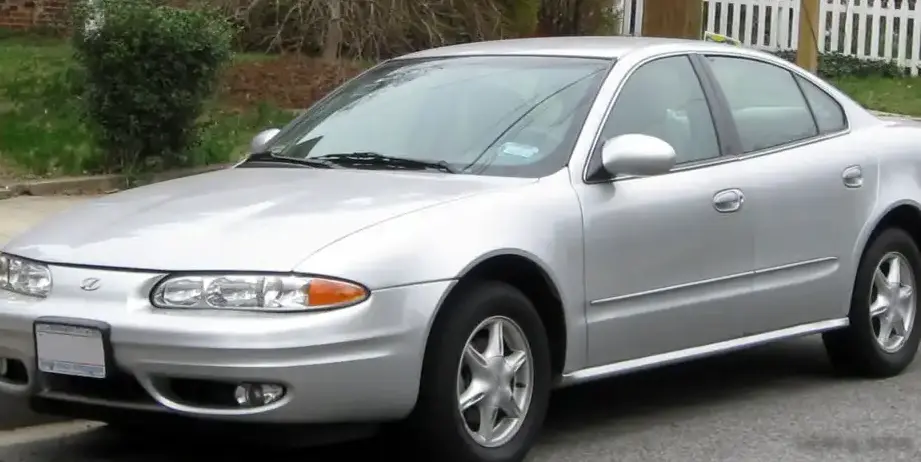
The Oldsmobile Alero 2.2L 16V Automatic, produced from 2002 to 2004, represented a mid-range offering within the Alero lineup. Positioned between the base 2.4L engine and the more powerful 3.4L V6, the 2.2L variant aimed to balance affordability with acceptable performance for the average commuter. The Alero itself was Oldsmobile’s entry into the compact car segment, intended to replace the Cutlass Ciera and compete with vehicles like the Honda Accord and Toyota Camry. It was built on General Motors’ 1HX0 platform, shared with other GM vehicles of the era, including the Chevrolet Malibu and Pontiac Grand Am.
Technical Specifications
| Brand | Oldsmobile |
| Model | Alero |
| Generation | Alero |
| Type (Engine) | 2.2 16V (141 Hp) Automatic |
| Start of production | 2002 |
| End of production | 2004 |
| Powertrain Architecture | Internal Combustion engine |
| Body type | Sedan |
| Seats | 5 |
| Doors | 4 |
| Fuel consumption (urban) | 9.8 l/100 km (24 US mpg) |
| Fuel consumption (extra urban) | 7.4 l/100 km (31.8 US mpg) |
| Fuel consumption (combined) | 8.7 l/100 km (27 US mpg) |
| Fuel Type | Petrol (Gasoline) |
| Acceleration 0 – 100 km/h | 10.8 sec |
| Acceleration 0 – 62 mph | 10.8 sec |
| Acceleration 0 – 60 mph | 10.3 sec |
| Maximum speed | 200 km/h (124.27 mph) |
| Weight-to-power ratio | 9.7 kg/Hp |
| Weight-to-torque ratio | 6.7 kg/Nm |
| Power | 141 Hp @ 5600 rpm |
| Torque | 203 Nm @ 4000 rpm (149.73 lb.-ft. @ 4000 rpm) |
| Engine layout | Front, Transverse |
| Engine Model/Code | L61 |
| Engine displacement | 2198 cm3 (134.13 cu. in.) |
| Number of cylinders | 4 |
| Engine configuration | Inline |
| Cylinder Bore | 86 mm (3.39 in.) |
| Piston Stroke | 94.6 mm (3.72 in.) |
| Compression ratio | 10:1 |
| Number of valves per cylinder | 4 |
| Fuel injection system | Multi-port manifold injection |
| Engine aspiration | Naturally aspirated |
| Engine oil capacity | 3.8 l (4.02 US qt | 3.34 UK qt) |
| Coolant capacity | 8.2 l (8.66 US qt | 7.21 UK qt) |
| Kerb Weight | 1370 kg (3020.33 lbs.) |
| Trunk (boot) space | 435 l (15.36 cu. ft.) |
| Fuel tank capacity | 53 l (14 US gal | 11.66 UK gal) |
| Length | 4740 mm (186.61 in.) |
| Width | 1780 mm (70.08 in.) |
| Height | 1385 mm (54.53 in.) |
| Wheelbase | 2720 mm (107.09 in.) |
| Front track | 1500 mm (59.06 in.) |
| Rear track | 1505 mm (59.25 in.) |
| Drivetrain | Front wheel drive |
| Number of gears | 4 |
| Gearbox type | Automatic transmission |
| Front suspension | Spring Strut |
| Rear suspension | Double wishbone |
| Front brakes | Ventilated discs |
| Rear brakes | Disc |
| Steering type | Steering rack and pinion |
| Power steering | Hydraulic |
| Tires size | 215/60 R15 |
| Wheel rims size | 15 |
Powertrain & Engine Architecture
The heart of the Alero 2.2L was the L61 inline-four cylinder engine. This 2.2-liter powerplant featured a cast iron block and an aluminum cylinder head, incorporating a dual overhead camshaft (DOHC) valvetrain with four valves per cylinder. This configuration allowed for improved breathing and higher engine speeds compared to older pushrod designs. Fuel delivery was handled by a multi-port fuel injection system, providing precise fuel metering for optimal combustion. The engine produced 141 horsepower at 5600 rpm and 203 Nm (149.73 lb-ft) of torque at 4000 rpm. The engine was paired with a four-speed automatic transmission, a 4T45-E unit, which was a common choice for GM’s front-wheel-drive vehicles. This transmission was known for its relatively smooth operation, but wasn’t particularly sporty or fuel-efficient compared to later designs.
Driving Characteristics
The Alero 2.2L Automatic offered adequate, but not exhilarating, performance. Acceleration from 0 to 60 mph took around 10.3 seconds, making it suitable for everyday driving but not for spirited driving. The four-speed automatic transmission, while providing smooth shifts, lacked the responsiveness of a manual transmission or a more modern automatic with more gears. The gear ratios were tuned for fuel economy and comfort rather than outright performance. Compared to the 3.4L V6 Alero, the 2.2L felt noticeably slower, especially during highway merging and passing maneuvers. However, it offered a more economical driving experience, and the automatic transmission made it easier to drive in stop-and-go traffic.
Equipment & Trim Levels
The Alero 2.2L typically came standard with features like air conditioning, power windows and locks, an AM/FM stereo, and cloth upholstery. Higher trim levels, such as the GL, added features like cruise control, upgraded audio systems, and alloy wheels. Optional extras included a sunroof, leather upholstery, and a premium sound system. Interior design was fairly basic, reflecting the Alero’s position as an affordable mid-size sedan. The dashboard layout was functional, with easy-to-read gauges and logically placed controls.
Chassis & Braking
The Alero 2.2L utilized a front-wheel-drive layout with an independent front suspension featuring coil springs and a strut design. The rear suspension employed a double wishbone setup, also with coil springs. This suspension configuration provided a comfortable ride, but wasn’t particularly sporty. Braking duties were handled by ventilated disc brakes at the front and solid disc brakes at the rear. Anti-lock braking system (ABS) was standard, enhancing safety by preventing wheel lockup during hard braking. The steering system was a rack-and-pinion setup with hydraulic power assist, providing responsive and predictable steering feel.
Market Reception & Comparison
The Alero 2.2L Automatic received mixed reviews from automotive critics. While praised for its comfortable ride and relatively affordable price, it was often criticized for its lack of performance and somewhat bland styling. Compared to the V6-powered Alero, the 2.2L offered significantly lower fuel consumption – around 27 mpg combined – but at the cost of noticeable performance. The 2.2L was generally considered a good choice for budget-conscious buyers who prioritized fuel economy and comfort over sporty handling and quick acceleration. It competed directly with other four-cylinder mid-size sedans like the Honda Accord and Toyota Camry, but often lagged behind in terms of refinement and driving dynamics.
Legacy
The Oldsmobile Alero 2.2L Automatic, while not a standout performer, proved to be a reasonably reliable vehicle. The L61 engine, in particular, was known for its durability and relatively low maintenance costs. Today, these Aleros are relatively inexpensive to purchase on the used car market. Common issues include minor oil leaks, worn suspension components, and occasional transmission problems. However, parts are generally readily available and affordable. The Alero 2.2L represents a snapshot of early 2000s American automotive design – a comfortable, practical, and affordable sedan that prioritized everyday usability over outright performance.