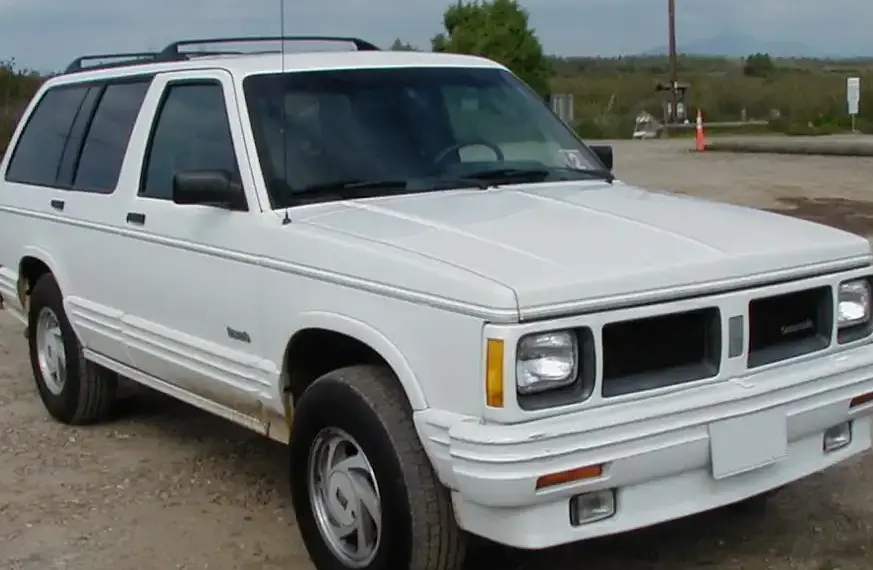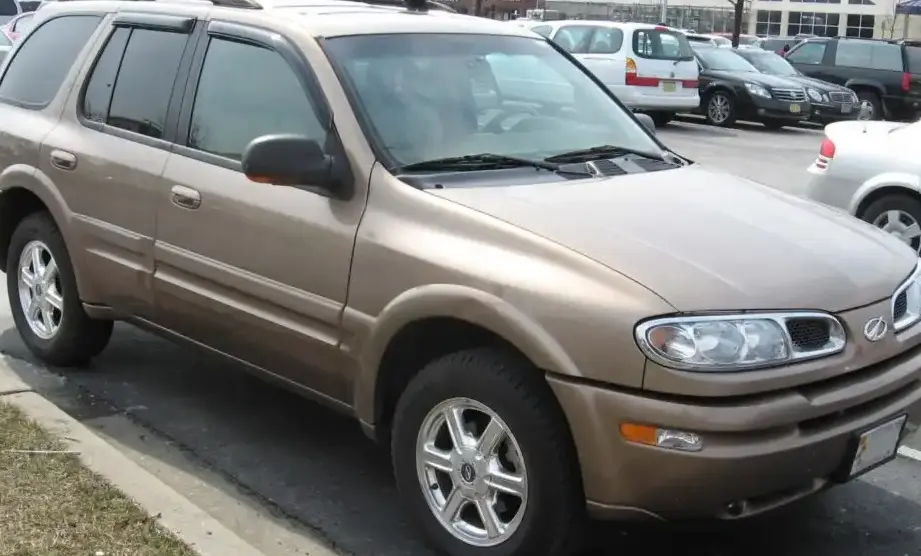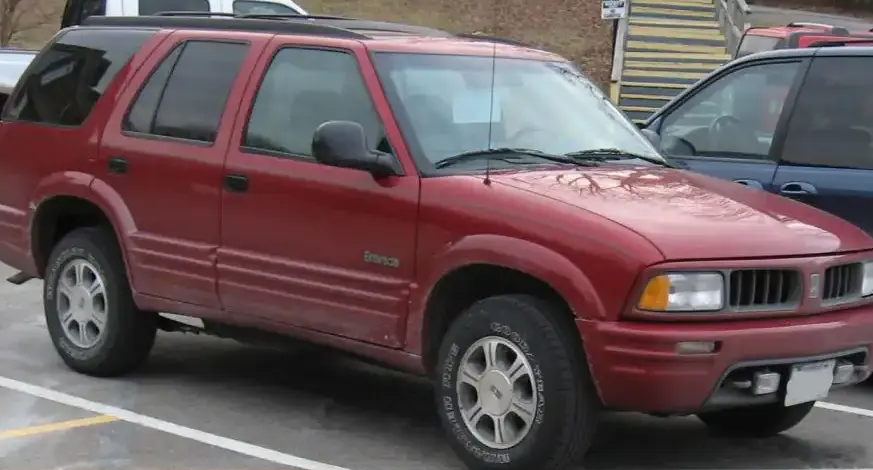
The Oldsmobile Bravada II, produced from 1995 to 2001, represented Oldsmobile’s entry into the burgeoning mid-size SUV market. Built on the General Motors GMT400 platform, shared with the Chevrolet Blazer and GMC Jimmy, the Bravada II distinguished itself with a more upscale interior and standard features. The 4.3-liter V6 engine, producing 193 horsepower, was a mainstay of the lineup throughout its production run, offering a balance of power and affordability. This variant occupied a middle ground within the Bravada range, positioned above base models but below potential future, higher-performance trims that never materialized due to Oldsmobile’s eventual discontinuation. The Bravada II aimed to appeal to buyers seeking a comfortable, capable SUV with a touch of luxury, though it faced stiff competition from established players like the Ford Explorer and Jeep Grand Cherokee.
Technical Specifications
| Brand | Oldsmobile |
| Model | Bravada |
| Generation | Bravada II |
| Type (Engine) | 4.3 V6 (193 Hp) |
| Start of production | 1995 |
| End of production | 2001 |
| Powertrain Architecture | Internal Combustion engine |
| Body type | SUV |
| Seats | 5 |
| Doors | 5 |
| Fuel consumption (urban) | 14.7 l/100 km (16 US mpg, 19.2 UK mpg) |
| Fuel consumption (extra urban) | 11.2 l/100 km (21 US mpg, 25.2 UK mpg) |
| Fuel Type | Petrol (Gasoline) |
| Acceleration 0 – 100 km/h | 10 sec |
| Acceleration 0 – 62 mph | 10 sec |
| Acceleration 0 – 60 mph | 9.5 sec |
| Maximum speed | 180 km/h (111.85 mph) |
| Weight-to-power ratio | 9.5 kg/Hp |
| Weight-to-torque ratio | 5.4 kg/Nm |
| Power | 193 Hp @ 4400 rpm |
| Power per litre | 44.9 Hp/l |
| Torque | 339 Nm @ 2800 rpm (250.03 lb.-ft. @ 2800 rpm) |
| Engine layout | Front, Longitudinal |
| Engine Model/Code | Vortec |
| Engine displacement | 4300 cm3 (262.4 cu. in.) |
| Number of cylinders | 6 |
| Engine configuration | V-engine |
| Cylinder Bore | 101.6 mm (4 in.) |
| Piston Stroke | 88.4 mm (3.48 in.) |
| Compression ratio | 9.2:1 |
| Number of valves per cylinder | 2 |
| Fuel injection system | Multi-port manifold injection |
| Engine aspiration | Naturally aspirated engine |
| Engine oil capacity | 4.3 l (4.54 US qt | 3.78 UK qt) |
| Coolant capacity | 11.1 l (11.73 US qt | 9.77 UK qt) |
| Kerb Weight | 1835 kg (4045.48 lbs.) |
| Trunk (boot) space – minimum | 1055 l (37.26 cu. ft.) |
| Trunk (boot) space – maximum | 3000 l (105.94 cu. ft.) |
| Fuel tank capacity | 68 l (17.96 US gal | 14.96 UK gal) |
| Length | 4660 mm (183.46 in.) |
| Width | 1720 mm (67.72 in.) |
| Height | 1610 mm (63.39 in.) |
| Wheelbase | 2720 mm (107.09 in.) |
| Front track | 1455 mm (57.28 in.) |
| Rear (Back) track | 1400 mm (55.12 in.) |
| Drive wheel | All wheel drive (4×4) |
| Front suspension | Double wishbone |
| Rear suspension | Leaf spring |
| Front brakes | Ventilated discs |
| Rear brakes | Disc |
| Assisting systems | ABS (Anti-lock braking system) |
| Steering type | Steering rack and pinion |
| Power steering | Hydraulic Steering |
| Tires size | 235/70 R15 |
Powertrain & Engine Architecture
The heart of the Bravada II 4.3 was the Vortec 4300 V6 engine. This engine, part of GM’s Vortec family, was a 90-degree V6 featuring a cast iron block and aluminum cylinder heads. It utilized a multi-port fuel injection system, delivering fuel directly to each intake port for improved efficiency and power. The engine produced 193 horsepower at 4400 rpm and 250 lb-ft of torque at 2800 rpm. The 4L60E four-speed automatic transmission was the sole transmission option for this variant. This transmission was known for its durability and smooth shifting, though it wasn’t particularly fuel-efficient by modern standards. The engine’s longitudinal mounting and the 4L60E’s design contributed to the Bravada’s standard all-wheel-drive capability, utilizing a single-speed transfer case.
Driving Characteristics
The 4.3L V6 and 4L60E automatic combination in the Bravada II provided adequate, but not exhilarating, performance. Acceleration from 0-60 mph took around 9.5 seconds, which was competitive for the era but lagged behind some of the V8-powered competitors. The automatic transmission’s gear ratios were geared towards providing smooth cruising and sufficient torque for everyday driving and light towing. While the engine had enough power for highway passing maneuvers, it required downshifting, and the transmission wasn’t particularly quick to respond. Compared to a manual transmission-equipped Blazer or Jimmy, the Bravada II felt somewhat less responsive. The all-wheel-drive system provided enhanced traction in inclement weather and on unpaved surfaces, making it a capable vehicle for a variety of conditions.
Equipment & Trim Levels
The Bravada II 4.3 came standard with a relatively well-equipped interior for its time. Standard features included air conditioning, power windows and locks, a tilt steering wheel, and a premium sound system. Upholstery was typically cloth, though leather was available as an option. The dashboard featured a straightforward layout with easy-to-read gauges. Optional extras included a sunroof, upgraded sound systems, and a trailering package. The Bravada II aimed for a more refined experience than its Chevrolet and GMC counterparts, with a focus on comfort and convenience features.
Chassis & Braking
The Bravada II utilized a body-on-frame construction, typical of SUVs of that era. The front suspension consisted of an independent double wishbone setup, while the rear suspension employed a traditional leaf spring design. This configuration provided a comfortable ride, but handling was not particularly sporty. Braking duties were handled by ventilated discs at the front and solid discs at the rear. An anti-lock braking system (ABS) was standard, enhancing safety and control during hard braking. The Bravada II’s relatively heavy weight (around 4045 lbs) contributed to its stable feel on the road, but also impacted its braking distance.
Market Reception & Comparison
The Oldsmobile Bravada II was generally well-received by critics, who praised its comfortable ride, spacious interior, and standard features. However, it was often criticized for its relatively lackluster performance compared to some of its competitors, particularly those equipped with V8 engines. Fuel economy was also a concern, averaging around 16 mpg in the city and 21 mpg on the highway. Compared to the Chevrolet Blazer and GMC Jimmy, the Bravada II offered a more upscale experience, but at a higher price point. The 4.3L V6 automatic combination was considered a good all-around choice for buyers who prioritized comfort and convenience over outright performance.
Legacy
The Oldsmobile Bravada II, and specifically the 4.3L V6 automatic variant, has proven to be a reasonably reliable vehicle in the used car market. The 4L60E transmission, while not without its potential issues, is generally durable with proper maintenance. The Vortec 4300 engine is known for its longevity, though it can be prone to oil leaks as it ages. Today, the Bravada II represents a relatively affordable entry point into the world of classic SUVs. While it may not offer the performance or fuel efficiency of modern SUVs, it provides a comfortable and capable driving experience, and a nostalgic reminder of a bygone era of automotive design.