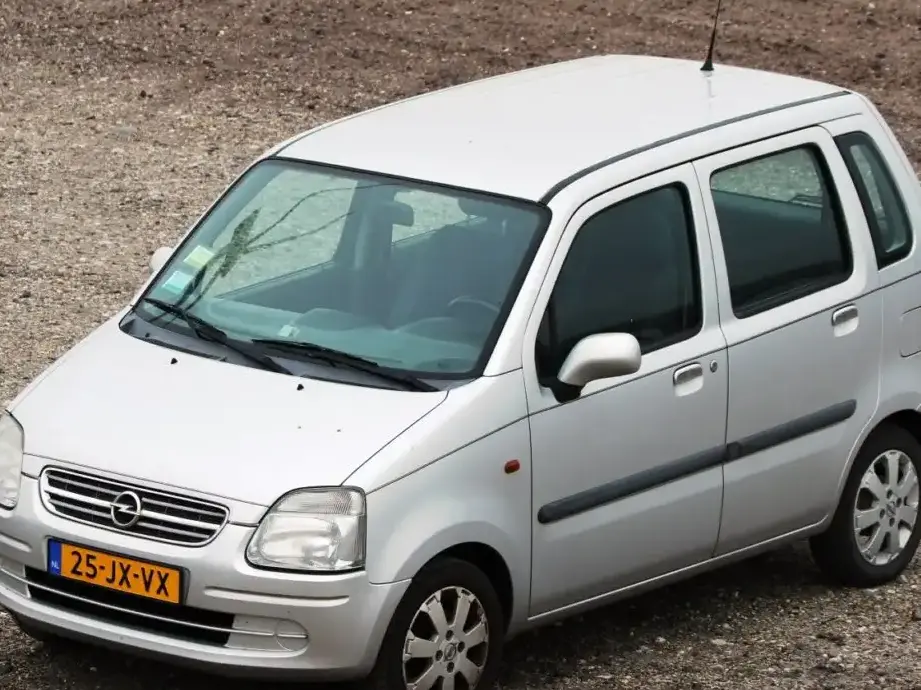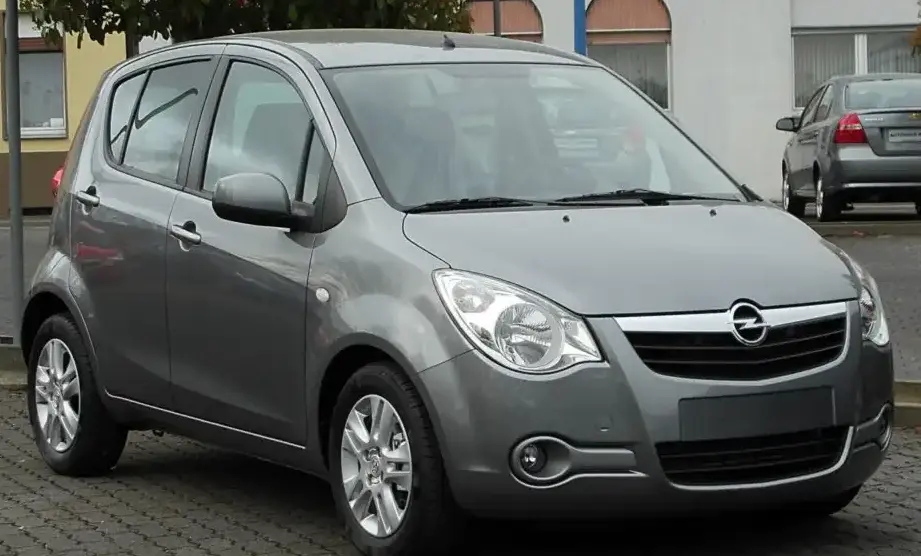
The Opel Agila II 1.2i (86 hp) was a subcompact hatchback produced from 2008 to 2010, representing a significant update to the original Agila. Positioned as an entry-level offering within the Agila II range, it aimed to provide affordable and practical transportation, particularly in European markets. The Agila II, built on the GM Gamma platform (shared with the Chevrolet Kalos and Matiz), was designed as a small, versatile city car, emphasizing fuel efficiency and ease of maneuverability. This 1.2-liter variant served as the base model, offering a balance between cost and usability, and was a popular choice for first-time car buyers and those seeking a simple, economical vehicle.
Technical Specifications
| Brand | Opel |
| Model | Agila |
| Generation | Agila II |
| Type (Engine) | 1.2i (86 Hp) |
| Start of production | 2008 |
| End of production | 2010 |
| Powertrain Architecture | Internal Combustion engine |
| Body type | Hatchback |
| Seats | 5 |
| Doors | 5 |
| Fuel consumption (urban) | 6.9 l/100 km (34.1 US mpg) |
| Fuel consumption (extra urban) | 4.7 l/100 km (50 US mpg) |
| Fuel consumption (combined) | 5.5 l/100 km (42.8 US mpg) |
| Fuel Type | Petrol (Gasoline) |
| Acceleration 0 – 100 km/h | 12.3 sec |
| Acceleration 0 – 62 mph | 12.3 sec |
| Acceleration 0 – 60 mph | 11.7 sec |
| Maximum speed | 175 km/h (108.74 mph) |
| Emission standard | Euro 4 |
| Weight-to-power ratio | 12.2 kg/Hp |
| Weight-to-torque ratio | 9.2 kg/Nm |
| Power | 86 Hp @ 5500 rpm |
| Torque | 114 Nm @ 4400 rpm (84.08 lb.-ft. @ 4400 rpm) |
| Engine layout | Front, Transverse |
| Engine Model/Code | K12B |
| Engine displacement | 1229 cm3 (75 cu. in.) |
| Number of cylinders | 4 |
| Engine configuration | Inline |
| Cylinder Bore | 73.4 mm (2.89 in.) |
| Piston Stroke | 72.6 mm (2.86 in.) |
| Compression ratio | 10.5:1 |
| Number of valves per cylinder | 4 |
| Fuel injection system | Multi-port manifold injection |
| Engine oil capacity | 3.3 l (3.49 US qt | 2.9 UK qt) |
| Coolant capacity | 4.4 l (4.65 US qt | 3.87 UK qt) |
| Kerb Weight | 1050 kg (2314.85 lbs.) |
| Max. weight | 1485 kg (3273.86 lbs.) |
| Max load | 435 kg (959.01 lbs.) |
| Trunk (boot) space – minimum | 225 l (7.95 cu. ft.) |
| Trunk (boot) space – maximum | 660 l (23.31 cu. ft.) |
| Fuel tank capacity | 45 l (11.89 US gal | 9.9 UK gal) |
| Length | 3740 mm (147.24 in.) |
| Width | 1680 mm (66.14 in.) |
| Height | 1590 mm (62.6 in.) |
| Wheelbase | 2360 mm (92.91 in.) |
| Front track | 1470 mm (57.87 in.) |
| Rear track | 1480 mm (58.27 in.) |
| Minimum turning circle | 9.6 m (31.5 ft.) |
| Drivetrain | Front wheel drive |
| Number of gears | 5 gears, manual transmission |
| Front suspension | Coil spring |
| Rear suspension | Coil spring |
| Front brakes | Disc |
| Rear brakes | Drum |
| Assisting systems | ABS (Anti-lock braking system) |
| Steering type | Steering rack and pinion |
| Power steering | Hydraulic Steering |
| Tires size | 185/60 R15 |
Powertrain & Engine Architecture
The heart of the Agila II 1.2i was the Opel/Vauxhall K12B engine, a 1.2-liter inline-four cylinder petrol engine. This engine, part of the ‘Family 0’ engine family, was known for its simplicity and reliability. It featured a single overhead camshaft (SOHC) design with four valves per cylinder, operated by a timing chain. Fuel delivery was handled by a multi-point fuel injection system, providing adequate, though not exceptional, performance. The K12B produced 86 horsepower at 5500 rpm and 114 Nm (84 lb-ft) of torque at 4400 rpm. The engine’s relatively low output was a deliberate design choice, prioritizing fuel economy and affordability over outright performance. The engine was paired with a standard five-speed manual transmission, contributing to the car’s overall efficiency. An optional four-speed automatic transmission was available, but it was less common and impacted fuel economy and acceleration.
Driving Characteristics
The Agila II 1.2i with the manual transmission offered adequate performance for urban driving and short trips. Acceleration was modest, taking around 12.3 seconds to reach 62 mph (100 km/h). The engine felt somewhat strained at higher speeds, and overtaking required careful planning. The five-speed gearbox was well-matched to the engine’s characteristics, allowing drivers to keep the engine in its optimal power band. The optional automatic transmission further reduced performance, with slightly slower acceleration and a less engaging driving experience. However, the automatic provided convenience for drivers prioritizing ease of use. The Agila’s light weight and compact size contributed to its nimble handling, making it easy to maneuver in tight city streets. The suspension, while basic, provided a reasonably comfortable ride, absorbing most road imperfections without excessive body roll.
Equipment & Trim Levels
The 1.2i Agila II typically came with a basic level of equipment, reflecting its position as the entry-level model. Standard features included power steering, central locking, front airbags, and an adjustable steering column. Interior trim was functional and durable, with cloth upholstery and plastic dashboard components. Optional extras included air conditioning, electric front windows, and a CD player. Higher trim levels, such as the ‘Sport’ or ‘Elegance’ variants, added features like alloy wheels, upgraded interior trim, and additional safety equipment. The base 1.2i model focused on providing essential transportation at an affordable price point.
Chassis & Braking
The Agila II utilized a relatively simple chassis design, featuring a MacPherson strut front suspension and a twist-beam rear suspension. This setup provided a good balance between ride comfort and handling. The front brakes were ventilated discs, while the rear brakes were drums. ABS (Anti-lock Braking System) was standard, enhancing safety by preventing wheel lockup during hard braking. The steering was a hydraulic power-assisted rack and pinion system, providing light and precise steering feel. The Agila’s relatively light weight contributed to its braking performance, allowing for reasonably short stopping distances.
Market Reception & Comparison
The Opel Agila II 1.2i was generally well-received as an affordable and practical city car. Critics praised its fuel efficiency, ease of driving, and compact size. However, the engine’s limited power was a common criticism, particularly when compared to higher-output variants like the 1.4-liter engine. Compared to the 1.4-liter Agila, the 1.2i offered significantly lower running costs but at the expense of performance. The 1.4-liter provided a more refined driving experience and was better suited for longer journeys. The Agila II also competed with other subcompact hatchbacks like the Fiat Panda, Renault Twingo, and Volkswagen Fox. The Agila offered a competitive price point and a spacious interior for its size.
Legacy
The Opel Agila II 1.2i, while not a performance icon, remains a popular choice in the used car market due to its affordability, reliability, and low running costs. The K12B engine is known for its durability, and with proper maintenance, it can provide many years of service. Parts availability is generally good, and maintenance costs are relatively low. The Agila II 1.2i represents a practical and economical solution for urban transportation, and its simplicity and reliability continue to appeal to budget-conscious buyers today. It’s often seen as a sensible and dependable first car or a useful second vehicle for city commuting.