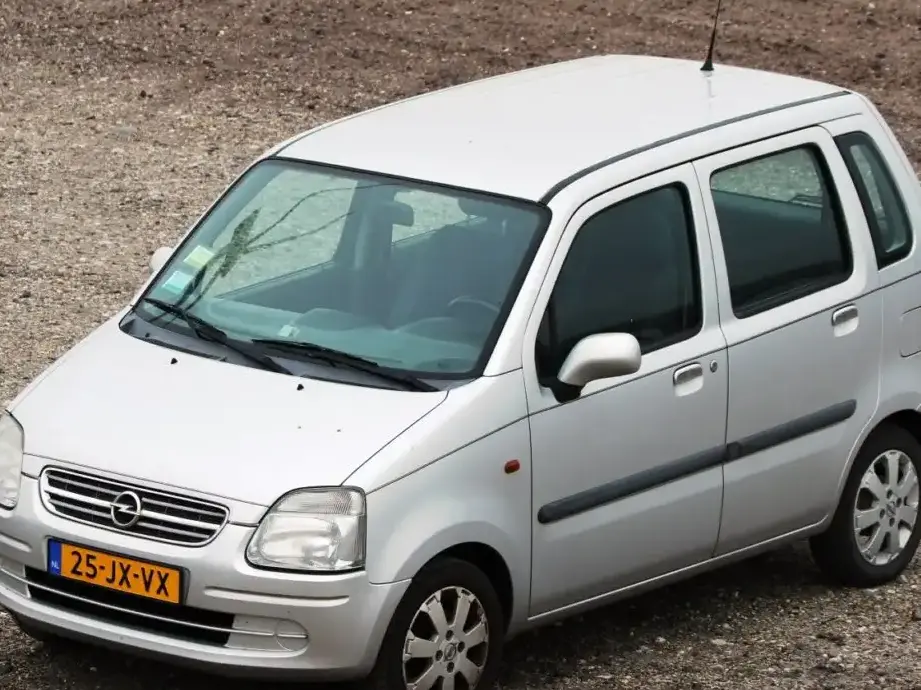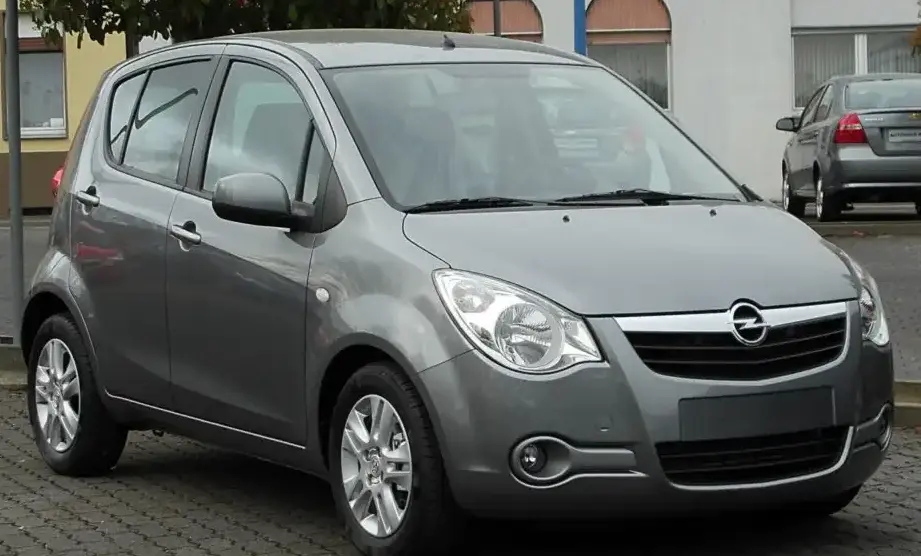
The Opel Agila II 1.3 CDTI (70 hp) was a subcompact hatchback produced from 2008 to 2010, representing a key entry point into the second generation Agila lineup. Positioned as the most fuel-efficient variant, it aimed to provide economical transportation within the European market. The Agila II, built in conjunction with Suzuki as part of a joint venture, shared its platform with the Suzuki Splash. This particular 1.3 CDTI model served as the base engine option, appealing to buyers prioritizing low running costs over outright performance. It was a popular choice for city driving and commuting due to its compact size and frugal diesel engine.
Technical Specifications
| Brand | Opel |
| Model | Agila |
| Generation | Agila II |
| Type (Engine) | 1.3 CDTI (70 Hp) |
| Start of production | 2008 |
| End of production | 2010 |
| Powertrain Architecture | Internal Combustion engine |
| Body type | Hatchback |
| Seats | 5 |
| Doors | 5 |
| Fuel consumption (urban) | 5.5 l/100 km (42.8 US mpg, 51.4 UK mpg, 18.2 km/l) |
| Fuel consumption (extra urban) | 4 l/100 km (58.8 US mpg, 70.6 UK mpg, 25 km/l) |
| Fuel consumption (combined) | 4.5 l/100 km (52.3 US mpg, 62.8 UK mpg, 22.2 km/l) |
| Fuel Type | Diesel |
| Acceleration 0 – 100 km/h | 13.9 sec |
| Acceleration 0 – 62 mph | 13.9 sec |
| Acceleration 0 – 60 mph | 13.2 sec |
| Maximum speed | 165 km/h (102.53 mph) |
| Emission standard | Euro 4 |
| Weight-to-power ratio | 15 kg/Hp, 66.7 Hp/tonne |
| Weight-to-torque ratio | 6.2 kg/Nm, 161.9 Nm/tonne |
| Power | 70 Hp @ 4000 rpm |
| Power per litre | 56.1 Hp/l |
| Torque | 170 Nm @ 1750 rpm (125.39 lb.-ft. @ 1750 rpm) |
| Engine layout | Front, Transverse |
| Engine Model/Code | Z13DTJ |
| Engine displacement | 1248 cm3 (76.16 cu. in.) |
| Number of cylinders | 4 |
| Engine configuration | Inline |
| Cylinder Bore | 69.6 mm (2.74 in.) |
| Piston Stroke | 82 mm (3.23 in.) |
| Compression ratio | 18:1 |
| Number of valves per cylinder | 4 |
| Fuel injection system | Diesel Commonrail |
| Engine aspiration | Turbocharger, Intercooler |
| Valvetrain | DOHC |
| Engine oil capacity | 3.1 l (3.28 US qt | 2.73 UK qt) |
| Coolant | 5.3 l (5.6 US qt | 4.66 UK qt) |
| Kerb Weight | 1050 kg (2314.85 lbs.) |
| Max. weight | 1485 kg (3273.86 lbs.) |
| Max load | 435 kg (959.01 lbs.) |
| Trunk (boot) space – minimum | 225 l (7.95 cu. ft.) |
| Trunk (boot) space – maximum | 660 l (23.31 cu. ft.) |
| Fuel tank capacity | 45 l (11.89 US gal | 9.9 UK gal) |
| Length | 3740 mm (147.24 in.) |
| Width | 1680 mm (66.14 in.) |
| Height | 1590 mm (62.6 in.) |
| Wheelbase | 2360 mm (92.91 in.) |
| Front track | 1470 mm (57.87 in.) |
| Rear (Back) track | 1480 mm (58.27 in.) |
| Minimum turning circle | 9.6 m (31.5 ft.) |
| Drivetrain Architecture | Front wheel drive |
| Number of gears | 5 |
| Gearbox type | Manual transmission |
| Front suspension | Coil spring |
| Rear suspension | Coil spring |
| Front brakes | Disc |
| Rear brakes | Drum |
| Assisting systems | ABS (Anti-lock braking system) |
| Steering type | Steering rack and pinion |
| Power steering | Hydraulic Steering |
| Tires size | 185/60 R16 |
Introduction
The Opel Agila II 1.3 CDTI, produced between 2008 and 2010, was a significant offering in Opel’s subcompact range. Built as part of a collaborative effort with Suzuki, the Agila II (internally designated as the B68/B98 series) shared its underpinnings with the Suzuki Splash. This model aimed to provide an affordable and economical option for buyers seeking a practical city car. The 1.3 CDTI variant, with its 70 horsepower diesel engine, was positioned as the entry-level trim, focusing on fuel efficiency and low running costs. It was a popular choice in Europe, particularly in countries where diesel fuel was readily available and economically advantageous.
Powertrain & Engine Architecture
The heart of the Agila II 1.3 CDTI is the Z13DTJ engine, a 1.3-liter inline-four cylinder diesel. This engine is a common rail direct injection (CDTI) unit, meaning fuel is delivered directly into the combustion chamber at very high pressure. The Z13DTJ utilizes a turbocharger with an intercooler to boost power and efficiency. The engine features a double overhead camshaft (DOHC) valvetrain with four valves per cylinder, optimizing airflow for improved combustion. The 70 hp output is achieved at 4000 rpm, while peak torque of 170 Nm (125 lb-ft) is available from 1750 rpm, providing reasonable low-end grunt for urban driving. The engine is paired with a five-speed manual transmission, chosen for its simplicity and contribution to fuel economy. While an automated manual transmission was available on some Agila II models, it was not offered with the 1.3 CDTI engine.
Driving Characteristics
The Agila II 1.3 CDTI, with its modest 70 hp, wasn’t designed for spirited performance. Acceleration from 0 to 100 km/h (0-62 mph) takes around 13.9 seconds, and top speed is limited to 165 km/h (102.5 mph). The focus is on usability and economy. The engine delivers adequate power for everyday driving, particularly in city environments. The five-speed manual transmission is well-matched to the engine’s characteristics, allowing drivers to keep the engine in its optimal torque band. Compared to higher-output Agila II variants, such as those with the 1.2-liter petrol engine, the 1.3 CDTI offers significantly better fuel economy but sacrifices acceleration. The gear ratios are geared towards maximizing fuel efficiency rather than providing quick acceleration.
Equipment & Trim Levels
The 1.3 CDTI typically came with a fairly basic level of equipment, reflecting its position as the entry-level model. Standard features generally included power steering, ABS brakes, a driver’s airbag, and central locking. Interior upholstery was typically cloth, and the dashboard featured a simple, functional design. Optional extras included air conditioning, electric front windows, and a CD player. Higher trim levels, available with other engine options, offered features like alloy wheels, upgraded interior trim, and more advanced audio systems. The Agila II prioritized practicality over luxury, and the 1.3 CDTI trim reflected this philosophy.
Chassis & Braking
The Agila II utilizes a relatively simple chassis design, featuring coil spring suspension at both the front and rear. The front suspension employs MacPherson struts, while the rear utilizes a torsion beam setup. This configuration provides a comfortable ride quality, suitable for urban driving. Braking is handled by disc brakes at the front and drum brakes at the rear. ABS (Anti-lock Braking System) is standard, enhancing safety during emergency braking situations. The suspension setup is tuned for comfort and stability rather than sporty handling. Stabilizer bars were typically smaller in diameter on the base 1.3 CDTI model compared to higher-spec variants.
Market Reception & Comparison
The Opel Agila II 1.3 CDTI was generally well-received by critics for its fuel efficiency and affordability. It was praised as a practical and economical city car, ideal for commuters and small families. However, its modest performance was often noted as a drawback. Compared to the 1.2-liter petrol version, the 1.3 CDTI offered significantly better fuel economy (around 4.5 l/100km vs. 5.8 l/100km) but slower acceleration. The diesel engine also came with a slightly higher purchase price. Against competitors like the Fiat Panda and Renault Twingo, the Agila II 1.3 CDTI offered a competitive combination of space, economy, and practicality.
Legacy
The Opel Agila II 1.3 CDTI, while not a performance icon, has proven to be a relatively reliable and durable vehicle. The Z13DTJ engine, when properly maintained, is known for its longevity. In the used car market, these Agilas are often sought after by buyers looking for an affordable and economical runabout. Common issues include wear and tear on suspension components and potential problems with the turbocharger if not regularly serviced. However, parts availability is generally good, and maintenance costs are relatively low. The Agila II 1.3 CDTI remains a testament to the appeal of small, fuel-efficient diesel cars in the European market.