
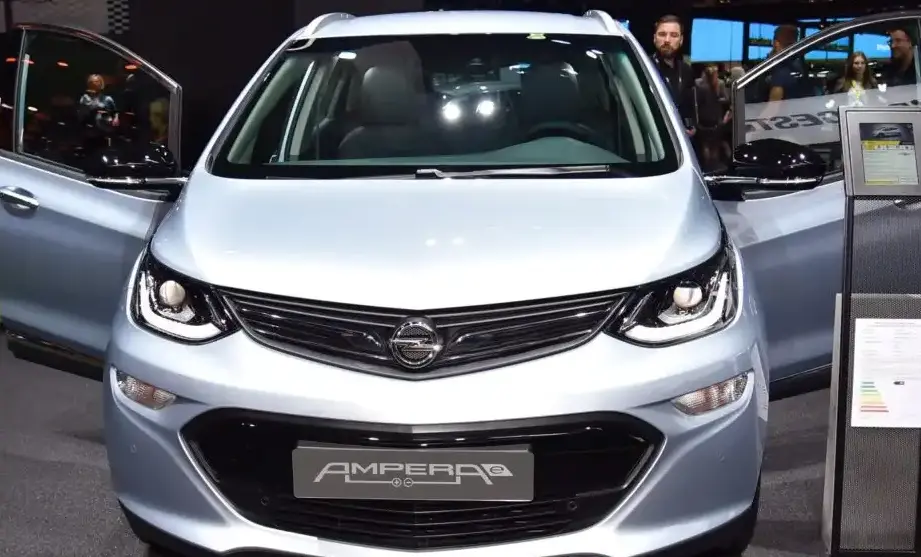
The Opel Ampera-e, marketed as the Chevrolet Bolt EV in North America, was a battery electric hatchback produced from 2016 to 2020. This variant, equipped with a 60 kWh battery pack delivering 204 horsepower, represented a significant step forward for Opel (and its parent company, General Motors) in the burgeoning electric vehicle market. Positioned as a practical and relatively affordable long-range EV, the Ampera-e aimed to address range anxiety – a major barrier to EV adoption at the time – while offering a usable and spacious interior. It was built on a dedicated EV platform, diverging from Opel’s traditional internal combustion engine offerings and signaling a commitment to electrification. The Ampera-e was primarily sold in Europe, where it competed with vehicles like the Nissan Leaf and Renault Zoe.
Technical Specifications
| Brand | Opel |
| Model | Ampera |
| Generation | Ampera-e |
| Type (Engine) | 60 kWh (204 Hp) |
| Start of production | 2016 |
| End of production | 2020 |
| Powertrain Architecture | BEV (Electric Vehicle) |
| Body type | Hatchback |
| Seats | 5 |
| Doors | 5 |
| Fuel Type | Electricity |
| Acceleration 0 – 100 km/h | 7.3 sec |
| Acceleration 0 – 62 mph | 7.3 sec |
| Acceleration 0 – 60 mph | 6.9 sec |
| Maximum speed | 150 km/h (93.21 mph) |
| Weight-to-power ratio | 7.9 kg/Hp (126.2 Hp/tonne) |
| Weight-to-torque ratio | 4.5 kg/Nm (222.8 Nm/tonne) |
| Gross battery capacity | 60 kWh |
| Net (usable) battery capacity | 58 kWh |
| Battery voltage | 350 V |
| Battery technology | Lithium-ion (Li-Ion) |
| Battery weight | 430 kg (947.99 lbs) |
| Battery location | Below the floor |
| All-electric range (WLTP) | 423 km (262.84 mi) |
| All-electric range | 520 km (323.11 mi) |
| Average Energy consumption (WLTP) | 16.5 kWh/100 km (26.55 kWh/100 mi, 127 MPGe, 6.1 km/kWh, 3.8 mi/kWh) |
| Average Energy consumption | 14.5 kWh/100 km (23.34 kWh/100 mi, 144 MPGe, 6.9 km/kWh, 4.3 mi/kWh) |
| Electric motor power | 204 Hp |
| Electric motor Torque | 360 Nm (265.52 lb.-ft.) |
| Electric motor location | Front axle, Transverse |
| System power | 204 Hp |
| System torque | 360 Nm (265.52 lb.-ft.) |
| Kerb Weight | 1616 kg (3562.67 lbs) |
| Max. weight | 2056 kg (4532.7 lbs) |
| Max load | 440 kg (970.03 lbs) |
| Trunk (boot) space – minimum | 381 l (13.45 cu. ft.) |
| Trunk (boot) space – maximum | 1274 l (44.99 cu. ft.) |
| Max. roof load | 50 kg (110.23 lbs) |
| Length | 4164 mm (163.94 in) |
| Width with mirrors folded | 1854 mm (72.99 in) |
| Width including mirrors | 2039 mm (80.28 in) |
| Height | 1594 mm (62.76 in) |
| Wheelbase | 2600 mm (102.36 in) |
| Front track | 1507 mm (59.33 in) |
| Rear (Back) track | 1516 mm (59.69 in) |
| Ride height (ground clearance) | 131 mm (5.16 in) |
| Minimum turning circle | 10.9 m (35.76 ft) |
| Drivetrain Architecture | One electric motor drives the front wheels |
| Drive wheel | Front wheel drive |
| Number of gears | 1 |
| Gearbox type | Automatic transmission |
| Front suspension | Independent type McPherson, Transverse stabilizer |
| Rear suspension | Torsion |
| Front brakes | Ventilated discs |
| Rear brakes | Disc |
| Assisting systems | ABS (Anti-lock braking system) |
| Steering type | Steering rack and pinion |
| Power steering | Electric Steering |
| Tires size | 215/50 R17 |
| Wheel rims size | 6.5J x 17 |
Powertrain & Engine Architecture
The Ampera-e utilizes a fully electric powertrain, centered around a 60 kWh lithium-ion battery pack. This pack, composed of 288 individual cells, is located under the vehicle floor to optimize weight distribution and maximize interior space. The electric motor, producing 204 horsepower and 360 Nm (265.52 lb.-ft.) of torque, is a three-phase AC induction motor. It’s a relatively simple and robust design, known for its reliability and efficiency. The motor is transversely mounted, driving the front wheels. The single-speed automatic transmission is a reduction gear, typical of electric vehicles, providing a fixed gear ratio. The car features a 350V electrical architecture. The charging port is located on the front fender and supports both AC and DC fast charging, allowing for significant range replenishment in relatively short periods. The onboard charger handles AC charging, while DC fast charging bypasses the onboard charger for quicker charging speeds.
Driving Characteristics
The 204 hp and 360 Nm of instant torque deliver brisk acceleration. The 0-60 mph time of around 6.9 seconds is respectable for a hatchback, and the Ampera-e feels noticeably quicker in everyday driving situations than its gasoline-powered counterparts. The single-speed transmission provides seamless acceleration, without the gear changes associated with traditional automatic transmissions. Compared to other Ampera-e trims (which didn’t exist, as it was only offered with this powertrain), this configuration offered the best performance. The relatively low center of gravity, due to the battery pack’s placement, contributes to stable handling. Regenerative braking is adjustable, allowing drivers to customize the level of deceleration when lifting off the accelerator, maximizing energy recovery and extending range. The steering is light and precise, making it easy to maneuver in urban environments.
Equipment & Trim Levels
The Ampera-e was generally well-equipped, even in its base trim. Standard features included a 10.1-inch touchscreen infotainment system with Apple CarPlay and Android Auto compatibility, automatic climate control, heated front seats, and a rear-view camera. Higher trim levels added features such as leather upholstery, a premium sound system, and advanced safety features like adaptive cruise control and lane keep assist. Optional extras included a panoramic sunroof and various styling packages. The interior design was modern and functional, with a focus on maximizing space and usability. The dashboard layout is clean and uncluttered, with most controls accessible through the touchscreen interface.
Chassis & Braking
The Ampera-e utilizes an independent McPherson strut suspension in the front, providing a comfortable ride and responsive handling. The rear suspension employs a torsion beam setup, which is a cost-effective and space-saving solution. Ventilated disc brakes are used on the front wheels, while solid discs are found at the rear. ABS (Anti-lock Braking System) is standard, enhancing braking performance and stability. The electric power steering provides a light and precise steering feel. The car’s relatively low weight, compared to similarly sized gasoline-powered vehicles, contributes to its agile handling characteristics.
Market Reception & Comparison
The Opel Ampera-e was generally well-received by critics, who praised its long range, brisk acceleration, and spacious interior. However, some reviewers noted the relatively firm ride quality and the somewhat basic interior materials. Compared to other EVs on the market at the time, the Ampera-e offered a compelling combination of range and affordability. Its real-world range of over 200 miles (WLTP) was a significant advantage, addressing a key concern for potential EV buyers. Fuel economy, expressed as MPGe, was excellent, significantly exceeding that of comparable gasoline-powered vehicles. Reliability reports have been generally positive, with few major issues reported.
Legacy
The Opel Ampera-e played a crucial role in establishing Opel as a serious contender in the electric vehicle market. It demonstrated the brand’s commitment to electrification and paved the way for future EV models. While production ended in 2020, the Ampera-e remains a popular choice on the used car market, particularly for buyers seeking an affordable and practical long-range EV. The powertrain has proven to be relatively reliable, with the battery pack maintaining a good level of capacity even after several years of use. The Ampera-e’s success helped to accelerate the adoption of electric vehicles in Europe and demonstrated the viability of battery electric technology for mainstream consumers.
