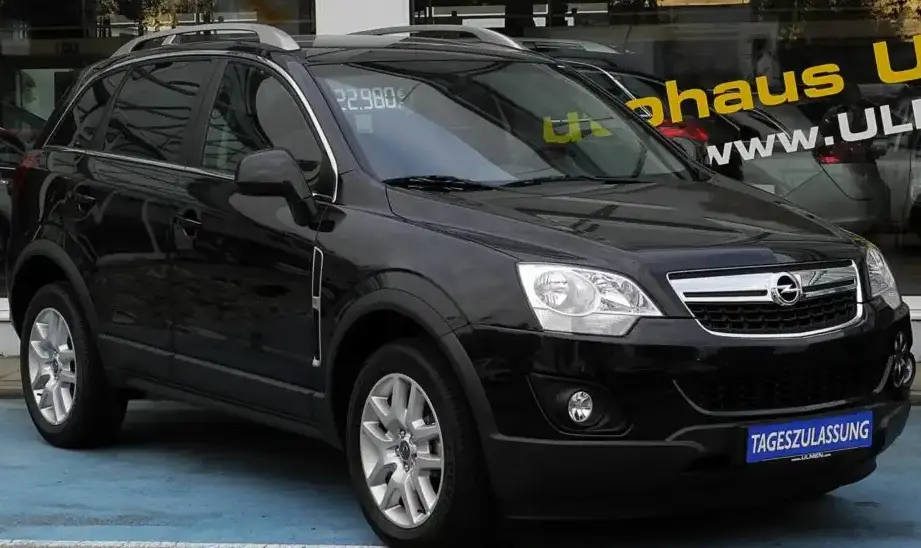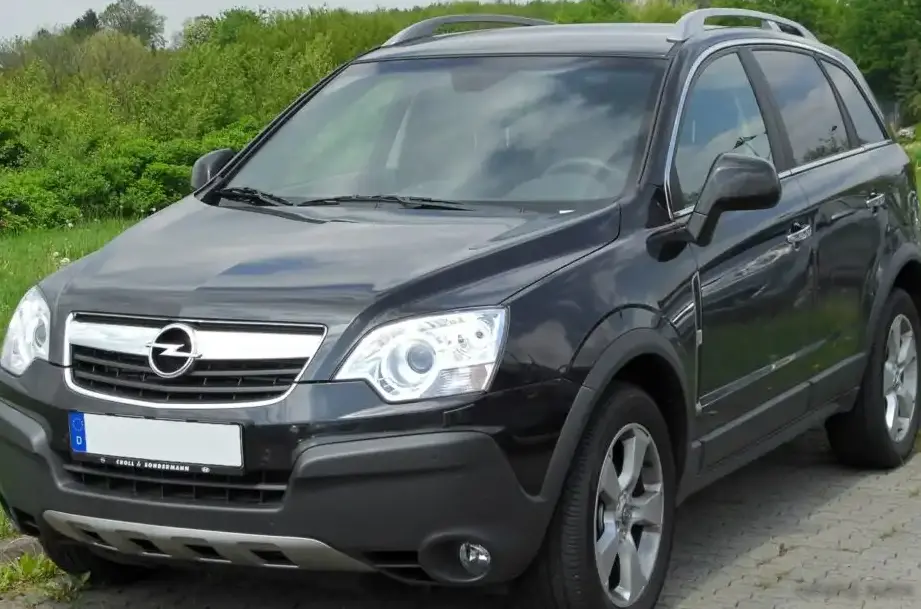
The Opel Antara 2.0 CDTI, producing 127 horsepower, was a compact SUV manufactured by the German automaker Opel from 2006 to 2010. Positioned as a mid-range offering within the Antara lineup, it aimed to provide a balance between fuel efficiency, practicality, and affordability. The Antara itself was Opel’s entry into the growing compact SUV segment, competing with vehicles like the Honda CR-V and Toyota RAV4 in the European market. It was based on the GM Theta platform, shared with models like the Chevrolet Captiva and Saturn Vue. This variant, with its 2.0-liter diesel engine and ECOTEC technology, was a popular choice for buyers seeking a versatile and economical family vehicle.
Technical Specifications
| Brand | Opel |
| Model | Antara |
| Generation | Antara |
| Type (Engine) | 2.0 CDTI (127 Hp) ECOTEC |
| Start of production | 2006 |
| End of production | 2010 |
| Powertrain Architecture | Internal Combustion engine |
| Body type | SUV |
| Seats | 5 |
| Doors | 5 |
| Fuel consumption (urban) | 8.9 l/100 km (26.4 US mpg) |
| Fuel consumption (extra urban) | 6.8 l/100 km (34.6 US mpg) |
| Fuel consumption (combined) | 7.5 l/100 km (31.4 US mpg) |
| Fuel Type | Diesel |
| Acceleration 0 – 100 km/h | 11.9 sec |
| Acceleration 0 – 62 mph | 11.9 sec |
| Acceleration 0 – 60 mph | 11.3 sec |
| Maximum speed | 180 km/h (111.85 mph) |
| Weight-to-power ratio | 14.2 kg/Hp |
| Weight-to-torque ratio | 6.1 kg/Nm |
| Power | 127 Hp @ 4000 rpm |
| Torque | 295 Nm @ 1800 rpm (217.58 lb.-ft. @ 1800 rpm) |
| Engine layout | Front, Transverse |
| Engine Model/Code | Z20DM |
| Engine displacement | 1991 cm3 (121.5 cu. in.) |
| Number of cylinders | 4 |
| Engine configuration | Inline |
| Fuel injection system | Diesel Commonrail |
| Engine oil capacity | 6.2 l (6.55 US qt | 5.46 UK qt) |
| Coolant capacity | 9 l (9.51 US qt | 7.92 UK qt) |
| Kerb Weight | 1805 kg (3979.34 lbs.) |
| Max. weight | 2225 kg (4905.29 lbs.) |
| Max load | 420 kg (925.94 lbs.) |
| Trunk (boot) space – minimum | 370 l (13.07 cu. ft.) |
| Trunk (boot) space – maximum | 1420 l (50.15 cu. ft.) |
| Length | 4575 mm (180.12 in.) |
| Width | 1850 mm (72.83 in.) |
| Height | 1704 mm (67.09 in.) |
| Wheelbase | 2707 mm (106.57 in.) |
| Front track | 1572 mm (61.89 in.) |
| Rear track | 1562 mm (61.5 in.) |
| Minimum turning circle | 12.4 m (40.68 ft.) |
| Drive wheel | All wheel drive (4×4) |
| Number of gears | 5 gears, manual transmission |
| Front suspension | Spring Strut |
| Rear suspension | Coil spring |
| Front brakes | Ventilated discs |
| Rear brakes | Disc |
| Assisting systems | ABS (Anti-lock braking system) |
| Steering type | Steering rack and pinion |
| Tires size | 225/70 R16 |
| Wheel rims size | 16 |
Powertrain & Engine Architecture
The heart of the Antara 2.0 CDTI was the Z20DM engine, a 1.991-liter inline-four cylinder diesel. This engine was part of Opel’s ECOTEC family, emphasizing efficiency and reduced emissions. It utilized a common rail direct injection system, delivering fuel directly into the combustion chamber at extremely high pressure. This technology, coupled with a turbocharger and intercooler, allowed for a good balance of power and fuel economy. The engine produced 127 horsepower at 4,000 rpm and 295 Nm (217.58 lb-ft) of torque at 1,800 rpm. The five-speed manual transmission was the standard offering for this variant, providing a relatively direct connection to the engine. The transmission’s gear ratios were tuned for everyday drivability, prioritizing fuel efficiency over outright performance.
Driving Characteristics
The Antara 2.0 CDTI with the manual transmission offered a reasonably comfortable and capable driving experience. While not particularly sporty, the engine provided adequate power for most driving situations. Acceleration from 0-60 mph took around 11.3 seconds, and top speed was limited to 111.85 mph. The torque available from low engine speeds made it easy to navigate city traffic and handle moderate inclines. Compared to the more powerful 2.2-liter direct injection gasoline engine available in some Antara models, the 2.0 CDTI prioritized fuel economy and lower running costs. The manual transmission allowed for greater driver control, but the gear ratios weren’t optimized for rapid acceleration. The all-wheel-drive system provided enhanced traction in slippery conditions, making it a suitable vehicle for year-round use.
Equipment & Trim Levels
The 2.0 CDTI Antara typically came with a respectable level of standard equipment. This included air conditioning, power windows, central locking, and an audio system with CD player. Safety features such as ABS, front and side airbags, and electronic stability control were also standard. Higher trim levels offered additional features like alloy wheels, a sunroof, leather upholstery, and a more advanced audio system. The interior was generally functional and well-built, although the materials used were not particularly luxurious. The Antara’s interior space was competitive within its class, offering comfortable seating for five adults and a reasonably sized cargo area.
Chassis & Braking
The Antara’s chassis featured a MacPherson strut front suspension and a coil spring rear suspension. This setup provided a comfortable ride quality, absorbing bumps and imperfections in the road surface effectively. The all-wheel-drive system utilized a multi-plate clutch to distribute torque between the front and rear axles, providing optimal traction in various conditions. The braking system consisted of ventilated discs on the front wheels and solid discs on the rear. ABS (Anti-lock Braking System) was standard, enhancing braking performance and stability. The Antara’s steering was light and precise, making it easy to maneuver in tight spaces.
Market Reception & Comparison
The Opel Antara 2.0 CDTI was generally well-received by automotive critics. It was praised for its fuel efficiency, practicality, and comfortable ride. However, some reviewers noted that the engine lacked outright power and that the interior was somewhat bland. Compared to other trims in the Antara lineup, the 2.0 CDTI offered the best fuel economy and lowest purchase price. It appealed to buyers who prioritized practicality and affordability over performance. Its fuel economy of around 31.4 US mpg combined was a significant selling point, especially in Europe where diesel fuel was often cheaper than gasoline.
Legacy
The Opel Antara, while not a groundbreaking vehicle, proved to be a solid and reliable SUV. The 2.0 CDTI engine, in particular, has a reputation for being durable and relatively trouble-free. On the used car market, Antaras with this engine are often sought after for their fuel efficiency and affordability. While maintenance costs are generally reasonable, owners should be aware of potential issues with the diesel particulate filter (DPF) and the turbocharger. Overall, the Antara 2.0 CDTI remains a viable option for buyers looking for a practical and economical compact SUV.