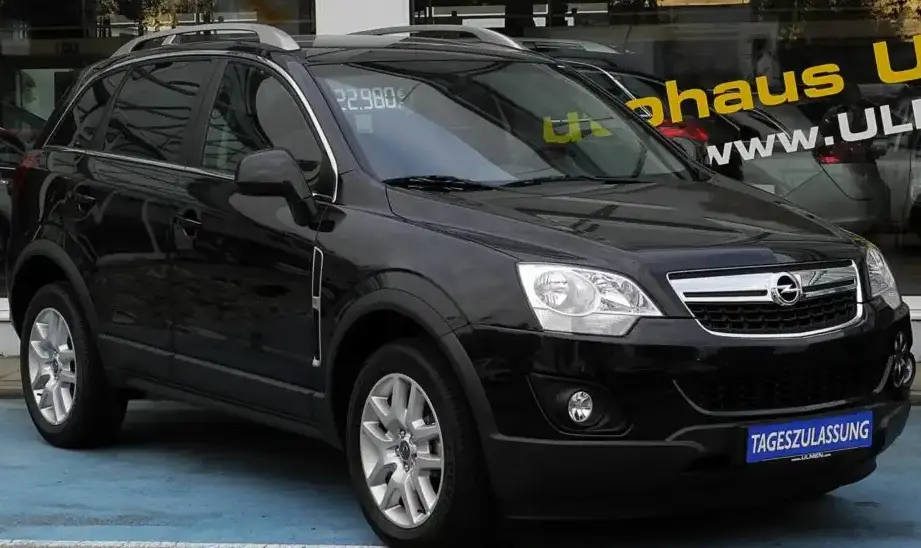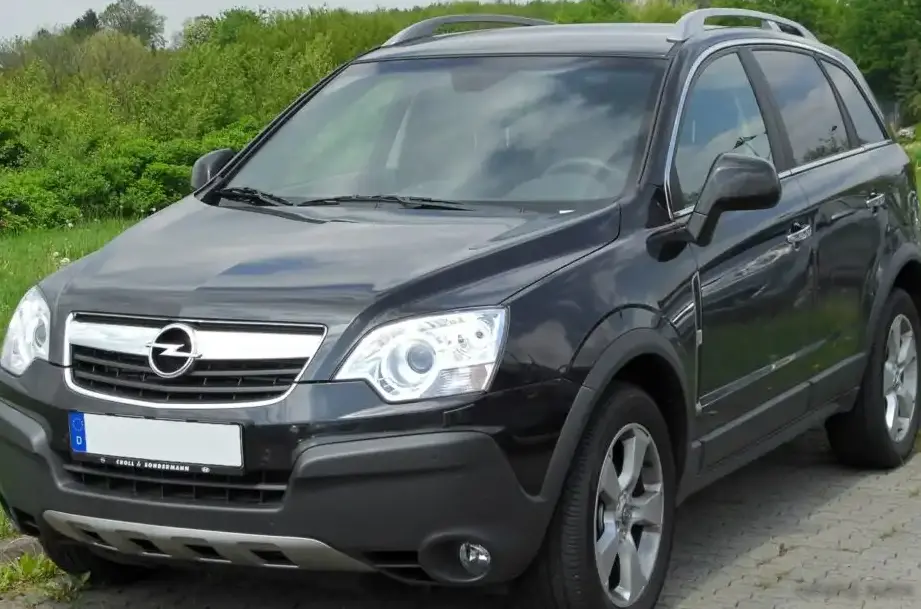
The Opel Antara 2.4 i 16V (150 hp) ECOTEC, produced between 2006 and 2010, was a compact SUV positioned as a versatile family vehicle within the Opel lineup. It represented Opel’s entry into the growing crossover SUV segment, aiming to provide a blend of practicality, comfort, and all-weather capability. The Antara shared its platform with the Chevrolet Captiva and Suzuki Grand Vitara, a result of General Motors’ global partnerships. This particular 2.4-liter variant served as a mid-range offering, slotting between the base models and potentially higher-performance or diesel-powered options depending on the market.
Technical Specifications
| Brand | Opel |
| Model | Antara |
| Generation | Antara |
| Type (Engine) | 2.4 i 16V (150 Hp) ECOTEC |
| Start of production | 2006 |
| End of production | 2010 |
| Powertrain Architecture | Internal Combustion engine |
| Body type | SUV |
| Seats | 5 |
| Doors | 5 |
| Fuel consumption (urban) | 13.3 l/100 km (17.7 US mpg, 21.2 UK mpg, 7.5 km/l) |
| Fuel consumption (extra urban) | 7.3 l/100 km (32.2 US mpg, 38.7 UK mpg, 13.7 km/l) |
| Fuel consumption (combined) | 9.6 l/100 km (24.5 US mpg, 29.4 UK mpg, 10.4 km/l) |
| Fuel Type | Petrol (Gasoline) |
| Acceleration 0 – 100 km/h | 11.9 sec |
| Acceleration 0 – 62 mph | 11.9 sec |
| Acceleration 0 – 60 mph | 11.3 sec |
| Maximum speed | 175 km/h (108.74 mph) |
| Power | 150 Hp @ 5200 rpm |
| Power per litre | 62.4 Hp/l |
| Torque | 220 Nm @ 2400 rpm (162.26 lb.-ft. @ 2400 rpm) |
| Engine layout | Front, Transverse |
| Engine displacement | 2405 cm3 (146.76 cu. in.) |
| Number of cylinders | 4 |
| Engine configuration | Inline |
| Number of valves per cylinder | 4 |
| Fuel injection system | Multi-port manifold injection |
| Engine aspiration | Naturally aspirated engine |
| Valvetrain | DOHC |
| Engine oil capacity | 6.2 l (6.55 US qt | 5.46 UK qt) |
| Trunk (boot) space – minimum | 370 l (13.07 cu. ft.) |
| Trunk (boot) space – maximum | 1420 l (50.15 cu. ft.) |
| Length | 4575 mm (180.12 in.) |
| Width | 1850 mm (72.83 in.) |
| Height | 1704 mm (67.09 in.) |
| Wheelbase | 2707 mm (106.57 in.) |
| Front track | 1572 mm (61.89 in.) |
| Rear (Back) track | 1562 mm (61.5 in.) |
| Minimum turning circle | 12.4 m (40.68 ft.) |
| Drive wheel | All wheel drive (4×4) |
| Number of gears | 5 |
| Gearbox type | Manual transmission |
| Front suspension | Spring Strut |
| Rear suspension | Coil spring |
| Front brakes | Ventilated discs |
| Rear brakes | Disc |
| Assisting systems | ABS (Anti-lock braking system) |
| Steering type | Steering rack and pinion |
| Tires size | 225/70 R16 |
| Wheel rims size | 16 |
Powertrain & Engine Architecture
The heart of the Antara 2.4 i was the Ecotec L850 engine, a 2.4-liter inline-four cylinder powerplant. This engine featured a dual overhead camshaft (DOHC) valvetrain with four valves per cylinder, contributing to its relatively efficient breathing. Fuel delivery was handled by a multi-port fuel injection system. The engine produced 150 horsepower at 5200 rpm and 220 Nm (162 lb-ft) of torque at 2400 rpm. This engine was known for its generally reliable operation, though it wasn’t particularly groundbreaking in terms of performance or technology. The five-speed manual transmission was the standard offering for this variant, providing a direct connection between the engine and the all-wheel-drive system. The transmission’s gear ratios were tuned for a balance of fuel economy and everyday drivability.
Driving Characteristics
The Antara 2.4 i with the manual transmission offered adequate, but not exhilarating, performance. Acceleration from 0 to 100 km/h (0-62 mph) took around 11.9 seconds. The engine’s torque peak at 2400 rpm provided reasonable responsiveness for merging and overtaking, but it did require downshifting for quicker acceleration. Compared to potential higher-output versions or diesel variants, the 2.4-liter engine felt less powerful, particularly when fully loaded with passengers and cargo. The all-wheel-drive system provided enhanced traction in slippery conditions, making it a capable vehicle for inclement weather. The manual transmission offered drivers more control over the engine’s power delivery compared to an automatic.
Equipment & Trim Levels
The Antara 2.4 i typically came with a standard equipment list that included air conditioning, power windows, central locking, and an audio system. Safety features such as ABS and front airbags were also standard. Higher trim levels offered options like alloy wheels, upgraded audio systems, sunroof, and leather upholstery. The interior design was functional and relatively spacious, offering comfortable seating for five passengers. The Antara’s cargo area was also reasonably sized, with a minimum of 370 liters (13.07 cu ft) expanding to 1420 liters (50.15 cu ft) with the rear seats folded down.
Chassis & Braking
The Antara utilized a conventional suspension setup with MacPherson struts at the front and a coil spring arrangement at the rear. This setup provided a comfortable ride quality, although it wasn’t particularly sporty in handling. The braking system consisted of ventilated discs at the front and solid discs at the rear, providing adequate stopping power for the vehicle’s weight class. The Antara’s all-wheel-drive system was typically a part-time system, engaging the rear wheels when traction was needed. The steering was a rack-and-pinion system, offering reasonable precision and feedback.
Market Reception & Comparison
The Opel Antara 2.4 i was generally well-received as a practical and affordable SUV. Critics praised its spacious interior, comfortable ride, and all-weather capability. However, some reviewers noted that the 2.4-liter engine felt underpowered compared to some of its competitors. Fuel economy was also considered average for its class. Compared to diesel-powered Antara models, the 2.4-liter petrol engine offered less torque and lower fuel efficiency. However, it was generally less expensive to maintain due to the simpler engine design. The Antara competed with other compact SUVs such as the Honda CR-V, Toyota RAV4, and Nissan X-Trail.
Legacy
The Opel Antara, and specifically the 2.4 i variant, has established a reputation for reasonable reliability, particularly with regular maintenance. The Ecotec engine is generally considered durable, although issues such as oil leaks and sensor failures can occur with age. In the used car market, the Antara 2.4 i represents a relatively affordable entry point into the compact SUV segment. Its all-wheel-drive system and spacious interior make it a practical choice for families and individuals who need a versatile vehicle. While it may not offer the latest technology or the most exciting driving experience, the Antara 2.4 i remains a capable and dependable SUV.