Technical Specifications
| Brand | Opel |
| Model | Antara |
| Generation | Antara (facelift 2010) |
| Type (Engine) | 2.2 CDTI (184 Hp) Automatic |
| Start of production | 2010 |
| End of production | 2016 |
| Powertrain Architecture | Internal Combustion engine |
| Body type | SUV |
| Seats | 5 |
| Doors | 5 |
| Fuel Type | Diesel |
| Emission standard | Euro 5 |
| Weight-to-power ratio | 10.7 kg/Hp, 93.5 Hp/tonne |
| Power | 184 Hp |
| Power per litre | 82.5 Hp/l |
| Engine layout | Front, Transverse |
| Engine Model/Code | A22DMH |
| Engine displacement | 2231 cm3 |
| Engine displacement (US) | 136.14 cu. in. |
| Number of cylinders | 4 |
| Engine configuration | Inline |
| Compression ratio | 9.6:1 |
| Number of valves per cylinder | 4 |
| Fuel injection system | Diesel Commonrail |
| Engine aspiration | Turbocharger, Intercooler |
| Engine oil capacity | 5.6 l |
| Engine oil capacity (US) | 5.92 US qt |
| Engine oil capacity (UK) | 4.93 UK qt |
| Coolant capacity | 7.5 l |
| Coolant capacity (US) | 7.93 US qt |
| Coolant capacity (UK) | 6.6 UK gal |
| Kerb Weight | 1967 kg |
| Kerb Weight (lbs) | 4336.49 lbs. |
| Max. weight | 2505 kg |
| Max. weight (lbs) | 5522.58 lbs. |
| Max load | 538 kg |
| Max load (lbs) | 1186.09 lbs. |
| Trunk (boot) space – minimum | 420 l |
| Trunk (boot) space – minimum (cu. ft.) | 14.83 cu. ft. |
| Trunk (boot) space – maximum | 1420 l |
| Trunk (boot) space – maximum (cu. ft.) | 50.15 cu. ft. |
| Fuel tank capacity | 65 l |
| Fuel tank capacity (US) | 17.17 US gal |
| Fuel tank capacity (UK) | 14.3 UK gal |
| Length | 4575 mm |
| Length (in.) | 180.12 in. |
| Width | 1850 mm |
| Width (in.) | 72.83 in. |
| Height | 1704 mm |
| Height (in.) | 67.09 in. |
| Wheelbase | 2707 mm |
| Wheelbase (in.) | 106.57 in. |
| Front track | 1569 mm |
| Front track (in.) | 61.77 in. |
| Rear (Back) track | 1576 mm |
| Rear (Back) track (in.) | 62.05 in. |
| Minimum turning circle | 12.8 m |
| Minimum turning circle (ft.) | 41.99 ft. |
| Drivetrain Architecture | Front wheel drive |
| Number of gears | 6 |
| Gearbox type | automatic transmission |
| Assisting systems | ABS (Anti-lock braking system) |
| Steering type | Steering rack and pinion |
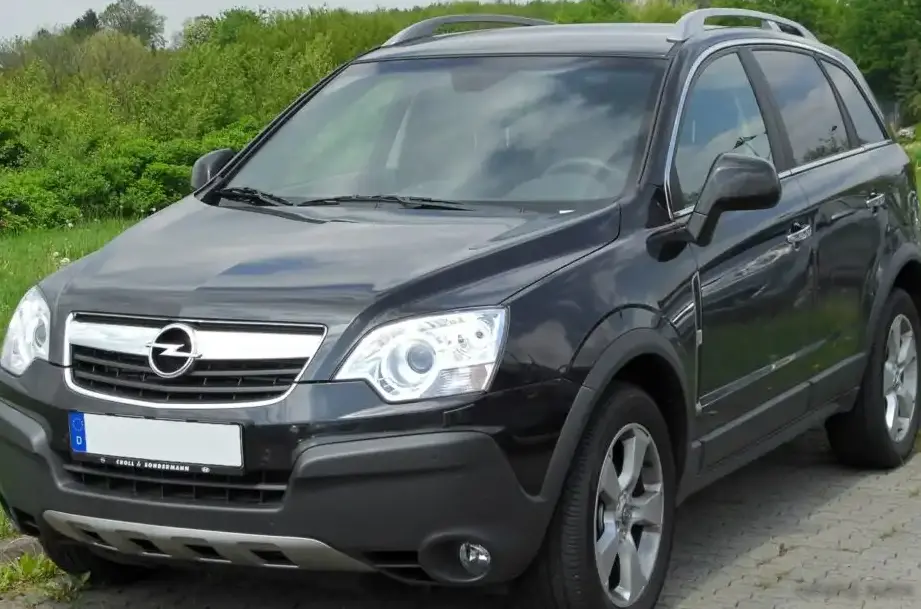
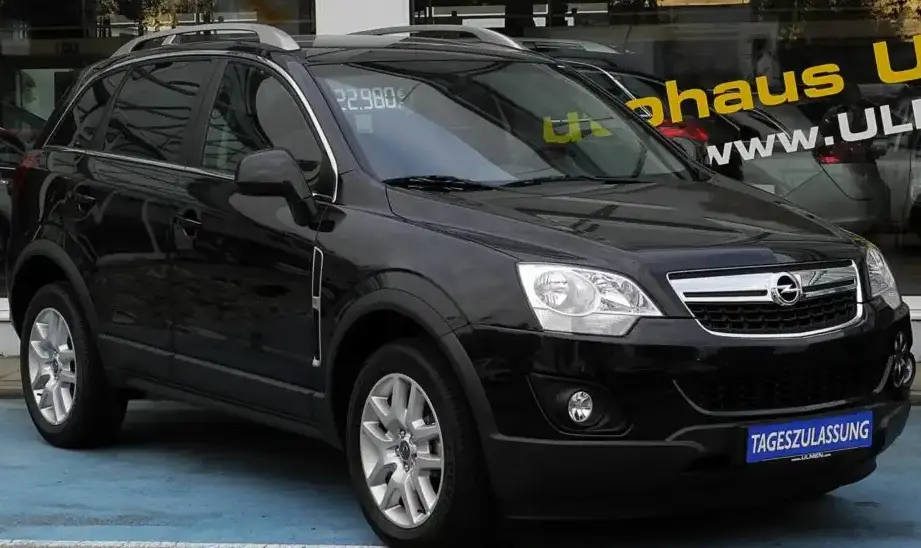
The 2010-2016 Opel Antara facelift represented a significant update to the original Antara, which was launched in 2006. Built on the GM Theta platform (shared with the Chevrolet Captiva and Suzuki Grand Vitara), the facelift brought revised styling, improved interior materials, and updated engine options. The 2.2 CDTI Automatic variant was a key offering, targeting buyers who desired a comfortable and efficient SUV for everyday use. It was designed to appeal to families and individuals seeking a practical vehicle with a reasonable level of performance and refinement.
Powertrain & Engine Architecture
The heart of the Antara 2.2 CDTI Automatic is the A22DMH engine, a 2.2-liter inline-four cylinder diesel. This engine utilizes a common rail direct injection system, delivering fuel directly into the combustion chamber at extremely high pressure. This technology, coupled with a turbocharger and intercooler, allows for increased power output and improved fuel efficiency. The engine produces 184 horsepower and a substantial amount of torque, making it well-suited for hauling passengers and cargo. The six-speed automatic transmission, sourced from Aisin, was chosen for its smooth shifting characteristics and ease of use. While not a performance-oriented transmission, it provided adequate responsiveness for typical driving conditions. The engine also incorporates a diesel particulate filter (DPF) to meet stringent Euro 5 emission standards. The DPF, while crucial for emissions compliance, would become a point of potential maintenance concern for owners.
Driving Characteristics
The Antara 2.2 CDTI Automatic offered a comfortable and relaxed driving experience. The automatic transmission, while not particularly sporty, provided smooth gear changes and eliminated the need for constant clutch and gear lever operation. Acceleration was adequate for merging onto highways and overtaking slower vehicles, but it wasn’t particularly brisk. Compared to the manual transmission versions of the same engine, the automatic resulted in a slight performance decrease due to transmission losses. However, the convenience factor was a significant draw for many buyers. The Antara’s suspension was tuned for comfort, absorbing bumps and imperfections in the road reasonably well. The front-wheel-drive configuration provided predictable handling, although it lacked the all-weather capability of the available all-wheel-drive models. The gear ratios were optimized for fuel economy rather than outright acceleration, resulting in a more leisurely driving style.
Equipment & Trim Levels
The Antara 2.2 CDTI Automatic typically came equipped with a respectable level of standard features. These included air conditioning, power windows and mirrors, a CD/radio system with auxiliary input, and ABS brakes. Higher trim levels added features such as alloy wheels, parking sensors, a sunroof, leather upholstery, and a more advanced infotainment system. Interior upholstery was generally cloth on the base models, with leather options available on higher trims. The dashboard layout was functional and straightforward, with easy-to-read gauges and logically placed controls. Optional extras included navigation systems, heated seats, and a premium sound system. The specific trim level significantly impacted the overall feel and features of the vehicle, with the higher trims offering a more luxurious experience.
Chassis & Braking
The Antara’s chassis featured a MacPherson strut front suspension and a multi-link rear suspension. This setup provided a good balance between ride comfort and handling. The front disc brakes and rear drum brakes offered adequate stopping power for the vehicle’s weight. ABS (Anti-lock Braking System) was standard, enhancing safety during emergency braking situations. The steering system utilized a rack and pinion setup, providing reasonably precise steering feel. Stabilizer bars were fitted to both the front and rear axles to reduce body roll during cornering. The rear drum brakes, while cost-effective, were a point of differentiation from some competitors who offered all-disc braking systems.
Market Reception & Comparison
The Opel Antara 2.2 CDTI Automatic received generally positive reviews from automotive critics. It was praised for its comfortable ride, spacious interior, and fuel-efficient engine. However, some critics noted that the interior materials weren’t quite as premium as those found in some of its competitors, such as the Volkswagen Tiguan or the Ford Kuga. Compared to the lower-powered Antara variants, the 2.2 CDTI Automatic offered a noticeable performance improvement. It also provided better fuel economy than the gasoline-powered models. In terms of reliability, the Antara generally proved to be a dependable vehicle, although some owners reported issues with the DPF system, a common problem with modern diesel engines. The Antara aimed to provide a value-oriented alternative to more expensive and premium-branded SUVs.
Legacy
The Opel Antara, while not a groundbreaking vehicle, served as a solid and practical SUV for many European families. The 2.2 CDTI Automatic powertrain proved to be relatively reliable, and well-maintained examples continue to be found on the used car market today. While the Antara has been replaced by the Opel Grandland X, it remains a popular choice for buyers seeking an affordable and capable SUV. The A22DMH engine, in particular, is known for its durability and relatively low maintenance costs, making it a desirable option for those looking for a long-lasting diesel engine. However, potential buyers should be aware of the potential for DPF-related issues and factor in the cost of maintenance when considering a used Antara 2.2 CDTI Automatic.