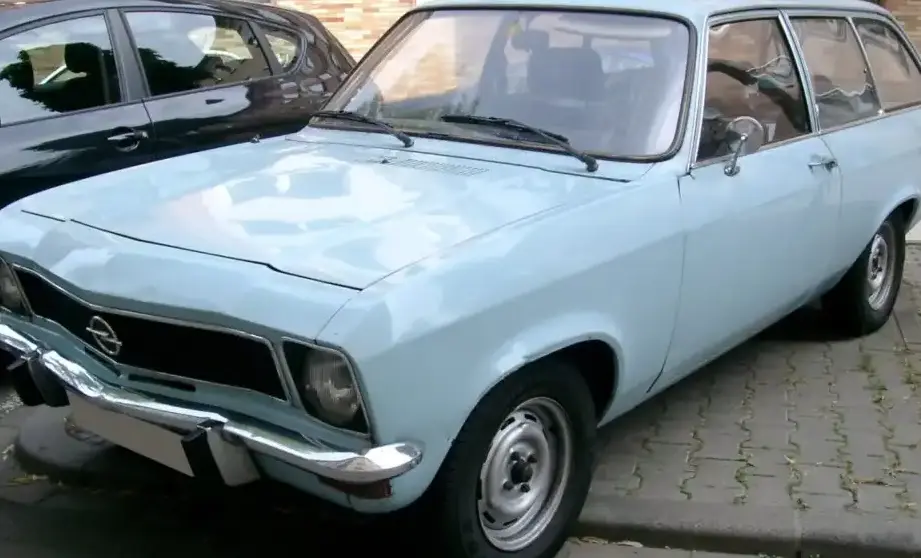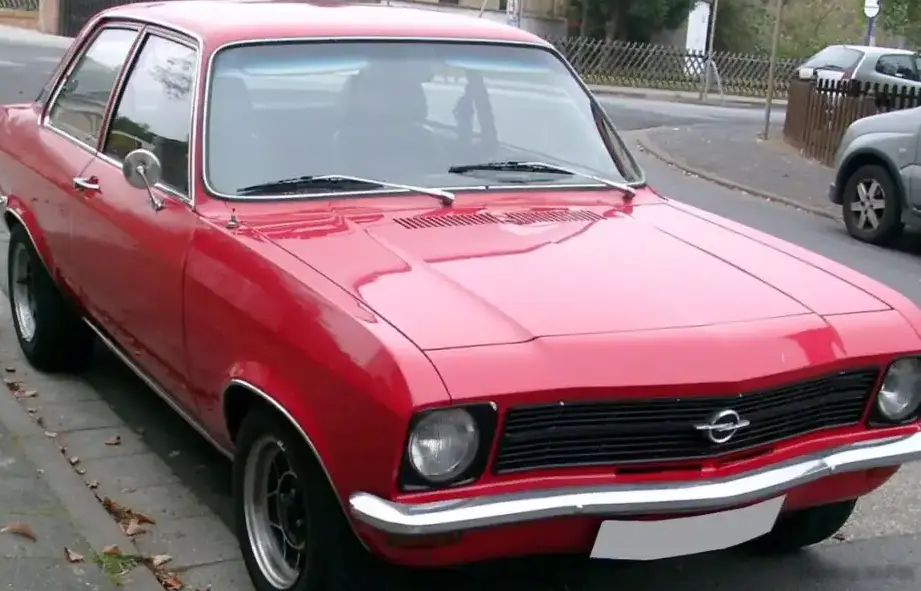
The Opel Ascona A, produced between November 1970 and December 1974, represented Opel’s entry into the mid-size market, intended to replace the Rekord C. The two-door variant, particularly the 1.6 N model generating 68 horsepower, occupied the lower end of the Ascona A lineup. Positioned as an affordable and practical family vehicle, it aimed to compete with rivals like the Ford Cortina and Vauxhall Victor in Europe. This specific configuration, with its modest power output and relatively simple mechanicals, was geared towards buyers prioritizing economy and reliability over outright performance. The Ascona A platform (internally designated as 1HX0) was significant for introducing a more modern design and engineering approach to Opel’s offerings.
Technical Specifications
| Brand | Opel |
| Model | Ascona |
| Generation | Ascona A 2-door |
| Type (Engine) | 1.6 N (68 Hp) |
| Start of production | November, 1970 |
| End of production | December, 1974 |
| Powertrain Architecture | Internal Combustion engine |
| Body type | Sedan |
| Seats | 5 |
| Doors | 2 |
| Fuel consumption (combined) | 10 l/100 km (23.5 US mpg, 28.2 UK mpg, 10 km/l) |
| Fuel Type | Petrol (Gasoline) |
| Acceleration 0 – 100 km/h | 18 sec |
| Acceleration 0 – 62 mph | 18 sec |
| Acceleration 0 – 60 mph | 17.1 sec |
| Maximum speed | 145 km/h (90.1 mph) |
| Weight-to-power ratio | 13.4 kg/Hp, 74.7 Hp/tonne |
| Weight-to-torque ratio | 8.3 kg/Nm, 120.9 Nm/tonne |
| Power | 68 Hp @ 5200 rpm |
| Power per litre | 42.9 Hp/l |
| Torque | 110 Nm @ 3400 rpm (81.13 lb.-ft. @ 3400 rpm) |
| Engine layout | Front, Longitudinal |
| Engine Model/Code | 16N |
| Engine displacement | 1584 cm3 (96.66 cu. in.) |
| Number of cylinders | 4 |
| Engine configuration | Inline |
| Cylinder Bore | 85 mm (3.35 in.) |
| Piston Stroke | 69.8 mm (2.75 in.) |
| Compression ratio | 8.2:1 |
| Number of valves per cylinder | 2 |
| Fuel injection system | Carburettor |
| Engine aspiration | Naturally aspirated engine |
| Valvetrain | CIH |
| Engine oil capacity | 3.8 l (4.02 US qt | 3.34 UK qt) |
| Coolant | 6.5 l (6.87 US qt | 5.72 UK qt) |
| Kerb Weight | 910 kg (2006.21 lbs.) |
| Max. weight | 1335 kg (2943.17 lbs.) |
| Max load | 425 kg (936.96 lbs.) |
| Trunk (boot) space – minimum | 307 l (10.84 cu. ft.) |
| Fuel tank capacity | 46 l (12.15 US gal | 10.12 UK gal) |
| Permitted trailer load with brakes (12%) | 1000 kg (2204.62 lbs.) |
| Permitted trailer load without brakes | 500 kg (1102.31 lbs.) |
| Length | 4124 mm (162.36 in.) |
| Width | 1626 mm (64.02 in.) |
| Height | 1385 mm (54.53 in.) |
| Wheelbase | 2430 mm (95.67 in.) |
| Front track | 1331 mm (52.4 in.) |
| Rear (Back) track | 1320 mm (51.97 in.) |
| Ride height (ground clearance) | 134 mm (5.28 in.) |
| Drag coefficient (Cd) | 0.48 |
| Minimum turning circle (turning diameter) | 9.76 m (32.02 ft.) |
| Drivetrain Architecture | The Internal combustion engine (ICE) drives the rear wheels of the vehicle. |
| Drive wheel | Rear wheel drive |
| Number of gears and type of gearbox | 4 gears, manual transmission |
| Front suspension | Double wishbone, Independent coil spring, Transverse stabilizer |
| Rear suspension | Rigid axle suspension, Transverse stabilizer, Trailing arm, Coil spring |
| Front brakes | Disc |
| Rear brakes | Drum |
| Steering type | Steering rack and pinion |
| Tires size | 155/80 R13; 165/80 R13; 185/70 R13 |
| Wheel rims size | 5J x 13; 5.5J x 13 |
Powertrain & Engine Architecture
The heart of the Ascona A 1.6 N was the 16N engine, a 1.6-liter (1584 cc) inline-four cylinder unit. This engine utilized a single overhead camshaft (SOHC) design with two valves per cylinder, employing Opel’s CIH (Camshaft In Head) valvetrain. Fuel delivery was managed by a single downdraft carburetor, a common setup for the time, prioritizing simplicity and cost-effectiveness. The engine produced 68 horsepower at 5200 rpm and 110 Nm (81.13 lb-ft) of torque at 3400 rpm. The engine was mounted longitudinally in the front of the vehicle, driving the rear wheels. The standard transmission for this variant was a four-speed manual gearbox, although a three-speed automatic transmission was offered as an option. The automatic transmission, while providing ease of use, did impact acceleration and fuel economy.
Driving Characteristics
The Ascona A 1.6 N with the manual transmission offered a reasonably engaging driving experience for its era, though it wasn’t a performance car. Acceleration was modest, taking around 18 seconds to reach 62 mph. The 68 hp engine required frequent gear changes to maintain momentum, especially when overtaking or climbing hills. The automatic transmission version further dulled performance, adding several seconds to acceleration times. The rear-wheel-drive layout provided predictable handling, but the relatively soft suspension and limited grip meant it wasn’t a particularly sporty car. Steering was via a rack and pinion system, offering reasonable precision for the time. The overall driving experience was best described as comfortable and practical, rather than exciting.
Equipment & Trim Levels
The 1.6 N Ascona A was typically the base model, offering a relatively sparse equipment list. Standard features included cloth upholstery, basic instrumentation (speedometer, fuel gauge, temperature gauge), and manually operated windows and door locks. Optional extras included a radio, upgraded interior trim, and a sunroof. The dashboard layout was functional but lacked the sophistication of more expensive models. The interior space was adequate for five passengers, but rear legroom was somewhat limited. The two-door configuration made access to the rear seats less convenient than in the four-door version.
Chassis & Braking
The Ascona A featured a traditional body-on-frame construction. The front suspension utilized an independent double wishbone setup with coil springs and a transverse stabilizer bar, providing a reasonable level of ride comfort. The rear suspension employed a rigid axle with trailing arms, coil springs, and a transverse stabilizer bar. Braking was accomplished via disc brakes on the front wheels and drum brakes on the rear. The braking system was adequate for normal driving conditions, but lacked the stopping power of more modern systems. Tire sizes typically ranged from 155/80 R13 to 185/70 R13, depending on the trim level and optional equipment.
Market Reception & Comparison
The Ascona A 1.6 N was generally well-received as an affordable and reliable family car. Critics praised its practicality and fuel economy, but noted its lack of performance. Compared to the higher-spec Ascona models, such as those equipped with the 1.9-liter engine, the 1.6 N felt underpowered. The 1.9-liter offered a noticeable improvement in acceleration and overall driving enjoyment. The Ascona A also faced competition from other mid-size cars, such as the Ford Cortina and Vauxhall Victor, which offered similar levels of practicality and affordability. The automatic transmission version of the 1.6 N was often criticized for its sluggish performance and reduced fuel economy compared to the manual version.
Legacy
The Opel Ascona A, and specifically the 1.6 N variant, holds a place in automotive history as a representative of 1970s European family cars. While not a particularly exciting vehicle, it was a reliable and practical choice for many buyers. The 16N engine, while simple in design, proved to be durable and relatively easy to maintain. Today, Ascona A models are becoming increasingly sought after by classic car enthusiasts, particularly well-preserved examples. The 1.6 N variant, due to its affordability and simplicity, is often a popular choice for restoration projects. Parts availability can be a challenge, but a dedicated community of Opel enthusiasts helps to keep these cars on the road.