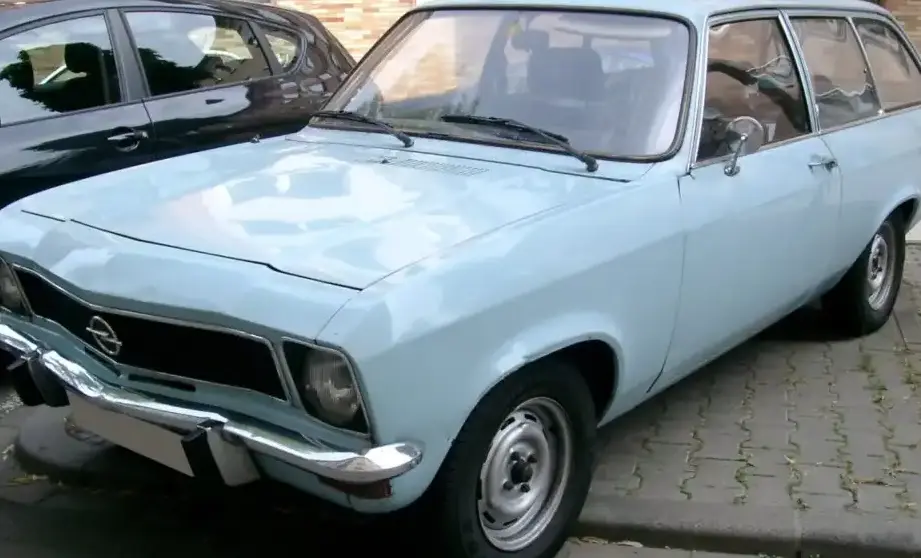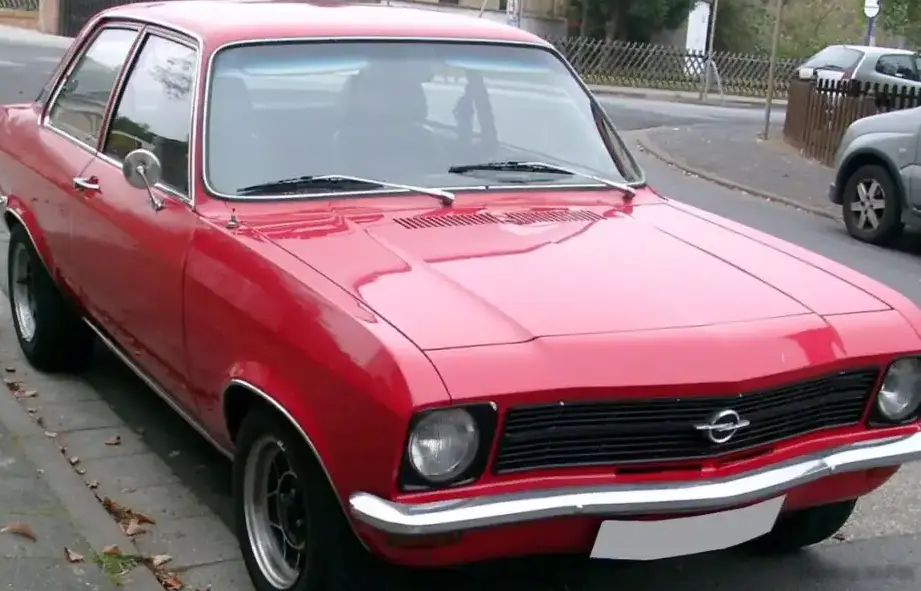
The Opel Ascona A 2-door 1.6 S, produced briefly between January and July of 1975, represented a sporting entry point into the Ascona A range. Positioned as a more performance-oriented version of the popular Ascona, it aimed to attract buyers seeking a blend of practicality and driving enjoyment. The Ascona A, launched in 1970, was Opel’s response to the Ford Cortina and other mid-size European saloons, and quickly became a sales success. The 2-door variant, and specifically the 1.6 S trim, offered a more compact and youthful alternative to the four-door models. It was part of the first generation (A) of the Ascona, a model that would continue through three further iterations until 1985.
Technical Specifications
| Brand | Opel |
| Model | Ascona |
| Generation | Ascona A 2-door |
| Type (Engine) | 1.6 S (75 Hp) |
| Start of production | January, 1975 |
| End of production | July, 1975 |
| Powertrain Architecture | Internal Combustion engine |
| Body type | Sedan |
| Seats | 5 |
| Doors | 2 |
| Fuel Type | Petrol (Gasoline) |
| Acceleration 0 – 100 km/h | 15 sec |
| Acceleration 0 – 62 mph | 15 sec |
| Acceleration 0 – 60 mph | 14.3 sec |
| Maximum speed | 153 km/h (95.07 mph) |
| Weight-to-power ratio | 12.5 kg/Hp, 79.8 Hp/tonne |
| Weight-to-torque ratio | 8 kg/Nm, 124.5 Nm/tonne |
| Power | 75 Hp @ 5000 rpm |
| Power per litre | 47.3 Hp/l |
| Torque | 117 Nm @ 3800 rpm (86.29 lb.-ft. @ 3800 rpm) |
| Engine layout | Front, Longitudinal |
| Engine Model/Code | 16S |
| Engine displacement | 1584 cm3 (96.66 cu. in.) |
| Number of cylinders | 4 |
| Engine configuration | Inline |
| Cylinder Bore | 85 mm (3.35 in.) |
| Piston Stroke | 69.8 mm (2.75 in.) |
| Compression ratio | 8.8:1 |
| Number of valves per cylinder | 2 |
| Fuel injection system | Carburettor |
| Engine aspiration | Naturally aspirated engine |
| Valvetrain | CIH |
| Engine oil capacity | 3.8 l (4.02 US qt | 3.34 UK qt) |
| Coolant | 6.5 l (6.87 US qt | 5.72 UK qt) |
| Kerb Weight | 940 kg (2072.35 lbs.) |
| Max. weight | 1365 kg (3009.31 lbs.) |
| Max load | 425 kg (936.96 lbs.) |
| Trunk (boot) space – minimum | 307 l (10.84 cu. ft.) |
| Fuel tank capacity | 46 l (12.15 US gal | 10.12 UK gal) |
| Permitted trailer load with brakes (12%) | 1000 kg (2204.62 lbs.) |
| Permitted trailer load without brakes | 500 kg (1102.31 lbs.) |
| Length | 4124 mm (162.36 in.) |
| Width | 1626 mm (64.02 in.) |
| Height | 1385 mm (54.53 in.) |
| Wheelbase | 2430 mm (95.67 in.) |
| Front track | 1331 mm (52.4 in.) |
| Rear (Back) track | 1320 mm (51.97 in.) |
| Ride height (ground clearance) | 134 mm (5.28 in.) |
| Drag coefficient (Cd) | 0.48 |
| Minimum turning circle (turning diameter) | 9.76 m (32.02 ft.) |
| Drivetrain Architecture | The Internal combustion engine (ICE) drives the rear wheels of the vehicle. |
| Drive wheel | Rear wheel drive |
| Number of gears and type of gearbox | 4 gears, manual transmission |
| Front suspension | Double wishbone, Independent coil spring, Transverse stabilizer |
| Rear suspension | Rigid axle suspension, Transverse stabilizer, Trailing arm, Coil spring |
| Front brakes | Disc |
| Rear brakes | Drum |
| Steering type | Steering rack and pinion |
| Tires size | 155/80 R13; 165/80 R13; 185/70 R13 |
| Wheel rims size | 5J x 13; 5.5J x 13 |
Powertrain & Engine Architecture
The heart of the Ascona A 1.6 S was the 16S engine, a 1584cc inline-four cylinder unit. This engine was part of Opel’s CIH (Cylinder Head Inclined) family, known for its robust design and relatively simple maintenance. The ‘S’ designation indicated a slightly higher compression ratio (8.8:1) and a twin-barrel carburetor, contributing to the 75 horsepower output at 5000 rpm and 117 Nm (86.29 lb-ft) of torque at 3800 rpm. The engine was mounted longitudinally in the front of the vehicle, driving the rear wheels. The four-speed manual transmission was the only gearbox option available with this engine, providing a direct and engaging driving experience. The engine’s design prioritized reliability and ease of servicing over outright performance, making it a practical choice for everyday use.
Driving Characteristics
The 1.6 S offered a noticeable step up in performance compared to the base Ascona models. While not a sports car by any means, the 75 hp engine provided adequate power for comfortable cruising and overtaking. Acceleration to 60 mph took around 14.3 seconds, and the top speed was approximately 95 mph. The four-speed manual gearbox allowed drivers to make the most of the engine’s powerband, although the gear ratios were relatively widely spaced. Compared to the later, more powerful Ascona variants like the 1.9 or 2.0-liter models, the 1.6 S felt less refined and had a more noticeable engine note. However, its lighter weight and simpler mechanicals contributed to a more nimble and responsive feel, particularly on winding roads.
Equipment & Trim Levels
The Ascona A 1.6 S was positioned as a mid-range trim level. Standard equipment included cloth upholstery, a basic instrument cluster, and a two-spoke steering wheel. While not lavishly equipped, it offered a step up in comfort and aesthetics compared to the more basic Ascona models. Optional extras included a vinyl roof, upgraded audio systems, and tinted glass. The interior design was functional and straightforward, reflecting the car’s focus on practicality and affordability. The 2-door configuration offered a slightly sportier aesthetic than the four-door models, appealing to a younger demographic.
Chassis & Braking
The Ascona A featured a robust chassis with independent front suspension utilizing double wishbones and coil springs, providing a comfortable ride and decent handling. The rear suspension employed a rigid axle with trailing arms and coil springs. Front brakes were discs, offering good stopping power, while the rear brakes were drums. A transverse stabilizer bar was fitted to both the front and rear axles, helping to reduce body roll during cornering. The steering was a rack and pinion system, providing precise and responsive control. The suspension setup was tuned for a balance between comfort and handling, making the Ascona A a capable all-rounder.
Market Reception & Comparison
The Ascona A 1.6 S was generally well-received by automotive critics as a practical and affordable family saloon. It was praised for its reliability, comfortable ride, and decent performance. However, some critics noted that the engine lacked refinement compared to some of its competitors. Compared to other trims in the Ascona lineup, the 1.6 S offered a good balance between price and performance. The larger-engined models provided more power but came at a higher cost. The 1.6 S was a popular choice for buyers who wanted a stylish and reliable car without breaking the bank. Fuel economy was reasonable for the time, averaging around 28-32 mpg.
Legacy
The Opel Ascona A 1.6 S, while a relatively short-lived variant, remains a fondly remembered classic among enthusiasts. The CIH engine proved to be exceptionally durable, and many examples are still on the road today. The 1.6 S is valued for its simplicity, reliability, and engaging driving experience. In the used car market, well-maintained examples command a reasonable price, particularly those with original features and low mileage. The Ascona A, and the 1.6 S in particular, represents a significant chapter in Opel’s history, showcasing the brand’s commitment to building practical and reliable vehicles.