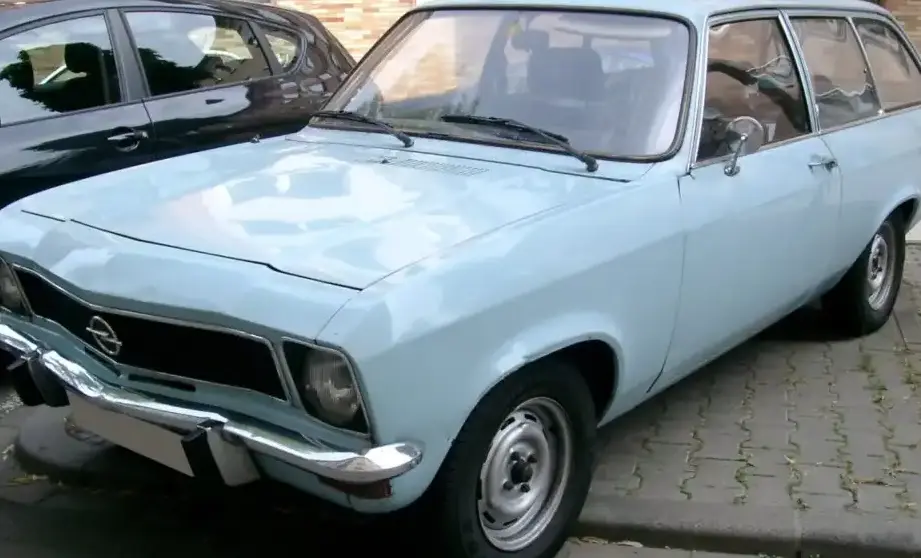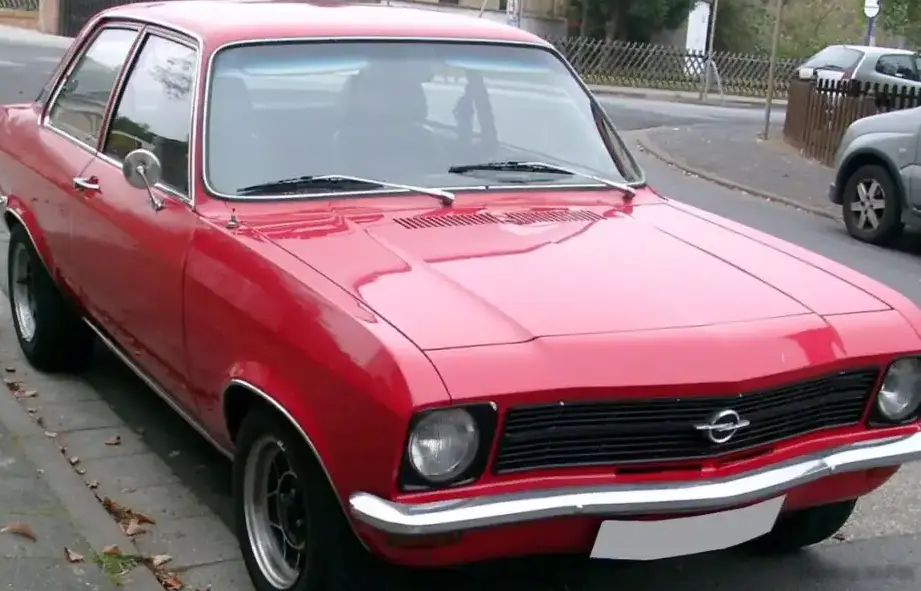
The Opel Ascona A 2-door 1.6 S, produced between November 1970 and December 1974, represented a key variant within the first generation of the Ascona. Positioned as a sporting, yet accessible, model, the 1.6 S offered a step up in performance from the base Ascona models while remaining more affordable than the larger-engined variants. It played a significant role in Opel’s strategy to offer a modern, comfortable, and relatively affordable mid-size car to compete in the European market, particularly against rivals like the Ford Cortina and Vauxhall Victor. The Ascona A series, built on the GM H-platform, was a crucial model for Opel, establishing a foothold in the competitive segment and paving the way for subsequent generations.
Technical Specifications
| Brand | Opel |
| Model | Ascona |
| Generation | Ascona A 2-door |
| Type (Engine) | 1.6 S (80 Hp) |
| Start of production | November, 1970 |
| End of production | December, 1974 |
| Powertrain Architecture | Internal Combustion engine |
| Body type | Sedan |
| Seats | 5 |
| Doors | 2 |
| Fuel consumption (combined) | 9.5 l/100 km (24.8 US mpg, 29.7 UK mpg, 10.5 km/l) |
| Fuel Type | Petrol (Gasoline) |
| Acceleration 0 – 100 km/h | 14.5 sec |
| Acceleration 0 – 62 mph | 14.5 sec |
| Acceleration 0 – 60 mph | 13.8 sec |
| Maximum speed | 155 km/h (96.31 mph) |
| Weight-to-power ratio | 11.8 kg/Hp, 85.1 Hp/tonne |
| Weight-to-torque ratio | 7.8 kg/Nm, 127.7 Nm/tonne |
| Power | 80 Hp @ 5200 rpm |
| Power per litre | 50.5 Hp/l |
| Torque | 120 Nm @ 3800 rpm (88.51 lb.-ft. @ 3800 rpm) |
| Engine layout | Front, Longitudinal |
| Engine Model/Code | 16S |
| Engine displacement | 1584 cm3 (96.66 cu. in.) |
| Number of cylinders | 4 |
| Engine configuration | Inline |
| Cylinder Bore | 85 mm (3.35 in.) |
| Piston Stroke | 69.8 mm (2.75 in.) |
| Compression ratio | 9.5:1 |
| Number of valves per cylinder | 2 |
| Fuel injection system | Carburettor |
| Engine aspiration | Naturally aspirated engine |
| Valvetrain | CIH |
| Engine oil capacity | 3.8 l (4.02 US qt | 3.34 UK qt) |
| Coolant | 6.5 l (6.87 US qt | 5.72 UK qt) |
| Kerb Weight | 940 kg (2072.35 lbs.) |
| Max. weight | 1365 kg (3009.31 lbs.) |
| Max load | 425 kg (936.96 lbs.) |
| Trunk (boot) space – minimum | 307 l (10.84 cu. ft.) |
| Fuel tank capacity | 46 l (12.15 US gal | 10.12 UK gal) |
| Permitted trailer load with brakes (12%) | 1000 kg (2204.62 lbs.) |
| Permitted trailer load without brakes | 500 kg (1102.31 lbs.) |
| Length | 4124 mm (162.36 in.) |
| Width | 1626 mm (64.02 in.) |
| Height | 1385 mm (54.53 in.) |
| Wheelbase | 2430 mm (95.67 in.) |
| Front track | 1331 mm (52.4 in.) |
| Rear (Back) track | 1320 mm (51.97 in.) |
| Ride height (ground clearance) | 134 mm (5.28 in.) |
| Drag coefficient (Cd) | 0.48 |
| Minimum turning circle (turning diameter) | 9.76 m (32.02 ft.) |
| Drivetrain Architecture | Rear wheel drive |
| Drive wheel | Rear wheel drive |
| Number of gears and type of gearbox | 4 gears, manual transmission |
| Front suspension | Double wishbone, Independent coil spring, Transverse stabilizer |
| Rear suspension | Rigid axle suspension, Transverse stabilizer, Trailing arm, Coil spring |
| Front brakes | Disc |
| Rear brakes | Drum |
| Steering type | Steering rack and pinion |
| Tires size | 155/80 R13; 165/80 R13; 185/70 R13 |
| Wheel rims size | 5J x 13; 5.5J x 13 |
Powertrain & Engine Architecture
The heart of the Ascona A 1.6 S was the 1584cc inline-four cylinder engine, designated the 16S. This engine was part of Opel’s CIH (Cylinder Head Integrated) family, known for its robust design and relatively simple maintenance. The ‘S’ designation indicated a higher compression ratio (9.5:1) and a slightly more aggressive camshaft profile compared to the standard 1.6-liter engine, resulting in the increased power output of 80 horsepower at 5200 rpm and 120 Nm (88.51 lb-ft) of torque at 3800 rpm. Fuel delivery was managed by a single, down-draft carburetor, a common setup for the era. The engine featured a two-valve per cylinder configuration. The engine was mounted longitudinally in the front of the vehicle, driving the rear wheels. The standard transmission was a four-speed manual gearbox, although a three-speed automatic transmission was offered as an option, impacting performance and fuel economy.
Driving Characteristics
The Ascona A 1.6 S, with the manual transmission, offered a reasonably engaging driving experience for its time. Acceleration to 60 mph took around 13.8 seconds, and it could reach a top speed of 155 km/h (96.31 mph). The 80 hp engine, while not exceptionally powerful, provided adequate performance for everyday driving and comfortable cruising. The automatic transmission version, however, noticeably dulled performance, increasing the 0-60 mph time to around 16-17 seconds. Gear ratios were relatively tall, prioritizing fuel economy over outright acceleration. The rear-wheel-drive layout provided a balanced feel, although handling was not as sharp as more modern cars. The suspension, while comfortable, could exhibit some body roll during cornering.
Equipment & Trim Levels
The 1.6 S trim level offered a step up in equipment compared to the base Ascona. Standard features typically included cloth upholstery, a basic instrument cluster, and a heater. Optional extras included a vinyl roof, upgraded audio systems, and tinted glass. The interior was functional and relatively spacious for a two-door car of the period. The dashboard layout was straightforward, with clearly marked gauges and controls. The ‘S’ trim also often included a sporty steering wheel and some exterior trim enhancements, such as chrome detailing.
Chassis & Braking
The Ascona A featured a traditional body-on-frame construction. The front suspension utilized an independent double wishbone setup with coil springs and a transverse stabilizer bar, providing a comfortable ride. The rear suspension employed a rigid axle with trailing arms, coil springs, and a transverse stabilizer bar. Braking was accomplished via disc brakes on the front wheels and drum brakes on the rear. The steering system was a rack and pinion setup, offering reasonably precise steering feel. Tire sizes typically ranged from 155/80 R13 to 185/70 R13, depending on the optional equipment.
Market Reception & Comparison
The Ascona A 1.6 S was generally well-received by automotive critics as a practical and affordable family car. It was praised for its comfortable ride, spacious interior, and relatively fuel-efficient engine. However, some critics noted that the engine lacked outright power, particularly when paired with the automatic transmission. Compared to the more powerful Ascona 1.9 and 2.0-liter models, the 1.6 S offered a more economical option, appealing to buyers who prioritized fuel economy and affordability over performance. It also provided a more refined driving experience than some of its British competitors, such as the Vauxhall Victor.
Legacy
The Opel Ascona A 1.6 S, while not a particularly rare or collectible car today, remains a popular choice among classic car enthusiasts. The 16S engine is known for its reliability and relatively simple maintenance requirements. Parts availability is generally good, although some specific trim pieces can be difficult to find. The Ascona A series as a whole is remembered as a significant model in Opel’s history, establishing the brand as a major player in the European mid-size car market. Well-maintained examples of the 1.6 S can still provide a comfortable and enjoyable driving experience, offering a glimpse into the automotive landscape of the early 1970s.