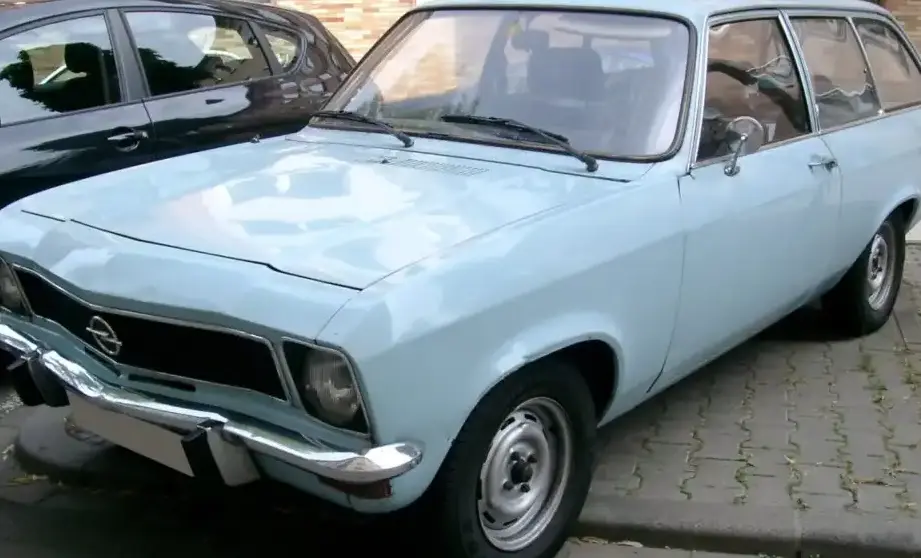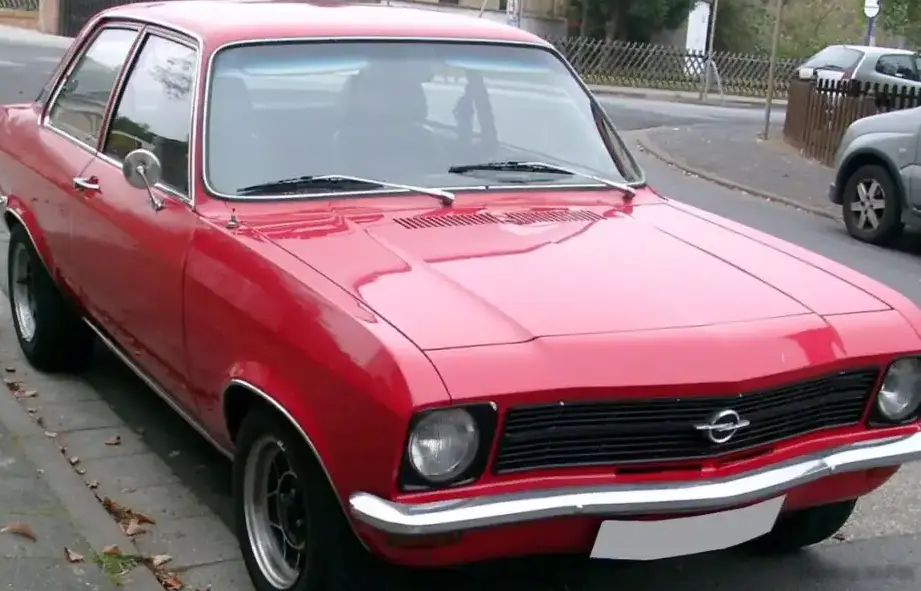
The Opel Ascona A 2-door 1.9 S, produced briefly between January and July of 1975, represented a sporting variant within the first generation (1970-1975) of Opel’s Ascona line. Positioned as a step up from the base models, the 1.9 S aimed to offer a blend of practicality and performance in a relatively compact package. It was a key offering in Opel’s lineup during a period when the company was solidifying its position as a major European automotive manufacturer, particularly in the mid-size segment. The Ascona A competed with vehicles like the Ford Cortina and Vauxhall Victor, offering a more modern and stylish alternative to some of its contemporaries.
Technical Specifications
| Brand | Opel |
| Model | Ascona |
| Generation | Ascona A 2-door |
| Type (Engine) | 1.9 S (88 Hp) |
| Start of production | January, 1975 |
| End of production | July, 1975 |
| Powertrain Architecture | Internal Combustion engine |
| Body type | Sedan |
| Seats | 5 |
| Doors | 2 |
| Fuel Type | Petrol (Gasoline) |
| Acceleration 0 – 100 km/h | 13 sec |
| Acceleration 0 – 62 mph | 13 sec |
| Acceleration 0 – 60 mph | 12.4 sec |
| Maximum speed | 160 km/h (99.42 mph) |
| Weight-to-power ratio | 10.7 kg/Hp, 93.6 Hp/tonne |
| Weight-to-torque ratio | 6.3 kg/Nm, 159.6 Nm/tonne |
| Power | 88 Hp @ 4800 rpm |
| Power per litre | 46.4 Hp/l |
| Torque | 150 Nm @ 2600-3800 rpm (110.63 lb.-ft. @ 2600-3800 rpm) |
| Engine layout | Front, Longitudinal |
| Engine Model/Code | 19S |
| Engine displacement | 1897 cm3 (115.76 cu. in.) |
| Number of cylinders | 4 |
| Engine configuration | Inline |
| Cylinder Bore | 93 mm (3.66 in.) |
| Piston Stroke | 69.8 mm (2.75 in.) |
| Compression ratio | 8.8:1 |
| Number of valves per cylinder | 2 |
| Fuel injection system | Carburettor |
| Engine aspiration | Naturally aspirated engine |
| Valvetrain | CIH |
| Engine oil capacity | 3.8 l (4.02 US qt | 3.34 UK qt) |
| Coolant | 6.1 l (6.45 US qt | 5.37 UK qt) |
| Kerb Weight | 940 kg (2072.35 lbs.) |
| Max. weight | 1365 kg (3009.31 lbs.) |
| Max load | 425 kg (936.96 lbs.) |
| Trunk (boot) space – minimum | 307 l (10.84 cu. ft.) |
| Fuel tank capacity | 46 l (12.15 US gal | 10.12 UK gal) |
| Permitted trailer load with brakes (12%) | 1000 kg (2204.62 lbs.) |
| Permitted trailer load without brakes | 500 kg (1102.31 lbs.) |
| Length | 4124 mm (162.36 in.) |
| Width | 1626 mm (64.02 in.) |
| Height | 1385 mm (54.53 in.) |
| Wheelbase | 2430 mm (95.67 in.) |
| Front track | 1331 mm (52.4 in.) |
| Rear (Back) track | 1320 mm (51.97 in.) |
| Ride height (ground clearance) | 134 mm (5.28 in.) |
| Drag coefficient (Cd) | 0.48 |
| Minimum turning circle (turning diameter) | 9.76 m (32.02 ft.) |
| Drivetrain Architecture | The Internal combustion engine (ICE) drives the rear wheels of the vehicle. |
| Drive wheel | Rear wheel drive |
| Number of gears and type of gearbox | 4 gears, manual transmission |
| Front suspension | Double wishbone, Independent coil spring, Transverse stabilizer |
| Rear suspension | Rigid axle suspension, Transverse stabilizer, Trailing arm, Coil spring |
| Front brakes | Disc |
| Rear brakes | Drum |
| Steering type | Steering rack and pinion |
| Tires size | 165/80 R13; 185/70 R13 |
| Wheel rims size | 5J x 13; 5.5J x 13 |
Powertrain & Engine Architecture
The heart of the Ascona A 1.9 S was the 19S engine, a 1,897 cc inline-four cylinder unit. This engine was part of Opel’s CIH (Cylinder Head Inclined) family, known for its robust design and relatively simple maintenance. The ‘S’ designation indicated a higher compression ratio (8.8:1) and a slightly more aggressive camshaft profile compared to the standard 1.9-liter engine. Fuel delivery was handled by a Solex carburetor, a common setup for the era. The engine produced 88 horsepower at 4,800 rpm and 150 Nm (110.63 lb-ft) of torque between 2,600 and 3,800 rpm. The engine was mounted longitudinally in the front of the vehicle, driving the rear wheels. The 4-speed manual transmission was the only gearbox option available with this engine.
Driving Characteristics
The 1.9 S offered a noticeable step up in performance compared to the lower-spec Ascona models. While not a sports car by modern standards, its 0-60 mph time of around 12.4 seconds and a top speed of 99.42 mph were respectable for the mid-1970s. The carburetor meant throttle response wasn’t as immediate as fuel-injected engines, but the engine pulled reasonably well throughout the rev range. The manual transmission allowed for greater driver control, and the rear-wheel-drive layout provided a balanced feel, although it could also lead to oversteer if pushed hard. Compared to a potential future 2.0L version, the 1.9 S offered a more economical option without sacrificing too much in terms of driving enjoyment.
Equipment & Trim Levels
The Ascona A 1.9 S was generally well-equipped for its time, though options were available to further enhance the interior. Standard features typically included cloth upholstery, a basic instrument cluster, and heated rear window. The ‘S’ trim often included a more sporty steering wheel and upgraded interior trim compared to the base models. Optional extras could include a vinyl roof, upgraded audio system, and tinted glass. The interior design was functional and straightforward, reflecting the era’s emphasis on practicality.
Chassis & Braking
The Ascona A featured independent front suspension with double wishbones and coil springs, providing a comfortable ride and decent handling. The rear suspension utilized a rigid axle with coil springs and a transverse stabilizer bar, which helped to reduce body roll. Braking was accomplished via disc brakes on the front wheels and drum brakes on the rear. While adequate for normal driving, the drum brakes on the rear could lack the stopping power of a fully disc-braked system, especially under heavy load. The steering was a rack and pinion system, offering precise and responsive control.
Market Reception & Comparison
The Ascona A 1.9 S was generally well-received by automotive journalists and buyers alike. It was praised for its blend of practicality, comfort, and performance. Critics noted that it offered a more engaging driving experience than some of its competitors, such as the Ford Cortina. However, some reviewers pointed out that the carburetor could sometimes lead to inconsistent performance. Compared to the base Ascona models, the 1.9 S offered a significant performance upgrade, while remaining relatively affordable. It was positioned as a good all-rounder, suitable for both daily commuting and longer journeys.
Legacy
The Opel Ascona A 1.9 S, while a relatively short-lived variant, holds a place in automotive history as a representative of 1970s European motoring. The 19S engine proved to be a durable and reliable unit, and many examples are still on the road today. In the used car market, Ascona A models, particularly the 1.9 S, are sought after by classic car enthusiasts and collectors. The Ascona A laid the foundation for subsequent generations of Opel Ascona and Vectra models, which continued to be popular choices in the European market for decades to come. Its simple mechanical design makes it relatively easy to maintain and repair, contributing to its enduring appeal.