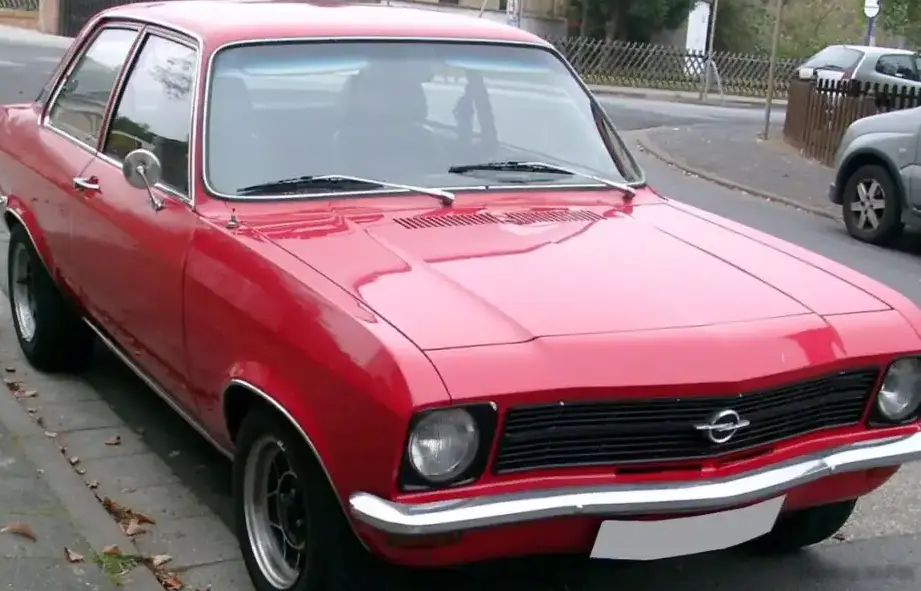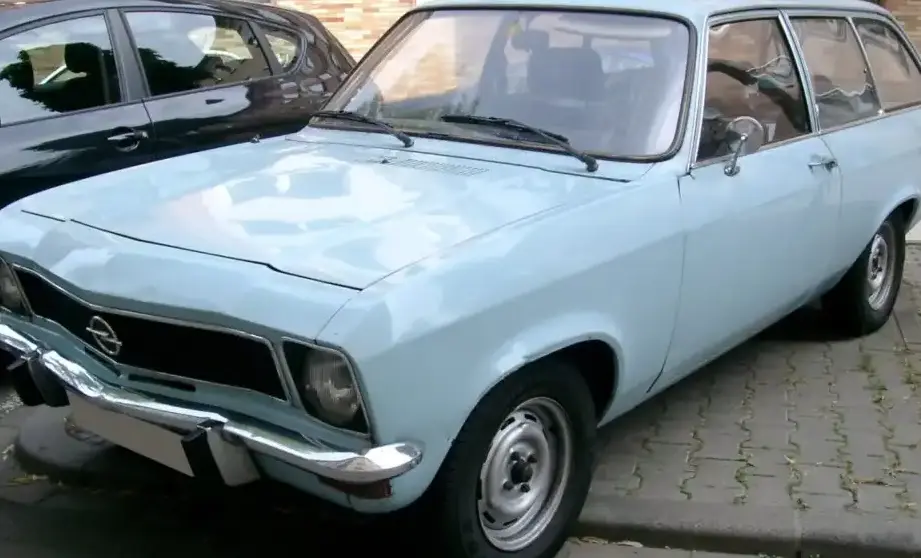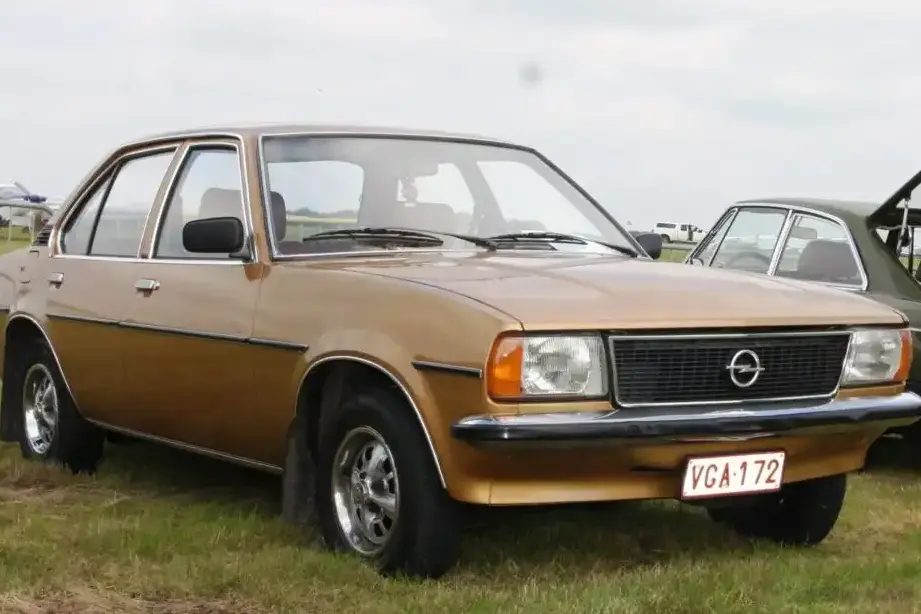
The Opel Ascona B 1.6 N, producing 60 horsepower, was a mainstay of the Ascona B range produced between 1975 and 1979. Positioned as the entry-level model, it offered affordable transportation within the compact family car segment in Europe. The Ascona B itself was a significant update to the original Ascona A, built on the same platform but featuring revised styling and mechanical improvements. This variant played a crucial role in establishing the Ascona as a popular choice for budget-conscious buyers seeking a practical and reliable vehicle.
Technical Specifications
| Brand | Opel |
| Model | Ascona |
| Generation | Ascona B |
| Type (Engine) | 1.6 N (60 Hp) |
| Start of production | 1975 |
| End of production | 1979 |
| Powertrain Architecture | Internal Combustion engine |
| Body type | Sedan |
| Seats | 5 |
| Doors | 2-4 |
| Fuel Type | Petrol (Gasoline) |
| Acceleration 0 – 100 km/h | 17.5 sec |
| Acceleration 0 – 62 mph | 17.5 sec |
| Acceleration 0 – 60 mph | 16.6 sec |
| Maximum speed | 145 km/h (90.1 mph) |
| Weight-to-power ratio | 15.8 kg/Hp, 63.2 Hp/tonne |
| Weight-to-torque ratio | 9.2 kg/Nm, 108.4 Nm/tonne |
| Power | 60 Hp @ 5000 rpm |
| Power per litre | 37.9 Hp/l |
| Torque | 103 Nm @ 3000-3400 rpm (75.97 lb.-ft. @ 3000-3400 rpm) |
| Engine Model/Code | 16N |
| Engine displacement | 1584 cm3 (96.66 cu. in.) |
| Number of cylinders | 4 |
| Engine configuration | Inline |
| Cylinder Bore | 85 mm (3.35 in.) |
| Piston Stroke | 69.8 mm (2.75 in.) |
| Compression ratio | 8:1 |
| Number of valves per cylinder | 2 |
| Fuel injection system | Carburettor |
| Engine aspiration | Naturally aspirated engine |
| Valvetrain | SOHC |
| Engine oil capacity | 3.8 l (4.02 US qt | 3.34 UK qt) |
| Coolant | 6.5 l (6.87 US qt | 5.72 UK qt) |
| Kerb Weight | 950 kg (2094.39 lbs.) |
| Max. weight | 1375 kg (3031.36 lbs.) |
| Max load | 425 kg (936.96 lbs.) |
| Trunk (boot) space – minimum | 380 l (13.42 cu. ft.) |
| Fuel tank capacity | 50 l (13.21 US gal | 11 UK gal) |
| Permitted trailer load with brakes (12%) | 1150 kg (2535.32 lbs.) |
| Permitted trailer load without brakes | 500 kg (1102.31 lbs.) |
| Length | 4321 mm (170.12 in.) |
| Width | 1670 mm (65.75 in.) |
| Height | 1380 mm (54.33 in.) |
| Wheelbase | 2518 mm (99.13 in.) |
| Front track | 1374 mm (54.09 in.) |
| Rear (Back) track | 1374 mm (54.09 in.) |
| Ride height (ground clearance) | 130 mm (5.12 in.) |
| Drag coefficient (Cd) | 0.46 |
| Minimum turning circle (turning diameter) | 10.1 m (33.14 ft.) |
| Drivetrain Architecture | The Internal combustion engine (ICE) drives the rear wheels of the vehicle. |
| Drive wheel | Rear wheel drive |
| Number of gears and type of gearbox | 4 gears, manual transmission |
| Front brakes | Disc |
| Rear brakes | Drum |
INTRODUCTION
The Opel Ascona B 1.6 N represented the entry point into the Ascona B range, a series of vehicles produced from 1975 to 1979. Building upon the success of the Ascona A, the B-series offered a more refined and modern package. Available in both two-door and four-door body styles, the 1.6 N was designed to appeal to buyers prioritizing economy and practicality. It competed directly with other European compacts like the Ford Cortina, Vauxhall Cavalier, and Fiat 132, offering a blend of affordability and Opel’s reputation for build quality. The Ascona B was a key model for Opel, contributing significantly to their market share in Europe during the late 1970s.
Powertrain & Engine Architecture
The heart of the Ascona B 1.6 N was the 16N engine, a 1.6-liter (1584 cc) inline-four cylinder unit. This engine featured a single overhead camshaft (SOHC) valvetrain with two valves per cylinder. Fuel delivery was managed by a single carburetor, a common setup for the time, prioritizing simplicity and cost-effectiveness. The 16N engine produced 60 horsepower at 5000 rpm and 103 Nm (76 lb-ft) of torque between 3000 and 3400 rpm. The engine’s relatively low compression ratio of 8:1 was typical for vehicles designed to run on the available fuel grades of the era. The engine was paired with a four-speed manual transmission, which was standard for this variant. While an automatic transmission was offered on higher-spec Ascona B models, it wasn’t available with the 1.6 N engine.
Driving Characteristics
The Ascona B 1.6 N’s driving experience was characterized by its modest performance. Acceleration was leisurely, taking approximately 17.5 seconds to reach 62 mph (100 km/h). Top speed was around 90 mph (145 km/h). The four-speed manual transmission offered a reasonable spread of gears, but the engine’s limited torque meant frequent downshifts were necessary, especially when tackling hills or overtaking. Compared to the more powerful Ascona B variants, such as the 1.9 or 2.0-liter models, the 1.6 N felt noticeably slower. However, its lighter weight and simpler mechanicals contributed to a more nimble and predictable handling balance. The rear-wheel-drive configuration provided a traditional driving feel, favored by many enthusiasts of the period.
Equipment & Trim Levels
The 1.6 N was the base model, and as such, it came equipped with a relatively basic level of standard features. Interior appointments were functional rather than luxurious, typically featuring cloth upholstery and a simple dashboard layout. Standard equipment included basic instrumentation (speedometer, fuel gauge, temperature gauge), a steering wheel, and manually operated windows and door locks. Optional extras included a radio, upgraded upholstery, and a sunroof. The trim level was deliberately kept simple to maintain affordability. The focus was on providing a reliable and practical vehicle rather than a feature-rich one.
Chassis & Braking
The Ascona B utilized a traditional body-on-frame construction. The suspension consisted of independent front suspension with coil springs and a rigid rear axle with leaf springs. The 1.6 N typically featured disc brakes on the front wheels and drum brakes on the rear. This configuration was common for vehicles in this price range during the 1970s. Stabilizer bars were not standard on the 1.6 N, contributing to a slightly softer ride but also a bit more body roll in corners. The steering was a recirculating ball system, providing a relatively heavy but direct feel.
Market Reception & Comparison
The Ascona B 1.6 N was generally well-received by critics as a sensible and affordable family car. It was praised for its reliability and fuel economy, although its performance was often criticized as being underwhelming. Compared to the higher-spec Ascona B models, the 1.6 N offered a significantly lower price point, making it accessible to a wider range of buyers. The 1.9-liter and 2.0-liter variants provided considerably more power and performance, but at a higher cost. The 1.6 N’s fuel economy was a key selling point, particularly during the oil crises of the 1970s. It offered a reasonable balance between affordability, practicality, and running costs.
Legacy
The Opel Ascona B 1.6 N, while not the most powerful or luxurious variant of the Ascona B, remains a fondly remembered classic. The 16N engine, while simple, proved to be remarkably durable and reliable. Today, well-maintained examples are sought after by classic car enthusiasts. Parts availability can be a challenge, but the engine’s simplicity makes it relatively easy to repair. The Ascona B 1.6 N represents a significant piece of automotive history, embodying the spirit of affordable and practical motoring from the 1970s. Its enduring appeal lies in its simplicity, reliability, and the nostalgic connection it provides to a bygone era of automotive design.