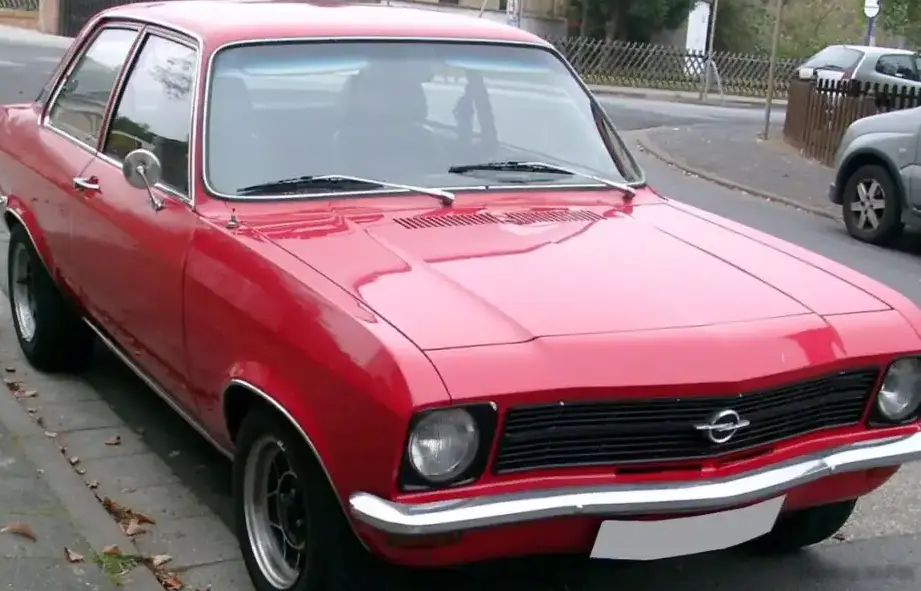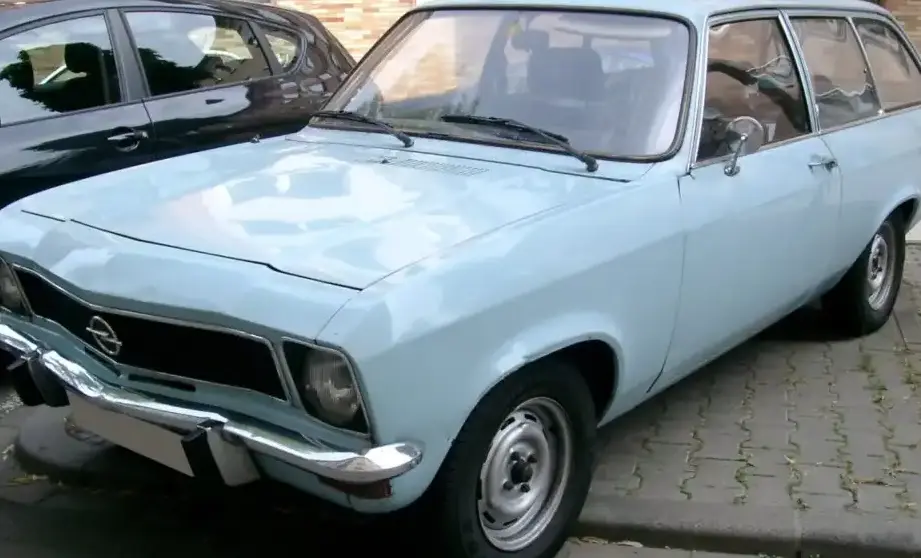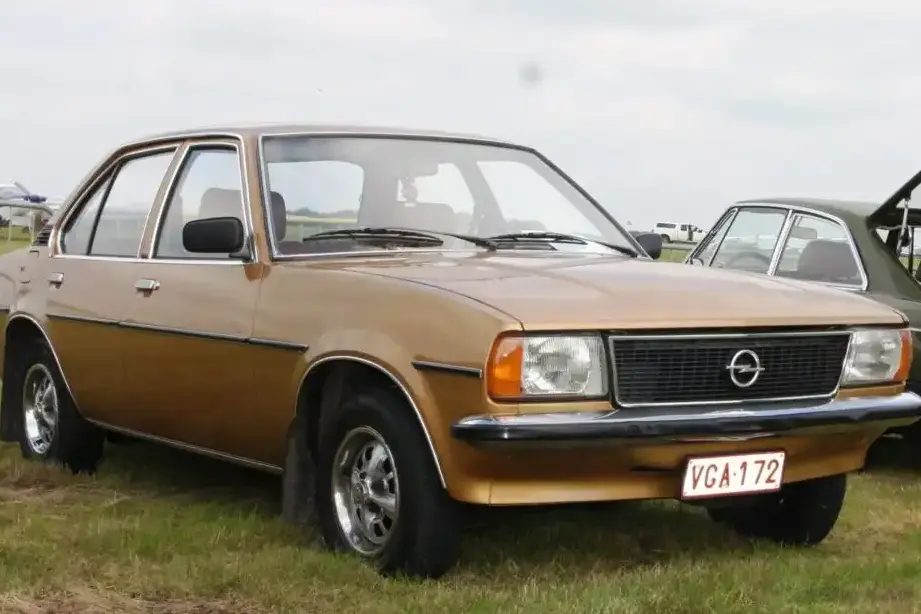
The Opel Ascona B 1.6 S, produced between 1975 and 1979, represented a key variant within the broader Ascona B range. Positioned as a mid-range offering, it aimed to balance performance with affordability, appealing to buyers seeking a practical and reasonably spirited family saloon. The Ascona B, launched in 1975, was Opel’s replacement for the Ascona A, and formed part of the GM P-platform, shared with models like the Isuzu Gemini and the Vauxhall Cavalier. The 1.6 S trim, with its 75 horsepower engine, occupied a space between the base models and the more powerful Ascona SR, offering a compromise for drivers who didn’t require the outright performance of the top-spec versions.
Technical Specifications
| Brand | Opel |
| Model | Ascona |
| Generation | Ascona B |
| Type (Engine) | 1.6 S (75 Hp) |
| Start of production | 1975 |
| End of production | 1979 |
| Powertrain Architecture | Internal Combustion engine |
| Body type | Sedan |
| Seats | 5 |
| Doors | 2-4 |
| Fuel Type | Petrol (Gasoline) |
| Acceleration 0 – 100 km/h | 14 sec |
| Acceleration 0 – 62 mph | 14 sec |
| Acceleration 0 – 60 mph | 13.3 sec |
| Maximum speed | 158 km/h (98.18 mph) |
| Weight-to-power ratio | 13.1 kg/Hp, 76.5 Hp/tonne |
| Weight-to-torque ratio | 8.5 kg/Nm, 117.3 Nm/tonne |
| Power | 75 Hp @ 5000 rpm |
| Power per litre | 47.3 Hp/l |
| Torque | 115 Nm @ 3800 rpm (84.82 lb.-ft. @ 3800 rpm) |
| Engine Model/Code | 16S |
| Engine displacement | 1584 cm3 (96.66 cu. in.) |
| Number of cylinders | 4 |
| Engine configuration | Inline |
| Cylinder Bore | 85 mm (3.35 in.) |
| Piston Stroke | 69.8 mm (2.75 in.) |
| Compression ratio | 8.8:1 |
| Number of valves per cylinder | 2 |
| Fuel injection system | Carburettor |
| Engine aspiration | Naturally aspirated engine |
| Valvetrain | SOHC |
| Engine oil capacity | 3.8 l (4.02 US qt | 3.34 UK qt) |
| Coolant | 6.5 l (6.87 US qt | 5.72 UK qt) |
| Kerb Weight | 980 kg (2160.53 lbs.) |
| Max. weight | 1420 kg (3130.56 lbs.) |
| Max load | 440 kg (970.03 lbs.) |
| Trunk (boot) space – minimum | 380 l (13.42 cu. ft.) |
| Fuel tank capacity | 50 l (13.21 US gal | 11 UK gal) |
| Permitted trailer load with brakes (12%) | 1300 kg (2866.01 lbs.) |
| Permitted trailer load without brakes | 500 kg (1102.31 lbs.) |
| Length | 4321 mm (170.12 in.) |
| Width | 1670 mm (65.75 in.) |
| Height | 1380 mm (54.33 in.) |
| Wheelbase | 2518 mm (99.13 in.) |
| Front track | 1374 mm (54.09 in.) |
| Rear (Back) track | 1374 mm (54.09 in.) |
| Ride height (ground clearance) | 130 mm (5.12 in.) |
| Drag coefficient (Cd) | 0.46 |
| Minimum turning circle (turning diameter) | 10.1 m (33.14 ft.) |
| Drivetrain Architecture | The Internal combustion engine (ICE) drives the rear wheels of the vehicle. |
| Drive wheel | Rear wheel drive |
| Number of gears and type of gearbox | 4 gears, manual transmission |
| Front brakes | Disc |
| Rear brakes | Drum |
Powertrain & Engine Architecture
The heart of the Ascona B 1.6 S was the 16S engine, a 1584cc inline-four cylinder unit. This engine featured a single overhead camshaft (SOHC) valvetrain operating two valves per cylinder. Fuel delivery was managed by a carburetor, a common setup for the era, providing adequate but not particularly sophisticated fuel atomization. The 16S engine produced 75 horsepower at 5000 rpm and 115 Nm (84.82 lb-ft) of torque at 3800 rpm. The engine’s relatively modest output was typical for a family saloon of the mid-1970s. The engine code ’16S’ is crucial for identifying parts and specifications. The Ascona B 1.6 S was exclusively offered with a four-speed manual transmission, designed to efficiently transfer power to the rear wheels. This transmission was a conventional setup, prioritizing durability and ease of maintenance over outright performance.
Driving Characteristics
The Ascona B 1.6 S offered a driving experience that was best described as competent and comfortable. The 75 horsepower engine provided adequate acceleration for everyday driving, with a 0-60 mph time of around 13.3 seconds. However, it lacked the punch of the more powerful Ascona SR models. The four-speed manual transmission offered a reasonable spread of gears, but the relatively low horsepower meant that frequent downshifts were often necessary when tackling hills or overtaking. Compared to the higher-output versions, the 1.6 S felt less eager to rev and offered a more relaxed driving experience. The rear-wheel-drive layout provided a balanced feel, although it wasn’t particularly sporty. The suspension, tuned for comfort, absorbed bumps reasonably well, making it a suitable long-distance cruiser.
Equipment & Trim Levels
The Ascona B 1.6 S was generally well-equipped for its time, offering a good balance of comfort and practicality. Standard features typically included cloth upholstery, a basic instrument panel, and manually operated windows and door locks. The interior was functional and durable, reflecting the car’s intended role as a family vehicle. Optional extras included a sunroof, upgraded audio systems, and more luxurious upholstery options. The trim level was identifiable by subtle badging and interior details. The 1.6 S sat in the middle of the Ascona B range, offering more features than the base models but lacking the sporty pretensions of the SR variants.
Chassis & Braking
The Ascona B featured a conventional chassis layout with independent front suspension and a live axle rear suspension. The front suspension utilized coil springs and wishbones, while the rear suspension employed leaf springs. The braking system consisted of disc brakes on the front wheels and drum brakes on the rear. This configuration was typical for cars of this era and weight class. The Ascona B 1.6 S, weighing in at around 980 kg (2160.53 lbs), benefited from a relatively light curb weight, which helped to offset the engine’s modest power output. Stabilizer bars were often included to reduce body roll during cornering, enhancing handling stability.
Market Reception & Comparison
The Ascona B 1.6 S was generally well-received by automotive critics as a practical and reliable family saloon. It offered a good compromise between performance, fuel economy, and affordability. However, it wasn’t considered a particularly exciting car to drive, and its performance was often criticized in comparison to the more powerful Ascona SR models. Fuel economy was reasonable for the time, and the car was known for its durability and relatively low maintenance costs. Compared to rivals like the Ford Cortina and Vauxhall Cavalier, the Ascona B 1.6 S offered a similar level of practicality and reliability, but often at a slightly higher price point.
Legacy
The Opel Ascona B 1.6 S, while not a particularly iconic model, holds a place in automotive history as a representative of the mid-1970s family saloon. The 16S engine proved to be a durable and reliable unit, and many examples are still on the road today. In the used car market, the Ascona B 1.6 S is often sought after by enthusiasts and collectors who appreciate its classic styling and simple mechanicals. While parts availability can be a challenge, the car’s relatively straightforward design makes it a relatively easy vehicle to maintain and repair. The Ascona B, and the 1.6 S variant specifically, represents a significant chapter in Opel’s history, showcasing the brand’s commitment to building practical and dependable vehicles.