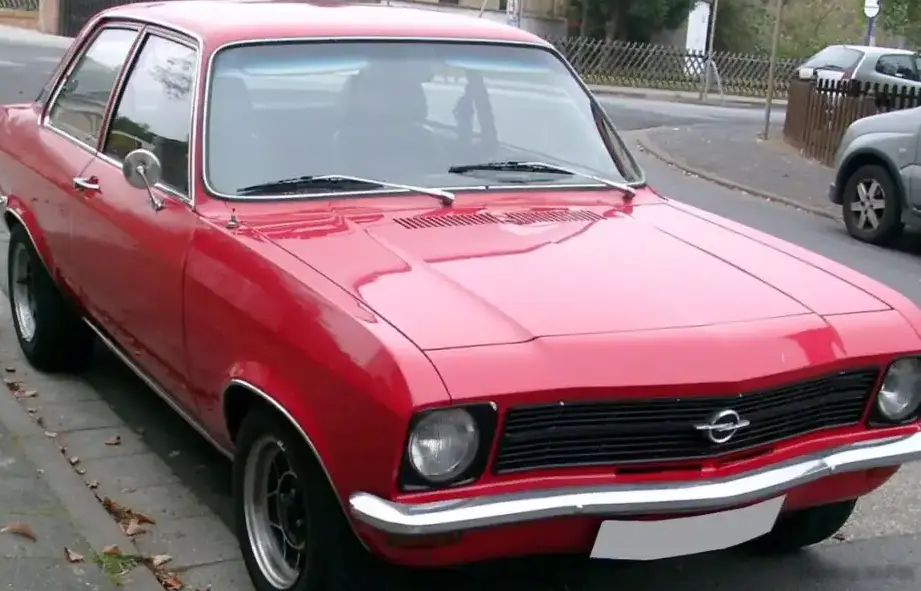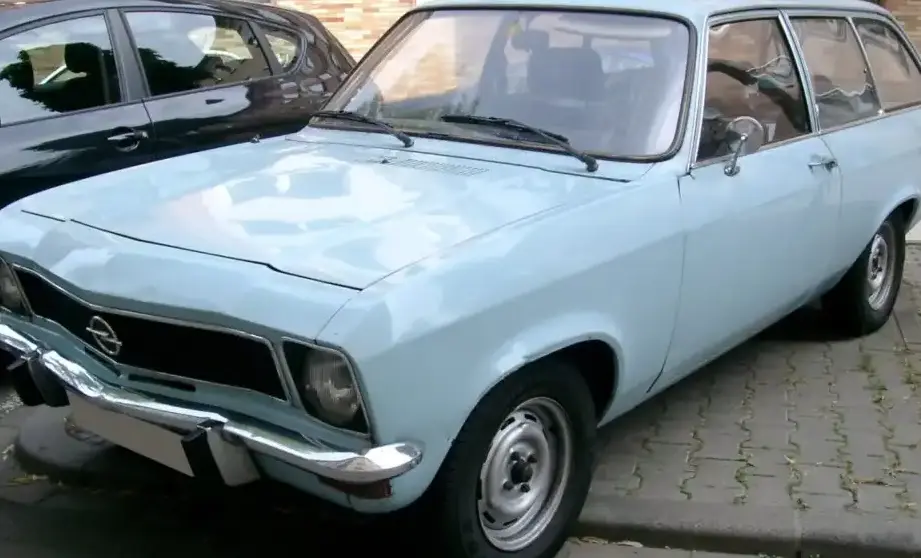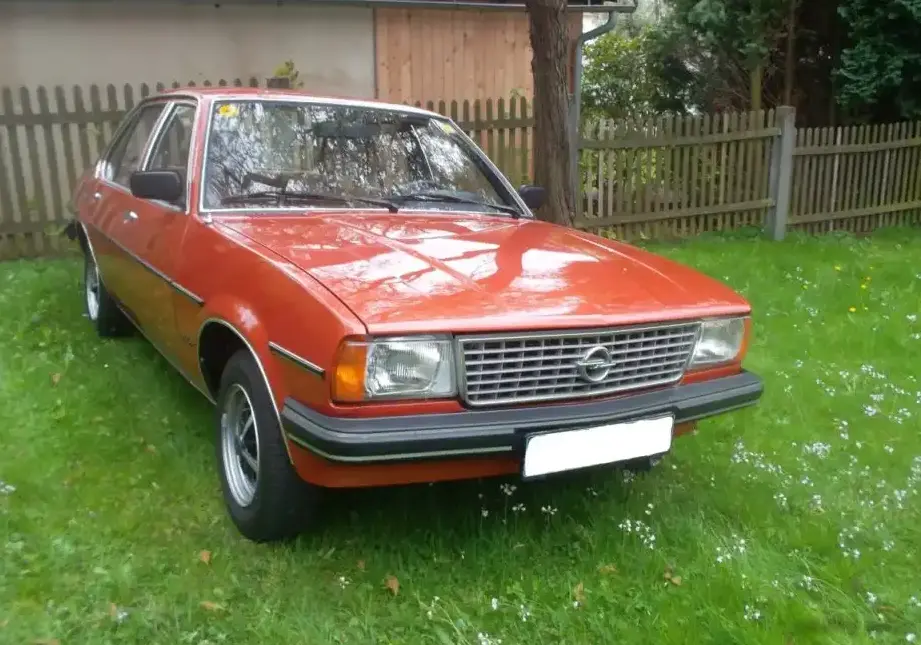
The Opel Ascona B 2.0 E, produced between 1979 and 1981, represented a significant step up in performance and refinement for Opel’s mid-size offering. Part of the Ascona B series, which underwent a facelift in 1979, the 2.0 E was positioned as a more sporting variant within the range, appealing to drivers seeking a blend of practicality and driving enjoyment. It sat above the base models with smaller engines and offered a more potent alternative to the fuel-injected versions of the 1.6-liter engine. The Ascona B, in general, was Opel’s response to increasing competition in the European market from vehicles like the Ford Taunus and Volkswagen Passat, aiming to provide a comfortable and reliable family car with a touch of style.
Technical Specifications
| Brand | Opel |
| Model | Ascona |
| Generation | Ascona B (facelift 1979) |
| Type (Engine) | 2.0 E (110 Hp) |
| Start of production | 1979 |
| End of production | 1981 |
| Powertrain Architecture | Internal Combustion engine |
| Body type | Sedan |
| Seats | 5 |
| Doors | 2-4 |
| Fuel Type | Petrol (Gasoline) |
| Acceleration 0 – 100 km/h | 10 sec |
| Acceleration 0 – 62 mph | 10 sec |
| Acceleration 0 – 60 mph | 9.5 sec |
| Maximum speed | 182 km/h (113.09 mph) |
| Weight-to-power ratio | 8.9 kg/Hp, 112.2 Hp/tonne |
| Weight-to-torque ratio | 6.2 kg/Nm, 162.2 Nm/tonne |
| Power | 110 Hp @ 5400 rpm |
| Power per litre | 55.6 Hp/l |
| Torque | 159 Nm @ 3400 rpm (117.27 lb.-ft. @ 3400 rpm) |
| Engine Model/Code | 20E |
| Engine displacement | 1979 cm3 (120.77 cu. in.) |
| Number of cylinders | 4 |
| Engine configuration | Inline |
| Cylinder Bore | 95 mm (3.74 in.) |
| Piston Stroke | 69.8 mm (2.75 in.) |
| Compression ratio | 9.4:1 |
| Number of valves per cylinder | 2 |
| Fuel injection system | Multi-port manifold injection |
| Engine aspiration | Naturally aspirated engine |
| Valvetrain | SOHC |
| Engine oil capacity | 3.8 l (4.02 US qt | 3.34 UK qt) |
| Coolant | 6.2 l (6.55 US qt | 5.46 UK qt) |
| Kerb Weight | 980 kg (2160.53 lbs.) |
| Max. weight | 1440 kg (3174.66 lbs.) |
| Max load | 460 kg (1014.13 lbs.) |
| Trunk (boot) space – minimum | 380 l (13.42 cu. ft.) |
| Fuel tank capacity | 50 l (13.21 US gal | 11 UK gal) |
| Permitted trailer load with brakes (12%) | 1300 kg (2866.01 lbs.) |
| Permitted trailer load without brakes | 500 kg (1102.31 lbs.) |
| Length | 4321 mm (170.12 in.) |
| Width | 1670 mm (65.75 in.) |
| Height | 1380 mm (54.33 in.) |
| Wheelbase | 2518 mm (99.13 in.) |
| Front track | 1380 mm (54.33 in.) |
| Rear (Back) track | 1375 mm (54.13 in.) |
| Drag coefficient (Cd) | 0.46 |
| Minimum turning circle (turning diameter) | 10.1 m (33.14 ft.) |
| Drivetrain Architecture | The Internal combustion engine (ICE) drives the rear wheels of the vehicle. |
| Drive wheel | Rear wheel drive |
| Number of gears and type of gearbox | 4 gears, manual transmission |
| Front brakes | Disc |
| Rear brakes | Drum |
| Tires size | 185/70 R13 |
| Wheel rims size | 13 |
Powertrain & Engine Architecture
The heart of the Ascona B 2.0 E was the 20E engine, a 1979cc inline-four cylinder unit. This engine featured a single overhead camshaft (SOHC) valvetrain operating two valves per cylinder. Crucially, it employed Bosch multi-port fuel injection, a significant upgrade over the carburetors found on earlier Ascona models. This system improved fuel efficiency and provided a more responsive throttle. The 20E produced 110 horsepower at 5400 rpm and 159 Nm (117.27 lb-ft) of torque at 3400 rpm. The engine’s design prioritized reliability and ease of maintenance, typical of Opel’s engineering philosophy at the time. The four-speed manual transmission was the standard offering, providing a direct connection to the rear wheels. The transmission was chosen for its durability and relatively simple construction.
Driving Characteristics
The Ascona B 2.0 E offered a noticeable improvement in performance over the lower-spec models. The 0-60 mph time of around 9.5 seconds, while not blistering by modern standards, was respectable for the late 1970s and early 1980s. The engine’s torque delivery made it reasonably flexible, allowing for comfortable cruising and effortless overtaking. The four-speed manual gearbox, while not offering the close ratios of some contemporary sports sedans, was well-matched to the engine’s characteristics. Compared to the 1.6-liter versions, the 2.0 E felt significantly more powerful, particularly at higher speeds. The rear-wheel-drive layout provided a balanced feel, although it lacked the handling precision of more modern front-wheel-drive cars.
Equipment & Trim Levels
The 2.0 E trim level generally included features such as upgraded cloth upholstery, a more comprehensive instrument cluster, and often, a vinyl roof. Optional extras included a sunroof, upgraded stereo systems, and power windows. The interior design was functional and relatively simple, reflecting the car’s focus on practicality. While not luxurious, the Ascona B 2.0 E offered a comfortable and well-equipped cabin for its price point. The dashboard layout was straightforward, with clearly marked gauges and easy-to-use controls.
Chassis & Braking
The Ascona B utilized a traditional body-on-frame construction, providing a robust and durable chassis. The suspension consisted of independent front suspension with MacPherson struts and a live axle with trailing arms at the rear. The 2.0 E typically featured disc brakes on the front wheels and drum brakes on the rear. While adequate for normal driving conditions, the braking system lacked the stopping power of more advanced setups. Stabilizer bars were fitted to both the front and rear axles to reduce body roll during cornering.
Market Reception & Comparison
The Ascona B 2.0 E was generally well-received by automotive critics as a competent and reliable family car. It was praised for its comfortable ride, spacious interior, and relatively strong performance. However, some critics noted that its styling was somewhat conservative compared to its rivals. Compared to the smaller-engined Ascona models, the 2.0 E offered a significant performance boost, but at a higher price. It also provided a more affordable alternative to larger, more expensive sedans like the Ford Taunus. Fuel economy was reasonable for the time, although not exceptional.
Legacy
The Opel Ascona B 2.0 E, while not a particularly rare or collectible car today, holds a place in automotive history as a representative of the late 1970s/early 1980s European family sedan. The 20E engine proved to be a durable and reliable unit, and many examples are still on the road today. In the used car market, the Ascona B 2.0 E is appreciated by enthusiasts for its classic styling, simple mechanics, and relatively affordable price. Parts availability can be a challenge, but a dedicated community of Opel enthusiasts helps to keep these cars running. The Ascona B, and the 2.0 E variant specifically, represents a solid and dependable vehicle from a pivotal era in European automotive design.