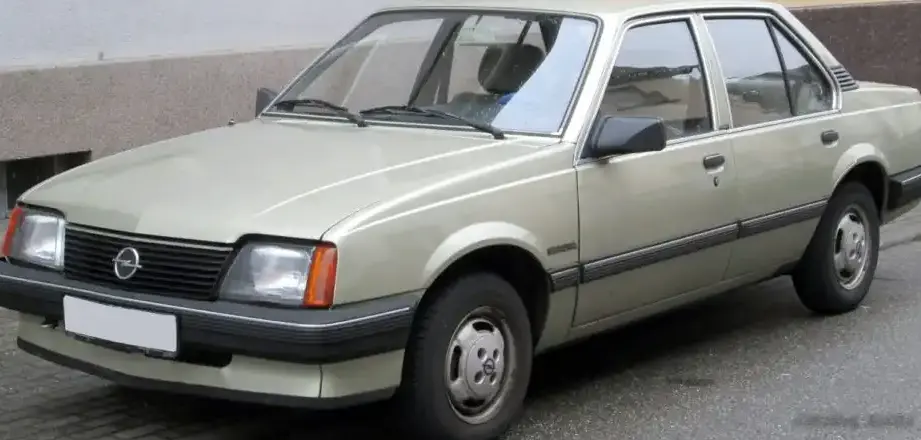
The Opel Ascona C 1.3 N, producing 60 horsepower, was a mainstay of the Ascona C range from 1981 to 1986. Positioned as the entry-level model, it offered affordable transportation within the compact family car segment in Europe. The Ascona C, built on the GM T-platform (internally designated as the 1HX0/A3), represented a significant update to the Ascona line, offering improved styling, comfort, and efficiency compared to its predecessor. This 1.3 N variant was particularly popular in markets where fuel economy and purchase price were primary concerns.
Technical Specifications
| Brand | Opel |
| Model | Ascona |
| Generation | Ascona C |
| Type (Engine) | 1.3 N (60 Hp) |
| Start of production | 1981 |
| End of production | 1986 |
| Powertrain Architecture | Internal Combustion engine |
| Body type | Sedan |
| Seats | 5 |
| Doors | 4 |
| Fuel Type | Petrol (Gasoline) |
| Acceleration 0 – 100 km/h | 17.5 sec |
| Acceleration 0 – 62 mph | 17.5 sec |
| Acceleration 0 – 60 mph | 16.6 sec |
| Maximum speed | 150 km/h (93.21 mph) |
| Weight-to-power ratio | 15.3 kg/Hp, 65.2 Hp/tonne |
| Weight-to-torque ratio | 9.8 kg/Nm, 102.2 Nm/tonne |
| Power | 60 Hp @ 5800 rpm |
| Power per litre | 46.3 Hp/l |
| Torque | 94 Nm @ 3400-3800 rpm (69.33 lb.-ft. @ 3400-3800 rpm) |
| Engine Model/Code | 13N, 13NB |
| Engine displacement | 1297 cm3 (79.15 cu. in.) |
| Number of cylinders | 4 |
| Engine configuration | Inline |
| Cylinder Bore | 75 mm (2.95 in.) |
| Piston Stroke | 73.4 mm (2.89 in.) |
| Compression ratio | 8.2:1 |
| Number of valves per cylinder | 2 |
| Fuel injection system | Carburettor |
| Engine aspiration | Naturally aspirated engine |
| Valvetrain | SOHC |
| Engine oil capacity | 3 l (3.17 US qt | 2.64 UK qt) |
| Coolant | 6.3 l (6.66 US qt | 5.54 UK qt) |
| Kerb Weight | 920 kg (2028.25 lbs) |
| Max. weight | 1420 kg (3130.56 lbs) |
| Max load | 500 kg (1102.31 lbs) |
| Trunk (boot) space – maximum | 510 l (18.01 cu. ft.) |
| Fuel tank capacity | 61 l (16.11 US gal | 13.42 UK gal) |
| Length | 4366 mm (171.89 in.) |
| Width | 1668 mm (65.67 in.) |
| Height | 1395 mm (54.92 in.) |
| Wheelbase | 2574 mm (101.34 in.) |
| Front track | 1400 mm (55.12 in.) |
| Rear (Back) track | 1406 mm (55.35 in.) |
| Ride height (ground clearance) | 148 mm (5.83 in.) |
| Drag coefficient (Cd) | 0.39 |
| Minimum turning circle (turning diameter) | 10.95 m (35.93 ft.) |
| Drivetrain Architecture | The Internal combustion engine (ICE) drives the front wheels of the vehicle. |
| Drive wheel | Front wheel drive |
| Number of gears and type of gearbox | 4 gears, manual transmission |
| Front brakes | Disc |
| Rear brakes | Drum |
Powertrain & Engine Architecture
The heart of the Ascona C 1.3 N was the 13N (and later 13NB) inline-four cylinder engine. This engine, displacing 1297 cc, was a relatively simple design featuring a single overhead camshaft (SOHC) and two valves per cylinder. Fuel delivery was handled by a carburetor, a common feature for vehicles of this era and price point. The 13N engine was known for its durability, but its performance was modest. The 13NB variant introduced minor refinements to improve emissions and fuel efficiency. The engine was paired with a four-speed manual transmission, which was the standard offering for this trim level. While an automatic transmission was available on higher-spec Ascona C models, it was not offered with the 1.3 N engine.
Driving Characteristics
The 1.3 N Ascona C offered a utilitarian driving experience. With only 60 horsepower on tap, acceleration was slow, taking approximately 17.5 seconds to reach 62 mph. The four-speed manual transmission required frequent shifting to maintain momentum, especially when tackling hills or overtaking. However, the engine proved to be reasonably torquey at lower RPMs, making it suitable for everyday driving. The front-wheel-drive layout provided predictable handling, although it lacked the dynamic finesse of rear-wheel-drive competitors. Compared to the more powerful Ascona models, such as the 1.6 or 2.0-liter variants, the 1.3 N felt significantly underpowered. The manual transmission, while basic, offered a more engaging driving experience than the optional automatic found on other trims.
Equipment & Trim Levels
The Ascona C 1.3 N was typically equipped with basic amenities. Standard features included cloth upholstery, a simple dashboard layout, and manual windows and door locks. The interior was functional rather than luxurious, reflecting the car’s affordable positioning. Optional extras included a radio, upgraded seat fabrics, and a sunroof. The trim level was generally consistent across the 1.3 N models, with limited opportunities for customization. The focus was on providing a practical and reliable vehicle at a competitive price.
Chassis & Braking
The Ascona C featured a MacPherson strut front suspension and a rigid axle rear suspension. The 1.3 N variant typically used smaller diameter tires and narrower wheels compared to higher-spec models. Braking was accomplished via disc brakes on the front wheels and drum brakes on the rear. The braking system was adequate for the car’s weight and performance, but it lacked the stopping power of more advanced systems found on contemporary vehicles. A stabilizer bar was included at the front to reduce body roll during cornering.
Market Reception & Comparison
The Ascona C 1.3 N was well-received in markets where affordability and fuel economy were paramount. Critics acknowledged its practicality and reliability, but often noted its lack of performance. Compared to other entry-level cars in its class, such as the Ford Escort and Volkswagen Golf, the Ascona C 1.3 N offered a competitive price point and a spacious interior. However, it lagged behind in terms of driving dynamics and refinement. Fuel economy was a strong point, making it an attractive option for budget-conscious buyers. The 1.6 and 2.0-liter Ascona models offered significantly more performance, but at a higher cost.
Legacy
The Opel Ascona C 1.3 N, while not a performance icon, remains a fondly remembered vehicle for many European drivers. The 13N engine proved to be remarkably durable, and many examples are still on the road today. In the used car market, the 1.3 N is often sought after by enthusiasts looking for a simple, reliable, and affordable classic car. Maintenance is relatively straightforward due to the engine’s uncomplicated design. However, finding replacement parts can sometimes be challenging. The Ascona C 1.3 N represents a significant chapter in Opel’s history, embodying the brand’s commitment to providing practical and affordable transportation to the masses.