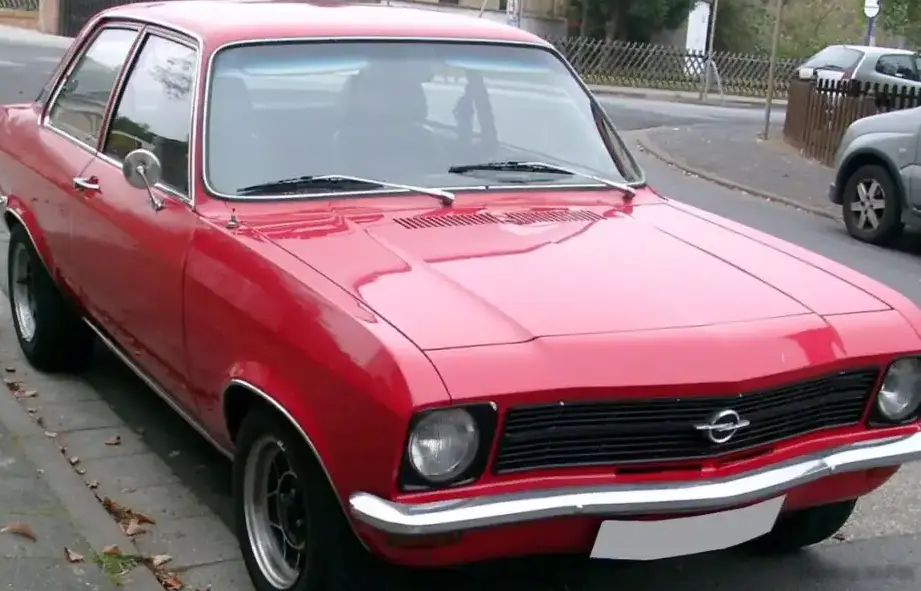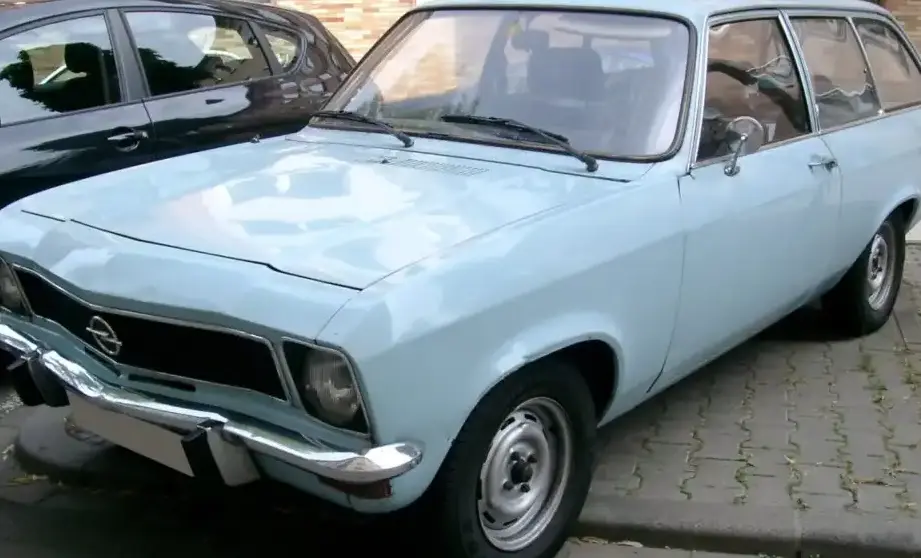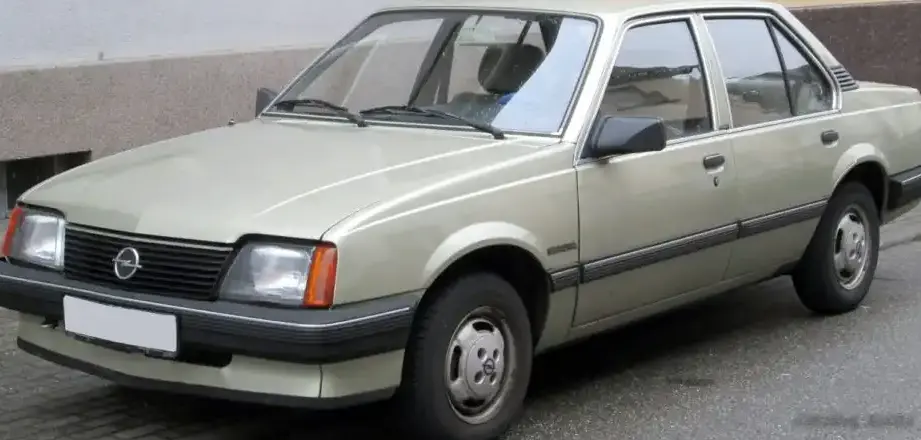
The Opel Ascona C 1.6i CAT, produced from 1987 to 1988, represented a mid-cycle refinement of the Ascona C range. Positioned as an entry-level to mid-range offering, this variant aimed to provide economical transportation with a degree of refinement. It was part of the larger Ascona C generation (1981-1988), a popular choice in the European market as a practical and relatively affordable family sedan. The “CAT” designation indicates the inclusion of a catalytic converter, reflecting increasing environmental regulations at the time. This model served as a bridge between the more basic Ascona models and the higher-performance variants, offering a balance of fuel efficiency and acceptable performance for everyday driving.
Technical Specifications
| Brand | Opel |
| Model | Ascona |
| Generation | Ascona C |
| Type (Engine) | 1.6i CAT (75 Hp) |
| Start of production | 1987 |
| End of production | 1988 |
| Powertrain Architecture | Internal Combustion engine |
| Body type | Sedan |
| Seats | 5 |
| Doors | 4 |
| Fuel Type | Petrol (Gasoline) |
| Acceleration 0 – 100 km/h | 14.5 sec |
| Acceleration 0 – 62 mph | 14.5 sec |
| Acceleration 0 – 60 mph | 13.8 sec |
| Maximum speed | 160 km/h (99.42 mph) |
| Weight-to-power ratio | 12.8 kg/Hp, 78.1 Hp/tonne |
| Weight-to-torque ratio | 7.8 kg/Nm, 128.1 Nm/tonne |
| Power | 75 Hp @ 5600 rpm |
| Power per litre | 46.9 Hp/l |
| Torque | 123 Nm @ 3000-3400 rpm (90.72 lb.-ft. @ 3000-3400 rpm) |
| Engine Model/Code | C16LZ |
| Engine displacement | 1598 cm3 (97.52 cu. in.) |
| Number of cylinders | 4 |
| Engine configuration | Inline |
| Cylinder Bore | 80 mm (3.15 in.) |
| Piston Stroke | 79.5 mm (3.13 in.) |
| Compression ratio | 9.2:1 |
| Number of valves per cylinder | 2 |
| Fuel injection system | Carburettor |
| Engine aspiration | Naturally aspirated engine |
| Valvetrain | SOHC |
| Engine oil capacity | 3.5 l (3.7 US qt | 3.08 UK qt) |
| Coolant | 7.7 l (8.14 US qt | 6.78 UK qt) |
| Kerb Weight | 960 kg (2116.44 lbs.) |
| Max. weight | 1460 kg (3218.75 lbs.) |
| Max load | 500 kg (1102.31 lbs.) |
| Trunk (boot) space – maximum | 510 l (18.01 cu. ft.) |
| Fuel tank capacity | 61 l (16.11 US gal | 13.42 UK gal) |
| Length | 4366 mm (171.89 in.) |
| Width | 1668 mm (65.67 in.) |
| Height | 1395 mm (54.92 in.) |
| Wheelbase | 2574 mm (101.34 in.) |
| Front track | 1400 mm (55.12 in.) |
| Rear (Back) track | 1406 mm (55.35 in.) |
| Ride height (ground clearance) | 148 mm (5.83 in.) |
| Drag coefficient (Cd) | 0.39 |
| Minimum turning circle (turning diameter) | 10.95 m (35.93 ft.) |
| Drivetrain Architecture | The Internal combustion engine (ICE) drives the front wheels of the vehicle. |
| Drive wheel | Front wheel drive |
| Number of gears and type of gearbox | 4 gears, manual transmission |
| Front brakes | Disc |
| Rear brakes | Drum |
Powertrain & Engine Architecture
The heart of the Ascona C 1.6i CAT is the C16LZ engine, a 1.6-liter inline-four cylinder unit. This engine utilized a single overhead camshaft (SOHC) valvetrain with two valves per cylinder. Unlike later fuel-injected Opel engines, the C16LZ employed a carburetor for fuel delivery, a cost-saving measure for the entry-level models. The catalytic converter, denoted by the “CAT” in the model name, was a crucial addition to reduce harmful emissions, complying with increasingly stringent European regulations. The engine produced 75 horsepower at 5600 rpm and 123 Nm (90.72 lb-ft) of torque between 3000 and 3400 rpm. The four-speed manual transmission was standard, providing relatively simple and reliable gear changes. The engine’s design prioritized durability and ease of maintenance over outright performance.
Driving Characteristics
The 1.6i CAT offered modest performance. Acceleration from 0 to 100 km/h (0-62 mph) took approximately 14.5 seconds, and top speed was limited to 160 km/h (99 mph). Compared to the more powerful Ascona variants, such as the 1.8 or 2.0-liter models, the 1.6i CAT felt noticeably slower, particularly when fully loaded or tackling inclines. The carburetor contributed to a slightly less responsive throttle compared to fuel-injected engines. However, the four-speed gearbox was well-matched to the engine’s torque curve, providing adequate usability for everyday driving. The focus was on fuel economy and smooth, predictable power delivery rather than sporty acceleration.
Equipment & Trim Levels
The Ascona C 1.6i CAT typically came with a fairly basic level of equipment. Standard features included cloth upholstery, a simple dashboard layout, and manual windows and door locks. Power steering was often an optional extra, as was a sunroof. The interior was functional and durable, prioritizing practicality over luxury. Higher trim levels within the Ascona C range offered upgrades such as upgraded upholstery, central locking, and more sophisticated instrumentation, but the 1.6i CAT remained the most affordable entry point into the model line.
Chassis & Braking
The Ascona C featured a conventional front-engine, front-wheel-drive layout. The suspension consisted of MacPherson struts at the front and a twist-beam axle at the rear. Braking was handled by disc brakes on the front wheels and drum brakes on the rear. This configuration was typical for cars in this class during the 1980s. The suspension provided a comfortable ride, although it wasn’t particularly sporty. The drum brakes on the rear were adequate for normal driving conditions but lacked the stopping power of disc brakes, especially under heavy braking.
Market Reception & Comparison
The Ascona C 1.6i CAT was generally well-received as a practical and affordable family car. Critics acknowledged its fuel efficiency and reliability, but noted its lack of performance compared to more powerful alternatives. Compared to the Ascona 1.8 or 2.0-liter models, the 1.6i CAT offered significantly lower running costs but at the expense of driving enjoyment. The 1.6i CAT also competed with other mainstream European sedans like the Ford Sierra and Volkswagen Jetta, offering a similar blend of practicality and affordability. Its inclusion of a catalytic converter was a selling point for environmentally conscious buyers.
Legacy
The Opel Ascona C 1.6i CAT, while not a particularly exciting model, proved to be a durable and reliable car. The C16LZ engine, despite its carburetor-based fuel system, was known for its longevity. Today, these cars are relatively rare, but well-maintained examples are sought after by classic car enthusiasts. The 1.6i CAT represents a snapshot of 1980s automotive engineering, prioritizing practicality, affordability, and increasingly, environmental responsibility. Parts availability can be a challenge, but the relatively simple mechanical design makes it a viable project for home mechanics. Its enduring appeal lies in its honest simplicity and its role as a representative of a bygone era of European motoring.