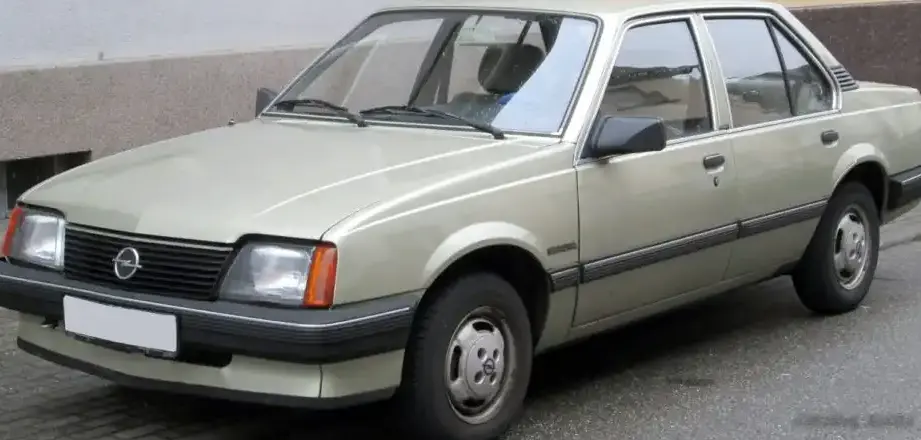
The Opel Ascona C 1.6i CAT Automatic, produced between 1986 and 1988, represented a mid-range offering within the Ascona C lineup. Positioned as a comfortable and economical choice, it catered to buyers prioritizing ease of driving over outright performance. The Ascona C, launched in 1985, was Opel’s replacement for the Ascona B, aiming to modernize the brand’s mid-size offering and compete with rivals like the Ford Mondeo (in later years) and Volkswagen Passat. This particular variant, with its catalytic converter (“CAT”) and automatic transmission, was primarily sold in European markets, where fuel efficiency and emissions regulations were becoming increasingly important. It was built on the GM T-platform, shared with other models like the Vauxhall Cavalier.
Technical Specifications
| Brand | Opel |
| Model | Ascona |
| Generation | Ascona C |
| Type | 1.6i CAT (75 Hp) Automatic |
| Start of production | 1986 |
| End of production | 1988 |
| Powertrain Architecture | Internal Combustion engine |
| Body type | Sedan |
| Seats | 5 |
| Doors | 4 |
| Fuel Type | Petrol (Gasoline) |
| Acceleration 0 – 100 km/h | 13.5 sec |
| Acceleration 0 – 62 mph | 13.5 sec |
| Acceleration 0 – 60 mph | 12.8 sec |
| Maximum speed | 177 km/h (109.98 mph) |
| Weight-to-power ratio | 14.6 kg/Hp, 68.5 Hp/tonne |
| Weight-to-torque ratio | 7.8 kg/Nm, 127.9 Nm/tonne |
| Power | 75 Hp @ 5800 rpm |
| Power per litre | 41.8 Hp/l |
| Torque | 140 Nm @ 3000 rpm (103.26 lb.-ft. @ 3000 rpm) |
| Engine Model/Code | C16LZ |
| Engine displacement | 1796 cm3 (109.6 cu. in.) |
| Number of cylinders | 4 |
| Engine configuration | Inline |
| Cylinder Bore | 84.8 mm (3.34 in.) |
| Piston Stroke | 79.5 mm (3.13 in.) |
| Compression ratio | 8.9:1 |
| Number of valves per cylinder | 2 |
| Fuel injection system | Multi-port manifold injection |
| Engine aspiration | Naturally aspirated |
| Engine oil capacity | 3.5 l (3.7 US qt | 3.08 UK qt) |
| Coolant capacity | 7.7 l (8.14 US qt | 6.78 UK qt) |
| Kerb Weight | 1095 kg (2414.06 lbs.) |
| Max. weight | 1545 kg (3406.14 lbs.) |
| Max load | 450 kg (992.08 lbs.) |
| Trunk (boot) space – maximum | 510 l (18.01 cu. ft.) |
| Fuel tank capacity | 61 l (16.11 US gal | 13.42 UK gal) |
| Length | 4366 mm (171.89 in.) |
| Width | 1668 mm (65.67 in.) |
| Height | 1395 mm (54.92 in.) |
| Wheelbase | 2574 mm (101.34 in.) |
| Front track | 1406 mm (55.35 in.) |
| Rear track | 1406 mm (55.35 in.) |
| Ride height (ground clearance) | 148 mm (5.83 in.) |
| Drag coefficient (Cd) | 0.39 |
| Minimum turning circle | 10.95 m (35.93 ft.) |
| Drivetrain Architecture | Front wheel drive |
| Number of gears | 3 |
| Gearbox type | Automatic |
| Front brakes | Disc |
| Rear brakes | Drum |
Powertrain & Engine Architecture
The heart of the Ascona C 1.6i CAT Automatic was the C16LZ engine, a 1.8-liter (1796 cc) inline-four cylinder unit. This engine featured multi-port fuel injection, a significant upgrade from the carbureted engines found in earlier Ascona models. The engine utilized a two-valve per cylinder configuration, and a relatively modest compression ratio of 8.9:1. The catalytic converter was a key feature, designed to reduce harmful emissions and meet increasingly stringent European regulations. The three-speed automatic transmission, while providing convenience, was a relatively simple unit, prioritizing smooth operation over rapid gear changes. It was not known for being particularly advanced, but it was reliable and well-suited to the engine’s power output.
Driving Characteristics
The 1.6i CAT Automatic offered a comfortable, if not particularly exciting, driving experience. With 75 horsepower and 103 lb-ft of torque, acceleration was leisurely. The 0-60 mph time of around 12.8 seconds reflects this. The automatic transmission, while smooth, contributed to a noticeable loss of power compared to the available five-speed manual version. Gear ratios were optimized for fuel economy and relaxed cruising rather than spirited driving. The car felt most at home on the highway, where its comfortable ride and adequate power made for a pleasant journey. Compared to the more powerful 1.8 and 2.0-liter versions, the 1.6i Automatic was noticeably slower, but it offered a more refined and less demanding driving experience.
Equipment & Trim Levels
The 1.6i CAT Automatic typically came with a reasonable level of standard equipment. This included power steering, central locking, and cloth upholstery. Optional extras included a sunroof, upgraded stereo system, and alloy wheels. Interior trim was generally functional and durable, with a focus on practicality rather than luxury. The dashboard layout was typical of the era, with clearly labeled controls and a straightforward instrument cluster. The trim level sat in the middle of the Ascona C range, offering a step up from the base models but lacking the premium features found in the higher-spec versions.
Chassis & Braking
The Ascona C featured a MacPherson strut front suspension and a twist-beam rear axle. The suspension was tuned for comfort, providing a relatively smooth ride over uneven surfaces. Braking was handled by disc brakes at the front and drum brakes at the rear. While adequate for normal driving, the braking system lacked the stopping power of more modern cars. Stabilizer bars were fitted to both the front and rear axles to reduce body roll during cornering. The chassis was relatively lightweight, contributing to the car’s decent fuel economy.
Market Reception & Comparison
The Ascona C 1.6i CAT Automatic was generally well-received by critics as a practical and reliable family car. However, its performance was often criticized as being underwhelming, particularly when compared to the more powerful versions. Fuel economy was a strong point, and the automatic transmission was appreciated by drivers who preferred convenience over sporty handling. Compared to the manual transmission version, the automatic offered slightly worse fuel economy and slower acceleration. The 1.8 and 2.0-liter models provided a more engaging driving experience, but at the cost of increased fuel consumption and a higher price tag.
Legacy
The Opel Ascona C 1.6i CAT Automatic, while not a particularly iconic model, remains a reasonably popular classic car today. The C16LZ engine is known for its reliability, and the automatic transmission, while simple, is generally durable. Parts availability is generally good, although some trim-specific components can be difficult to find. These cars are often sought after by enthusiasts looking for a classic European sedan that is easy to maintain and relatively affordable to run. The Ascona C, in general, represents a significant step forward in Opel’s design and engineering, and the 1.6i CAT Automatic offers a comfortable and practical entry point into the world of classic Opel ownership.