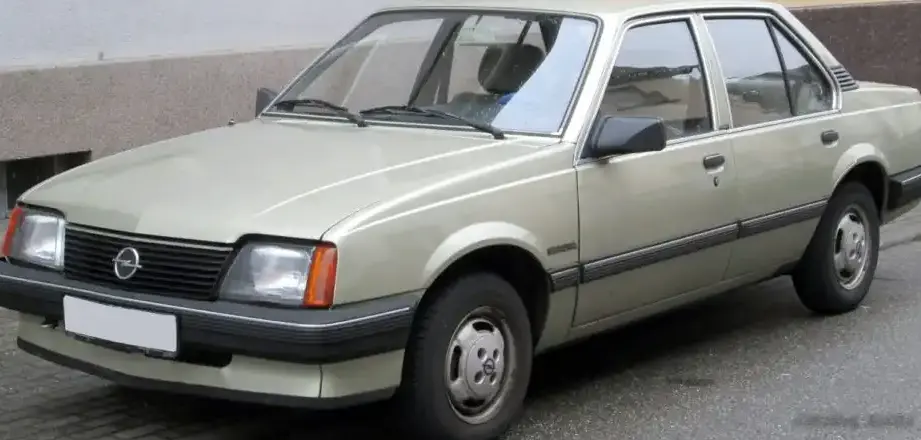
The Opel Ascona C 2.0i, produced between 1987 and 1988, represented a refinement of Opel’s mid-size offering. Positioned as a step up from the more economical Ascona models, the 2.0i aimed to provide a balance of performance and comfort for the European driver. It was part of the Ascona C generation (1981-1988), which itself was a significant update to the popular Ascona B series. The Ascona C, and by extension the 2.0i variant, played a crucial role in Opel’s lineup as a practical, family-oriented sedan competing with vehicles like the Ford Taunus and Volkswagen Passat.
Technical Specifications
| Brand | Opel |
| Model | Ascona |
| Generation | Ascona C |
| Type (Engine) | 2.0i (100 Hp) |
| Start of production | 1987 |
| End of production | 1988 |
| Powertrain Architecture | Internal Combustion engine |
| Body type | Sedan |
| Seats | 5 |
| Doors | 4 |
| Fuel Type | Petrol (Gasoline) |
| Power | 100 Hp @ 5400 rpm |
| Power per litre | 50.5 Hp/l |
| Torque | 170 Nm @ 3000 rpm / 125.39 lb.-ft. @ 3000 rpm |
| Engine Model/Code | C20NEF |
| Engine displacement | 1979 cm3 / 120.77 cu. in. |
| Number of cylinders | 4 |
| Engine configuration | Inline |
| Cylinder Bore | 95 mm / 3.74 in. |
| Piston Stroke | 69.8 mm / 2.75 in. |
| Compression ratio | 9:1 |
| Engine aspiration | Naturally aspirated engine |
| Engine oil capacity | 3 l / 3.17 US qt | 2.64 UK qt |
| Coolant | 7.5 l / 7.93 US qt | 6.6 UK qt |
| Trunk (boot) space – maximum | 510 l / 18.01 cu. ft. |
| Fuel tank capacity | 61 l / 16.11 US gal | 13.42 UK gal |
| Length | 4366 mm / 171.89 in. |
| Width | 1668 mm / 65.67 in. |
| Height | 1395 mm / 54.92 in. |
| Wheelbase | 2574 mm / 101.34 in. |
| Front track | 1400 mm / 55.12 in. |
| Rear (Back) track | 1406 mm / 55.35 in. |
| Ride height (ground clearance) | 130 mm / 5.12 in. |
| Minimum turning circle (turning diameter) | 10.95 m / 35.93 ft. |
| Drivetrain Architecture | The Internal combustion engine (ICE) drives the front wheels of the vehicle. |
| Drive wheel | Front wheel drive |
| Number of gears and type of gearbox | 5 gears, manual transmission |
Powertrain & Engine Architecture
The heart of the Ascona C 2.0i was the C20NEF engine, a 1.979-liter inline-four cylinder gasoline engine. This engine was a development of Opel’s earlier ‘E’ series engines, known for their relative durability and straightforward design. The C20NEF featured a single overhead camshaft (SOHC) valvetrain operating two valves per cylinder. Fuel delivery was managed by Bosch Motronic fuel injection, a system that provided improved efficiency and responsiveness compared to earlier carbureted Opel engines. The Motronic system controlled both fuel injection and ignition timing. The engine’s 9:1 compression ratio was a compromise between performance and the fuel quality available in European markets at the time. While a four-speed automatic transmission was offered on some Ascona C models, the 2.0i was primarily equipped with a five-speed manual gearbox, contributing to its more engaging driving experience.
Driving Characteristics
The 100 horsepower output of the 2.0i engine, while not exceptionally high, provided adequate performance for the Ascona C. Acceleration from 0 to 60 mph was typically in the 10-11 second range. The five-speed manual transmission allowed drivers to keep the engine in its optimal power band, resulting in reasonably brisk performance. The gear ratios were spaced to provide a balance between acceleration and cruising efficiency. Compared to the lower-powered 1.6-liter Ascona models, the 2.0i offered noticeably more torque, making it more comfortable for highway driving and overtaking. The handling was typical of front-wheel-drive sedans of the era – safe and predictable, but not particularly sporty. The steering was relatively light, making it easy to maneuver in urban environments.
Equipment & Trim Levels
The Ascona C 2.0i generally occupied a mid-range position within the Ascona lineup. Standard equipment typically included cloth upholstery, a basic stereo system, and power-assisted steering. Higher trim levels, often denoted by suffixes like ‘GL’ or ‘SR’, added features such as central locking, electric windows, a sunroof, and upgraded interior trim. Optional extras included alloy wheels, a more sophisticated stereo system, and metallic paint finishes. The interior design was functional and straightforward, prioritizing practicality over luxury. Dashboard layout was typical of the early 1980s, with clearly labeled gauges and controls.
Chassis & Braking
The Ascona C utilized a MacPherson strut front suspension and a torsion beam rear suspension. This setup provided a reasonable compromise between ride comfort and handling. The front suspension incorporated anti-roll bar to reduce body roll during cornering. Braking was typically accomplished with disc brakes on the front wheels and drum brakes on the rear. The braking system was adequate for the vehicle’s weight and performance, but lacked the stopping power of more modern systems. Steering was rack and pinion, providing precise control.
Market Reception & Comparison
The Ascona C 2.0i was generally well-received by automotive critics as a practical and reliable family sedan. It was praised for its comfortable ride, spacious interior, and fuel efficiency. However, some critics noted that its styling was somewhat conservative and that its handling was not as engaging as some of its competitors. Compared to the 1.6-liter Ascona models, the 2.0i offered a significant performance upgrade, but at a higher price point. The 2.0i also offered better fuel economy than the larger-displacement engines available in the Ascona range. Reliability was generally good, with the C20NEF engine proving to be a durable unit.
Legacy
The Opel Ascona C 2.0i, while not a particularly rare or collectible vehicle today, remains a popular choice among classic car enthusiasts. The C20NEF engine is known for its robustness and relative ease of maintenance. Parts availability is generally good, although some trim-specific components can be difficult to find. Well-maintained examples of the Ascona C 2.0i can still provide reliable and enjoyable transportation. The Ascona C, and the 2.0i variant in particular, represents a significant chapter in Opel’s history, showcasing the company’s commitment to building practical and affordable vehicles for the European market. The car’s simple design and durable components contribute to its continued presence on roads and in the hands of enthusiasts today.