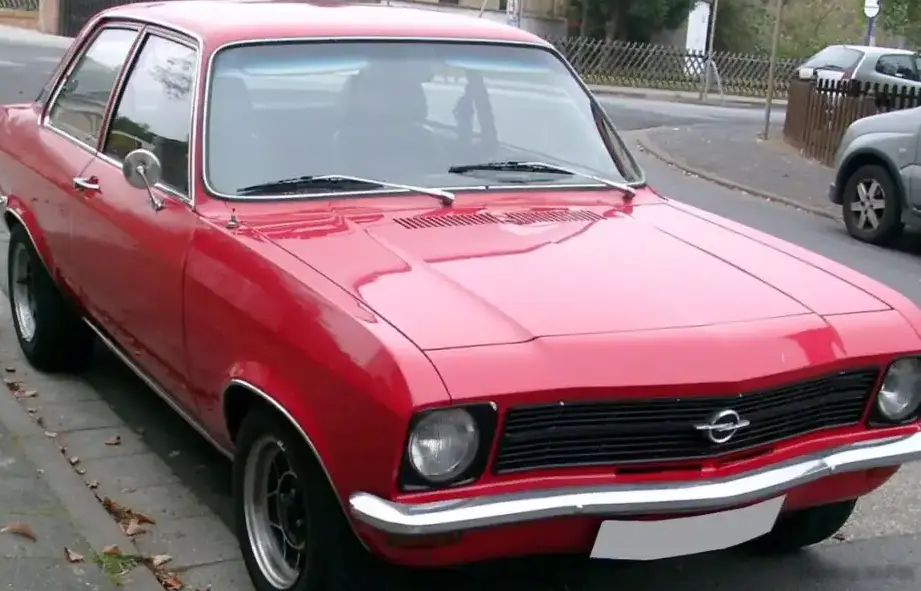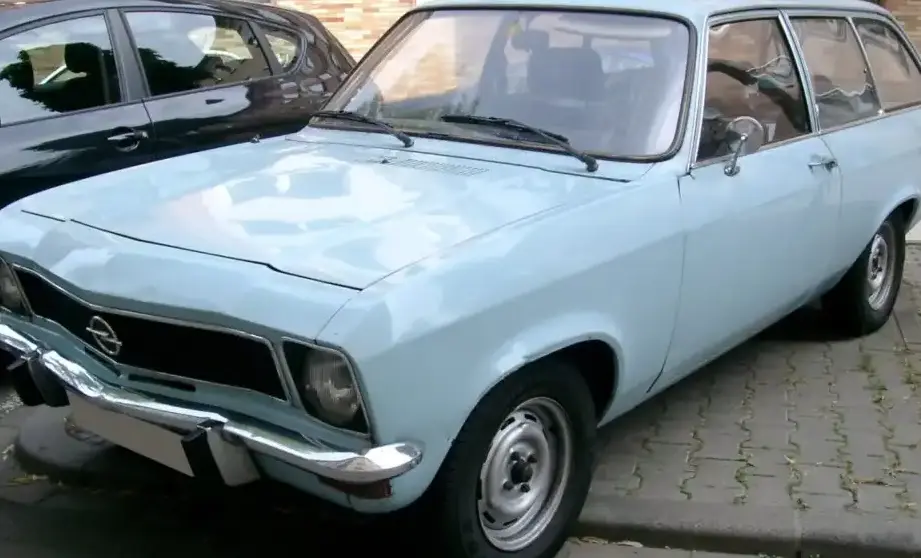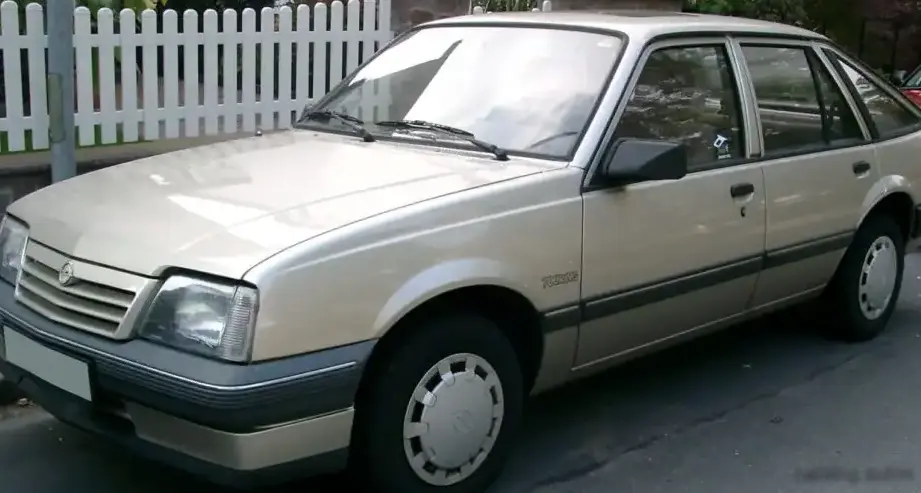
The Opel Ascona C CC 1.6, produced between 1981 and 1988, represented a key offering in Opel’s mid-size lineup. Positioned as an entry-level variant within the Ascona C range, it provided affordable family transportation with a focus on practicality and fuel economy. The “CC” designation signified the Coupé Caravan body style – a five-door hatchback – which was becoming increasingly popular in Europe during this period. This model was a direct successor to the Ascona B and paved the way for the later Vectra. It was primarily sold in European markets, competing with vehicles like the Ford Taunus, Volkswagen Passat, and Fiat Croma.
Technical Specifications
| Brand | Opel |
| Model | Ascona |
| Generation | Ascona C CC |
| Type (Engine) | 1.6 (75 Hp) |
| Start of production | 1981 |
| End of production | 1988 |
| Powertrain Architecture | Internal Combustion engine |
| Body type | Hatchback |
| Seats | 5 |
| Doors | 5 |
| Fuel Type | Petrol (Gasoline) |
| Acceleration 0 – 100 km/h | 14.5 sec |
| Acceleration 0 – 62 mph | 14.5 sec |
| Acceleration 0 – 60 mph | 13.8 sec |
| Maximum speed | 160 km/h (99.42 mph) |
| Weight-to-power ratio | 13.4 kg/Hp, 74.6 Hp/tonne |
| Weight-to-torque ratio | 8.2 kg/Nm, 122.4 Nm/tonne |
| Power | 75 Hp @ 5600 rpm |
| Power per litre | 46.9 Hp/l |
| Torque | 123 Nm @ 3000-3400 rpm (90.72 lb.-ft. @ 3000-3400 rpm) |
| Engine Model/Code | 16N |
| Engine displacement | 1598 cm3 (97.52 cu. in.) |
| Number of cylinders | 4 |
| Engine configuration | Inline |
| Cylinder Bore | 80 mm (3.15 in.) |
| Piston Stroke | 79.5 mm (3.13 in.) |
| Compression ratio | 9.2:1 |
| Number of valves per cylinder | 2 |
| Fuel injection system | Carburettor |
| Engine aspiration | Naturally aspirated engine |
| Valvetrain | SOHC |
| Engine oil capacity | 3.5 l (3.7 US qt | 3.08 UK qt) |
| Coolant | 7.9 l (8.35 US qt | 6.95 UK qt) |
| Kerb Weight | 1005 kg (2215.65 lbs.) |
| Max. weight | 1510 kg (3328.98 lbs.) |
| Max load | 505 kg (1113.33 lbs.) |
| Trunk (boot) space – minimum | 445 l (15.72 cu. ft.) |
| Trunk (boot) space – maximum | 1215 l (42.91 cu. ft.) |
| Fuel tank capacity | 61 l (16.11 US gal | 13.42 UK gal) |
| Length | 4264 mm (167.87 in.) |
| Width | 1668 mm (65.67 in.) |
| Height | 1385 mm (54.53 in.) |
| Wheelbase | 2574 mm (101.34 in.) |
| Front track | 1400 mm (55.12 in.) |
| Rear (Back) track | 1406 mm (55.35 in.) |
| Ride height (ground clearance) | 145 mm (5.71 in.) |
| Drag coefficient (Cd) | 0.38 |
| Minimum turning circle (turning diameter) | 10.95 m (35.93 ft.) |
| Drivetrain Architecture | The Internal combustion engine (ICE) drives the front wheels of the vehicle. |
| Drive wheel | Front wheel drive |
| Number of gears and type of gearbox | 4 gears, manual transmission |
| Front brakes | Disc |
| Rear brakes | Drum |
Powertrain & Engine Architecture
The Ascona C CC 1.6 was powered by the Opel 16N engine, a 1.6-liter inline-four cylinder unit. This engine utilized a single overhead camshaft (SOHC) valvetrain with two valves per cylinder. Fuel delivery was managed by a carburetor, a common feature for vehicles of this era, offering simplicity and relatively low cost. The 16N engine was known for its durability, but its carbureted fuel system meant it wasn’t as efficient or responsive as later fuel-injected engines. The engine produced 75 horsepower at 5600 rpm and 123 Nm (90.72 lb-ft) of torque between 3000 and 3400 rpm. The engine was mated to a four-speed manual transmission, which was the standard offering for this variant. While an automatic transmission was available on higher-spec Ascona models, it wasn’t typically paired with the 1.6-liter engine due to the performance limitations.
Driving Characteristics
The 1.6-liter Ascona C CC offered modest performance. Acceleration from 0 to 60 mph took approximately 13.8 seconds, and the top speed was around 99 mph. The four-speed manual transmission provided adequate control, but the engine lacked the low-end torque found in larger displacement Ascona models. Drivers often needed to downshift to maintain momentum when climbing hills or overtaking. Compared to the more powerful Ascona variants, such as those equipped with the 1.8 or 2.0-liter engines, the 1.6 felt noticeably slower. However, the lighter engine weight contributed to better handling and a more nimble feel, particularly in urban driving conditions. The gear ratios were fairly widely spaced, prioritizing fuel economy over outright acceleration.
Equipment & Trim Levels
The 1.6-liter Ascona C CC typically represented the base trim level. Standard equipment included cloth upholstery, basic instrumentation, and manual windows and door locks. The interior was functional and durable, prioritizing practicality over luxury. Optional extras included a sunroof, upgraded stereo system, and more comfortable seating. The exterior featured steel wheels with hubcaps, and relatively simple trim. The Ascona C range offered several higher trim levels, such as the SR and GLS, which included features like alloy wheels, upgraded interiors, and more powerful engines.
Chassis & Braking
The Ascona C CC utilized a front-wheel-drive layout with independent suspension at the front and a rigid axle suspension at the rear. The front suspension featured MacPherson struts, while the rear employed leaf springs. Braking was accomplished via disc brakes on the front wheels and drum brakes on the rear. The braking system was adequate for the vehicle’s weight and performance, but lacked the stopping power of more modern systems. Stabilizer bars were typically fitted to the front axle to reduce body roll during cornering. The suspension setup prioritized ride comfort over sporty handling, making it a suitable vehicle for long-distance cruising.
Market Reception & Comparison
The Ascona C CC 1.6 was generally well-received as an affordable and practical family car. Critics praised its spacious interior, comfortable ride, and reasonable fuel economy. However, the engine’s lack of power was a common criticism. Compared to the higher-spec Ascona models, the 1.6 offered a more economical option, but at the expense of performance. The Volkswagen Passat and Ford Taunus offered similar levels of practicality and affordability, but the Ascona C CC distinguished itself with its distinctive hatchback body style and Opel’s reputation for reliability. Fuel economy was a strong point, averaging around 30-35 mpg in mixed driving conditions.
Legacy
The Opel Ascona C CC 1.6, while not the most powerful or technologically advanced variant of the Ascona range, remains a popular choice among classic car enthusiasts. The 16N engine is known for its robustness and relative simplicity, making it relatively easy to maintain. Parts availability is generally good, although some components may be becoming increasingly scarce. Today, well-maintained examples of the Ascona C CC 1.6 are sought after by collectors and those looking for a nostalgic driving experience. The model represents a significant chapter in Opel’s history and a testament to the enduring appeal of practical, affordable European motoring.