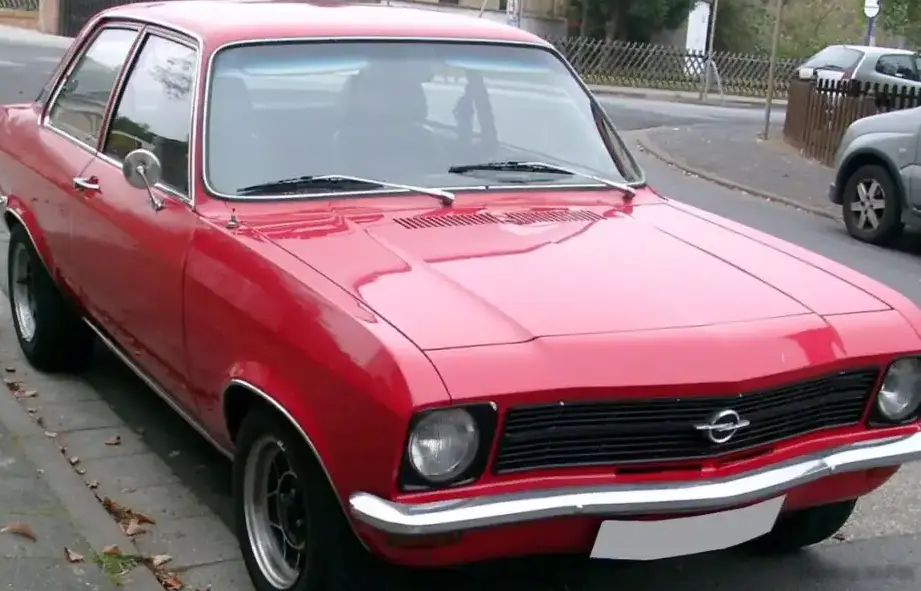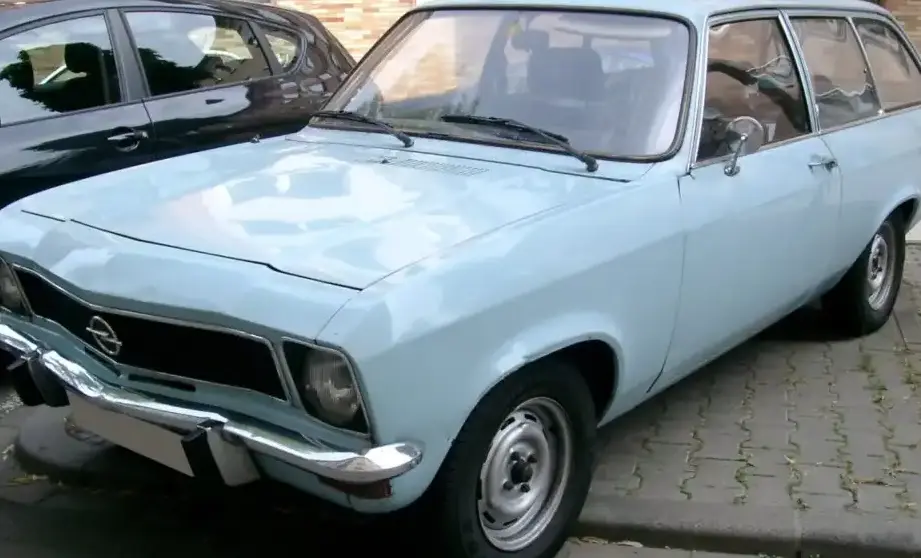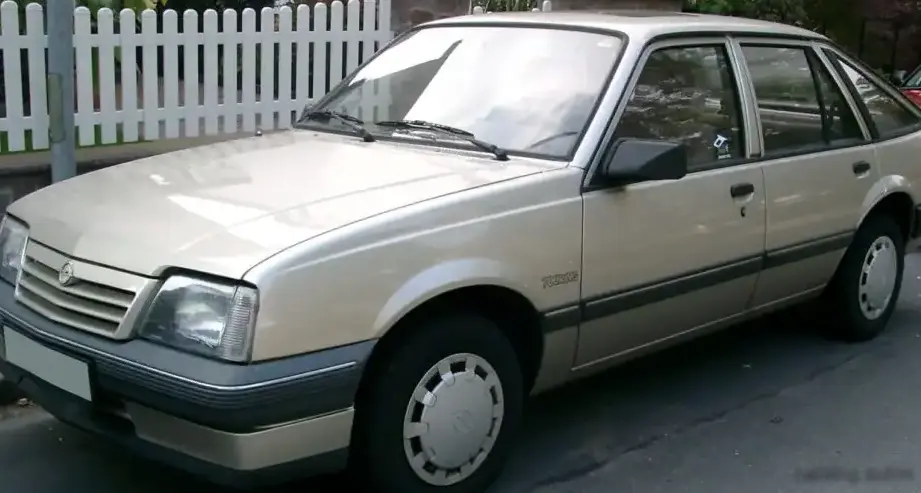
The Opel Ascona C CC 1.6i CAT Automatic, produced from 1987 to 1988, represented a relatively accessible entry point into the Ascona C range. Positioned as a comfortable and practical family car, it catered to buyers prioritizing fuel economy and ease of use over outright performance. This variant was part of the Ascona C “CC” (Coupe Convenience) body style, a five-door hatchback that offered a blend of practicality and styling. It sat below the more powerful fuel-injected and turbo variants in the Ascona lineup, and was aimed at a broader market segment than the performance-oriented models.
Technical Specifications
| Brand | Opel |
| Model | Ascona |
| Generation | Ascona C CC |
| Type (Engine) | 1.6i CAT (75 Hp) Automatic |
| Start of production | 1987 |
| End of production | 1988 |
| Powertrain Architecture | Internal Combustion engine |
| Body type | Hatchback |
| Seats | 5 |
| Doors | 5 |
| Fuel Type | Petrol (Gasoline) |
| Acceleration 0 – 100 km/h | 16.5 sec |
| Acceleration 0 – 62 mph | 16.5 sec |
| Acceleration 0 – 60 mph | 15.7 sec |
| Maximum speed | 155 km/h (96.31 mph) |
| Weight-to-power ratio | 14.4 kg/Hp, 69.4 Hp/tonne |
| Weight-to-torque ratio | 8.8 kg/Nm, 113.9 Nm/tonne |
| Power | 75 Hp @ 5600 rpm |
| Power per litre | 46.9 Hp/l |
| Torque | 123 Nm @ 3200 rpm (90.72 lb.-ft. @ 3200 rpm) |
| Engine Model/Code | C16LZ |
| Engine displacement | 1598 cm3 (97.52 cu. in.) |
| Number of cylinders | 4 |
| Engine configuration | Inline |
| Cylinder Bore | 80 mm (3.15 in.) |
| Piston Stroke | 79.5 mm (3.13 in.) |
| Compression ratio | 9.2:1 |
| Number of valves per cylinder | 2 |
| Fuel injection system | Carburettor |
| Engine aspiration | Naturally aspirated engine |
| Valvetrain | SOHC |
| Engine oil capacity | 3.5 l (3.7 US qt | 3.08 UK qt) |
| Coolant | 7.7 l (8.14 US qt | 6.78 UK qt) |
| Kerb Weight | 1080 kg (2380.99 lbs.) |
| Max. weight | 1580 kg (3483.3 lbs.) |
| Max load | 500 kg (1102.31 lbs.) |
| Trunk (boot) space – minimum | 445 l (15.72 cu. ft.) |
| Trunk (boot) space – maximum | 1215 l (42.91 cu. ft.) |
| Fuel tank capacity | 61 l (16.11 US gal | 13.42 UK gal) |
| Length | 4264 mm (167.87 in.) |
| Width | 1668 mm (65.67 in.) |
| Height | 1385 mm (54.53 in.) |
| Wheelbase | 2574 mm (101.34 in.) |
| Front track | 1400 mm (55.12 in.) |
| Rear (Back) track | 1406 mm (55.35 in.) |
| Ride height (ground clearance) | 145 mm (5.71 in.) |
| Drag coefficient (Cd) | 0.37 |
| Minimum turning circle | 10.95 m (35.93 ft.) |
| Drivetrain Architecture | Front wheel drive |
| Number of gears and type of gearbox | 3 gears, automatic transmission |
| Front brakes | Disc |
| Rear brakes | Drum |
Powertrain & Engine Architecture
The heart of the Ascona C CC 1.6i CAT Automatic was the C16LZ engine, a 1.6-liter inline-four cylinder unit. This engine featured a single overhead camshaft (SOHC) valvetrain operating two valves per cylinder. Crucially, it utilized a carburetor for fuel delivery, a relatively outdated technology by the late 1980s, but one that kept costs down. The “CAT” designation indicates the presence of a catalytic converter, a feature increasingly common due to tightening emissions regulations. The engine produced 75 horsepower at 5600 rpm and 123 Nm (90.72 lb-ft) of torque at 3200 rpm. Paired with a three-speed automatic transmission, the powertrain was designed for smooth, if not particularly brisk, acceleration.
Driving Characteristics
The 1.6i Automatic Ascona C offered a comfortable, but uninspiring, driving experience. The three-speed automatic transmission, while providing convenience, resulted in noticeable gear changes and a lack of the responsiveness found in manual transmission versions or the more powerful Ascona models. Acceleration was leisurely, with 0-60 mph taking around 15.7 seconds. The gear ratios were optimized for fuel efficiency rather than performance. Compared to the 1.8-liter or 2.0-liter Ascona variants, the 1.6i felt noticeably slower, especially when fully loaded or tackling inclines. However, the automatic transmission made it a more appealing option for drivers prioritizing ease of use in urban environments.
Equipment & Trim Levels
The Ascona C CC 1.6i CAT Automatic typically came with a reasonable level of standard equipment for its time. This included cloth upholstery, a basic stereo system, and manual windows and door locks. Power steering was often included, but air conditioning was usually an optional extra. The interior design was functional and straightforward, prioritizing practicality over luxury. Optional extras could include upgraded stereo systems, sunroofs, and metallic paint finishes. The trim level was generally considered to be a mid-range offering, providing a step up from the very basic Ascona models but falling short of the more luxurious trims.
Chassis & Braking
The Ascona C CC featured a MacPherson strut front suspension and a twist-beam rear axle. The braking system consisted of disc brakes on the front wheels and drum brakes on the rear. This configuration was typical for cars in this weight class and price range during the late 1980s. Stabilizer bars were fitted to both the front and rear axles to reduce body roll during cornering. The suspension was tuned for comfort, providing a relatively smooth ride over uneven surfaces. However, the rear drum brakes offered less stopping power and fade resistance compared to disc brakes.
Market Reception & Comparison
The Ascona C CC 1.6i CAT Automatic was generally well-received as a practical and affordable family car. Critics praised its comfortable ride and spacious interior, but noted its lack of performance. Compared to the more powerful Ascona variants, such as the 1.8i or 2.0i, the 1.6i offered lower running costs but a less engaging driving experience. Fuel economy was a strong point, making it an attractive option for drivers covering long distances. Reliability was generally good, although the carburetor required periodic maintenance. The automatic transmission, while convenient, was not as durable as the manual gearbox.
Legacy
The Opel Ascona C CC 1.6i CAT Automatic, while not a particularly iconic or sought-after model today, represents a significant chapter in Opel’s history. The C16LZ engine, while relatively simple, proved to be reasonably durable. In the used car market, these Asconas are now considered classic cars, and well-maintained examples are becoming increasingly rare. The carburetor can present maintenance challenges for modern mechanics, but the overall simplicity of the powertrain makes it relatively easy to work on. The Ascona C CC 1.6i Automatic remains a testament to Opel’s commitment to providing practical and affordable transportation to a wide range of customers.