Technical Specifications
| Brand | Opel |
| Model | Ascona |
| Generation | Ascona C CC |
| Type (Engine) | 1.8 (84 Hp) |
| Start of production | 1987 |
| End of production | 1988 |
| Powertrain Architecture | Internal Combustion engine |
| Body type | Hatchback |
| Seats | 5 |
| Doors | 5 |
| Fuel Type | Petrol (Gasoline) |
| Acceleration 0 – 100 km/h | 12.5 sec |
| Acceleration 0 – 62 mph | 12.5 sec |
| Acceleration 0 – 60 mph | 11.9 sec |
| Maximum speed | 168 km/h (104.39 mph) |
| Weight-to-power ratio | 12.3 kg/Hp, 81.2 Hp/tonne |
| Weight-to-torque ratio | 7.2 kg/Nm, 138.2 Nm/tonne |
| Power | 84 Hp @ 5400 rpm |
| Power per litre | 46.8 Hp/l |
| Torque | 143 Nm @ 2600 rpm (105.47 lb.-ft. @ 2600 rpm) |
| Engine Model/Code | E18NV |
| Engine displacement | 1796 cm3 (109.6 cu. in.) |
| Number of cylinders | 4 |
| Engine configuration | Inline |
| Cylinder Bore | 84.8 mm (3.34 in.) |
| Piston Stroke | 79.5 mm (3.13 in.) |
| Compression ratio | 9.2:1 |
| Number of valves per cylinder | 2 |
| Fuel injection system | Carburettor |
| Engine aspiration | Naturally aspirated engine |
| Valvetrain | SOHC |
| Engine oil capacity | 4 l (4.23 US qt | 3.52 UK qt) |
| Coolant | 7.5 l (7.93 US qt | 6.6 UK qt) |
| Kerb Weight | 1035 kg (2281.78 lbs.) |
| Max. weight | 1535 kg (3384.1 lbs.) |
| Max load | 500 kg (1102.31 lbs.) |
| Trunk (boot) space – minimum | 445 l (15.72 cu. ft.) |
| Trunk (boot) space – maximum | 1215 l (42.91 cu. ft.) |
| Fuel tank capacity | 61 l (16.11 US gal | 13.42 UK gal) |
| Permitted trailer load with brakes (12%) | 1100 kg (2425.08 lbs.) |
| Permitted trailer load without brakes | 500 kg (1102.31 lbs.) |
| Length | 4264 mm (167.87 in.) |
| Width | 1668 mm (65.67 in.) |
| Height | 1385 mm (54.53 in.) |
| Wheelbase | 2574 mm (101.34 in.) |
| Front track | 1400 mm (55.12 in.) |
| Rear (Back) track | 1406 mm (55.35 in.) |
| Ride height (ground clearance) | 145 mm (5.71 in.) |
| Drag coefficient (Cd) | 0.37 |
| Minimum turning circle (turning diameter) | 10.95 m (35.93 ft.) |
| Drivetrain Architecture | The Internal combustion engine (ICE) drives the front wheels of the vehicle. |
| Drive wheel | Front wheel drive |
| Number of gears and type of gearbox | 5 gears, manual transmission |
| Front brakes | Disc |
| Rear brakes | Drum |
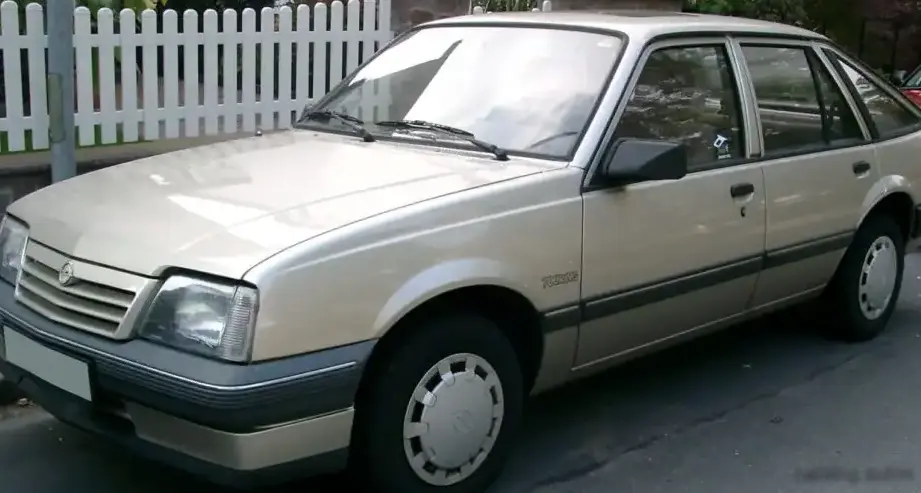
The Opel Ascona C CC 1.8 was a variant of the Ascona C “CC” (Coupe/Commodore) model, produced between 1987 and 1988. Positioned as an entry-level offering within the Ascona C range, it provided a more affordable and fuel-conscious alternative to the more powerful and performance-oriented versions like the 2.0E or the later GSi models. The Ascona C, launched in 1985, represented a significant update to the Ascona line, built on the GM T-platform (also known as the 1HX0/A3 platform) shared with other European Opel/Vauxhall models like the Vectra. This generation aimed to modernize the Ascona, offering improved aerodynamics, interior space, and a wider range of engine options. The Ascona was primarily a European market vehicle, intended to compete with Ford’s Taunus and other mid-size family cars.
Powertrain & Engine Architecture
The Ascona C CC 1.8 utilized the Opel E18NV engine, an inline four-cylinder unit displacing 1796cc. This engine was a relatively simple design, featuring a single overhead camshaft (SOHC) valvetrain with two valves per cylinder. Crucially, this version was equipped with a carburetor, rather than fuel injection, which was common in lower-spec models of the era. The carburetor setup – typically a Solex – contributed to lower production costs but also resulted in slightly reduced performance and fuel efficiency compared to fuel-injected counterparts. The E18NV produced 84 horsepower at 5400 rpm and 143 Nm (105.47 lb-ft) of torque at 2600 rpm. The engine’s design prioritized reliability and ease of maintenance over outright power. The standard transmission was a five-speed manual, offering a reasonable spread of gears for everyday driving. A three-speed automatic transmission was also available, but it significantly impacted performance and fuel economy. The automatic was a GM-sourced unit, known for its durability but not its responsiveness.
Driving Characteristics
The 1.8-liter, 84 hp Ascona C CC was not a performance car. Acceleration from 0-60 mph took around 11.9 seconds, and top speed was approximately 104 mph. The carburetor-fed engine delivered power in a linear fashion, but lacked the responsiveness of fuel-injected engines. The five-speed manual transmission helped to keep the engine in its optimal power band, but the overall driving experience was geared towards practicality and economy. Compared to the 2.0-liter versions, the 1.8 felt noticeably slower, especially when fully loaded or climbing hills. The automatic transmission option further diminished performance, making the car feel sluggish and increasing fuel consumption. However, the 1.8 offered a more forgiving and relaxed driving experience, making it suitable for urban commuting and long-distance cruising. The gear ratios in the manual transmission were fairly widely spaced, prioritizing fuel economy over spirited acceleration.
Equipment & Trim Levels
The Ascona C CC 1.8 typically came with a fairly basic level of equipment. Standard features included cloth upholstery, a simple dashboard layout, and manual windows and door locks. Power steering was often an optional extra, as was air conditioning. The interior was functional and durable, but lacked the refinement of higher-spec models. Optional extras included a sunroof, upgraded stereo systems, and alloy wheels. The trim level was generally considered entry-level, appealing to buyers seeking affordable and reliable transportation. The focus was on providing a practical and comfortable cabin rather than luxurious appointments. The base model often featured steel wheels with hubcaps and a relatively plain interior trim.
Chassis & Braking
The Ascona C CC featured a MacPherson strut front suspension and a twist-beam rear axle. The suspension setup provided a comfortable ride, but handling was not particularly sporty. The front brakes were disc brakes, while the rear brakes were drum brakes – a common configuration for cars in this price range. The braking system was adequate for everyday driving, but lacked the stopping power of more advanced systems. Stabilizer bars were fitted to both the front and rear axles, helping to reduce body roll during cornering. The chassis was designed to provide a balance between comfort and stability, prioritizing ride quality over dynamic handling. The suspension was tuned for a softer ride, absorbing bumps and imperfections in the road effectively.
Market Reception & Comparison
The Ascona C CC 1.8 was generally well-received as an affordable and reliable family car. Critics praised its practicality, spacious interior, and fuel efficiency. However, the carburetor-fed engine and relatively low power output were often criticized. Compared to the 2.0-liter versions, the 1.8 offered significantly lower performance, but at a lower price point. The 1.9-liter diesel version offered even better fuel economy, but with considerably less power. The Ascona C CC 1.8 appealed to buyers who prioritized affordability and practicality over performance and luxury. It was seen as a sensible choice for families and commuters who needed a reliable and economical vehicle.
Legacy
The Opel Ascona C CC 1.8, while not a particularly exciting model, proved to be a reliable and durable car. The E18NV engine is known for its robustness and relatively simple maintenance requirements. Today, these cars are relatively rare, but well-maintained examples are sought after by classic car enthusiasts. The carburetor can require periodic adjustment and rebuilding, but overall, the powertrain is considered relatively trouble-free. The Ascona C CC 1.8 represents a snapshot of 1980s European motoring, offering a practical and affordable transportation solution for families and commuters. Finding parts can be challenging, but many components are still available through specialist suppliers. The car’s simplicity makes it a relatively easy vehicle for home mechanics to maintain and repair.