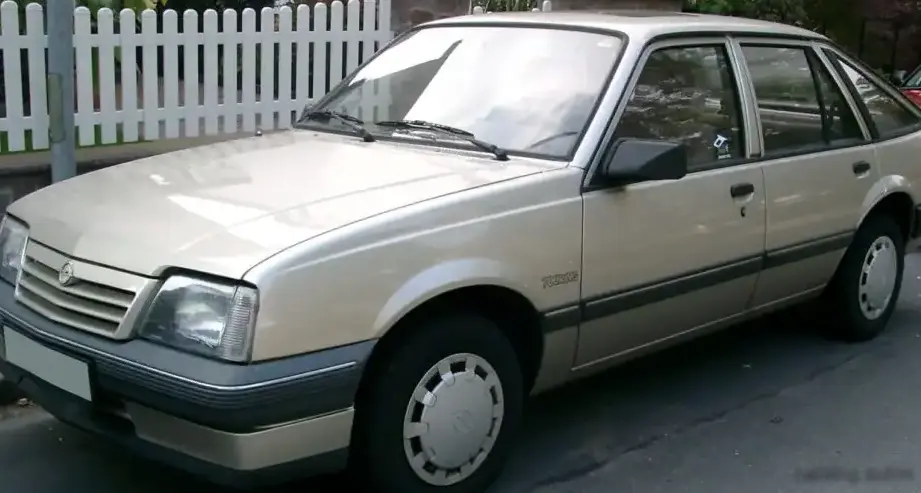
The Opel Ascona C CC 1.8 E, produced between 1985 and 1986, represented a significant iteration of Opel’s popular Ascona line. Falling within the Ascona C “CC” (Coupe Convenience) body style – essentially a five-door hatchback – this variant occupied a middle ground in the lineup, offering a balance between performance and affordability. It was positioned above the base models with smaller engines and manual transmissions, but below the more powerful and often better-equipped versions like the 2.0E. The Ascona C, launched in 1981, aimed to modernize Opel’s offerings and compete with increasingly sophisticated rivals in the European mid-size market. This particular 1.8 E model was primarily sold in Europe, where it found a reasonable degree of success as a practical and relatively economical family vehicle.
Technical Specifications
| Brand | Opel |
| Model | Ascona |
| Generation | Ascona C CC |
| Type (Engine) | 1.8 E (100 Hp) |
| Start of production | 1985 |
| End of production | 1986 |
| Powertrain Architecture | Internal Combustion engine |
| Body type | Hatchback |
| Seats | 5 |
| Doors | 5 |
| Fuel Type | Petrol (Gasoline) |
| Acceleration 0 – 100 km/h | 11.8 sec |
| Acceleration 0 – 62 mph | 11.8 sec |
| Acceleration 0 – 60 mph | 11.2 sec |
| Maximum speed | 180 km/h (111.85 mph) |
| Emission standard | Euro 1 |
| Weight-to-power ratio | 11 kg/Hp, 91.3 Hp/tonne |
| Weight-to-torque ratio | 7.8 kg/Nm, 127.9 Nm/tonne |
| Power | 100 Hp @ 5800 rpm |
| Power per litre | 55.7 Hp/l |
| Torque | 140 Nm @ 3000 rpm (103.26 lb.-ft. @ 3000 rpm) |
| Engine Model/Code | 18NE |
| Engine displacement | 1796 cm3 (109.6 cu. in.) |
| Number of cylinders | 4 |
| Engine configuration | Inline |
| Cylinder Bore | 84.8 mm (3.34 in.) |
| Piston Stroke | 79.5 mm (3.13 in.) |
| Compression ratio | 8.9:1 |
| Number of valves per cylinder | 2 |
| Fuel injection system | Multi-port manifold injection |
| Engine aspiration | Naturally aspirated engine |
| Engine oil capacity | 3.25 l (3.43 US qt | 2.86 UK qt) |
| Coolant | 7.6 l (8.03 US qt | 6.69 UK qt) |
| Kerb Weight | 1095 kg (2414.06 lbs.) |
| Max. weight | 1535 kg (3384.1 lbs.) |
| Max load | 440 kg (970.03 lbs.) |
| Trunk (boot) space – minimum | 445 l (15.72 cu. ft.) |
| Trunk (boot) space – maximum | 1215 l (42.91 cu. ft.) |
| Fuel tank capacity | 61 l (16.11 US gal | 13.42 UK gal) |
| Length | 4264 mm (167.87 in.) |
| Width | 1668 mm (65.67 in.) |
| Height | 1385 mm (54.53 in.) |
| Wheelbase | 2574 mm (101.34 in.) |
| Front track | 1406 mm (55.35 in.) |
| Rear (Back) track | 1406 mm (55.35 in.) |
| Ride height (ground clearance) | 145 mm (5.71 in.) |
| Drag coefficient (Cd) | 0.38 |
| Minimum turning circle | 10.95 m (35.93 ft.) |
| Drivetrain Architecture | The Internal combustion engine (ICE) drives the front wheels of the vehicle. |
| Drive wheel | Front wheel drive |
| Number of gears and type of gearbox | 5 gears, manual transmission |
| Front brakes | Disc |
| Rear brakes | Drum |
Powertrain & Engine Architecture
The heart of the Ascona C CC 1.8 E was the 18NE engine, an inline four-cylinder unit displacing 1796cc. This engine featured a cast iron block and an aluminum cylinder head, a common configuration for Opel engines of the era. It utilized a Bosch multi-port fuel injection system, which improved fuel efficiency and responsiveness compared to earlier carbureted Opel engines. The 18NE engine employed a single overhead camshaft (SOHC) design with two valves per cylinder. This valvetrain configuration, while not as sophisticated as dual overhead cam setups, offered a good balance of performance and reliability. The engine produced 100 horsepower at 5800 rpm and 140 Nm (103.26 lb-ft) of torque at 3000 rpm. The Ascona C CC 1.8 E was typically equipped with a five-speed manual transmission, although a three-speed automatic transmission was also available, albeit less common. The automatic transmission, while offering convenience, noticeably impacted acceleration and fuel economy.
Driving Characteristics
The 1.8 E with the manual transmission provided adequate performance for everyday driving. Acceleration to 60 mph took around 11.2 seconds, and the top speed was approximately 112 mph. The engine felt relatively lively in the mid-range, making it suitable for overtaking maneuvers on the highway. However, it lacked the outright punch of the larger 2.0-liter engines offered in the Ascona range. The automatic transmission version suffered from slower acceleration and a less engaging driving experience. The gear ratios were optimized for fuel economy rather than performance, resulting in a somewhat sluggish feel. The Ascona C CC’s front-wheel-drive layout provided predictable handling, but it wasn’t particularly sporty. The suspension was tuned for comfort, absorbing bumps and imperfections in the road reasonably well.
Equipment & Trim Levels
The Ascona C CC 1.8 E typically came with a reasonable level of standard equipment. This included cloth upholstery, a basic stereo system, and power-assisted steering. Optional extras included a sunroof, central locking, electric windows, and upgraded audio systems. The interior design was functional and straightforward, reflecting the car’s practical nature. The dashboard layout was clean and easy to use, with clearly labeled controls. The “CC” designation indicated a more convenience-oriented trim level, with features like a rear wiper and more comfortable seats compared to the base models.
Chassis & Braking
The Ascona C CC utilized a MacPherson strut front suspension and a semi-trailing arm rear suspension. This setup provided a good compromise between ride comfort and handling. The front brakes were disc brakes, while the rear brakes were drum brakes. This configuration was typical for cars in this class during the 1980s. The braking performance was adequate for normal driving conditions, but it wasn’t particularly strong. The steering was relatively light and easy to use, making it well-suited for city driving.
Market Reception & Comparison
The Ascona C CC 1.8 E was generally well-received by automotive critics as a practical and reliable family car. It offered a good balance of performance, fuel economy, and comfort. However, it wasn’t considered to be particularly exciting or sporty. Compared to the 2.0-liter versions, the 1.8 E offered less power but better fuel economy. The automatic transmission version was criticized for its sluggish performance. In terms of reliability, the 18NE engine was generally considered to be a robust and dependable unit, although regular maintenance was essential.
Legacy
The Opel Ascona C CC 1.8 E, while not a particularly rare or collectible car today, remains a popular choice among classic car enthusiasts. The 18NE engine is known for its durability and relatively simple mechanics, making it relatively easy to maintain. Parts availability is generally good, although some specific components may be difficult to find. The Ascona C CC 1.8 E represents a significant chapter in Opel’s history, showcasing the company’s commitment to building practical and reliable family cars. In the used car market, well-maintained examples of this model can still provide years of dependable service, offering a nostalgic glimpse into 1980s automotive design and engineering.