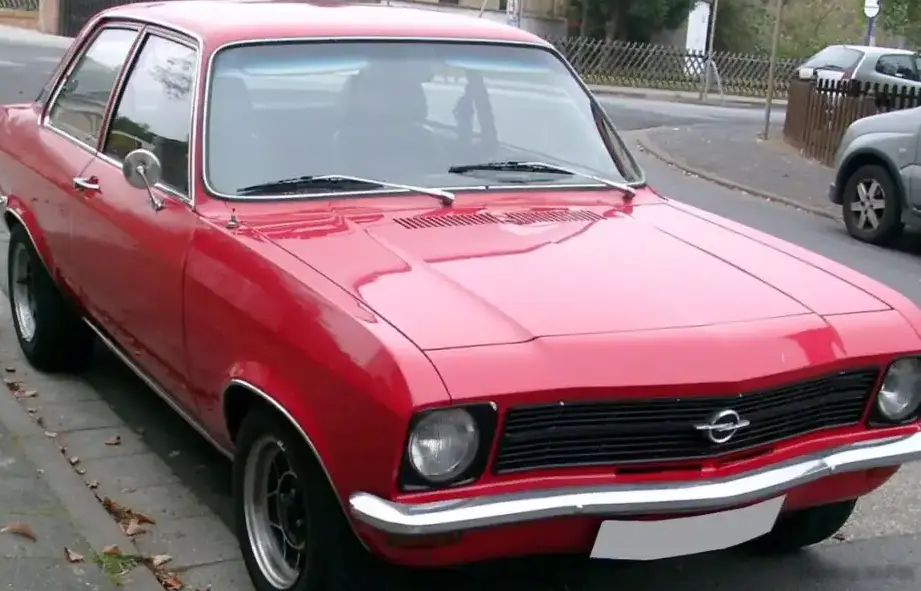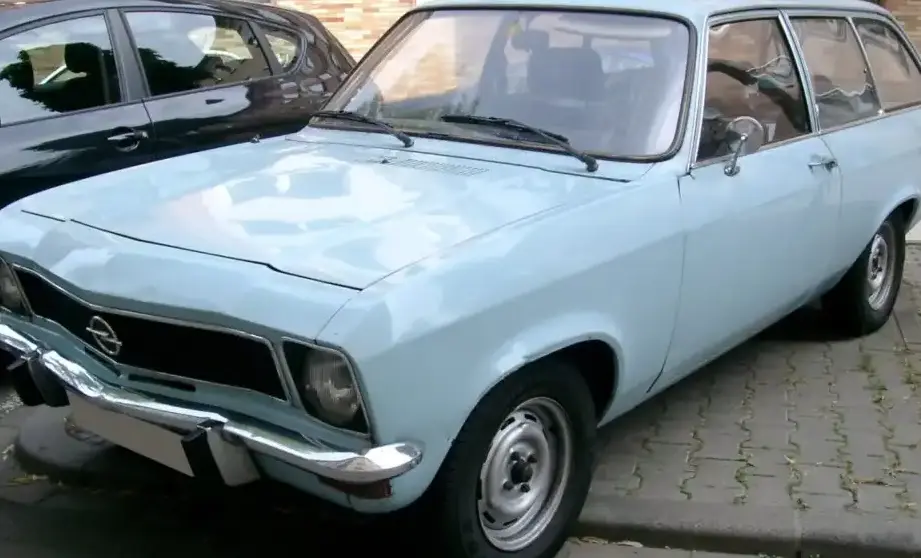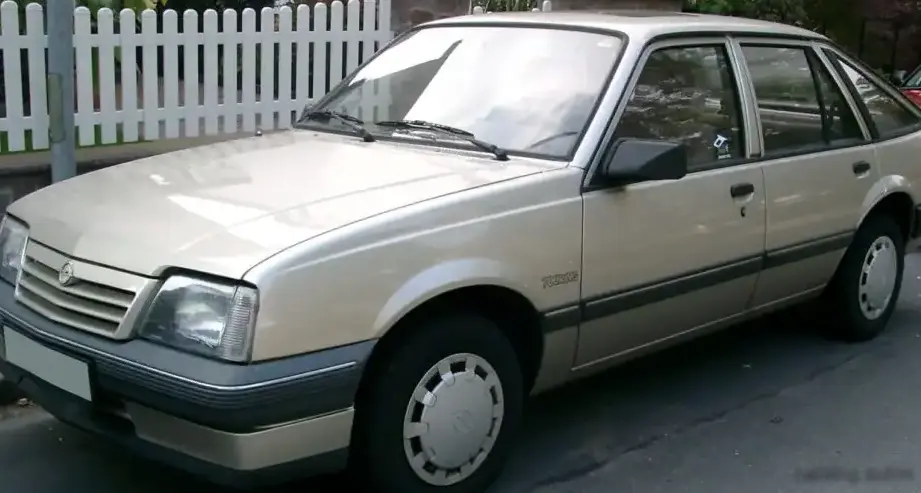
The Opel Ascona C CC 2.0i, produced between 1986 and 1988, represented a significant evolution of Opel’s mid-size offering. Part of the Ascona C generation (internally designated as the 81B/82B series), the “CC” denoted the Coupé Caravan body style – a five-door hatchback configuration. This variant occupied a position in the lineup above the base models, offering a blend of performance and practicality aimed at buyers seeking a more engaging driving experience than the lower-powered options. It was primarily marketed in Europe, where it competed with vehicles like the Ford Taunus, Volkswagen Passat, and Fiat Croma.
Technical Specifications
| Brand | Opel |
| Model | Ascona |
| Generation | Ascona C CC |
| Type (Engine) | 2.0i (115 Hp) |
| Start of production | 1986 |
| End of production | 1988 |
| Powertrain Architecture | Internal Combustion engine |
| Body type | Hatchback |
| Seats | 5 |
| Doors | 5 |
| Fuel Type | Petrol (Gasoline) |
| Acceleration 0 – 100 km/h | 10 sec |
| Acceleration 0 – 62 mph | 10 sec |
| Acceleration 0 – 60 mph | 9.5 sec |
| Maximum speed | 187 km/h (116.2 mph) |
| Weight-to-power ratio | 9.4 kg/Hp, 106.6 Hp/tonne |
| Weight-to-torque ratio | 6.2 kg/Nm, 162.2 Nm/tonne |
| Power | 115 Hp @ 5600 rpm |
| Power per litre | 57.6 Hp/l |
| Torque | 175 Nm @ 3000 rpm (129.07 lb.-ft. @ 3000 rpm) |
| Engine Model/Code | 20NE |
| Engine displacement | 1998 cm3 (121.93 cu. in.) |
| Number of cylinders | 4 |
| Engine configuration | Inline |
| Cylinder Bore | 86 mm (3.39 in.) |
| Piston Stroke | 86 mm (3.39 in.) |
| Compression ratio | 9.2:1 |
| Number of valves per cylinder | 2 |
| Fuel injection system | Multi-port manifold injection |
| Engine aspiration | Naturally aspirated engine |
| Valvetrain | SOHC |
| Engine oil capacity | 4 l (4.23 US qt | 3.52 UK qt) |
| Coolant | 6.9 l (7.29 US qt | 6.07 UK qt) |
| Kerb Weight | 1079 kg (2378.79 lbs.) |
| Max. weight | 1565 kg (3450.23 lbs.) |
| Max load | 486 kg (1071.45 lbs.) |
| Trunk (boot) space – minimum | 445 l (15.72 cu. ft.) |
| Trunk (boot) space – maximum | 1215 l (42.91 cu. ft.) |
| Fuel tank capacity | 61 l (16.11 US gal | 13.42 UK gal) |
| Permitted trailer load with brakes (12%) | 1300 kg (2866.01 lbs.) |
| Permitted trailer load without brakes | 500 kg (1102.31 lbs.) |
| Length | 4264 mm (167.87 in.) |
| Width | 1668 mm (65.67 in.) |
| Height | 1385 mm (54.53 in.) |
| Wheelbase | 2574 mm (101.34 in.) |
| Front track | 1406 mm (55.35 in.) |
| Rear (Back) track | 1406 mm (55.35 in.) |
| Ride height (ground clearance) | 145 mm (5.71 in.) |
| Drag coefficient (Cd) | 0.37 |
| Minimum turning circle (turning diameter) | 10.95 m (35.93 ft.) |
| Drivetrain Architecture | The Internal combustion engine (ICE) drives the front wheels of the vehicle. |
| Drive wheel | Front wheel drive |
| Number of gears and type of gearbox | 5 gears, manual transmission |
| Front brakes | Disc |
| Rear brakes | Drum |
Powertrain & Engine Architecture
The Ascona C CC 2.0i was powered by the 20NE engine, a 1998cc inline-four cylinder unit. This engine was a mainstay of Opel’s lineup during the 1980s, known for its relative simplicity and durability. The 20NE featured a single overhead camshaft (SOHC) valvetrain operating two valves per cylinder. Fuel delivery was handled by Bosch multi-port fuel injection, a significant upgrade over earlier carbureted Opel engines, contributing to improved fuel efficiency and smoother power delivery. The engine produced 115 horsepower at 5600 rpm and 175 Nm (129 lb-ft) of torque at 3000 rpm. The engine’s design prioritized usability and reliability over outright performance. The 20NE was known to be relatively easy to maintain, with readily available parts. The five-speed manual transmission was the standard offering, providing a reasonably direct connection between the engine and the front wheels.
Driving Characteristics
The 2.0i variant offered a noticeable step up in performance compared to the lower-displacement Ascona models. While not a sports car, the 115 hp engine provided adequate power for comfortable cruising and overtaking. Acceleration from 0 to 60 mph took around 9.5 seconds, and the car could reach a top speed of 116 mph. The five-speed manual transmission allowed drivers to keep the engine in its optimal power band. The gear ratios were spaced to provide a balance between acceleration and fuel economy. Compared to the more powerful Ascona 2.0E (which featured a higher compression ratio and different cylinder head), the 2.0i offered a more relaxed driving experience, prioritizing fuel efficiency and ease of use. The front-wheel-drive layout provided predictable handling, although it lacked the dynamic finesse of rear-wheel-drive competitors.
Equipment & Trim Levels
The Ascona C CC 2.0i typically came equipped with features considered standard for a mid-range European car of the era. This included cloth upholstery, a basic stereo system, and manual windows and door locks. Power steering was often an optional extra. The interior design was functional and straightforward, with a focus on practicality. Higher trim levels offered options such as central locking, electric windows, and a sunroof. The dashboard layout was typical of Opel designs from the period, with clearly marked gauges and easy-to-use controls. The CC body style offered increased cargo space compared to the sedan version, making it a practical choice for families.
Chassis & Braking
The Ascona C CC utilized a MacPherson strut front suspension and a twist-beam rear axle. This suspension setup provided a comfortable ride, although it wasn’t particularly sporty. The front brakes were ventilated discs, while the rear brakes were drums. This configuration was common for vehicles in this class at the time. Stabilizer bars were fitted to both the front and rear axles to reduce body roll during cornering. The steering was a rack-and-pinion system, providing reasonably precise control. The chassis was designed to provide a balance between comfort and handling, prioritizing stability and predictability over outright performance.
Market Reception & Comparison
The Ascona C CC 2.0i was generally well-received by automotive critics. It was praised for its comfortable ride, spacious interior, and fuel efficiency. However, some critics noted that the engine lacked the refinement and power of some of its competitors. Compared to the Ascona 1.6, the 2.0i offered a significant performance improvement, making it a more appealing option for drivers who frequently traveled on motorways or carried passengers. The 2.0i was also more reliable than some of the more complex Opel models, such as those with turbocharging or electronic fuel injection. Fuel economy was respectable for the time, averaging around 30-35 mpg on the combined cycle.
Legacy
The Opel Ascona C CC 2.0i has become a popular classic car among enthusiasts. The 20NE engine is known for its durability and relatively simple maintenance requirements. Parts availability is generally good, although some components can be difficult to find. Today, well-maintained examples of the Ascona C CC 2.0i are sought after by collectors and enthusiasts who appreciate its classic styling and practical features. The car represents a significant chapter in Opel’s history, showcasing the company’s commitment to building reliable and affordable family cars. While not a high-performance machine, the Ascona C CC 2.0i remains a fondly remembered and capable vehicle from the 1980s.