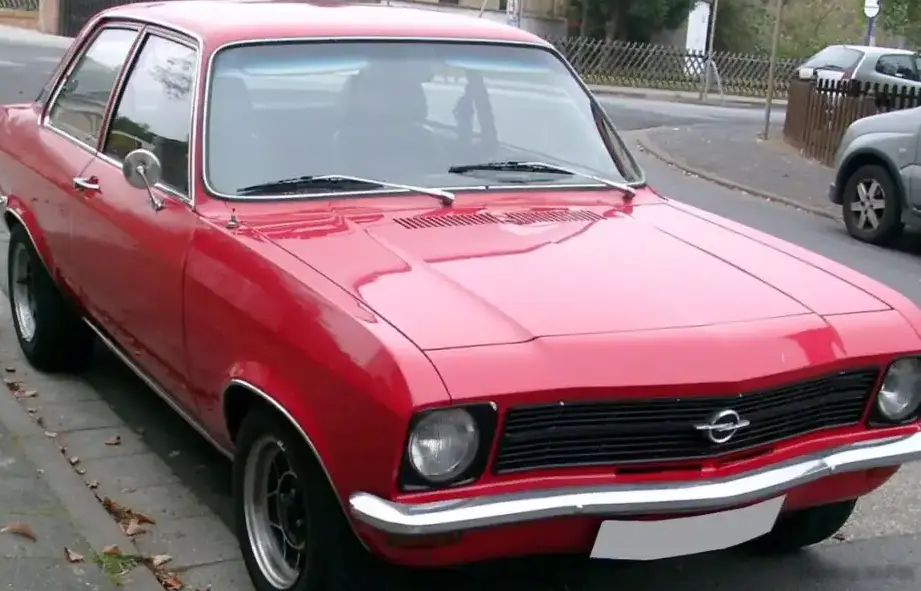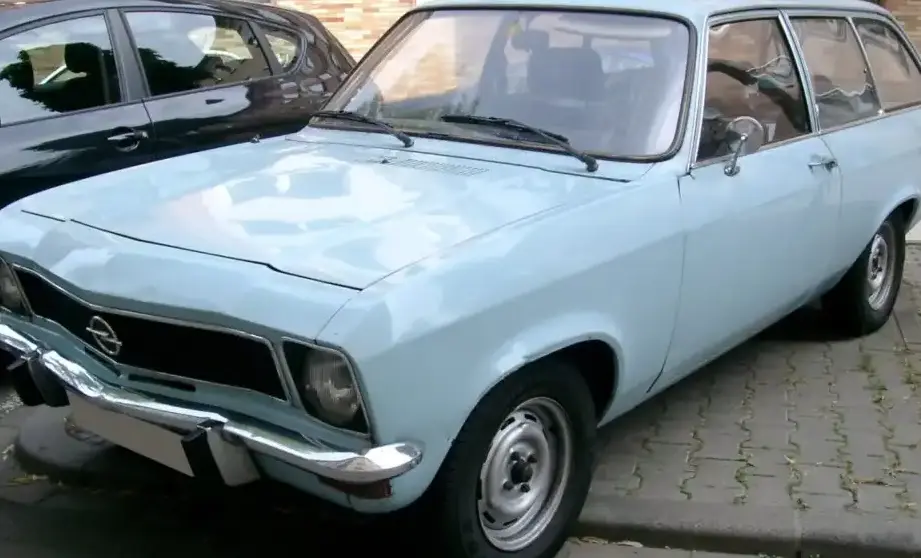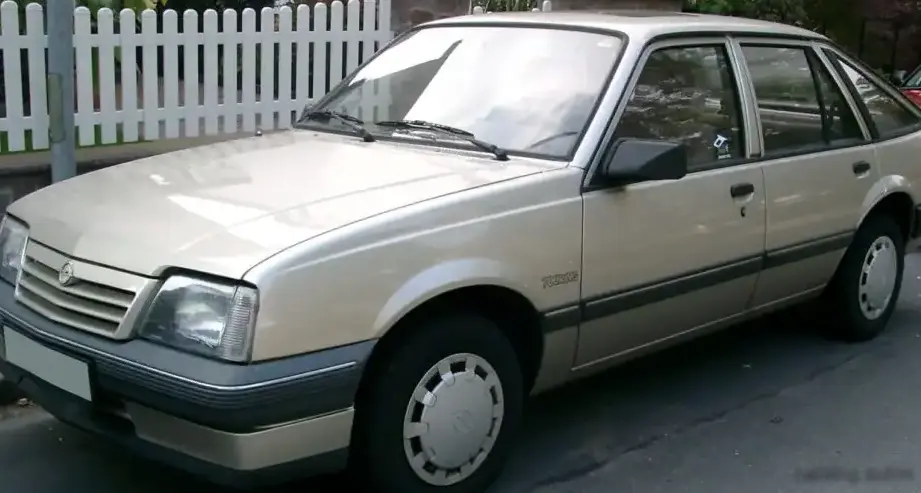
The Opel Ascona C CC 2.0i CAT, produced between 1986 and 1988, represented a refined iteration of Opel’s popular Ascona line. Positioned as a mid-range offering within the Ascona C “CC” (Coupe Convenience) body style – a five-door hatchback – it aimed to balance performance with fuel efficiency and practicality. This variant, equipped with the C20NE engine and a five-speed manual transmission, was a key player in Opel’s strategy to appeal to a broader European audience seeking a comfortable and capable family vehicle. The Ascona C series, built on the GM T-platform (also known as the 1HX0/A3 platform), was a significant model for Opel, offering a modern alternative to competitors like the Ford Taunus and Volkswagen Passat.
Technical Specifications
| Brand | Opel |
| Model | Ascona |
| Generation | Ascona C CC |
| Type (Engine) | 2.0i CAT (115 Hp) |
| Start of production | 1986 |
| End of production | 1988 |
| Powertrain Architecture | Internal Combustion engine |
| Body type | Hatchback |
| Seats | 5 |
| Doors | 5 |
| Fuel Type | Petrol (Gasoline) |
| Acceleration 0 – 100 km/h | 10 sec |
| Acceleration 0 – 62 mph | 10 sec |
| Acceleration 0 – 60 mph | 9.5 sec |
| Maximum speed | 187 km/h (116.2 mph) |
| Weight-to-power ratio | 9.4 kg/Hp, 106.6 Hp/tonne |
| Weight-to-torque ratio | 6.3 kg/Nm, 157.6 Nm/tonne |
| Power | 115 Hp @ 5400 rpm |
| Power per litre | 57.6 Hp/l |
| Torque | 170 Nm @ 3000 rpm (125.39 lb.-ft. @ 3000 rpm) |
| Engine Model/Code | C20NE |
| Engine displacement | 1998 cm3 (121.93 cu. in.) |
| Number of cylinders | 4 |
| Engine configuration | Inline |
| Cylinder Bore | 86 mm (3.39 in.) |
| Piston Stroke | 86 mm (3.39 in.) |
| Compression ratio | 9.2:1 |
| Number of valves per cylinder | 2 |
| Fuel injection system | Multi-port manifold injection |
| Engine aspiration | Naturally aspirated engine |
| Valvetrain | SOHC |
| Engine oil capacity | 4 l (4.23 US qt | 3.52 UK qt) |
| Coolant | 7.5 l (7.93 US qt | 6.6 UK qt) |
| Kerb Weight | 1079 kg (2378.79 lbs.) |
| Max. weight | 1565 kg (3450.23 lbs.) |
| Max load | 486 kg (1071.45 lbs.) |
| Trunk (boot) space – minimum | 445 l (15.72 cu. ft.) |
| Trunk (boot) space – maximum | 1215 l (42.91 cu. ft.) |
| Fuel tank capacity | 61 l (16.11 US gal | 13.42 UK gal) |
| Permitted trailer load with brakes (12%) | 1300 kg (2866.01 lbs.) |
| Permitted trailer load without brakes | 500 kg (1102.31 lbs.) |
| Length | 4264 mm (167.87 in.) |
| Width | 1668 mm (65.67 in.) |
| Height | 1385 mm (54.53 in.) |
| Wheelbase | 2574 mm (101.34 in.) |
| Front track | 1406 mm (55.35 in.) |
| Rear (Back) track | 1406 mm (55.35 in.) |
| Ride height (ground clearance) | 145 mm (5.71 in.) |
| Drag coefficient (Cd) | 0.37 |
| Minimum turning circle (turning diameter) | 10.95 m (35.93 ft.) |
| Drivetrain Architecture | The Internal combustion engine (ICE) drives the front wheels of the vehicle. |
| Drive wheel | Front wheel drive |
| Number of gears and type of gearbox | 5 gears, manual transmission |
| Front brakes | Disc |
| Rear brakes | Drum |
Powertrain & Engine Architecture
The heart of the Ascona C CC 2.0i CAT was the C20NE engine, a 1998cc inline-four cylinder unit. This engine was a member of Opel’s “E-series” family, known for its robust construction and relatively simple design. The “NE” designation indicated a catalytic converter equipped version, reflecting increasing environmental regulations in Europe. The C20NE featured a single overhead camshaft (SOHC) valvetrain operating two valves per cylinder. Fuel delivery was handled by Bosch multi-port fuel injection, providing a good balance between performance and fuel economy. The engine produced 115 horsepower at 5400 rpm and 170 Nm (125 lb-ft) of torque at 3000 rpm. The five-speed manual transmission offered precise shifts and allowed drivers to effectively utilize the engine’s power band. This transmission was a standard offering, contributing to the car’s engaging driving experience.
Driving Characteristics
The 2.0i CAT with the five-speed manual offered a noticeably more spirited driving experience than the lower-powered Ascona variants. Acceleration to 60 mph took around 9.5 seconds, and it could reach a top speed of 116 mph. While not a sports car, the 2.0i provided ample power for comfortable highway cruising and overtaking. The gear ratios were well-matched to the engine’s torque curve, providing good acceleration in each gear. Compared to the automatic transmission options available on other Ascona models, the manual version felt more responsive and engaging. The manual also allowed for better control during spirited driving, while the automatic versions prioritized comfort and ease of use.
Equipment & Trim Levels
The Ascona C CC 2.0i CAT typically came equipped with a reasonable level of standard features for its time. These included power steering, central locking, and a basic stereo system. Interior upholstery was typically cloth, with options for upgraded materials available. The dashboard layout was functional and straightforward, with clearly marked gauges and controls. Optional extras included a sunroof, electric windows, and upgraded sound systems. The “CC” designation indicated a focus on convenience features, making it a well-equipped family vehicle.
Chassis & Braking
The Ascona C CC featured a MacPherson strut front suspension and a semi-trailing arm rear suspension. This setup provided a good balance between ride comfort and handling. The front brakes were discs, offering good stopping power, while the rear brakes were drums, a cost-saving measure common in vehicles of this era. Stabilizer bars were fitted to both the front and rear axles, helping to reduce body roll during cornering. The suspension was tuned for comfort, but it still provided a reasonably controlled driving experience.
Market Reception & Comparison
The Ascona C CC 2.0i CAT was generally well-received by automotive critics. It was praised for its comfortable ride, spacious interior, and relatively strong performance. However, some critics noted that the styling was somewhat conservative compared to some of its rivals. Compared to the lower-powered Ascona variants, the 2.0i CAT offered a significant performance upgrade, making it a more appealing option for drivers who enjoyed a more engaging driving experience. It also offered better fuel economy than the larger-displacement engines in the range. Against competitors like the Ford Taunus and Volkswagen Passat, the Ascona C CC 2.0i CAT offered a competitive package in terms of price, features, and performance.
Legacy
The Opel Ascona C CC 2.0i CAT, while not a particularly rare or collectible car today, remains a popular choice among classic car enthusiasts. The C20NE engine is known for its reliability and durability, and parts availability is generally good. The manual transmission version is particularly sought after by drivers who appreciate its engaging driving experience. Well-maintained examples of the Ascona C CC 2.0i CAT can still provide years of reliable service, offering a nostalgic glimpse into 1980s automotive engineering. Its blend of practicality, comfort, and performance continues to appeal to a dedicated following.