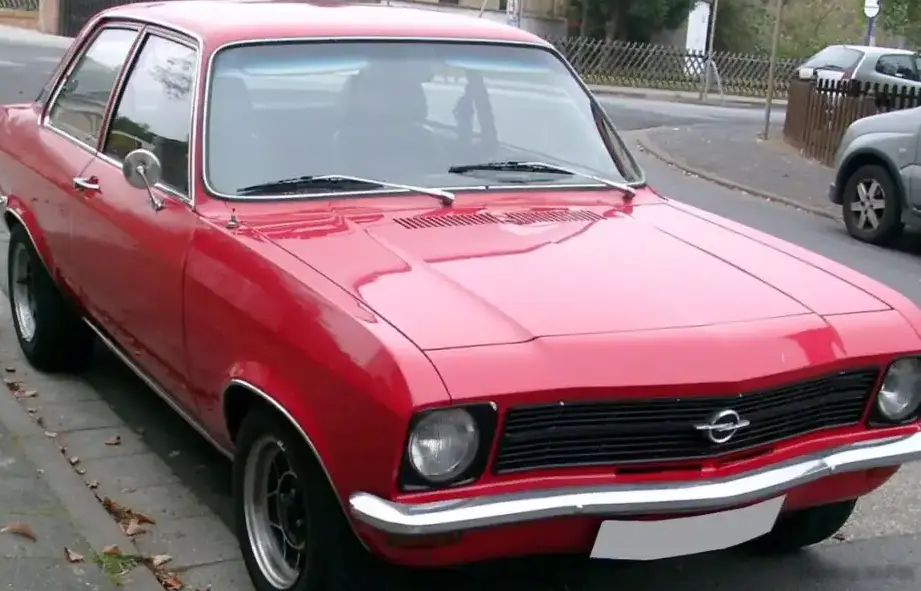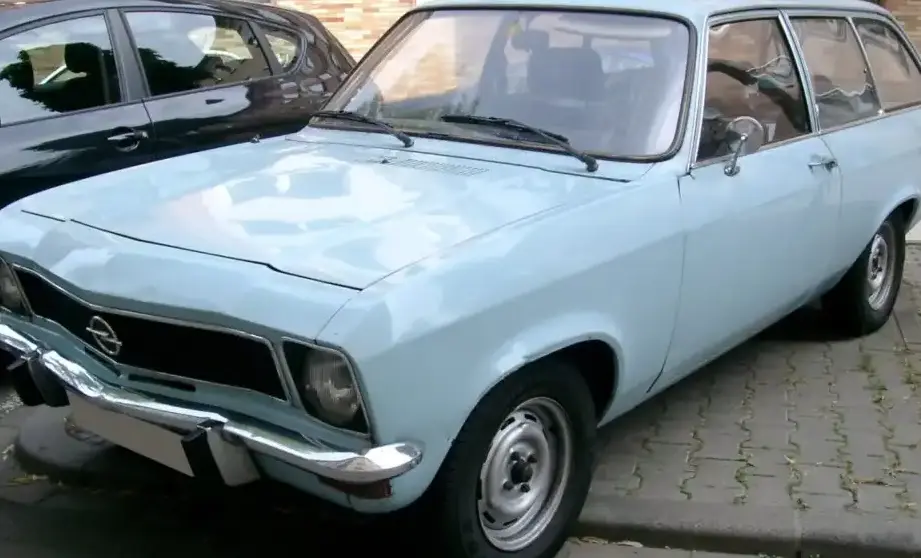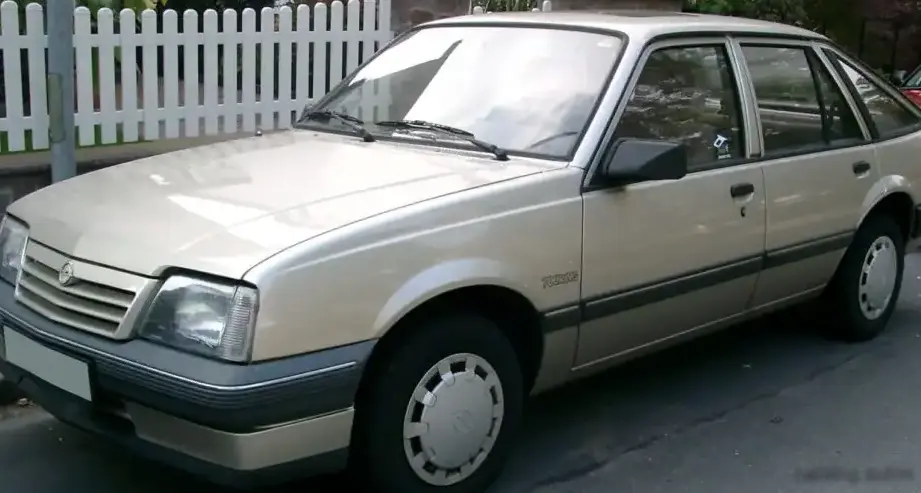
The Opel Ascona C CC 2.0i GT, produced between 1987 and 1988, represented a performance-oriented variant within the Ascona C “CC” (Coupe Convenience) range. Positioned as a step up from the more economical Ascona models, the 2.0i GT aimed to deliver a blend of practicality, comfort, and respectable performance for the European market. The Ascona C, launched in 1981, was Opel’s competitor in the mid-size family car segment, and the CC bodystyle, introduced later, offered a more streamlined and modern appearance with a hatchback configuration. This particular 2.0i GT trim served as a sporty offering, appealing to drivers seeking a more engaging driving experience than the base models provided.
Technical Specifications
| Brand | Opel |
| Model | Ascona |
| Generation | Ascona C CC |
| Type (Engine) | 2.0i GT (129 Hp) |
| Start of production | 1987 |
| End of production | 1988 |
| Powertrain Architecture | Internal Combustion engine |
| Body type | Hatchback |
| Seats | 5 |
| Doors | 5 |
| Fuel Type | Petrol (Gasoline) |
| Acceleration 0 – 100 km/h | 9.3 sec |
| Acceleration 0 – 62 mph | 9.3 sec |
| Acceleration 0 – 60 mph | 8.8 sec |
| Maximum speed | 193 km/h (119.92 mph) |
| Weight-to-power ratio | 8.4 kg/Hp, 119.4 Hp/tonne |
| Weight-to-torque ratio | 6 kg/Nm, 166.7 Nm/tonne |
| Power | 129 Hp @ 5600 rpm |
| Power per litre | 64.6 Hp/l |
| Torque | 180 Nm @ 4600 rpm (132.76 lb.-ft. @ 4600 rpm) |
| Engine Model/Code | 20SEH, 20NE |
| Engine displacement | 1998 cm3 (121.93 cu. in.) |
| Number of cylinders | 4 |
| Engine configuration | Inline |
| Cylinder Bore | 86 mm (3.39 in.) |
| Piston Stroke | 86 mm (3.39 in.) |
| Compression ratio | 10:1 |
| Number of valves per cylinder | 2 |
| Fuel injection system | Multi-port manifold injection |
| Engine aspiration | Naturally aspirated engine |
| Valvetrain | SOHC |
| Engine oil capacity | 4 l (4.23 US qt | 3.52 UK qt) |
| Coolant | 6.9 l (7.29 US qt | 6.07 UK qt) |
| Kerb Weight | 1080 kg (2380.99 lbs.) |
| Max. weight | 1565 kg (3450.23 lbs.) |
| Max load | 485 kg (1069.24 lbs.) |
| Trunk (boot) space – minimum | 445 l (15.72 cu. ft.) |
| Trunk (boot) space – maximum | 1215 l (42.91 cu. ft.) |
| Fuel tank capacity | 61 l (16.11 US gal | 13.42 UK gal) |
| Permitted trailer load with brakes (12%) | 1300 kg (2866.01 lbs.) |
| Permitted trailer load without brakes | 500 kg (1102.31 lbs.) |
| Length | 4264 mm (167.87 in.) |
| Width | 1668 mm (65.67 in.) |
| Height | 1385 mm (54.53 in.) |
| Wheelbase | 2574 mm (101.34 in.) |
| Front track | 1406 mm (55.35 in.) |
| Rear (Back) track | 1406 mm (55.35 in.) |
| Ride height (ground clearance) | 145 mm (5.71 in.) |
| Drag coefficient (Cd) | 0.37 |
| Minimum turning circle (turning diameter) | 10.95 m (35.93 ft.) |
| Drivetrain Architecture | The Internal combustion engine (ICE) drives the front wheels of the vehicle. |
| Drive wheel | Front wheel drive |
| Number of gears and type of gearbox | 5 gears, manual transmission |
| Front brakes | Disc |
| Rear brakes | Drum |
| Tires size | 195/60 R14 |
| Wheel rims size | 14 |
Powertrain & Engine Architecture
The heart of the Ascona C CC 2.0i GT was the 20SEH or 20NE inline-four cylinder engine, displacing 1998cc. These engines were part of Opel’s “E” family of engines, known for their durability and relatively simple design. The 20SEH, in particular, featured Bosch Motronic fuel injection, a multi-port system that precisely metered fuel into the intake ports. The engine utilized a single overhead camshaft (SOHC) design, operating two valves per cylinder. This configuration, while not as sophisticated as dual overhead cam setups, offered a good balance of performance and cost-effectiveness. The engine’s 10:1 compression ratio contributed to its respectable power output of 129 horsepower at 5600 rpm and 180 Nm (132.76 lb-ft) of torque at 4600 rpm. The engine was mated to a five-speed manual transmission, providing drivers with full control over the power delivery.
Driving Characteristics
The 2.0i GT offered a noticeable step up in performance compared to the lower-spec Ascona models. Acceleration from 0 to 60 mph took approximately 8.8 seconds, and it could achieve a top speed of around 119.92 mph. While not a sports car by modern standards, the 2.0i GT provided a lively and engaging driving experience for its time. The five-speed manual transmission allowed drivers to keep the engine in its optimal power band, and the relatively lightweight construction of the Ascona C contributed to its nimble handling. Compared to the later 1.8-liter versions, the 2.0i GT offered more substantial torque, making it more comfortable for highway cruising and overtaking maneuvers. The gear ratios were well-spaced, providing good acceleration in each gear.
Equipment & Trim Levels
The 2.0i GT trim level typically included features such as power steering, upgraded interior trim, and a more comprehensive instrument cluster. Interior upholstery was often a combination of cloth and vinyl, with a focus on durability and comfort. Optional extras included a sunroof, alloy wheels, and upgraded audio systems. The dashboard layout was functional and straightforward, with clearly marked gauges and controls. The CC bodystyle itself offered increased practicality with its hatchback configuration, providing easier access to the cargo area.
Chassis & Braking
The Ascona C CC utilized a MacPherson strut front suspension and a semi-trailing arm rear suspension. The front suspension provided good handling and ride comfort, while the rear suspension helped to maintain stability. Braking duties were handled by disc brakes at the front and drum brakes at the rear. While the drum brakes at the rear were a cost-saving measure, they provided adequate stopping power for most driving conditions. The Ascona C CC’s chassis was relatively lightweight, contributing to its nimble handling characteristics.
Market Reception & Comparison
The Ascona C CC 2.0i GT was generally well-received by automotive critics. It was praised for its blend of practicality, comfort, and performance. Compared to other cars in its class, such as the Ford Escort and Volkswagen Jetta, the Ascona C CC offered a more spacious interior and a more comfortable ride. However, some critics noted that the interior styling was somewhat dated compared to its rivals. Fuel economy was reasonable for the time, but not exceptional. The 2.0i GT offered a good balance of performance and fuel efficiency, making it a practical choice for everyday driving.
Legacy
The Opel Ascona C CC 2.0i GT remains a popular choice among classic car enthusiasts. The 20SEH and 20NE engines are known for their durability and reliability, and parts availability is generally good. However, like any classic car, regular maintenance is essential to keep it in good running condition. Today, well-maintained examples of the Ascona C CC 2.0i GT are sought after by collectors and enthusiasts who appreciate its classic styling and engaging driving experience. The car represents a significant chapter in Opel’s history, and it continues to be a reminder of a time when cars were built to last.