
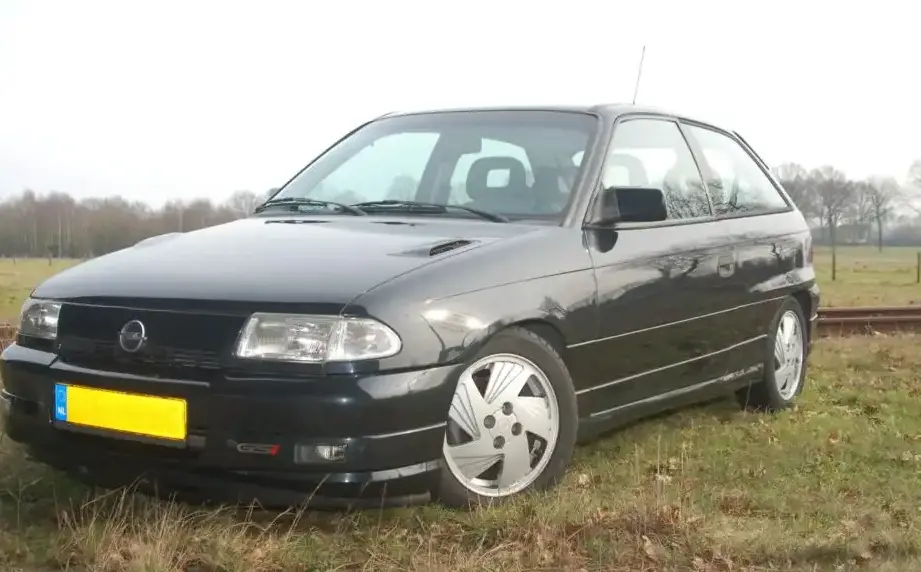
The Opel Astra F 1.6 Si, produced from March 1993 to July 1994, was a key variant within the Astra F generation (1991-1998). Positioned as a mid-range offering, it aimed to bridge the gap between the base models and the more performance-oriented versions. The Astra F represented a significant step forward for Opel, built on the GM290 platform, and was a popular choice in the European compact car segment. This specific 1.6 Si model offered a balance of fuel efficiency, reasonable performance, and a comfortable driving experience, making it a practical choice for families and commuters.
Technical Specifications
| Brand | Opel |
| Model | Astra |
| Generation | Astra F |
| Type (Engine) | 1.6 Si (100 Hp) |
| Start of production | March, 1993 |
| End of production | July, 1994 |
| Powertrain Architecture | Internal Combustion engine |
| Body type | Hatchback |
| Seats | 5 |
| Doors | 3-5 |
| Fuel consumption (urban) | 7.9 l/100 km (29.8 US mpg, 35.8 UK mpg, 12.7 km/l) |
| Fuel consumption (extra urban) | 5.2 l/100 km (45.2 US mpg, 54.3 UK mpg, 19.2 km/l) |
| Fuel consumption (combined) | 6.3 l/100 km (37.3 US mpg, 44.8 UK mpg, 15.9 km/l) |
| CO2 emissions | 169 g/km |
| Fuel Type | Petrol (Gasoline) |
| Acceleration 0 – 100 km/h | 11 sec |
| Acceleration 0 – 62 mph | 11 sec |
| Acceleration 0 – 60 mph | 10.5 sec |
| Maximum speed | 190 km/h (118.06 mph) |
| Emission standard | Euro 1 |
| Weight-to-power ratio | 9.5 kg/Hp, 105.3 Hp/tonne |
| Weight-to-torque ratio | 7 kg/Nm, 143.2 Nm/tonne |
| Power | 100 Hp @ 5800 rpm |
| Power per litre | 62.6 Hp/l |
| Torque | 136 Nm @ 3400 rpm (100.31 lb.-ft. @ 3400 rpm) |
| Engine layout | Front, Transverse |
| Engine Model/Code | C16SE |
| Engine displacement | 1598 cm3 (97.52 cu. in.) |
| Number of cylinders | 4 |
| Engine configuration | Inline |
| Cylinder Bore | 79 mm (3.11 in.) |
| Piston Stroke | 81.5 mm (3.21 in.) |
| Compression ratio | 9.8:1 |
| Number of valves per cylinder | 2 |
| Fuel injection system | Multi-port manifold injection |
| Engine aspiration | Naturally aspirated engine |
| Valvetrain | SOHC |
| Engine oil capacity | 3.5 l (3.7 US qt | 3.08 UK qt) |
| Coolant | 5.7 l (6.02 US qt | 5.02 UK qt) |
| Kerb Weight | 950/970 kg (2094.39 lbs.) |
| Max. weight | 1495 kg (3295.91 lbs.) |
| Max load | 525-545 kg (1157.43 – 1201.52 lbs.) |
| Trunk (boot) space – minimum | 360 l (12.71 cu. ft.) |
| Trunk (boot) space – maximum | 1200 l (42.38 cu. ft.) |
| Fuel tank capacity | 52 l (13.74 US gal | 11.44 UK gal) |
| Length | 4051 mm (159.49 in.) |
| Width | 1688 mm (66.46 in.) |
| Width including mirrors | 1795 mm (70.67 in.) |
| Height | 1410 mm (55.51 in.) |
| Wheelbase | 2517 mm (99.09 in.) |
| Front track | 1424 mm (56.06 in.) |
| Rear (Back) track | 1423 mm (56.02 in.) |
| Ride height (ground clearance) | 135 mm (5.31 in.) |
| Drag coefficient (Cd) | 0.32 |
| Minimum turning circle | 10.5 m (34.45 ft.) |
| Drivetrain Architecture | The Internal combustion engine (ICE) drives the front wheels of the vehicle. |
| Drive wheel | Front wheel drive |
| Number of gears and type of gearbox | 5 gears, manual transmission |
| Front suspension | Wishbone |
| Rear suspension | Suspension with traction connecting levers |
| Front brakes | Ventilated discs |
| Rear brakes | Drum |
| Steering type | Steering rack and pinion |
| Tires size | 175/70 R13 82T; 175/65 R14 81S |
| Wheel rims size | 5.5J x 13 ET49; 5.5J x 14 ET49 |
Powertrain & Engine Architecture
The heart of the Astra F 1.6 Si was the C16SE engine, a 1.6-liter inline-four cylinder gasoline engine. This engine featured a single overhead camshaft (SOHC) valvetrain with two valves per cylinder. It utilized a multi-port fuel injection system, which improved fuel atomization and combustion efficiency compared to earlier carburetor-based systems. The C16SE was known for its relative simplicity and durability. The engine produced 100 horsepower at 5800 rpm and 136 Nm (100.31 lb-ft) of torque at 3400 rpm. The engine was transversely mounted, driving the front wheels. The standard transmission was a five-speed manual, although a four-speed automatic transmission was also available, albeit less common. The automatic transmission, while offering convenience, did impact acceleration and fuel economy.
Driving Characteristics
The 1.6 Si with the manual transmission offered a reasonably engaging driving experience. Acceleration from 0 to 60 mph took around 10.5 seconds, and top speed was approximately 118 mph. The engine felt responsive enough for everyday driving, with adequate torque for overtaking maneuvers. The automatic transmission version, however, noticeably dulled performance. The gear ratios were optimized for fuel efficiency rather than outright acceleration. The Astra F’s suspension provided a comfortable ride, absorbing bumps and imperfections in the road well. Steering was light and precise, making it easy to maneuver in urban environments.
Equipment & Trim Levels
The 1.6 Si trim level typically included features such as power steering, central locking, electric front windows, and a basic stereo system. Interior upholstery was usually cloth, with a relatively simple dashboard layout. Optional extras included air conditioning, alloy wheels, and a sunroof. The 1.6 Si was generally considered a well-equipped vehicle for its price point, offering a good balance of comfort and convenience.
Chassis & Braking
The Astra F 1.6 Si utilized a front-wheel-drive layout with a MacPherson strut front suspension and a torsion beam rear suspension. The front brakes were ventilated discs, providing good stopping power, while the rear brakes were drums. This combination was typical for vehicles in this class at the time. The chassis was relatively lightweight, contributing to the car’s nimble handling. Stabilizer bars were fitted to both the front and rear axles to reduce body roll during cornering.
Market Reception & Comparison
The Astra F 1.6 Si was generally well-received by automotive critics. It was praised for its comfortable ride, decent performance, and practical interior. However, some critics noted that the engine could feel strained at higher speeds, and the automatic transmission version lacked the responsiveness of the manual. Compared to the more powerful Astra GSi models, the 1.6 Si offered a more economical and accessible option. Against competitors like the Volkswagen Golf and Ford Escort, the Astra F 1.6 Si held its own, offering a competitive package in terms of price, features, and fuel efficiency.
Legacy
The Opel Astra F 1.6 Si remains a relatively common sight on European roads today, testament to its durability and reliability. The C16SE engine is known to be a robust unit, capable of high mileage with proper maintenance. While not a particularly exciting or groundbreaking vehicle, the Astra F 1.6 Si served as a dependable and affordable compact car for many owners. In the used car market, these models are often sought after as inexpensive and practical transportation, particularly those with the manual transmission. Parts availability remains good, making maintenance relatively straightforward and affordable.
