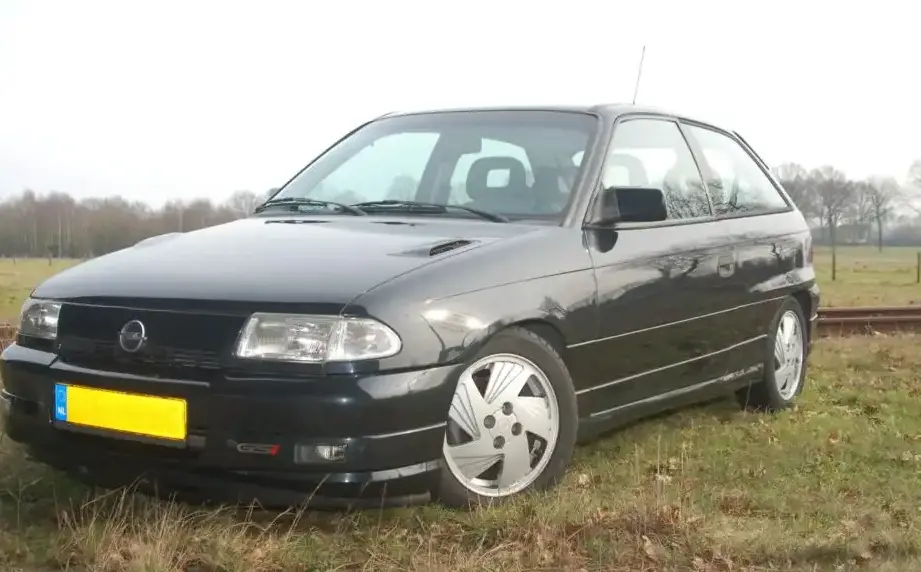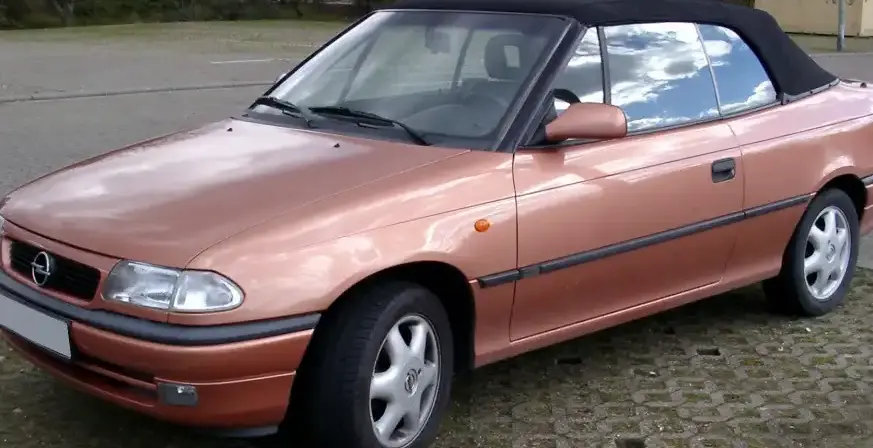
The Opel Astra F Cabriolet 1.6i, produced from 1994 to 1996, represented an accessible entry point into the world of open-top motoring for European buyers. This variant, powered by the X16SZ engine and typically paired with a five-speed manual transmission, occupied the lower end of the Astra F Cabriolet lineup, positioned below the more powerful 1.8 and 2.0-liter options. It was a popular choice for those seeking a stylish and affordable convertible, particularly in markets where Opel had a strong presence. The ‘facelift’ designation refers to styling updates introduced in 1994, giving the car a more modern appearance compared to earlier Astra F Cabriolets.
Technical Specifications
| Brand | Opel |
| Model | Astra |
| Generation | Astra F Cabrio (facelift 1994) |
| Type (Engine) | 1.6i (71 Hp) |
| Start of production | 1994 |
| End of production | 1996 |
| Powertrain Architecture | Internal Combustion engine |
| Body type | Cabriolet |
| Seats | 4 |
| Doors | 2 |
| Fuel consumption (urban) | 8.7 l/100 km (27 US mpg, 32.5 UK mpg, 11.5 km/l) |
| Fuel consumption (extra urban) | 5.6 l/100 km (42 US mpg, 50.4 UK mpg, 17.9 km/l) |
| Fuel consumption (combined) | 7.2 l/100 km (32.7 US mpg, 39.2 UK mpg, 13.9 km/l) |
| Fuel Type | Petrol (Gasoline) |
| Acceleration 0 – 100 km/h | 14.5 sec |
| Acceleration 0 – 62 mph | 14.5 sec |
| Acceleration 0 – 60 mph | 13.8 sec |
| Maximum speed | 170 km/h (105.63 mph) |
| Weight-to-power ratio | 15.8 kg/Hp, 63.4 Hp/tonne |
| Weight-to-torque ratio | 8.8 kg/Nm, 114.3 Nm/tonne |
| Power | 71 Hp @ 5000 rpm |
| Power per litre | 44.4 Hp/l |
| Torque | 128 Nm @ 2800 rpm (94.41 lb.-ft. @ 2800 rpm) |
| Engine layout | Front, Transverse |
| Engine Model/Code | X16SZ |
| Engine displacement | 1598 cm3 (97.52 cu. in.) |
| Number of cylinders | 4 |
| Engine configuration | Inline |
| Cylinder Bore | 79 mm (3.11 in.) |
| Piston Stroke | 81.5 mm (3.21 in.) |
| Compression ratio | 10:1 |
| Number of valves per cylinder | 2 |
| Fuel injection system | Multi-port manifold injection |
| Engine aspiration | Naturally aspirated engine |
| Valvetrain | SOHC |
| Engine oil capacity | 3.5 l (3.7 US qt | 3.08 UK qt) |
| Coolant capacity | 5.6 l (5.92 US qt | 4.93 UK qt) |
| Kerb Weight | 1120 kg (2469.18 lbs.) |
| Max. weight | 1545 kg (3406.14 lbs.) |
| Max load | 425 kg (936.96 lbs.) |
| Trunk (boot) space – minimum | 390 l (13.77 cu. ft.) |
| Fuel tank capacity | 52 l (13.74 US gal | 11.44 UK gal) |
| Length | 4239 mm (166.89 in.) |
| Width | 1684 mm (66.3 in.) |
| Width including mirrors | 1852 mm (72.91 in.) |
| Height | 1400 mm (55.12 in.) |
| Wheelbase | 2517 mm (99.09 in.) |
| Front track | 1424 mm (56.06 in.) |
| Rear (Back) track | 1423 mm (56.02 in.) |
| Drag coefficient (Cd) | 0.33 |
| Minimum turning circle | 10.5 m (34.45 ft.) |
| Drivetrain Architecture | Front wheel drive |
| Number of gears | 5 |
| Gearbox type | Manual transmission |
| Front brakes | Ventilated discs |
| Rear brakes | Drum |
| Steering type | Steering rack and pinion |
| Tires size | 185/60 R14 82H |
| Wheel rims size | 5.5J x 14 ET49 |
Powertrain & Engine Architecture
The heart of the Astra F Cabriolet 1.6i was the Opel X16SZ engine, a naturally aspirated, four-cylinder inline engine displacing 1.6 liters (1598 cc). This engine was a staple in many Opel and Vauxhall models of the era. It featured a single overhead camshaft (SOHC) valvetrain with two valves per cylinder. Fuel delivery was handled by a multi-port fuel injection system, providing a balance between efficiency and performance. The X16SZ was known for its relative simplicity and durability, making it a reasonably reliable unit. The five-speed manual transmission was the most common pairing, offering a decent spread of gears for everyday driving. While an automatic transmission was available, it was less frequently chosen and often impacted performance.
Driving Characteristics
The 1.6-liter engine, producing 71 horsepower, provided adequate but not exhilarating performance in the Astra F Cabriolet. Acceleration from 0 to 60 mph took around 13.8 seconds, and top speed was approximately 105 mph. The car felt best suited to relaxed cruising rather than spirited driving. The manual transmission allowed drivers to make the most of the available power, while the automatic version, if equipped, resulted in noticeable performance loss. The gear ratios were geared towards fuel economy, and the engine needed to be revved to extract its full potential. Compared to the 1.8 and 2.0-liter versions, the 1.6i felt noticeably slower, especially when carrying passengers or luggage.
Equipment & Trim Levels
The 1.6i Cabriolet typically came with a fairly basic level of equipment, reflecting its position as the entry-level model. Standard features generally included power steering, central locking, and a basic stereo system. Interior upholstery was typically cloth, and the dashboard featured a functional but somewhat utilitarian design. Optional extras included alloy wheels, electric windows, and a more sophisticated audio system. The trim level could vary slightly depending on the market, but the focus remained on providing an affordable and enjoyable open-top experience.
Chassis & Braking
The Astra F Cabriolet utilized a MacPherson strut front suspension and a torsion beam rear suspension. The front brakes were ventilated discs, providing adequate stopping power, while the rear brakes were drums. This configuration was typical for cars in this class and price range during the 1990s. The suspension setup prioritized comfort over outright handling, resulting in a relatively smooth ride. Stabilizer bars were fitted to both the front and rear axles to reduce body roll during cornering, but the car wasn’t designed for aggressive driving.
Market Reception & Comparison
The Astra F Cabriolet 1.6i was generally well-received as an affordable and stylish convertible. Critics praised its attractive design and reasonable fuel economy. However, the 1.6-liter engine was often criticized for being underpowered, particularly when compared to the larger-engined versions. The 1.8-liter model offered a significant performance boost, while the 2.0-liter provided even more power. In terms of reliability, the 1.6i engine was considered fairly robust, but regular maintenance was essential. Fuel economy was a strong point, with combined figures around 32.7 US mpg.
Legacy
Today, the Opel Astra F Cabriolet 1.6i is a relatively affordable classic car. The X16SZ engine is known for its durability, but age-related issues such as oil leaks and worn suspension components are common. Parts availability is generally good, as many components were shared with other Opel and Vauxhall models. The 1.6i variant remains a popular choice for those seeking a classic convertible experience without breaking the bank. While not the fastest or most luxurious version of the Astra F Cabriolet, it offers a charming and enjoyable driving experience, particularly for those who appreciate its simplicity and affordability.