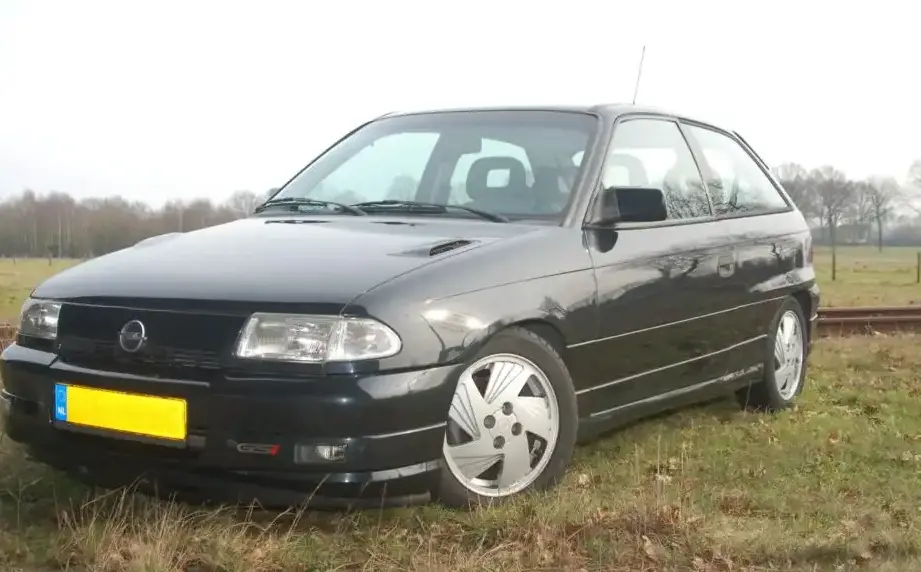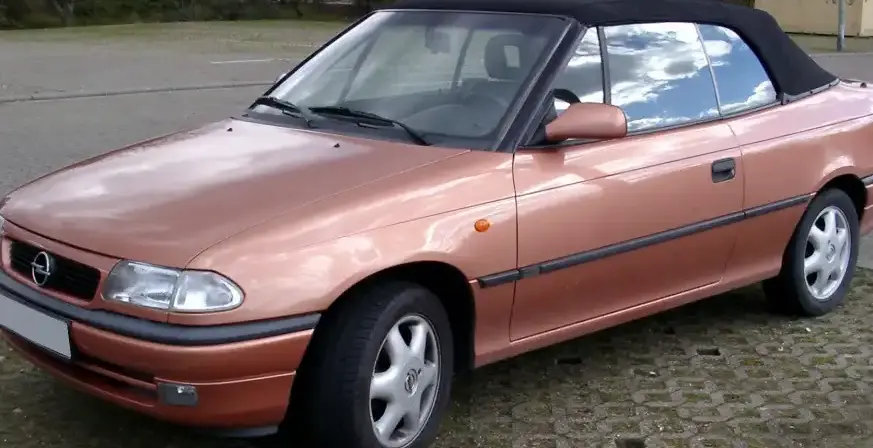
The Opel Astra F Cabriolet, specifically the 1.6i variant with an automatic transmission produced from 1994 to 1996, represented an accessible entry point into the world of open-top motoring for European buyers. Positioned as the base model within the Astra F Cabrio range, it offered a more affordable alternative to the higher-performance and more expensive 1.8 and 2.0-liter versions. This facelifted model, introduced in 1994, featured subtle styling revisions compared to the earlier Astra F Cabriolets, and aimed to broaden the appeal of the Astra nameplate with a stylish and practical convertible option. It was a key part of Opel’s strategy to offer a diverse range of vehicles catering to different customer needs and budgets.
Technical Specifications
| Brand | Opel |
| Model | Astra |
| Generation | Astra F Cabrio (facelift 1994) |
| Type (Engine) | 1.6i (71 Hp) Automatic |
| Start of production | 1994 |
| End of production | 1996 |
| Powertrain Architecture | Internal Combustion engine |
| Body type | Cabriolet |
| Seats | 4 |
| Doors | 2 |
| Fuel consumption (urban) | 9.5 l/100 km (24.8 US mpg, 29.7 UK mpg, 10.5 km/l) |
| Fuel consumption (extra urban) | 6.1 l/100 km (38.6 US mpg, 46.3 UK mpg, 16.4 km/l) |
| Fuel consumption (combined) | 7.8 l/100 km (30.2 US mpg, 36.2 UK mpg, 12.8 km/l) |
| Fuel Type | Petrol (Gasoline) |
| Acceleration 0 – 100 km/h | 17.5 sec |
| Acceleration 0 – 62 mph | 17.5 sec |
| Acceleration 0 – 60 mph | 16.6 sec |
| Maximum speed | 163 km/h (101.28 mph) |
| Weight-to-power ratio | 16.1 kg/Hp, 62.3 Hp/tonne |
| Weight-to-torque ratio | 8.9 kg/Nm, 112.3 Nm/tonne |
| Power | 71 Hp @ 5000 rpm |
| Power per litre | 44.4 Hp/l |
| Torque | 128 Nm @ 2800 rpm (94.41 lb.-ft. @ 2800 rpm) |
| Engine layout | Front, Transverse |
| Engine Model/Code | X16SZ |
| Engine displacement | 1598 cm3 (97.52 cu. in.) |
| Number of cylinders | 4 |
| Engine configuration | Inline |
| Cylinder Bore | 79 mm (3.11 in.) |
| Piston Stroke | 81.5 mm (3.21 in.) |
| Compression ratio | 10:1 |
| Number of valves per cylinder | 2 |
| Fuel injection system | Multi-port manifold injection |
| Engine aspiration | Naturally aspirated engine |
| Valvetrain | SOHC |
| Engine oil capacity | 3.5 l (3.7 US qt | 3.08 UK qt) |
| Coolant capacity | 5.6 l (5.92 US qt | 4.93 UK qt) |
| Kerb Weight | 1140 kg (2513.27 lbs.) |
| Max. weight | 1565 kg (3450.23 lbs.) |
| Max load | 425 kg (936.96 lbs.) |
| Trunk (boot) space – minimum | 390 l (13.77 cu. ft.) |
| Fuel tank capacity | 52 l (13.74 US gal | 11.44 UK gal) |
| Length | 4239 mm (166.89 in.) |
| Width | 1684 mm (66.3 in.) |
| Width including mirrors | 1852 mm (72.91 in.) |
| Height | 1400 mm (55.12 in.) |
| Wheelbase | 2517 mm (99.09 in.) |
| Front track | 1424 mm (56.06 in.) |
| Rear (Back) track | 1423 mm (56.02 in.) |
| Drag coefficient (Cd) | 0.33 |
| Minimum turning circle | 10.5 m (34.45 ft.) |
| Drivetrain Architecture | Front wheel drive |
| Number of gears | 4 |
| Gearbox type | Automatic transmission |
| Front brakes | Ventilated discs |
| Rear brakes | Drum |
| Steering type | Steering rack and pinion |
| Tires size | 185/60 R14 82H |
| Wheel rims size | 5.5J x 14 ET49 |
Powertrain & Engine Architecture
The heart of the Astra F Cabriolet 1.6i Automatic was the X16SZ engine, a 1.6-liter inline-four cylinder gasoline engine. This engine was a mainstay of Opel’s lineup during the 1990s, known for its relative simplicity and durability. It featured a single overhead camshaft (SOHC) valvetrain operating two valves per cylinder. Fuel delivery was handled by a multi-port fuel injection system, providing a balance between efficiency and performance. The X16SZ produced 71 horsepower at 5000 rpm and 128 Nm (94.41 lb-ft) of torque at 2800 rpm. The engine’s design prioritized fuel economy and smooth operation over outright power. Paired with this engine was a four-speed automatic transmission, offering convenient gear changes but at the expense of some performance and efficiency compared to the available five-speed manual gearbox.
Driving Characteristics
The 1.6-liter automatic Astra F Cabriolet offered a relaxed and comfortable driving experience. Acceleration was modest, taking approximately 17.5 seconds to reach 62 mph (100 km/h). The automatic transmission, while providing ease of use, resulted in noticeable power loss compared to the manual versions. Gear ratios were optimized for fuel efficiency and smooth cruising rather than spirited driving. The car felt best suited for city driving and leisurely open-road journeys. Compared to the 1.8 and 2.0-liter models, the 1.6i automatic lacked the punch for quick overtaking maneuvers or engaging driving experiences. However, its lighter weight compared to the larger-engined variants did contribute to slightly better handling and fuel economy.
Equipment & Trim Levels
The base 1.6i automatic trim level typically included features such as power steering, central locking, and basic instrumentation. Interior upholstery was usually cloth, with a relatively simple dashboard layout. Optional extras included alloy wheels, upgraded audio systems, and a more refined interior trim. The convertible top was manually operated, a cost-saving measure compared to the electrically operated tops found on higher-spec models. Safety features were relatively basic for the time, typically consisting of seatbelts and a driver’s airbag as optional equipment.
Chassis & Braking
The Astra F Cabriolet utilized a MacPherson strut front suspension and a torsion beam rear suspension. The front brakes were ventilated discs, providing adequate stopping power, while the rear brakes were drums, a common cost-saving measure on base models. The suspension setup was tuned for comfort, prioritizing a smooth ride over sharp handling. Stabilizer bars were fitted to both the front and rear axles to reduce body roll during cornering, but the overall handling characteristics were geared towards everyday usability rather than sporty performance.
Market Reception & Comparison
The Astra F Cabriolet 1.6i Automatic was generally well-received as an affordable and stylish entry into the convertible market. Critics noted its comfortable ride and practical interior space. However, the engine’s lack of power and the automatic transmission’s inefficiency were common criticisms. Compared to the 1.8 and 2.0-liter models, the 1.6i offered significantly lower performance but also lower running costs. Fuel economy was a strong point, with combined figures around 30.2 US mpg. Reliability was generally good, although the automatic transmission could be prone to issues if not properly maintained.
Legacy
The Opel Astra F Cabriolet 1.6i Automatic remains a relatively affordable classic car today. The X16SZ engine is known for its durability, and parts availability is generally good. However, potential buyers should be aware of the potential for automatic transmission issues and the need for regular maintenance. The car’s simple design and relatively low running costs make it an appealing option for those seeking a classic convertible experience without breaking the bank. While not a performance icon, the Astra F Cabriolet 1.6i Automatic played a significant role in making open-top motoring accessible to a wider audience in Europe.