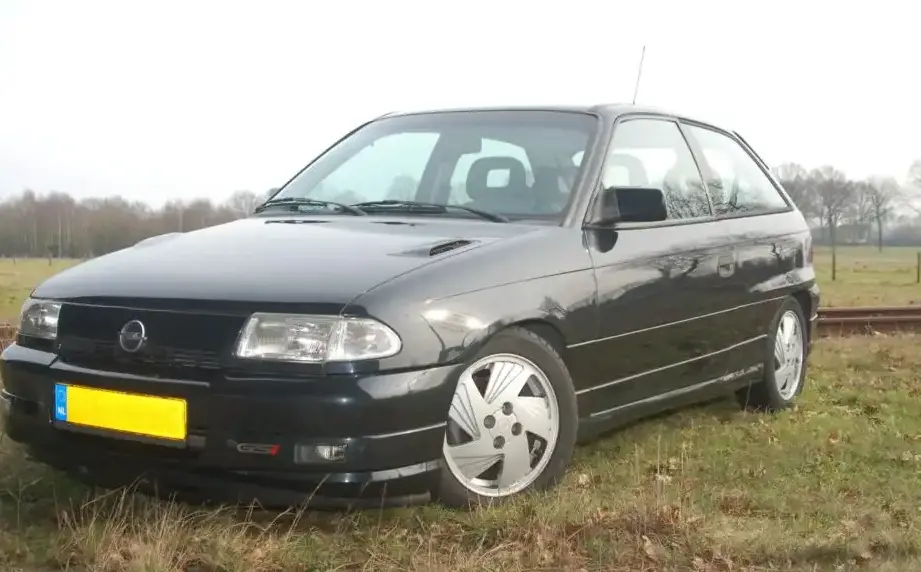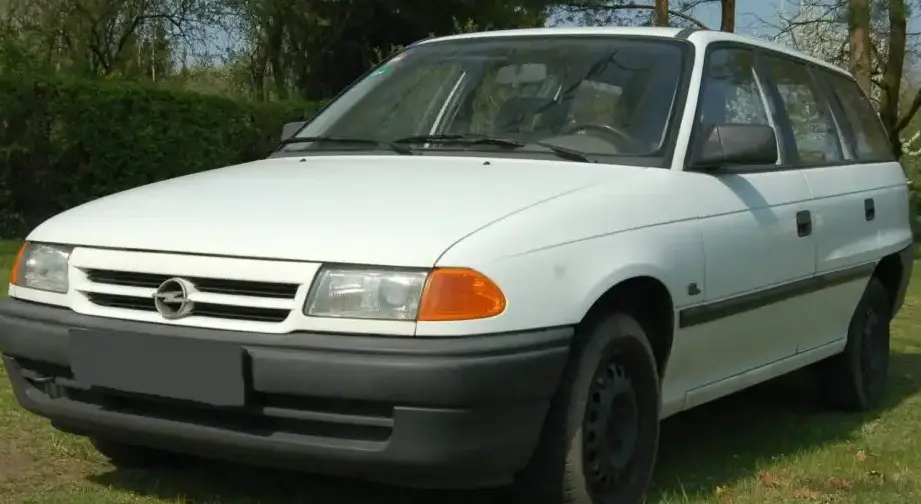
The Opel Astra F Caravan 1.7 D, produced from October 1991 to July 1992, represented an entry-level offering within the broader Astra F Caravan (estate) range. This variant, equipped with a 1.7-liter diesel engine producing 57 horsepower, was primarily aimed at buyers prioritizing fuel economy and practicality over outright performance. It occupied the base trim level, serving as the most affordable option for those needing the versatility of a station wagon. The Astra F generation (1991-1998) was a significant model for Opel, representing a substantial leap forward in design, safety, and technology compared to its predecessor, the Astra F. The Caravan body style, in particular, was popular in Europe for its spaciousness and utility.
Technical Specifications
| Brand | Opel |
| Model | Astra |
| Generation | Astra F Caravan |
| Type (Engine) | 1.7 D (57 Hp) |
| Start of production | October, 1991 |
| End of production | July, 1992 |
| Powertrain Architecture | Internal Combustion engine |
| Body type | Station wagon (estate) |
| Seats | 5 |
| Doors | 5 |
| Fuel consumption (urban) | 8.3 l/100 km (28.3 US mpg, 34 UK mpg, 12 km/l) |
| Fuel consumption (extra urban) | 6.8 l/100 km (34.6 US mpg, 41.5 UK mpg, 14.7 km/l) |
| Fuel consumption (combined) | 6.8 l/100 km (34.6 US mpg, 41.5 UK mpg, 14.7 km/l) |
| Fuel Type | Diesel |
| Acceleration 0 – 100 km/h | 19.5 sec |
| Acceleration 0 – 62 mph | 19.5 sec |
| Acceleration 0 – 60 mph | 18.5 sec |
| Maximum speed | 149 km/h (92.58 mph) |
| Weight-to-power ratio | 18.8 kg/Hp, 53.3 Hp/tonne |
| Weight-to-torque ratio | 10.2 kg/Nm, 98.1 Nm/tonne |
| Power | 57 Hp @ 4600 rpm |
| Power per litre | 33.5 Hp/l |
| Torque | 105 Nm @ 2400 rpm (77.44 lb.-ft. @ 2400 rpm) |
| Engine layout | Front, Transverse |
| Engine Model/Code | 17D |
| Engine displacement | 1699 cm3 (103.68 cu. in.) |
| Number of cylinders | 4 |
| Engine configuration | Inline |
| Cylinder Bore | 82.5 mm (3.25 in.) |
| Piston Stroke | 79.5 mm (3.13 in.) |
| Compression ratio | 23:1 |
| Number of valves per cylinder | 2 |
| Fuel injection system | Precombustion chamber injection |
| Engine aspiration | Naturally aspirated engine |
| Valvetrain | SOHC |
| Engine oil capacity | 5 l (5.28 US qt | 4.4 UK qt) |
| Coolant | 7.8 l (8.24 US qt | 6.86 UK qt) |
| Kerb Weight | 1070 kg (2358.95 lbs.) |
| Max. weight | 1575 kg (3472.28 lbs.) |
| Max load | 505 kg (1113.33 lbs.) |
| Trunk (boot) space – minimum | 500 l (17.66 cu. ft.) |
| Trunk (boot) space – maximum | 1630 l (57.56 cu. ft.) |
| Fuel tank capacity | 50 l (13.21 US gal | 11 UK gal) |
| Length | 4278 mm (168.43 in.) |
| Width | 1688 mm (66.46 in.) |
| Width including mirrors | 1795 mm (70.67 in.) |
| Height | 1475 mm (58.07 in.) |
| Wheelbase | 2517 mm (99.09 in.) |
| Front track | 1430 mm (56.3 in.) |
| Rear (Back) track | 1429 mm (56.26 in.) |
| Ride height (ground clearance) | 135 mm (5.31 in.) |
| Drag coefficient (Cd) | 0.34 |
| Minimum turning circle | 10.5 m (34.45 ft.) |
| Drivetrain Architecture | The Internal combustion engine (ICE) drives the front wheels of the vehicle. |
| Drive wheel | Front wheel drive |
| Number of gears and type of gearbox | 5 gears, manual transmission |
| Front suspension | Wishbone |
| Rear suspension | Suspension with traction connecting levers |
| Front brakes | Ventilated discs |
| Rear brakes | Drum |
| Steering type | Steering rack and pinion |
| Tires size | 175/70 R13 82T; 175/65 R14 82T |
| Wheel rims size | 5.5J x 13 ET49; 5.5J x 14 ET49 |
Powertrain & Engine Architecture
The heart of the Astra F Caravan 1.7 D was the Opel 17D engine, a naturally aspirated, inline-four cylinder diesel. This engine utilized a precombustion chamber injection system, a common technology for diesel engines of the era. This system involved injecting fuel into a small precombustion chamber within the cylinder head, where it was partially ignited before entering the main combustion chamber. This aided in cold starting and reduced engine noise. The engine featured a single overhead camshaft (SOHC) valvetrain, operating two valves per cylinder. The 17D produced 57 horsepower at 4600 rpm and 105 Nm (77.44 lb-ft) of torque at 2400 rpm. The engine’s relatively low compression ratio of 23:1 was typical for indirect injection diesel engines. The engine was transversely mounted in the front of the vehicle, driving the front wheels. The standard transmission was a five-speed manual gearbox, optimized for fuel efficiency rather than sporty performance.
Driving Characteristics
The 1.7 D-powered Astra F Caravan was not known for its speed. Acceleration from 0 to 100 km/h (0-62 mph) took approximately 19.5 seconds, and top speed was limited to 149 km/h (92.58 mph). The focus was squarely on economy and usability. The five-speed manual transmission helped to keep the engine within its optimal torque band, but the limited horsepower meant that overtaking maneuvers required careful planning. Compared to the more powerful gasoline variants (like the 1.8 or 2.0-liter engines) or even the later 1.7 TDI, the 1.7 D felt significantly slower. However, the diesel engine’s torque characteristics provided reasonable pulling power for everyday driving and hauling loads in the spacious Caravan body style. The gear ratios were spaced to maximize fuel efficiency, resulting in a somewhat lethargic feel at higher speeds.
Equipment & Trim Levels
As the entry-level trim, the 1.7 D Caravan typically came with basic equipment. Standard features included cloth upholstery, a simple dashboard layout, and manual windows and door locks. Power steering was often an optional extra. Safety features were relatively basic for the time, typically including a driver’s airbag and seatbelts. Optional extras could include a radio/cassette player, upgraded interior trim, and central locking. The interior was designed for practicality and durability rather than luxury.
Chassis & Braking
The Astra F Caravan 1.7 D utilized a relatively simple chassis setup. The front suspension consisted of wishbones, while the rear suspension employed a torsion beam with traction connecting levers. This setup prioritized ride comfort and load-carrying capacity over sporty handling. The braking system featured ventilated discs on the front wheels and drum brakes on the rear. This configuration was common for vehicles in this price range and weight class during the early 1990s. The steering was a rack and pinion system, providing adequate precision for everyday driving.
Market Reception & Comparison
The Astra F Caravan 1.7 D was well-received by buyers seeking an affordable and economical station wagon. Critics acknowledged its practicality and fuel efficiency but noted its lack of performance. Compared to the gasoline-powered Astra F models, the 1.7 D offered significantly better fuel economy but at the cost of acceleration and refinement. The later introduction of the 1.7 TDI (turbo diesel) variant offered a compelling alternative, providing more power and torque without a significant penalty in fuel economy. However, the 1.7 D remained a popular choice for those on a tight budget or prioritizing simplicity and reliability.
Legacy
The Opel Astra F Caravan 1.7 D, while not a performance icon, proved to be a durable and reliable workhorse. The 17D engine, though simple in design, was known for its longevity when properly maintained. Today, these vehicles are relatively rare, but those that remain are often sought after by enthusiasts looking for a classic, affordable, and practical European station wagon. The powertrain, while dated by modern standards, is relatively straightforward to repair, making it appealing to DIY mechanics. The Astra F Caravan 1.7 D represents a significant chapter in Opel’s history, embodying the brand’s commitment to providing practical and affordable transportation to a wide range of customers.