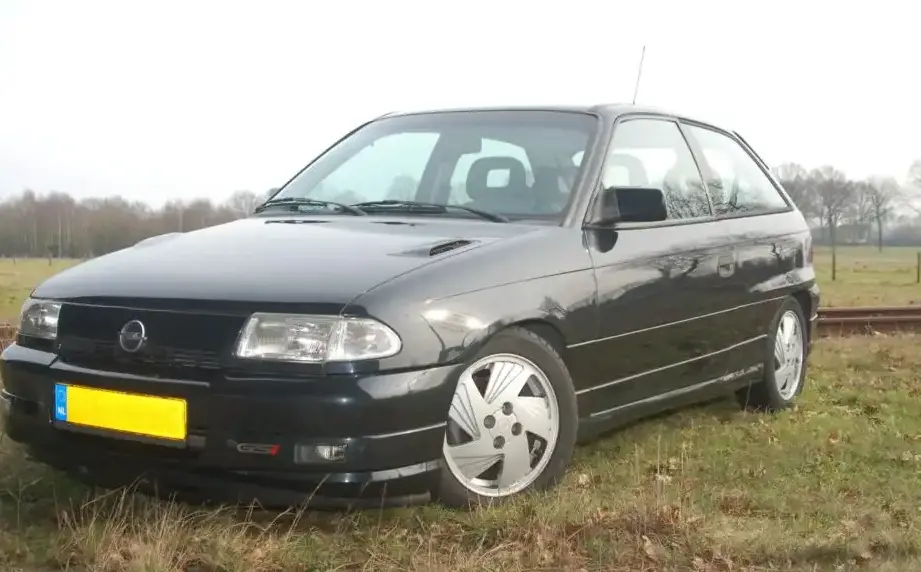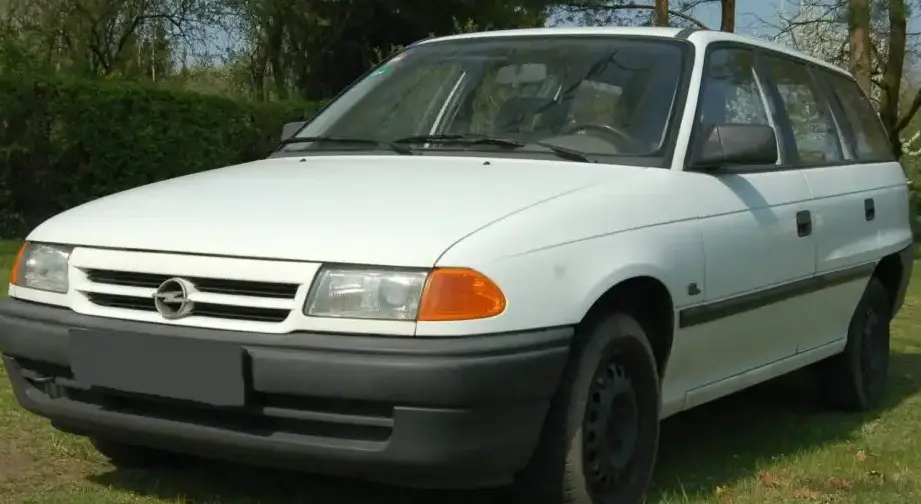
The Opel Astra F Caravan 2.0i (115 hp) was a station wagon variant produced between October 1991 and March 1993. It represented a mid-range offering within the broader Astra F Caravan lineup, positioned above the base 1.4 and 1.6-liter models but below the more performance-oriented 2.0 16V. The Astra F, launched in 1991, was a significant model for Opel, representing a substantial leap forward in design, safety, and technology compared to its predecessor, the Astra F. The Caravan body style, a popular choice in Europe, offered increased practicality and cargo space, making it a favored option for families and those requiring versatile transportation.
Technical Specifications
| Brand | Opel |
| Model | Astra |
| Generation | Astra F Caravan |
| Type (Engine) | 2.0i (115 Hp) |
| Start of production | October, 1991 |
| End of production | March, 1993 |
| Powertrain Architecture | Internal Combustion engine |
| Body type | Station wagon (estate) |
| Seats | 5 |
| Doors | 5 |
| Fuel consumption (urban) | 10.5 l/100 km (22.4 US mpg, 26.9 UK mpg, 9.5 km/l) |
| Fuel consumption (extra urban) | 6.7 l/100 km (35.1 US mpg, 42.2 UK mpg, 14.9 km/l) |
| Fuel consumption (combined) | 8.9 l/100 km (26.4 US mpg, 31.7 UK mpg, 11.2 km/l) |
| Fuel Type | Petrol (Gasoline) |
| Acceleration 0 – 100 km/h | 10 sec |
| Acceleration 0 – 62 mph | 10 sec |
| Acceleration 0 – 60 mph | 9.5 sec |
| Maximum speed | 190 km/h (118.06 mph) |
| Weight-to-power ratio | 9.6 kg/Hp, 104.1 Hp/tonne |
| Weight-to-torque ratio | 6.5 kg/Nm, 153.8 Nm/tonne |
| Power | 115 Hp @ 5400 rpm |
| Power per litre | 57.6 Hp/l |
| Torque | 170 Nm @ 2600 rpm (125.39 lb.-ft. @ 2600 rpm) |
| Engine layout | Front, Transverse |
| Engine Model/Code | C20NE |
| Engine displacement | 1998 cm3 (121.93 cu. in.) |
| Number of cylinders | 4 |
| Engine configuration | Inline |
| Cylinder Bore | 86 mm (3.39 in.) |
| Piston Stroke | 86 mm (3.39 in.) |
| Compression ratio | 9.2:1 |
| Number of valves per cylinder | 2 |
| Fuel injection system | Multi-port manifold injection |
| Engine aspiration | Naturally aspirated engine |
| Valvetrain | SOHC |
| Engine oil capacity | 4 l (4.23 US qt | 3.52 UK qt) |
| Coolant | 7 l (7.4 US qt | 6.16 UK qt) |
| Kerb Weight | 1105 kg (2436.11 lbs.) |
| Max. weight | 1590 kg (3505.35 lbs.) |
| Max load | 485 kg (1069.24 lbs.) |
| Trunk (boot) space – minimum | 500 l (17.66 cu. ft.) |
| Trunk (boot) space – maximum | 1630 l (57.56 cu. ft.) |
| Fuel tank capacity | 50 l (13.21 US gal | 11 UK gal) |
| Length | 4278 mm (168.43 in.) |
| Width | 1688 mm (66.46 in.) |
| Width including mirrors | 1795 mm (70.67 in.) |
| Height | 1475 mm (58.07 in.) |
| Wheelbase | 2517 mm (99.09 in.) |
| Front track | 1430 mm (56.3 in.) |
| Rear (Back) track | 1423 mm (56.02 in.) |
| Ride height (ground clearance) | 135 mm (5.31 in.) |
| Drag coefficient (Cd) | 0.34 |
| Minimum turning circle | 10.5 m (34.45 ft.) |
| Drivetrain Architecture | The Internal combustion engine (ICE) drives the front wheels of the vehicle. |
| Drive wheel | Front wheel drive |
| Number of gears and type of gearbox | 5 gears, manual transmission |
| Front brakes | Ventilated discs |
| Rear brakes | Drum |
| Steering type | Steering rack and pinion |
| Tires size | 175/65 R14 82H |
| Wheel rims size | 5.5J x 14 |
Powertrain & Engine Architecture
The Astra F Caravan 2.0i was powered by the Opel C20NE engine, an inline four-cylinder, naturally aspirated gasoline engine displacing 1998cc. This engine was a mainstay of the Opel/Vauxhall range during the early 1990s, known for its relative simplicity and durability. The C20NE featured a single overhead camshaft (SOHC) valvetrain operating two valves per cylinder. Fuel delivery was handled by a Bosch Motronic multi-port fuel injection system, providing precise control over the air-fuel mixture. The engine produced 115 horsepower at 5400 rpm and 170 Nm (125 lb-ft) of torque at 2600 rpm. The engine’s design prioritized smooth operation and fuel efficiency over outright performance. The 5-speed manual transmission was the standard offering, providing a balance between usability and driver engagement.
Driving Characteristics
The 2.0i Caravan offered a noticeable step up in performance compared to the lower-displacement Astra F Caravan models. While not a sports car, the 115 hp engine provided adequate power for comfortable cruising and overtaking on highways. Acceleration from 0 to 60 mph took approximately 9.5 seconds, and the top speed was around 118 mph. The manual transmission allowed for reasonable control over the engine’s power band. The gear ratios were tuned for everyday driving, prioritizing fuel economy and ease of use. Compared to the later 2.0 16V models, the 8-valve engine felt less responsive at higher engine speeds, but it offered a more linear power delivery, making it easier to drive in everyday situations.
Equipment & Trim Levels
The 2.0i Caravan typically came equipped with features such as power steering, central locking, and electric front windows. Interior upholstery was generally cloth, with options for upgraded materials available. Dashboard configuration was fairly standard for the era, with analog gauges for speed, tachometer, fuel level, and coolant temperature. Optional extras included a sunroof, air conditioning, and upgraded audio systems. The trim level often dictated the availability of these features, with higher trims offering more standard equipment.
Chassis & Braking
The Astra F Caravan featured a MacPherson strut front suspension and a torsion beam rear suspension. The 2.0i model benefited from slightly stiffer suspension components compared to the base models, improving handling and stability. Braking was handled by ventilated discs on the front wheels and drum brakes on the rear. The braking system was adequate for the vehicle’s weight and performance, but lacked the stopping power of more modern systems. The steering was a rack and pinion system, providing precise and responsive steering feel.
Market Reception & Comparison
The Astra F Caravan 2.0i was generally well-received by automotive critics as a practical and reliable family car. It offered a good balance of performance, fuel economy, and space. Compared to other station wagons in its class, such as the Ford Escort Estate and the Volkswagen Passat Variant, the Astra F Caravan offered a competitive level of equipment and a stylish design. The 2.0i engine provided a noticeable performance advantage over the base models, making it a popular choice for those who frequently carried passengers or cargo. Fuel economy was respectable for the time, averaging around 26.4 US mpg in combined driving.
Legacy
The Opel Astra F Caravan 2.0i, while not a particularly rare or collectible vehicle, remains a popular choice among classic car enthusiasts and those seeking a reliable and affordable used car. The C20NE engine is known for its durability and relatively simple maintenance requirements. Parts availability is generally good, and the engine is relatively easy to work on for experienced mechanics. Today, these vehicles are often found in well-maintained condition, offering a nostalgic driving experience and a practical alternative to more modern vehicles. The Astra F Caravan, in general, is remembered as a significant model in Opel’s history, representing a turning point in design and technology.