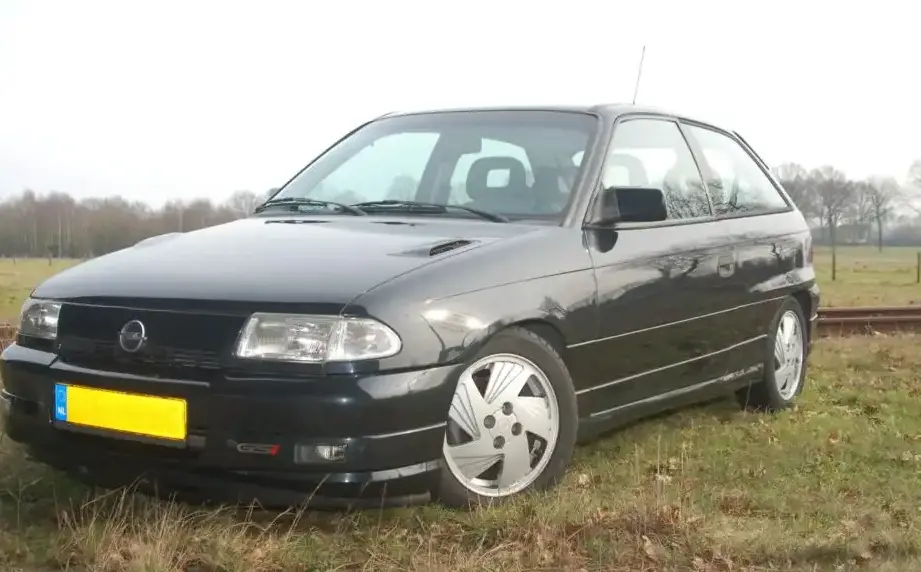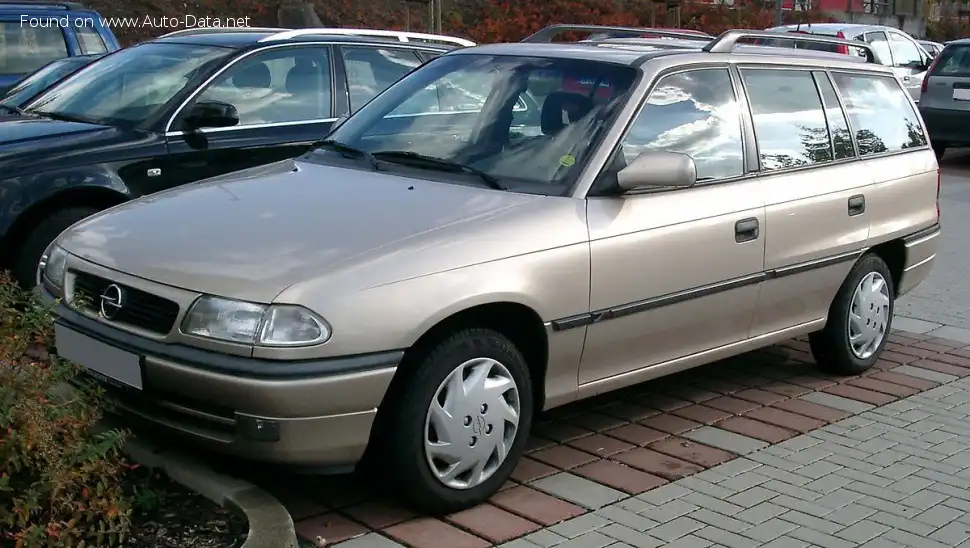
The Opel Astra F Caravan 1.4i Ecotec 16V (90 hp) was a station wagon variant produced between 1996 and 1998, representing a key offering within the facelifted ‘F’ generation of the Astra. Introduced as part of the 1994 refresh of the Astra F, this model aimed to provide a practical and economical option for families and those requiring increased cargo space. It occupied a mid-range position in the Caravan lineup, slotting below the more powerful 1.6 and 1.8-liter engines, and above the base 1.2-liter model. The Astra F series, and the Caravan specifically, were crucial to Opel’s success in the European compact car market, offering a blend of affordability, functionality, and relatively modern technology for its time.
Technical Specifications
| Brand | Opel |
| Model | Astra |
| Generation | Astra F Caravan (facelift 1994) |
| Type (Engine) | 1.4i Ecotec 16V (90 Hp) |
| Start of production | 1996 |
| End of production | 1998 |
| Powertrain Architecture | Internal Combustion engine |
| Body type | Station wagon (estate) |
| Seats | 5 |
| Doors | 5 |
| Fuel consumption (urban) | 9.3 l/100 km (25.3 US mpg) |
| Fuel consumption (extra urban) | 6.6 l/100 km (35.6 US mpg) |
| Fuel consumption (combined) | 8.4 l/100 km (28 US mpg) |
| Fuel Type | Petrol (Gasoline) |
| Acceleration 0 – 100 km/h | 13.5 sec |
| Acceleration 0 – 62 mph | 13.5 sec |
| Acceleration 0 – 60 mph | 12.8 sec |
| Maximum speed | 173 km/h (107.5 mph) |
| Weight-to-power ratio | 12.1 kg/Hp |
| Weight-to-torque ratio | 8.7 kg/Nm |
| Power | 90 Hp @ 6000 rpm |
| Power per litre | 64.8 Hp/l |
| Torque | 125 Nm @ 4000 rpm (92.2 lb.-ft. @ 4000 rpm) |
| Engine layout | Front, Transverse |
| Engine Model/Code | X14XE |
| Engine displacement | 1389 cm3 (84.76 cu. in.) |
| Number of cylinders | 4 |
| Engine configuration | Inline |
| Cylinder Bore | 77.6 mm (3.06 in.) |
| Piston Stroke | 73.4 mm (2.89 in.) |
| Compression ratio | 10.5:1 |
| Number of valves per cylinder | 4 |
| Fuel injection system | Multi-port manifold injection |
| Engine aspiration | Naturally aspirated engine |
| Valvetrain | DOHC |
| Engine oil capacity | 3.5 l (3.7 US qt | 3.08 UK qt) |
| Coolant capacity | 5.6 l (5.92 US qt | 4.93 UK qt) |
| Kerb Weight | 1085 kg (2392.02 lbs.) |
| Max. weight | 1570 kg (3461.26 lbs.) |
| Max load | 485 kg (1069.24 lbs.) |
| Trunk (boot) space – minimum | 500 l (17.66 cu. ft.) |
| Trunk (boot) space – maximum | 1630 l (57.56 cu. ft.) |
| Fuel tank capacity | 50 l (13.21 US gal | 11 UK gal) |
| Length | 4278 mm (168.43 in.) |
| Width | 1686 mm (66.38 in.) |
| Width including mirrors | 1852 mm (72.91 in.) |
| Height | 1525 mm (60.04 in.) |
| Wheelbase | 2517 mm (99.09 in.) |
| Front track | 1424 mm (56.06 in.) |
| Rear track | 1423 mm (56.02 in.) |
| Ride height (ground clearance) | 135 mm (5.31 in.) |
| Drag coefficient (Cd) | 0.34 |
| Minimum turning circle | 10.5 m (34.45 ft.) |
| Drivetrain Architecture | Front wheel drive |
| Number of gears | 5 |
| Gearbox type | Manual transmission |
| Front brakes | Ventilated discs |
| Rear brakes | Drum |
| Steering type | Steering rack and pinion |
| Tires size | 175/65 R14 82T |
| Wheel rims size | 5.5J x 14 ET 49 |
Powertrain & Engine Architecture
The heart of the Astra F Caravan 1.4i was the X14XE engine, a 1.4-liter inline-four cylinder unit belonging to Opel’s ‘Ecotec’ family. This engine featured a cast iron block and an aluminum cylinder head, incorporating a dual overhead camshaft (DOHC) design with four valves per cylinder. This 16-valve configuration, combined with multi-port fuel injection, allowed for improved breathing and a relatively high output for its displacement. The X14XE produced 90 horsepower at 6000 rpm and 125 Nm (92.2 lb-ft) of torque at 4000 rpm. The engine’s compression ratio was 10.5:1. The transmission was a five-speed manual gearbox, designed to maximize fuel efficiency and provide adequate acceleration. While an automatic transmission was available on other Astra F models, it was less common with the 1.4i engine due to the performance limitations.
Driving Characteristics
The 1.4i Ecotec with the five-speed manual transmission offered a reasonably sprightly driving experience for everyday use. Acceleration to 60 mph took around 12.8 seconds, and top speed was approximately 107.5 mph. However, it wasn’t a particularly powerful engine, and overtaking maneuvers required careful planning. The gear ratios were tuned for economy, meaning the engine needed to be revved to access its peak power. Compared to the 1.6 and 1.8-liter versions, the 1.4i felt noticeably less responsive, especially when fully loaded. The manual transmission provided more control and engagement than the optional automatic, allowing drivers to make the most of the available power. The Caravan’s suspension was tuned for comfort, providing a relatively smooth ride, although it could feel somewhat wallowy when cornering.
Equipment & Trim Levels
The 1.4i Ecotec Caravan typically came with a modest level of standard equipment. This included central locking, power steering, and an adjustable steering column. Interior upholstery was typically cloth, and the dashboard featured a simple, functional design. Optional extras included air conditioning, electric windows, and an upgraded stereo system. The trim level was generally considered entry-level to mid-range within the Caravan lineup. It was aimed at buyers who prioritized practicality and fuel economy over outright performance and luxury.
Chassis & Braking
The Astra F Caravan featured a MacPherson strut front suspension and a torsion beam rear suspension. The front brakes were ventilated discs, providing adequate stopping power, while the rear brakes were drums. This configuration was typical for cars in this class at the time, balancing cost and performance. The Caravan’s chassis was designed to provide a comfortable ride and reasonable handling. Stabilizer bars were fitted to both the front and rear axles to reduce body roll during cornering. The tires were typically 175/65 R14, offering a good compromise between grip and fuel efficiency.
Market Reception & Comparison
The Astra F Caravan 1.4i Ecotec was generally well-received as a practical and economical family car. Critics praised its spacious interior, large cargo area, and fuel efficiency. However, the engine’s lack of power was often cited as a drawback. Compared to the 1.6 and 1.8-liter versions, the 1.4i offered lower running costs but compromised on performance. The 1.9 TDI diesel version provided even better fuel economy but lacked the refinement of the petrol engine. The 1.4i appealed to buyers who primarily used their cars for commuting and short trips, where fuel economy and ease of driving were more important than outright speed.
Legacy
The X14XE engine, while not known for being particularly exciting, proved to be relatively reliable. Common issues included oil leaks and occasional sensor failures, but these were generally inexpensive to repair. Today, the Astra F Caravan 1.4i is a relatively affordable classic car, popular with those seeking a practical and nostalgic vehicle. Parts availability is generally good, and the engine is relatively easy to work on. While not a performance icon, the 1.4i Ecotec Caravan represents a solid and dependable option for those looking for a classic European station wagon.