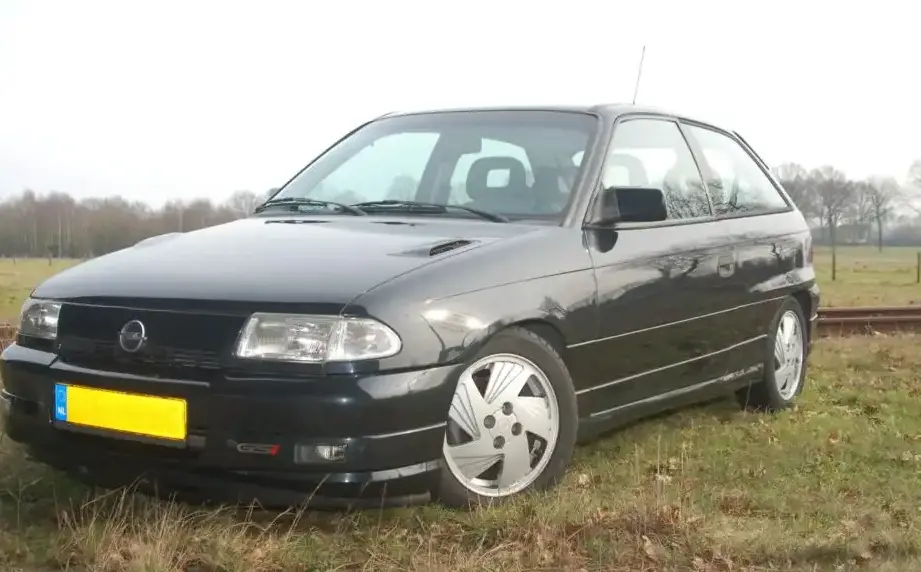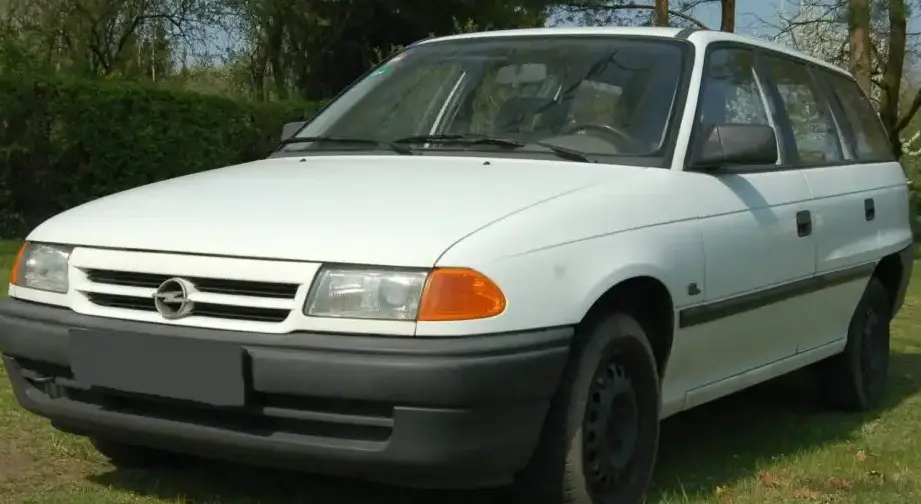
The Opel Astra F Caravan GSi 2.0i 16V, produced between October 1991 and July 1994, represented a performance-oriented variant within the broader Astra F Caravan (estate) range. Positioned as a sporty offering, it catered to drivers seeking a blend of practicality and engaging driving dynamics. This model was a key part of Opel’s strategy to offer a diverse lineup within the popular compact class, competing with rivals like the Ford Escort and Volkswagen Golf. The Astra F series, internally designated as the 1HX0, was a significant step forward for Opel, introducing improved aerodynamics, safety features, and a more refined driving experience compared to its predecessor.
Technical Specifications
| Brand | Opel |
| Model | Astra |
| Generation | Astra F Caravan |
| Type (Engine) | GSi 2.0i 16V (150 Hp) |
| Start of production | October, 1991 |
| End of production | July, 1994 |
| Powertrain Architecture | Internal Combustion engine |
| Body type | Station wagon (estate) |
| Seats | 5 |
| Doors | 5 |
| Fuel consumption (urban) | 13 l/100 km (18.1 US mpg, 21.7 UK mpg, 7.7 km/l) |
| Fuel consumption (extra urban) | 7.9 l/100 km (29.8 US mpg, 35.8 UK mpg, 12.7 km/l) |
| Fuel consumption (combined) | 10.8 l/100 km (21.8 US mpg, 26.2 UK mpg, 9.3 km/l) |
| Fuel Type | Petrol (Gasoline) |
| Acceleration 0 – 100 km/h | 8.5 sec |
| Acceleration 0 – 62 mph | 8.5 sec |
| Acceleration 0 – 60 mph | 8.1 sec |
| Maximum speed | 210 km/h (130.49 mph) |
| Weight-to-power ratio | 7.9 kg/Hp, 126.6 Hp/tonne |
| Weight-to-torque ratio | 6 kg/Nm, 165.4 Nm/tonne |
| Power | 150 Hp @ 6000 rpm |
| Power per litre | 75.1 Hp/l |
| Torque | 196 Nm @ 4600 rpm (144.56 lb.-ft. @ 4600 rpm) |
| Engine layout | Front, Transverse |
| Engine Model/Code | C20XE |
| Engine displacement | 1998 cm3 (121.93 cu. in.) |
| Number of cylinders | 4 |
| Engine configuration | Inline |
| Cylinder Bore | 86 mm (3.39 in.) |
| Piston Stroke | 86 mm (3.39 in.) |
| Compression ratio | 10.5:1 |
| Number of valves per cylinder | 4 |
| Fuel injection system | Multi-port manifold injection |
| Engine aspiration | Naturally aspirated engine |
| Valvetrain | DOHC |
| Engine oil capacity | 4.5 l (4.76 US qt | 3.96 UK qt) |
| Coolant | 6.9 l (7.29 US qt | 6.07 UK qt) |
| Kerb Weight | 1185 kg (2612.48 lbs.) |
| Max. weight | 1655 kg (3648.65 lbs.) |
| Max load | 470 kg (1036.17 lbs.) |
| Trunk (boot) space – minimum | 500 l (17.66 cu. ft.) |
| Trunk (boot) space – maximum | 1630 l (57.56 cu. ft.) |
| Fuel tank capacity | 50 l (13.21 US gal | 11 UK gal) |
| Length | 4278 mm (168.43 in.) |
| Width | 1688 mm (66.46 in.) |
| Width including mirrors | 1795 mm (70.67 in.) |
| Height | 1475 mm (58.07 in.) |
| Wheelbase | 2517 mm (99.09 in.) |
| Front track | 1430 mm (56.3 in.) |
| Rear (Back) track | 1423 mm (56.02 in.) |
| Ride height (ground clearance) | 135 mm (5.31 in.) |
| Drag coefficient (Cd) | 0.34 |
| Minimum turning circle (turning diameter) | 10.5 m (34.45 ft.) |
| Drivetrain Architecture | The Internal combustion engine (ICE) drives the front wheels of the vehicle. |
| Drive wheel | Front wheel drive |
| Number of gears and type of gearbox | 5 gears, manual transmission |
| Front suspension | Wishbone |
| Rear suspension | Coil spring |
| Front brakes | Ventilated discs |
| Rear brakes | Disc |
| Assisting systems | ABS (Anti-lock braking system) |
| Steering type | Steering rack and pinion |
| Power steering | Hydraulic Steering |
| Tires size | 195/60 R14 V |
| Wheel rims size | 6J x 14 ET49 |
Powertrain & Engine Architecture
The heart of the Astra F Caravan GSi 2.0i 16V was the C20XE engine, a 1998cc inline-four cylinder powerplant. This engine was a member of Opel’s ‘E’ family of engines, known for their durability and performance potential. The ‘XE’ designation signified a dual overhead camshaft (DOHC) configuration with four valves per cylinder, contributing to its higher power output. Fuel delivery was managed by a Bosch Motronic multi-port fuel injection system, optimizing air-fuel mixture for efficient combustion. The engine featured a compression ratio of 10.5:1. The GSi variant was exclusively offered with a five-speed manual transmission, providing drivers with full control over the engine’s power band. This transmission was chosen to complement the engine’s sporty character and deliver a more engaging driving experience.
Driving Characteristics
The 150 horsepower and 144.56 lb-ft of torque produced by the C20XE engine provided the Astra F Caravan GSi with brisk acceleration. The 0-60 mph sprint was achieved in approximately 8.1 seconds, and it could reach a top speed of 130.49 mph. The five-speed manual transmission allowed for precise gear selection, maximizing the engine’s power output. Compared to lower-powered Astra F Caravan models, the GSi offered a noticeably more responsive and engaging driving experience. While not a dedicated sports car, the GSi provided a satisfying balance between performance and practicality. The suspension was tuned for a slightly firmer ride, enhancing handling and stability during cornering.
Equipment & Trim Levels
The GSi trim level came standard with a number of features designed to enhance both comfort and aesthetics. Interior appointments included sport seats with upgraded upholstery, a leather-wrapped steering wheel, and a more comprehensive instrument cluster. Exterior features included a body-colored front spoiler, side skirts, and a rear spoiler, giving the GSi a more aggressive appearance. Optional extras included power windows, central locking, and an upgraded audio system. The interior trim was generally darker in tone, reflecting the sporty nature of the vehicle.
Chassis & Braking
The Astra F Caravan GSi featured a MacPherson strut front suspension and a coil spring rear suspension. The suspension was tuned to provide a balance between ride comfort and handling performance. Braking duties were handled by ventilated discs at the front and solid discs at the rear. An Anti-lock Braking System (ABS) was standard, enhancing safety by preventing wheel lockup during hard braking. The GSi also benefited from a slightly thicker stabilizer bar compared to lower trim levels, further improving handling stability.
Market Reception & Comparison
The Astra F Caravan GSi 2.0i 16V was generally well-received by automotive critics. It was praised for its responsive engine, engaging handling, and practical estate car body style. Compared to the base models, the GSi offered a significant performance upgrade, making it a popular choice for drivers who wanted a more enjoyable driving experience. Fuel economy was reasonable for a performance-oriented vehicle of its era, averaging around 21.8 US mpg in combined driving. Reliability was generally good, although regular maintenance was essential to ensure the longevity of the C20XE engine.
Legacy
The Opel Astra F Caravan GSi 2.0i 16V remains a popular choice among enthusiasts today. The C20XE engine is known for its durability and tunability, making it a relatively easy engine to maintain and upgrade. Well-maintained examples are becoming increasingly collectible, as they represent a significant era in Opel’s history. The GSi’s blend of practicality, performance, and affordability has ensured its enduring appeal in the used car market. While modern cars offer significantly more power and technology, the Astra F Caravan GSi 2.0i 16V continues to provide a rewarding and engaging driving experience.