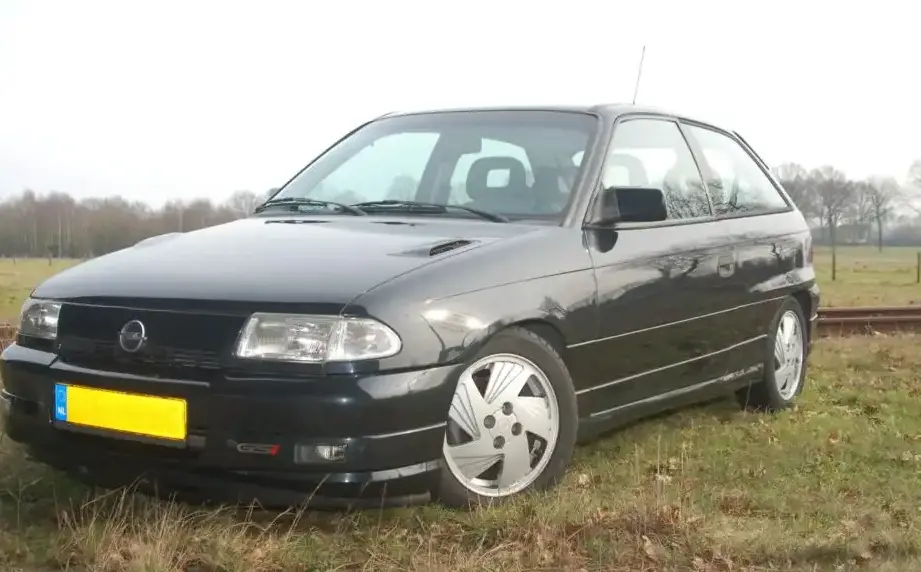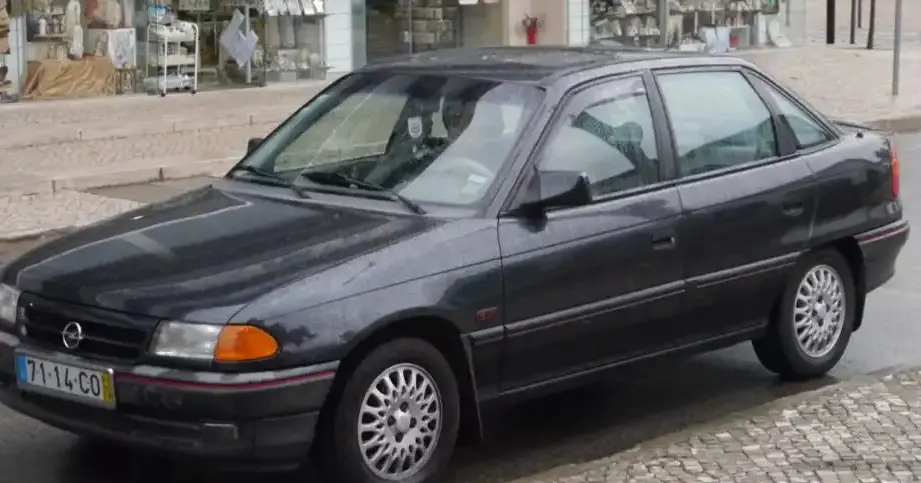
The Opel Astra F Classic 1.6i Automatic, produced between May 1993 and July 1994, represented an entry-level offering within the broader Astra F range. Positioned as a practical and affordable family sedan, it catered to buyers prioritizing economy and ease of use over outright performance. This variant was part of the Astra F Classic series, a facelift of the original Astra F (1HX0) that aimed to refine the design and improve value. The “Classic” designation denoted a more budget-focused trim level compared to the higher-spec Astra and GSi models. It primarily served the European market, offering a comfortable and reliable transportation solution.
Technical Specifications
| Brand | Opel |
| Model | Astra |
| Generation | Astra F Classic |
| Type (Engine) | 1.6i (71 Hp) Automatic |
| Start of production | May, 1993 |
| End of production | July, 1994 |
| Powertrain Architecture | Internal Combustion engine |
| Body type | Sedan |
| Seats | 5 |
| Doors | 4 |
| Fuel consumption (urban) | 9.3 l/100 km (25.3 US mpg) |
| Fuel consumption (extra urban) | 6.5 l/100 km (36.2 US mpg) |
| Fuel consumption (combined) | 8.3 l/100 km (28.3 US mpg) |
| Fuel Type | Petrol (Gasoline) |
| Acceleration 0 – 100 km/h | 17 sec |
| Acceleration 0 – 62 mph | 17 sec |
| Acceleration 0 – 60 mph | 16.2 sec |
| Maximum speed | 163 km/h (101.28 mph) |
| Weight-to-power ratio | 14.6 kg/Hp |
| Weight-to-torque ratio | 8.1 kg/Nm |
| Power | 71 Hp @ 5000 rpm |
| Power per litre | 44.4 Hp/l |
| Torque | 128 Nm @ 2800 rpm (94.41 lb.-ft. @ 2800 rpm) |
| Engine layout | Front, Transverse |
| Engine Model/Code | X16SZ |
| Engine displacement | 1598 cm3 (97.52 cu. in.) |
| Number of cylinders | 4 |
| Engine configuration | Inline |
| Cylinder Bore | 79 mm (3.11 in.) |
| Piston Stroke | 81.5 mm (3.21 in.) |
| Compression ratio | 10:1 |
| Number of valves per cylinder | 2 |
| Fuel injection system | Single-point injection |
| Engine aspiration | Naturally aspirated engine |
| Valvetrain | SOHC |
| Engine oil capacity | 3.5 l (3.7 US qt | 3.08 UK qt) |
| Coolant capacity | 5.6 l (5.92 US qt | 4.93 UK qt) |
| Kerb Weight | 1040 kg (2292.81 lbs.) |
| Max. weight | 1515 kg (3340 lbs.) |
| Max load | 475 kg (1047.2 lbs.) |
| Trunk (boot) space – minimum | 500 l (17.66 cu. ft.) |
| Trunk (boot) space – maximum | 1200 l (42.38 cu. ft.) |
| Fuel tank capacity | 52 l (13.74 US gal | 11.44 UK gal) |
| Length | 4239 mm (166.89 in.) |
| Width | 1688 mm (66.46 in.) |
| Width including mirrors | 1795 mm (70.67 in.) |
| Height | 1410 mm (55.51 in.) |
| Wheelbase | 2517 mm (99.09 in.) |
| Front track | 1430 mm (56.3 in.) |
| Rear (Back) track | 1429 mm (56.26 in.) |
| Ride height (ground clearance) | 135 mm (5.31 in.) |
| Drag coefficient (Cd) | 0.31 |
| Minimum turning circle | 10.5 m (34.45 ft.) |
| Drivetrain Architecture | Front wheel drive |
| Number of gears and type of gearbox | 4 gears, automatic transmission |
| Front suspension | Wishbone |
| Rear suspension | Suspension with traction connecting levers |
| Front brakes | Disc |
| Rear brakes | Drum |
| Assisting systems | ABS (Anti-lock braking system) |
| Steering type | Steering rack and pinion |
| Tires size | 175/70 R13 82T |
| Wheel rims size | 5.5J x 13 ET49 |
Powertrain & Engine Architecture
The heart of the Astra F Classic 1.6i Automatic was the X16SZ engine, a 1.6-liter inline-four cylinder powerplant. This engine utilized a single-point fuel injection system (throttle body injection), a relatively simple and cost-effective technology for the time. The X16SZ featured a single overhead camshaft (SOHC) valvetrain operating two valves per cylinder. This configuration prioritized reliability and low-end torque over high-revving performance. The engine produced 71 horsepower at 5000 rpm and 94.41 lb-ft of torque at 2800 rpm. Paired with this engine was a four-speed automatic transmission, designed for smooth and effortless driving. This transmission wasn’t known for its sportiness, but it provided a comfortable driving experience, particularly in urban environments.
Driving Characteristics
The 1.6i Automatic offered a decidedly unhurried driving experience. Acceleration from 0-60 mph took approximately 16.2 seconds, and top speed was limited to around 101 mph. The automatic transmission, while convenient, contributed to noticeable power loss compared to the available five-speed manual gearbox. Gear ratios were optimized for fuel economy and smooth cruising rather than spirited acceleration. The engine felt strained when attempting rapid overtaking maneuvers, requiring careful planning. However, for everyday commuting and relaxed highway driving, the combination proved adequate. The relatively low power output meant that the suspension wasn’t overly stressed, resulting in a comfortable ride quality.
Equipment & Trim Levels
The Astra F Classic 1.6i Automatic typically came equipped with basic but functional features. Standard equipment included power steering, central locking, and an AM/FM radio. Interior upholstery was typically cloth, with a simple dashboard layout. Optional extras included power windows, a sunroof, and upgraded audio systems. The trim level was generally considered entry-level, focusing on providing essential transportation at an affordable price point. Compared to higher-spec Astras, it lacked features like alloy wheels, more sophisticated interior trim, and advanced safety equipment.
Chassis & Braking
The Astra F Classic utilized a front-wheel-drive layout with a relatively simple suspension setup. The front suspension employed wishbones, while the rear featured a torsion beam suspension with traction connecting levers. Braking was handled by disc brakes on the front wheels and drum brakes on the rear. An Anti-lock Braking System (ABS) was often included as standard equipment, enhancing safety. The suspension was tuned for comfort, prioritizing ride quality over sharp handling. The relatively lightweight nature of the car helped to mitigate the effects of the modest engine power.
Market Reception & Comparison
The Astra F Classic 1.6i Automatic was generally well-received as a practical and affordable family car. Critics acknowledged its fuel efficiency and comfortable ride, but often noted its lack of performance. Compared to the more powerful 1.8-liter and 2.0-liter versions, the 1.6i Automatic felt significantly slower. The 1.7 Diesel model offered superior fuel economy but lacked the refinement of the gasoline engine. The automatic transmission was seen as a convenience feature, but it also contributed to lower fuel economy compared to the manual transmission. Its main competitors included the Ford Escort, Volkswagen Golf, and Peugeot 305.
Legacy
The Opel Astra F Classic 1.6i Automatic, while not a performance icon, proved to be a reliable and durable vehicle. The X16SZ engine is known for its robustness, and the four-speed automatic transmission, while not particularly sophisticated, is generally dependable. Today, these cars are relatively affordable on the used car market, making them attractive options for budget-conscious buyers. However, potential buyers should be aware of the age-related issues common to vehicles of this era, such as corrosion and wear and tear on suspension components. Parts availability is generally good, but finding specific trim pieces may prove challenging. The Astra F Classic 1.6i Automatic remains a testament to Opel’s commitment to providing practical and affordable transportation.