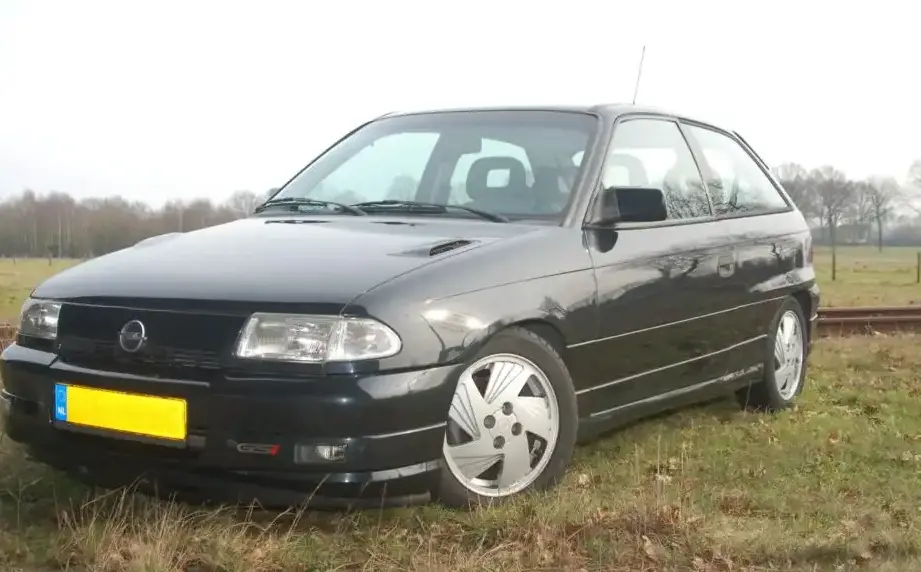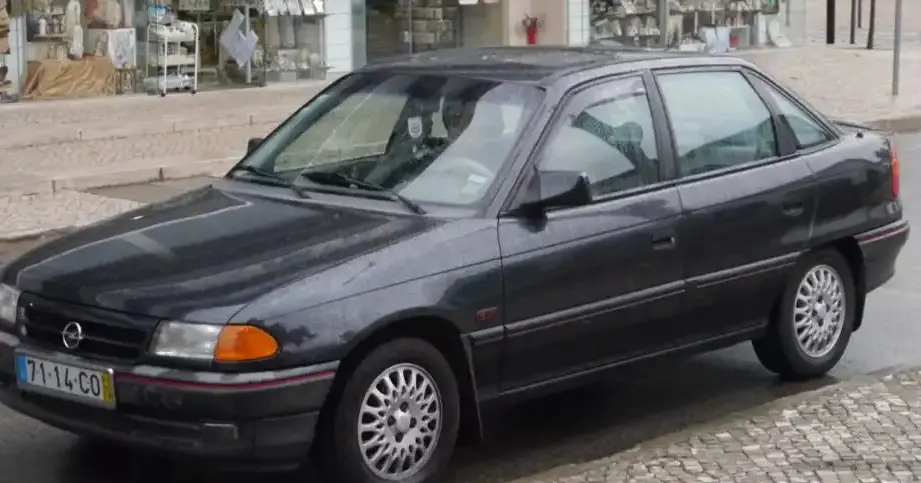
The Opel Astra F Classic 1.6i (75 hp) was a mainstay of the European compact car market from October 1991 to March 1993. Positioned as an entry-level offering within the broader Astra F range, it provided affordable transportation for families and commuters. This variant, characterized by its 1.6-liter engine and typically paired with a five-speed manual transmission, played a significant role in establishing the Astra F as a popular choice in its segment. It was part of the first generation of the Astra F Classic, built on the T-platform (also known as the 1HX0/A3 platform) shared with other General Motors vehicles.
Technical Specifications
| Brand | Opel |
| Model | Astra |
| Generation | Astra F Classic |
| Type (Engine) | 1.6i (75 Hp) |
| Start of production | October, 1991 |
| End of production | March, 1993 |
| Powertrain Architecture | Internal Combustion engine |
| Body type | Sedan |
| Seats | 5 |
| Doors | 4 |
| Fuel consumption (urban) | 11 l/100 km (21.4 US mpg, 25.7 UK mpg, 9.1 km/l) |
| Fuel consumption (extra urban) | 6.1 l/100 km (38.6 US mpg, 46.3 UK mpg, 16.4 km/l) |
| Fuel consumption (combined) | 8 l/100 km (29.4 US mpg, 35.3 UK mpg, 12.5 km/l) |
| Fuel Type | Petrol (Gasoline) |
| Acceleration 0 – 100 km/h | 14 sec |
| Acceleration 0 – 62 mph | 14 sec |
| Acceleration 0 – 60 mph | 13.3 sec |
| Maximum speed | 170 km/h (105.63 mph) |
| Weight-to-power ratio | 13.1 kg/Hp, 76.5 Hp/tonne |
| Weight-to-torque ratio | 7.7 kg/Nm, 130.6 Nm/tonne |
| Power | 75 Hp @ 5200 rpm |
| Power per litre | 46.9 Hp/l |
| Torque | 128 Nm @ 2800 rpm (94.41 lb.-ft. @ 2800 rpm) |
| Engine layout | Front, Transverse |
| Engine Model/Code | C16NZ |
| Engine displacement | 1598 cm3 (97.52 cu. in.) |
| Number of cylinders | 4 |
| Engine configuration | Inline |
| Cylinder Bore | 79 mm (3.11 in.) |
| Piston Stroke | 81.5 mm (3.21 in.) |
| Compression ratio | 9.2:1 |
| Number of valves per cylinder | 2 |
| Fuel injection system | Single-point injection |
| Engine aspiration | Naturally aspirated engine |
| Valvetrain | SOHC |
| Engine oil capacity | 3.5 l (3.7 US qt | 3.08 UK qt) |
| Coolant | 5.6 l (5.92 US qt | 4.93 UK qt) |
| Kerb Weight | 980 kg (2160.53 lbs.) |
| Max. weight | 1475 kg (3251.82 lbs.) |
| Max load | 495 kg (1091.29 lbs.) |
| Trunk (boot) space – minimum | 500 l (17.66 cu. ft.) |
| Trunk (boot) space – maximum | 1200 l (42.38 cu. ft.) |
| Fuel tank capacity | 52 l (13.74 US gal | 11.44 UK gal) |
| Length | 4239 mm (166.89 in.) |
| Width | 1688 mm (66.46 in.) |
| Width including mirrors | 1795 mm (70.67 in.) |
| Height | 1410 mm (55.51 in.) |
| Wheelbase | 2517 mm (99.09 in.) |
| Front track | 1430 mm (56.3 in.) |
| Rear (Back) track | 1429 mm (56.26 in.) |
| Ride height (ground clearance) | 135 mm (5.31 in.) |
| Drag coefficient (Cd) | 0.31 |
| Minimum turning circle | 10.5 m (34.45 ft.) |
| Drivetrain Architecture | The Internal combustion engine (ICE) drives the front wheels of the vehicle. |
| Drive wheel | Front wheel drive |
| Number of gears and type of gearbox | 5 gears, manual transmission |
| Front suspension | Wishbone |
| Rear suspension | Suspension with traction connecting levers |
| Front brakes | Disc |
| Rear brakes | Drum |
| Assisting systems | ABS (Anti-lock braking system) |
| Steering type | Steering rack and pinion |
| Tires size | 175/70 R13 82T |
| Wheel rims size | 5.5J x 13 ET49 |
Powertrain & Engine Architecture
The heart of the Astra F Classic 1.6i was the C16NZ engine, a 1.6-liter inline-four cylinder gasoline engine. This engine featured a single overhead camshaft (SOHC) valvetrain with two valves per cylinder. It utilized a Bosch Mono-Jetronic single-point fuel injection system, which was a cost-effective solution for the time but less sophisticated than multi-point injection systems found in higher-spec Astra models. The C16NZ was known for its relative simplicity and durability, though it lacked the performance of the more advanced engines in the range. The engine produced 75 horsepower at 5200 rpm and 128 Nm (94.41 lb-ft) of torque at 2800 rpm. The five-speed manual transmission was the most common pairing, offering a reasonable balance between fuel economy and drivability. The transmission’s gear ratios were geared towards economy rather than outright acceleration.
Driving Characteristics
The 1.6i automatic Astra F Classic offered a comfortable, if uninspiring, driving experience. Acceleration from 0-60 mph took around 13.3 seconds, and top speed was limited to 105.63 mph. Compared to the manual transmission version, the automatic suffered a slight performance penalty due to the inherent losses in the torque converter. The automatic transmission, typically a four-speed unit, prioritized smooth shifts over sporty responsiveness. In real-world driving, the 1.6i automatic was best suited for city commuting and relaxed highway cruising. It lacked the punch needed for quick overtaking maneuvers, especially when fully loaded. The steering was light and easy, making it maneuverable in urban environments, but it didn’t offer much in the way of road feel.
Equipment & Trim Levels
The Astra F Classic 1.6i was typically offered in a basic trim level, focusing on essential features. Standard equipment generally included power steering, central locking, and a basic stereo system. Interior upholstery was typically cloth, and the dashboard featured a simple, functional design. Optional extras included power windows, a sunroof, and upgraded audio systems. The trim level was designed to appeal to budget-conscious buyers who prioritized practicality and affordability over luxury features.
Chassis & Braking
The Astra F Classic featured a MacPherson strut front suspension and a torsion beam rear suspension. This setup provided a comfortable ride, but it wasn’t particularly sporty. The front brakes were disc brakes, while the rear brakes were drum brakes – a cost-saving measure common in entry-level models. ABS (Anti-lock Braking System) was often available as an option, enhancing safety. The chassis was designed to provide a good balance between handling and ride comfort, but it wasn’t as refined as the suspension setups found in more expensive cars.
Market Reception & Comparison
The Astra F Classic 1.6i was generally well-received as an affordable and reliable family car. Critics praised its practicality and fuel economy, but noted its lack of performance. Compared to the higher-spec Astra models, such as those with the 1.8 or 2.0-liter engines, the 1.6i felt underpowered. However, it offered a significant price advantage and lower running costs. The 1.6i was also often compared to rivals such as the Ford Escort and Volkswagen Golf, and it generally held its own in terms of value for money.
Legacy
The Opel Astra F Classic 1.6i remains a relatively common sight on European roads today, testament to its durability and affordability. The C16NZ engine is known for its reliability, although it can be prone to oil leaks as it ages. Parts availability is generally good, and maintenance costs are relatively low. In the used car market, the 1.6i automatic is often seen as a sensible and practical choice for first-time drivers or those seeking a reliable and economical runabout. While it may not offer the excitement of more powerful Astra variants, its simplicity and dependability have ensured its enduring popularity.