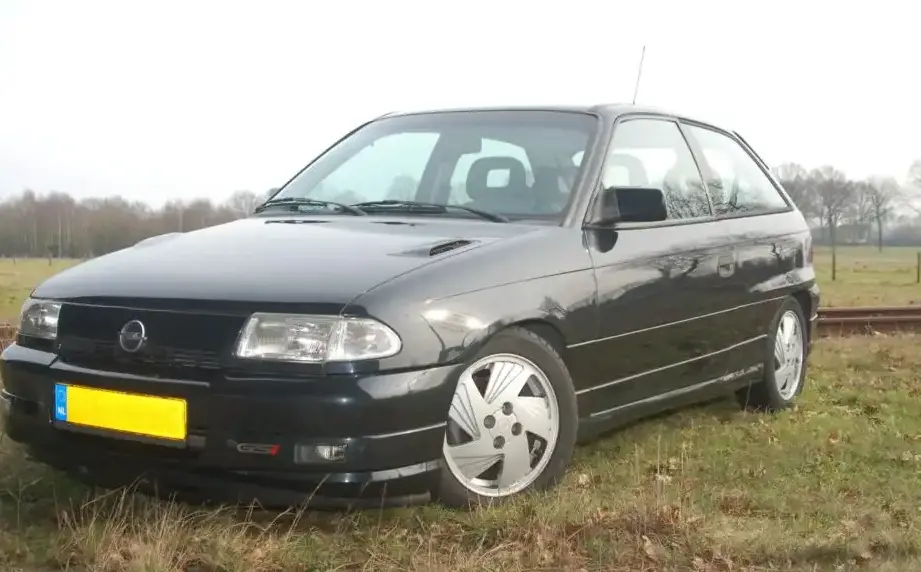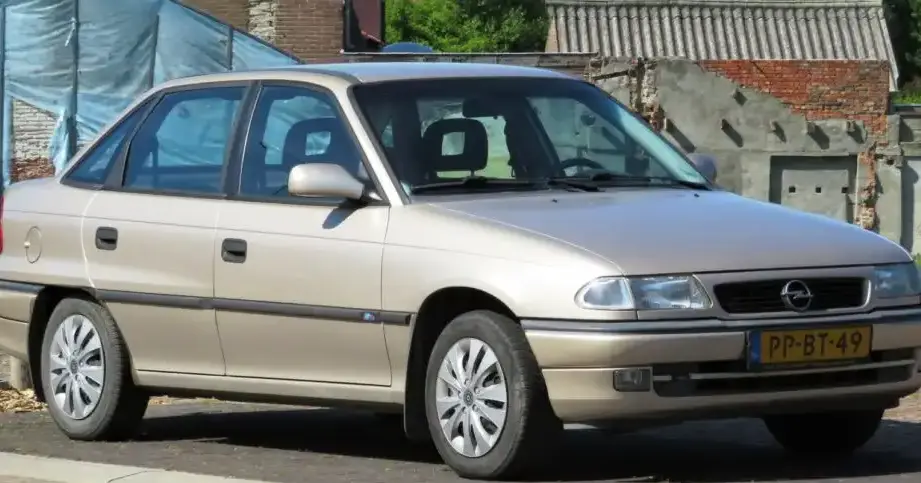
The Opel Astra F Classic 1.8i Ecotec 16V Automatic, produced from 1996 to December 1997, represented a popular mid-range offering within the facelifted Astra F series. Introduced after the 1994 refresh of the original Astra F (launched in 1991), this variant aimed to provide a balance of performance and convenience for buyers seeking a comfortable and relatively economical family sedan. It occupied a position between the base 1.4L models and the more performance-oriented 2.0L 16V versions, appealing to a broader customer base. The Astra F, in general, was a crucial model for Opel, solidifying its position in the competitive European compact car segment.
Technical Specifications
| Brand | Opel |
| Model | Astra |
| Generation | Astra F Classic (facelift 1994) |
| Type (Engine) | 1.8i Ecotec 16V (116 Hp) Automatic |
| Start of production | 1996 |
| End of production | December, 1997 |
| Powertrain Architecture | Internal Combustion engine |
| Body type | Sedan |
| Seats | 5 |
| Doors | 4 |
| Fuel consumption (urban) | 10.9 l/100 km (21.6 US mpg, 25.9 UK mpg, 9.2 km/l) |
| Fuel consumption (extra urban) | 7.3 l/100 km (32.2 US mpg, 38.7 UK mpg, 13.7 km/l) |
| Fuel consumption (combined) | 9.5 l/100 km (24.8 US mpg, 29.7 UK mpg, 10.5 km/l) |
| Fuel Type | Petrol (Gasoline) |
| Acceleration 0 – 100 km/h | 11.5 sec |
| Acceleration 0 – 62 mph | 11.5 sec |
| Acceleration 0 – 60 mph | 10.9 sec |
| Maximum speed | 193 km/h (119.92 mph) |
| Weight-to-power ratio | 9.8 kg/Hp, 102.2 Hp/tonne |
| Weight-to-torque ratio | 6.7 kg/Nm, 149.8 Nm/tonne |
| Power | 116 Hp @ 5400 rpm |
| Power per litre | 64.7 Hp/l |
| Torque | 170 Nm @ 3600 rpm (125.39 lb.-ft. @ 3600 rpm) |
| Engine layout | Front, Transverse |
| Engine Model/Code | X18XE |
| Engine displacement | 1794 cm3 (109.48 cu. in.) |
| Number of cylinders | 4 |
| Engine configuration | Inline |
| Cylinder Bore | 81.6 mm (3.21 in.) |
| Piston Stroke | 86 mm (3.39 in.) |
| Compression ratio | 10.8:1 |
| Number of valves per cylinder | 4 |
| Fuel injection system | Multi-port manifold injection |
| Engine aspiration | Naturally aspirated engine |
| Valvetrain | DOHC |
| Engine oil capacity | 4 l (4.23 US qt | 3.52 UK qt) |
| Coolant capacity | 6.9 l (7.29 US qt | 6.07 UK qt) |
| Kerb Weight | 1135 kg (2502.25 lbs.) |
| Max. weight | 1615 kg (3560.47 lbs.) |
| Max load | 480 kg (1058.22 lbs.) |
| Trunk (boot) space – minimum | 500 l (17.66 cu. ft.) |
| Trunk (boot) space – maximum | 1200 l (42.38 cu. ft.) |
| Fuel tank capacity | 52 l (13.74 US gal | 11.44 UK gal) |
| Length | 4239 mm (166.89 in.) |
| Width | 1696 mm (66.77 in.) |
| Width including mirrors | 1852 mm (72.91 in.) |
| Height | 1410 mm (55.51 in.) |
| Wheelbase | 2517 mm (99.09 in.) |
| Front track | 1424 mm (56.06 in.) |
| Rear (Back) track | 1423 mm (56.02 in.) |
| Ride height (ground clearance) | 135 mm (5.31 in.) |
| Drag coefficient (Cd) | 0.31 |
| Minimum turning circle | 10.5 m (34.45 ft.) |
| Drivetrain Architecture | ICE, Front wheel drive |
| Drive wheel | Front wheel drive |
| Number of gears and type of gearbox | 4 gears, automatic transmission |
| Front brakes | Ventilated discs |
| Rear brakes | Disc |
| Steering type | Steering rack and pinion |
| Tires size | 175/65 R14 82H |
| Wheel rims size | 5.5J x 14 |
Powertrain & Engine Architecture
The heart of this Astra variant was the X18XE, an 1.8-liter inline four-cylinder engine belonging to Opel’s Ecotec family. This engine featured a cast iron block and an aluminum cylinder head, incorporating dual overhead camshafts (DOHC) and four valves per cylinder. The X18XE utilized Bosch Motronic multi-port fuel injection, carefully managing fuel delivery for optimal efficiency and power. The 16-valve configuration contributed to improved breathing and a broader powerband compared to older 8-valve designs. Paired with this engine was a four-speed automatic transmission, offering smooth gear changes but sacrificing some of the responsiveness found in manual versions. This automatic was a common GM unit, known for its reliability but not particularly for its sportiness.
Driving Characteristics
The 1.8i Automatic Astra F offered a comfortable and predictable driving experience. With 116 horsepower and 125 lb-ft of torque, acceleration was adequate for everyday driving, taking around 11.5 seconds to reach 62 mph. However, it wasn’t a particularly quick car. The automatic transmission, while convenient, did detract from the engine’s potential, resulting in a noticeable delay during acceleration. Compared to the five-speed manual version, the automatic felt less engaging and slightly slower. The gear ratios were tuned for fuel economy and smooth cruising rather than outright performance. The car felt most at home on the highway, where the engine could comfortably maintain cruising speeds.
Equipment & Trim Levels
The 1.8i Ecotec Automatic typically came with a reasonable level of standard equipment. This included power steering, central locking, electric front windows, and an adjustable steering column. Interior upholstery was usually cloth, with a relatively simple dashboard layout. Optional extras included air conditioning, alloy wheels, a sunroof, and upgraded audio systems. The trim level often dictated the quality of the cloth and the availability of certain features. This variant generally sat in the mid-range of the Astra F lineup, offering more comfort and convenience than the base models but lacking the sporty touches of the higher-spec versions.
Chassis & Braking
The Astra F Classic utilized a MacPherson strut front suspension and a torsion beam rear suspension. This setup provided a good balance of ride comfort and handling. The front brakes were ventilated discs, offering adequate stopping power, while the rear brakes were solid discs. The steering was a rack and pinion system, providing precise and responsive steering feel. The 1.8i Automatic models typically featured slightly softer suspension settings compared to the sportier 2.0L versions, prioritizing ride comfort over handling sharpness. Stabilizer bars were fitted front and rear, helping to reduce body roll during cornering.
Market Reception & Comparison
The Astra F 1.8i Automatic was generally well-received by critics as a practical and reliable family car. It offered a good compromise between performance, fuel economy, and comfort. However, some reviewers noted that the automatic transmission dulled the engine’s performance and that the interior was somewhat basic compared to some of its rivals. Compared to the 1.4L models, the 1.8i offered a noticeable performance boost, while the 2.0L 16V provided significantly more power but at a higher price point. Fuel economy was respectable for its class, averaging around 25-30 mpg in mixed driving.
Legacy
The X18XE engine proved to be a durable and reliable unit, and many Astra Fs equipped with this engine are still on the road today. The four-speed automatic transmission, while not the most modern, is also generally considered to be reliable. However, like all older cars, these Astras require regular maintenance to prevent issues. Common problems include corrosion, particularly in areas prone to salt exposure, and wear and tear on suspension components. In the used car market, the 1.8i Automatic Astra F represents a relatively affordable and practical option for those seeking a classic European sedan. Its simplicity and reliability make it a popular choice for enthusiasts and everyday drivers alike.