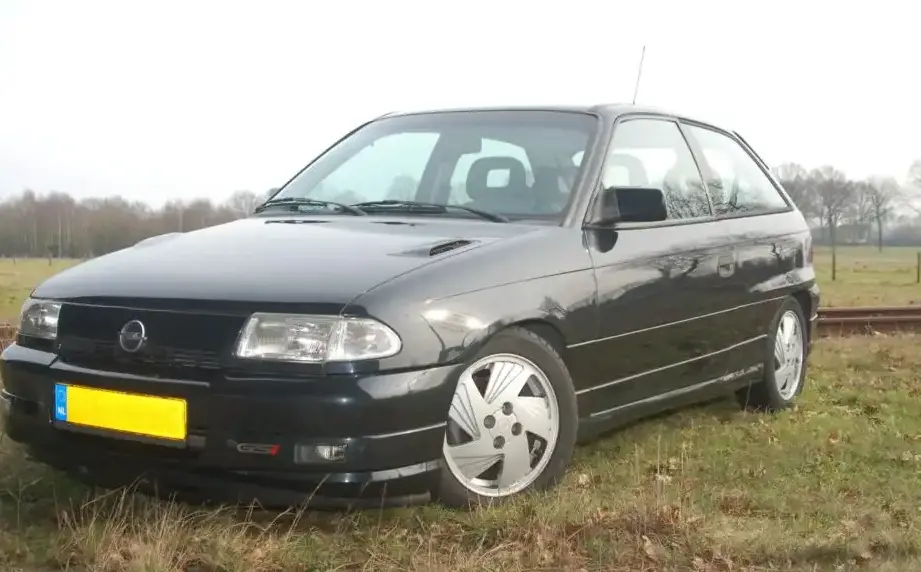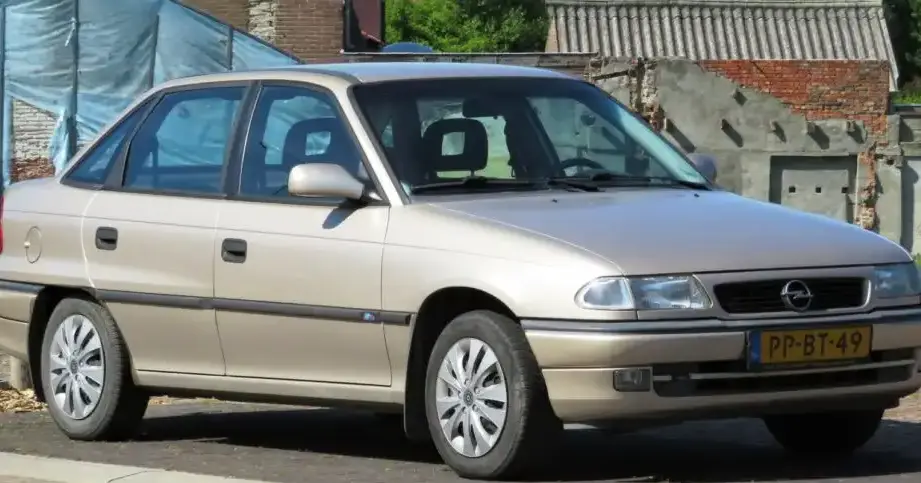
The Opel Astra F Classic 2.0i Ecotec 16V, produced from 1995 to December 1997, represented a significant step up in performance and refinement within the Astra F range. This variant, part of the facelifted ‘Classic’ series introduced in 1994, aimed to offer a more sophisticated driving experience compared to lower-spec models. Positioned as a mid-range offering, it bridged the gap between the more economical base engines and the performance-focused GSi models. The Astra F, a mainstay of the European C-segment, was Opel’s challenger to rivals like the Volkswagen Golf, Ford Escort, and Peugeot 306. This 2.0i Ecotec model was primarily marketed in Europe, offering a blend of practicality, comfort, and respectable performance for family buyers.
Technical Specifications
| Brand | Opel |
| Model | Astra |
| Generation | Astra F Classic (facelift 1994) |
| Type (Engine) | 2.0i Ecotec 16V (136 Hp) |
| Start of production | 1995 |
| End of production | December, 1997 |
| Powertrain Architecture | Internal Combustion engine |
| Body type | Sedan |
| Seats | 5 |
| Doors | 4 |
| Fuel consumption (urban) | 11.8 l/100 km (19.9 US mpg, 23.9 UK mpg, 8.5 km/l) |
| Fuel consumption (extra urban) | 7.3 l/100 km (32.2 US mpg, 38.7 UK mpg, 13.7 km/l) |
| Fuel consumption (combined) | 9.9 l/100 km (23.8 US mpg, 28.5 UK mpg, 10.1 km/l) |
| Fuel Type | Petrol (Gasoline) |
| Acceleration 0 – 100 km/h | 9 sec |
| Acceleration 0 – 62 mph | 9 sec |
| Acceleration 0 – 60 mph | 8.6 sec |
| Maximum speed | 207 km/h (128.62 mph) |
| Weight-to-power ratio | 8.7 kg/Hp, 114.8 Hp/tonne |
| Weight-to-torque ratio | 6.4 kg/Nm, 156.1 Nm/tonne |
| Power | 136 Hp @ 6000 rpm |
| Power per litre | 68.1 Hp/l |
| Torque | 185 Nm @ 4000 rpm (136.45 lb.-ft. @ 4000 rpm) |
| Engine layout | Front, Transverse |
| Engine Model/Code | X20XEV |
| Engine displacement | 1998 cm3 (121.93 cu. in.) |
| Number of cylinders | 4 |
| Engine configuration | Inline |
| Cylinder Bore | 86 mm (3.39 in.) |
| Piston Stroke | 86 mm (3.39 in.) |
| Compression ratio | 10.8:1 |
| Number of valves per cylinder | 4 |
| Fuel injection system | Multi-port manifold injection |
| Engine aspiration | Naturally aspirated engine |
| Valvetrain | DOHC |
| Engine oil capacity | 4 l (4.23 US qt | 3.52 UK qt) |
| Coolant capacity | 6.7 l (7.08 US qt | 5.9 UK qt) |
| Kerb Weight | 1185 kg (2612.48 lbs.) |
| Max. weight | 1635 kg (3604.56 lbs.) |
| Max load | 450 kg (992.08 lbs.) |
| Trunk (boot) space – minimum | 500 l (17.66 cu. ft.) |
| Trunk (boot) space – maximum | 1200 l (42.38 cu. ft.) |
| Fuel tank capacity | 52 l (13.74 US gal | 11.44 UK gal) |
| Length | 4239 mm (166.89 in.) |
| Width | 1696 mm (66.77 in.) |
| Width including mirrors | 1852 mm (72.91 in.) |
| Height | 1410 mm (55.51 in.) |
| Wheelbase | 2517 mm (99.09 in.) |
| Front track | 1430 mm (56.3 in.) |
| Rear (Back) track | 1423 mm (56.02 in.) |
| Ride height (ground clearance) | 135 mm (5.31 in.) |
| Drag coefficient (Cd) | 0.31 |
| Minimum turning circle | 10.5 m (34.45 ft.) |
| Drivetrain Architecture | ICE to Front Wheels |
| Drive wheel | Front wheel drive |
| Number of gears | 5 |
| Gearbox type | Manual transmission |
| Front brakes | Ventilated discs |
| Rear brakes | Disc |
| Steering type | Steering rack and pinion |
| Tires size | 195/60 R15 |
| Wheel rims size | 6.0J x 15 |
Powertrain & Engine Architecture
The heart of the Astra F Classic 2.0i Ecotec was the X20XEV engine, a 1998cc inline-four cylinder unit. This engine belonged to Opel’s ‘Ecotec’ family, designed for efficiency and reduced emissions. The X20XEV featured multi-port fuel injection and a double overhead camshaft (DOHC) valvetrain, operating with four valves per cylinder. This configuration allowed for improved breathing and higher revs, contributing to the engine’s 136 horsepower output at 6000 rpm and 185 Nm (136.45 lb-ft) of torque at 4000 rpm. The engine’s compression ratio was 10.8:1. The five-speed manual transmission was the standard offering, providing a reasonably direct connection to the front wheels. While an automatic transmission was available, it was less common and often resulted in a slight performance decrease.
Driving Characteristics
The 2.0i Ecotec offered a noticeable improvement in performance over the lower-displacement Astra F models. Acceleration to 62 mph (100 km/h) took around 9 seconds, making it a competitive performer in its class. The engine felt responsive throughout the rev range, with a usable spread of torque. The five-speed manual gearbox was well-matched to the engine, allowing drivers to keep the engine in its sweet spot. Compared to the 1.4 or 1.6-liter versions, the 2.0i provided more effortless cruising and overtaking ability. However, it wasn’t a sports car; the focus remained on providing a comfortable and practical driving experience. The automatic transmission, while offering convenience, did diminish acceleration slightly and felt less engaging.
Equipment & Trim Levels
The Astra F Classic 2.0i Ecotec typically came equipped with features such as power steering, central locking, electric front windows, and an adjustable steering column. Interior upholstery was usually cloth, with a relatively simple but functional dashboard layout. Optional extras included air conditioning, alloy wheels, a sunroof, and upgraded audio systems. The trim level often dictated the level of standard equipment, with higher trims offering more comfort and convenience features. The 2.0i model generally sat in the mid-range of the Astra F lineup, offering a good balance of features and price.
Chassis & Braking
The Astra F Classic utilized a MacPherson strut front suspension and a torsion beam rear suspension. This setup provided a comfortable ride, although it wasn’t particularly sporty. The front brakes were ventilated discs, offering good stopping power, while the rear brakes were typically solid discs. The steering was a rack and pinion system, providing reasonably precise control. The 2.0i model benefited from slightly uprated suspension components compared to the base models, helping to manage the increased power and weight. Tire size was typically 195/60 R15.
Market Reception & Comparison
The Astra F Classic 2.0i Ecotec was generally well-received by automotive critics. It was praised for its refined engine, comfortable ride, and practical interior. However, some critics noted that the handling wasn’t as sharp as some of its rivals, such as the Ford Escort. Compared to the 1.4 and 1.6-liter Astra F models, the 2.0i offered significantly better performance, but at the cost of slightly increased fuel consumption. The 2.0i also represented a more affordable alternative to the high-performance GSi models. Fuel economy averaged around 23.8 US mpg combined.
Legacy
The X20XEV engine proved to be a relatively reliable unit, although regular maintenance is crucial. Common issues include oil leaks and occasional sensor failures. Today, the Astra F Classic 2.0i Ecotec is becoming increasingly sought after by classic car enthusiasts. Its combination of practicality, affordability, and respectable performance makes it a desirable option for those looking for a well-rounded and enjoyable classic car. Parts availability is generally good, and the car’s relatively simple mechanical design makes it relatively easy to maintain and repair. The 2.0i Ecotec variant remains a solid choice for those seeking a classic European hatchback with a touch of refinement.