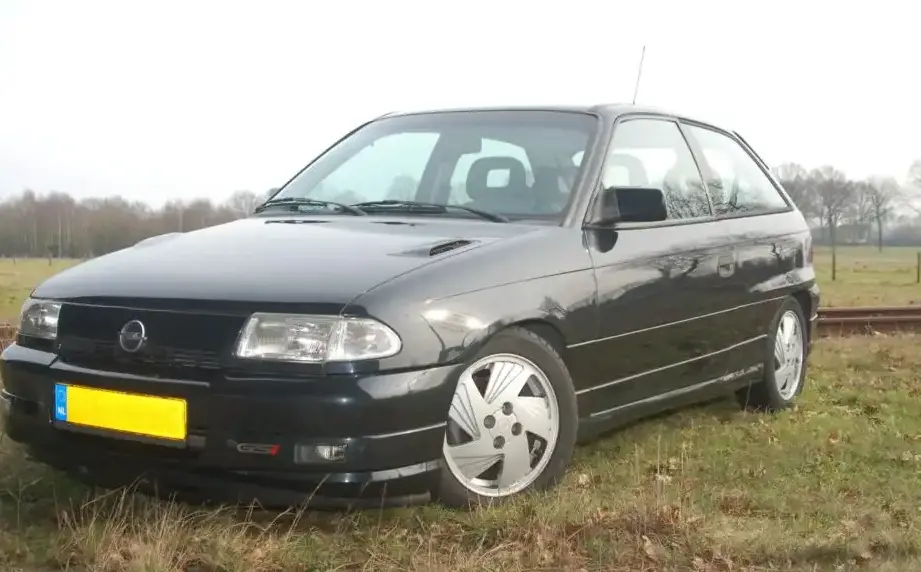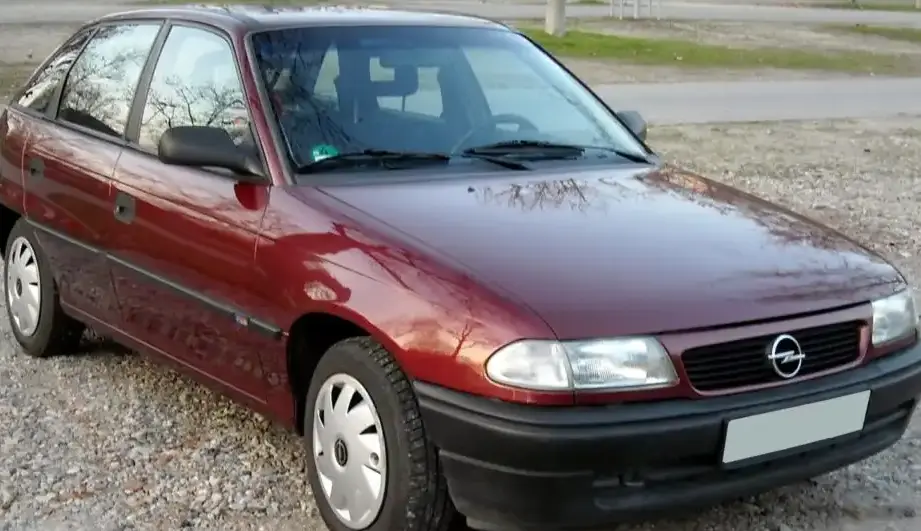
The Opel Astra F (facelift, introduced in 1994) 1.4i 60 hp variant was a key entry-level offering in the popular Astra F range, produced from June 1996 to December 1997. Positioned as an affordable and economical hatchback, it served as the gateway into the Astra lineup for many European buyers. This model represented a continuation of Opel’s commitment to providing practical and reliable transportation, building upon the success of the original Astra F launched in 1991. The facelift brought updated styling and minor mechanical improvements, enhancing the car’s appeal in a competitive market segment. It was primarily sold in Europe, where compact hatchbacks were – and remain – a dominant force in the automotive landscape.
Technical Specifications
| Brand | Opel |
| Model | Astra |
| Generation | Astra F (facelift 1994) |
| Type (Engine) | 1.4i (60 Hp) |
| Start of production | June, 1996 |
| End of production | December, 1997 |
| Powertrain Architecture | Internal Combustion engine |
| Body type | Hatchback |
| Seats | 5 |
| Doors | 3 |
| Fuel consumption (urban) | 8.5 l/100 km (27.7 US mpg, 33.2 UK mpg, 11.8 km/l) |
| Fuel consumption (extra urban) | 5.9 l/100 km (39.9 US mpg, 47.9 UK mpg, 16.9 km/l) |
| Fuel consumption (combined) | 7.5 l/100 km (31.4 US mpg, 37.7 UK mpg, 13.3 km/l) |
| Fuel Type | Petrol (Gasoline) |
| Acceleration 0 – 100 km/h | 16.5 sec |
| Acceleration 0 – 62 mph | 16.5 sec |
| Acceleration 0 – 60 mph | 15.7 sec |
| Maximum speed | 160 km/h (99.42 mph) |
| Emission standard | Euro 1 |
| Weight-to-power ratio | 16.3 kg/Hp, 61.5 Hp/tonne |
| Weight-to-torque ratio | 9.5 kg/Nm, 105.6 Nm/tonne |
| Power | 60 Hp @ 5200 rpm |
| Power per litre | 43.2 Hp/l |
| Torque | 103 Nm @ 2800 rpm (75.97 lb.-ft. @ 2800 rpm) |
| Engine layout | Front, Transverse |
| Engine Model/Code | X14NZ |
| Engine displacement | 1389 cm3 (84.76 cu. in.) |
| Number of cylinders | 4 |
| Engine configuration | Inline |
| Cylinder Bore | 77.6 mm (3.06 in.) |
| Piston Stroke | 73.4 mm (2.89 in.) |
| Compression ratio | 9.4:1 |
| Number of valves per cylinder | 2 |
| Fuel injection system | Single-point injection |
| Engine aspiration | Naturally aspirated engine |
| Valvetrain | SOHC |
| Engine oil capacity | 3.5 l (3.7 US qt | 3.08 UK qt) |
| Coolant capacity | 5.5 l (5.81 US qt | 4.84 UK qt) |
| Kerb Weight | 975/995 kg (2149.51 lbs.) |
| Max. weight | 1495 kg (3295.91 lbs.) |
| Max load | 500-520 kg (1102.31 – 1146.4 lbs.) |
| Trunk (boot) space – minimum | 360 l (12.71 cu. ft.) |
| Trunk (boot) space – maximum | 1200 l (42.38 cu. ft.) |
| Fuel tank capacity | 52 l (13.74 US gal | 11.44 UK gal) |
| Length | 4051 mm (159.49 in.) |
| Width | 1696 mm (66.77 in.) |
| Width including mirrors | 1852 mm (72.91 in.) |
| Height | 1410 mm (55.51 in.) |
| Wheelbase | 2517 mm (99.09 in.) |
| Front track | 1430/1424 mm (56.3 in.) |
| Rear (Back) track | 1429/1423 mm (56.26 in.) |
| Ride height (ground clearance) | 135 mm (5.31 in.) |
| Drag coefficient (Cd) | 0.32 |
| Minimum turning circle | 10.5 m (34.45 ft.) |
| Drivetrain Architecture | ICE, Front wheel drive |
| Drive wheel | Front wheel drive |
| Number of gears and type of gearbox | 5 gears, manual transmission |
| Front brakes | Disc |
| Rear brakes | Drum |
| Assisting systems | ABS (Anti-lock braking system) |
| Steering type | Steering rack and pinion |
| Tires size | 175/70 R13 82T; 175/65 R14 82T |
| Wheel rims size | 5.5J x 13 ET49; 5.5J x 14 ET49 |
Powertrain & Engine Architecture
The heart of the Astra F 1.4i was the X14NZ engine, a 1.4-liter (1389 cc) inline-four cylinder petrol engine. This engine was a relatively simple design, utilizing a single overhead camshaft (SOHC) valvetrain with two valves per cylinder. It employed a single-point fuel injection system, which was common for vehicles in this price range during the mid-1990s. While not as sophisticated as multi-point injection, it provided adequate fuel delivery for the engine’s modest power output. The X14NZ was known for its durability and relative ease of maintenance. The engine produced 60 horsepower (43.2 hp/liter) at 5200 rpm and 103 Nm (75.97 lb-ft) of torque at 2800 rpm. The engine was transversely mounted in the front of the vehicle, driving the front wheels. The standard transmission was a five-speed manual, though a four-speed automatic was also available, albeit less common.
Driving Characteristics
The 1.4i 60 hp Astra F was not designed for performance. Acceleration was leisurely, taking approximately 16.5 seconds to reach 62 mph (100 km/h). Its strength lay in its fuel efficiency and ease of driving. The engine provided sufficient power for everyday commuting and urban driving, but overtaking maneuvers required careful planning. The five-speed manual transmission allowed drivers to keep the engine in its optimal power band, while the optional automatic, though convenient, further reduced performance. The gear ratios were geared towards economy rather than outright speed. Compared to the more powerful 1.6L and 1.8L versions of the Astra F, the 1.4i felt noticeably slower, but it offered a more forgiving and economical driving experience.
Equipment & Trim Levels
The 1.4i typically represented the base trim level of the Astra F. Standard equipment included power steering, central locking, and a basic stereo system. Interior upholstery was typically cloth, and the dashboard featured a simple, functional design. Optional extras included power windows, air conditioning, and alloy wheels. The interior was designed for practicality and durability, rather than luxury. The trim level was often designated as “Base” or “Comfort,” depending on the specific market and optional equipment fitted.
Chassis & Braking
The Astra F 1.4i utilized a MacPherson strut front suspension and a torsion beam rear suspension. This setup provided a comfortable ride, although handling was not particularly sporty. The front brakes were disc brakes, while the rear brakes were drum brakes – a cost-saving measure common in entry-level models. ABS (Anti-lock Braking System) was often included as standard equipment, enhancing safety. The suspension was tuned for comfort and stability, prioritizing ride quality over aggressive cornering. Stabilizer bars were present, but were typically smaller in diameter than those found on higher-spec Astra F models.
Market Reception & Comparison
The Astra F 1.4i was generally well-received as an affordable and reliable family car. Critics praised its fuel economy and practicality, but noted its lack of performance. Compared to the 1.6L and 1.8L versions, the 1.4i offered lower running costs but sacrificed acceleration and overall driving enjoyment. The 1.9 TDI diesel version provided superior fuel economy and torque, but at a higher purchase price. The 1.4i appealed to buyers who prioritized economy and practicality over performance, such as first-time drivers or those seeking a low-cost commuter vehicle.
Legacy
The Opel Astra F 1.4i, particularly with the X14NZ engine, has proven to be a remarkably durable and reliable vehicle. Many examples are still on the road today, testament to its robust engineering. The X14NZ engine is known for its longevity and relatively simple maintenance requirements. In the used car market, these Astras are often sought after as affordable and dependable transportation. While not a particularly collectible model, the 1.4i represents a significant part of Opel’s history and a popular choice for budget-conscious buyers.