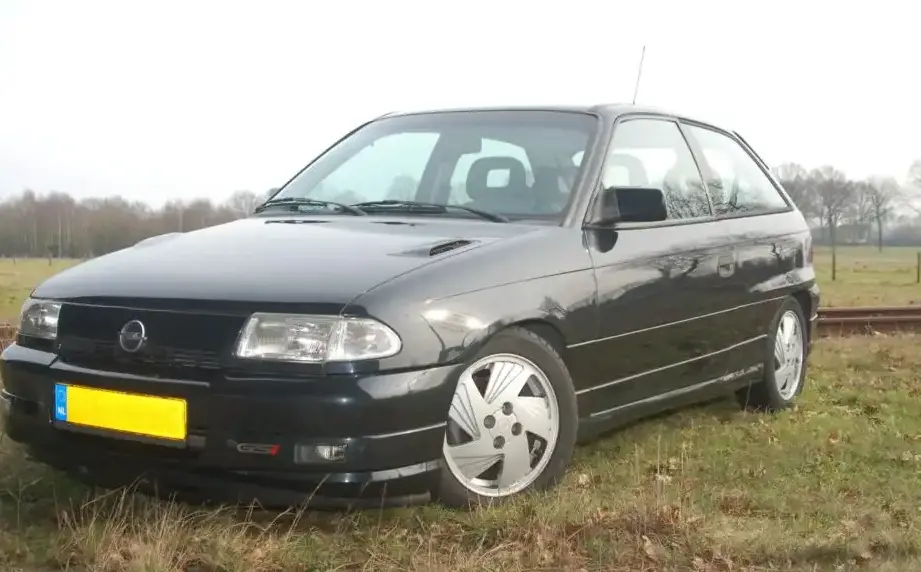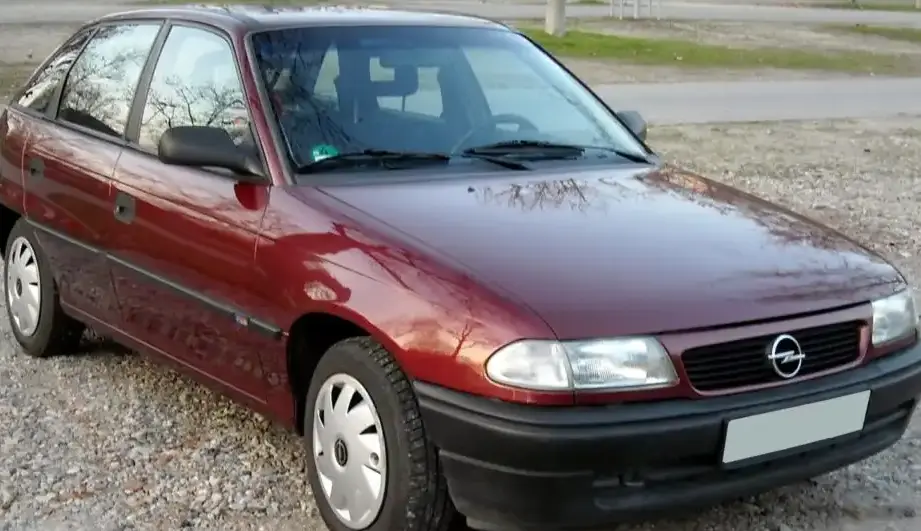
The Opel Astra F (facelift, introduced in 1994) 1.4i Ecotec 16V 90 hp automatic, produced between 1996 and 1998, represented an entry-level offering within the broader Astra F range. Positioned as a practical and economical choice, this variant aimed at buyers prioritizing affordability and ease of use over outright performance. It was a key part of Opel’s strategy to offer a diverse lineup catering to a wide range of customer needs in the European market. The facelifted Astra F, designated internally as the 1HX0/A3 platform, brought revised styling and minor mechanical updates compared to the pre-1994 models.
Technical Specifications
| Brand | Opel |
| Model | Astra |
| Generation | Astra F (facelift 1994) |
| Type (Engine) | 1.4i Ecotec 16V (90 Hp) Automatic |
| Start of production | 1996 |
| End of production | 1998 |
| Powertrain Architecture | Internal Combustion engine |
| Body type | Hatchback |
| Seats | 5 |
| Doors | 3 |
| Fuel consumption (urban) | 9 l/100 km (26.1 US mpg, 31.4 UK mpg, 11.1 km/l) |
| Fuel consumption (extra urban) | 6.5 l/100 km (36.2 US mpg, 43.5 UK mpg, 15.4 km/l) |
| Fuel consumption (combined) | 8.2 l/100 km (28.7 US mpg, 34.4 UK mpg, 12.2 km/l) |
| Fuel Type | Petrol (Gasoline) |
| Acceleration 0 – 100 km/h | 15.5 sec |
| Acceleration 0 – 62 mph | 15.5 sec |
| Acceleration 0 – 60 mph | 14.7 sec |
| Maximum speed | 165 km/h (102.53 mph) |
| Weight-to-power ratio | 11.6 kg/Hp, 86.1 Hp/tonne |
| Weight-to-torque ratio | 8.4 kg/Nm, 119.6 Nm/tonne |
| Power | 90 Hp @ 6000 rpm |
| Power per litre | 64.8 Hp/l |
| Torque | 125 Nm @ 4000 rpm (92.2 lb.-ft. @ 4000 rpm) |
| Engine layout | Front, Longitudinal |
| Engine Model/Code | X14XE |
| Engine displacement | 1389 cm3 (84.76 cu. in.) |
| Number of cylinders | 4 |
| Engine configuration | Inline |
| Cylinder Bore | 77.6 mm (3.06 in.) |
| Piston Stroke | 73.4 mm (2.89 in.) |
| Compression ratio | 10.5:1 |
| Number of valves per cylinder | 4 |
| Fuel injection system | Multi-port manifold injection |
| Engine aspiration | Naturally aspirated engine |
| Valvetrain | DOHC |
| Engine oil capacity | 3.5 l (3.7 US qt | 3.08 UK qt) |
| Coolant capacity | 5.6 l (5.92 US qt | 4.93 UK qt) |
| Kerb Weight | 1045/1065 kg (2303.83 lbs.) |
| Max. weight | 1550 kg (3417.17 lbs.) |
| Max load | 485-505 kg (1069.24 – 1113.33 lbs.) |
| Trunk (boot) space – minimum | 360 l (12.71 cu. ft.) |
| Trunk (boot) space – maximum | 1200 l (42.38 cu. ft.) |
| Fuel tank capacity | 52 l (13.74 US gal | 11.44 UK gal) |
| Length | 4051 mm (159.49 in.) |
| Width | 1696 mm (66.77 in.) |
| Width including mirrors | 1852 mm (72.91 in.) |
| Height | 1410 mm (55.51 in.) |
| Wheelbase | 2517 mm (99.09 in.) |
| Front track | 1424 mm (56.06 in.) |
| Rear (Back) track | 1423 mm (56.02 in.) |
| Ride height (ground clearance) | 135 mm (5.31 in.) |
| Drag coefficient (Cd) | 0.32 |
| Minimum turning circle | 10.5 m (34.45 ft.) |
| Drivetrain Architecture | The Internal combustion engine (ICE) drives the front wheels of the vehicle. |
| Drive wheel | Front wheel drive |
| Number of gears and type of gearbox | 4 gears, automatic transmission |
| Front brakes | Ventilated discs |
| Rear brakes | Drum |
| Steering type | Steering rack and pinion |
| Tires size | 175/65 R14 82T |
| Wheel rims size | 14 |
Powertrain & Engine Architecture
The heart of this Astra variant was the X14XE engine, a 1.4-liter inline-four cylinder unit belonging to Opel’s Ecotec family. This engine featured a cast iron block and an aluminum cylinder head, incorporating a dual overhead camshaft (DOHC) valvetrain with four valves per cylinder. The X14XE utilized multi-port fuel injection, delivering fuel directly into the intake ports, optimizing combustion efficiency. The 90 horsepower output was achieved at 6000 rpm, with a peak torque of 125 Nm (92.2 lb-ft) available at 4000 rpm. Paired with this engine was a four-speed automatic transmission, designed for smooth and convenient operation. This transmission, while providing ease of driving, was not known for its sportiness or particularly quick shifts.
Driving Characteristics
The 1.4i Ecotec automatic Astra F offered a comfortable, but unhurried, driving experience. Acceleration from 0-100 km/h (0-62 mph) took approximately 15.5 seconds, making it noticeably slower than versions equipped with the 1.6 or 1.8-liter engines, or even the 1.4 with a manual transmission. The automatic transmission’s gear ratios were geared towards fuel economy rather than performance. While adequate for city driving and relaxed highway cruising, overtaking maneuvers required careful planning. The relatively low power output meant the engine needed to be revved to extract the most from it, but the automatic transmission often robbed some of that potential.
Equipment & Trim Levels
The 1.4i Ecotec automatic typically represented a mid-range trim level within the Astra F lineup. Standard equipment generally included central locking, power steering, and an adjustable steering column. Interior upholstery was typically cloth, with a functional, if somewhat basic, dashboard layout. Optional extras could include air conditioning, electric windows, and an upgraded audio system. The specific trim level (e.g., “Comfort,” “Select”) determined the availability of these optional features.
Chassis & Braking
The Astra F’s chassis featured independent suspension at the front, utilizing MacPherson struts, and a semi-independent torsion beam suspension at the rear. Braking was accomplished via ventilated discs on the front wheels and drum brakes on the rear. This configuration was typical for vehicles in this weight class and price range during the mid-1990s. Stabilizer bars were fitted to both the front and rear axles to reduce body roll during cornering, though the overall handling was geared more towards comfort than sporty dynamics.
Market Reception & Comparison
The 1.4i Ecotec automatic Astra F was generally well-received as a practical and affordable family car. Critics acknowledged its fuel efficiency and ease of driving, but often noted its lack of outright performance. Compared to the 1.6 and 1.8-liter versions, it offered significantly less power and a slower driving experience. However, it was more economical to run and often cheaper to insure. The 1.9 TDI diesel variant offered superior fuel economy and torque, but at a higher initial cost. The automatic transmission, while convenient, was often criticized for its sluggishness compared to the available manual gearbox.
Legacy
The X14XE engine, while not known for being particularly exciting, proved to be relatively reliable. The four-speed automatic transmission, however, is a potential weak point, with some units experiencing issues with wear and tear over time. Today, the 1.4i Ecotec automatic Astra F is a relatively affordable classic car, appealing to those seeking a simple, economical, and nostalgic vehicle. Parts availability is generally good, and maintenance is relatively straightforward, making it a viable option for enthusiasts and first-time car owners alike. Its enduring appeal lies in its practicality and affordability, representing a typical family car of the mid-1990s.