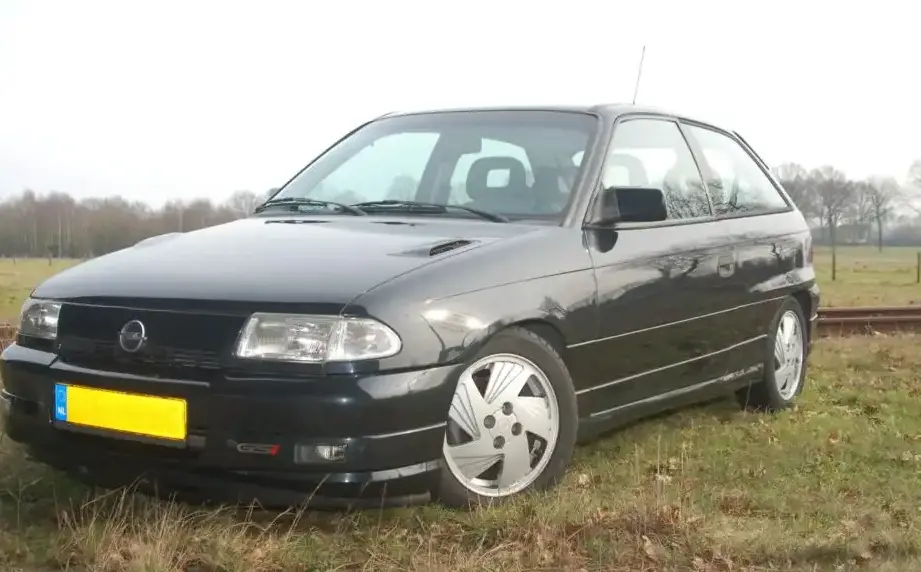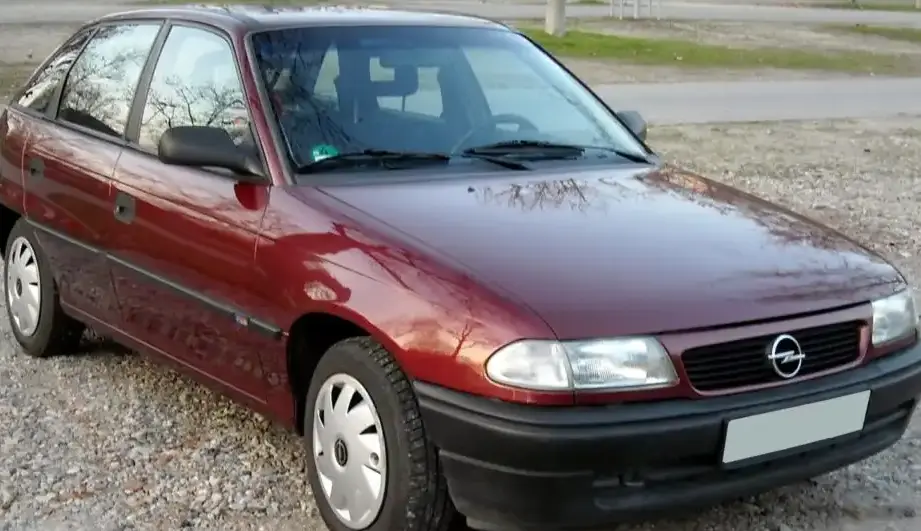
The Opel Astra F (facelift, introduced in August 1994) 1.7 TD represents a diesel-powered variant within the highly successful Astra F generation. Produced through December 1997, this model aimed to provide economical transportation within the European market, particularly appealing to buyers prioritizing fuel efficiency over outright performance. Positioned as an entry-level offering, the 1.7 TD served as a more affordable alternative to the gasoline-powered Astra variants and the more potent 2.0-liter diesel. It was a key component of Opel’s strategy to offer a broad range of options within the compact family car segment.
Technical Specifications
| Brand | Opel |
| Model | Astra |
| Generation | Astra F (facelift 1994) |
| Type (Engine) | 1.7 TD (68 Hp) |
| Start of production | August, 1994 |
| End of production | December, 1997 |
| Powertrain Architecture | Internal Combustion engine |
| Body type | Hatchback |
| Seats | 5 |
| Doors | 3 |
| Fuel consumption (urban) | 6.8 l/100 km (34.6 US mpg, 41.5 UK mpg, 14.7 km/l) |
| Fuel consumption (extra urban) | 5.1 l/100 km (46.1 US mpg, 55.4 UK mpg, 19.6 km/l) |
| Fuel consumption (combined) | 6.3 l/100 km (37.3 US mpg, 44.8 UK mpg, 15.9 km/l) |
| Fuel Type | Diesel |
| Acceleration 0 – 100 km/h | 16 sec |
| Acceleration 0 – 62 mph | 16 sec |
| Acceleration 0 – 60 mph | 15.2 sec |
| Maximum speed | 164 km/h (101.9 mph) |
| Weight-to-power ratio | 15.4 kg/Hp, 64.8 Hp/tonne |
| Weight-to-torque ratio | 8 kg/Nm, 125.7 Nm/tonne |
| Power | 68 Hp @ 4500 rpm |
| Power per litre | 40 Hp/l |
| Torque | 132 Nm @ 2400 rpm (97.36 lb.-ft. @ 2400 rpm) |
| Engine layout | Front, Transverse |
| Engine Model/Code | X17DTL |
| Engine displacement | 1700 cm3 (103.74 cu. in.) |
| Number of cylinders | 4 |
| Engine configuration | Inline |
| Cylinder Bore | 82.5 mm (3.25 in.) |
| Piston Stroke | 79.5 mm (3.13 in.) |
| Compression ratio | 22:1 |
| Number of valves per cylinder | 2 |
| Fuel injection system | Precombustion chamber injection |
| Engine aspiration | Turbocharger |
| Valvetrain | SOHC |
| Engine oil capacity | 4.5 l (4.76 US qt | 3.96 UK qt) |
| Coolant capacity | 6.8 l (7.19 US qt | 5.98 UK qt) |
| Kerb Weight | 1050/1070 kg (2314.85 lbs.) |
| Max. weight | 1555 kg (3428.19 lbs.) |
| Max load | 485-505 kg (1069.24 – 1113.33 lbs.) |
| Trunk (boot) space – minimum | 360 l (12.71 cu. ft.) |
| Trunk (boot) space – maximum | 1200 l (42.38 cu. ft.) |
| Fuel tank capacity | 52 l (13.74 US gal | 11.44 UK gal) |
| Length | 4051 mm (159.49 in.) |
| Width | 1696 mm (66.77 in.) |
| Width including mirrors | 1852 mm (72.91 in.) |
| Height | 1410 mm (55.51 in.) |
| Wheelbase | 2517 mm (99.09 in.) |
| Front track | 1430/1424 mm (56.3 in.) |
| Rear (Back) track | 1429/1423 mm (56.26 in.) |
| Ride height (ground clearance) | 135 mm (5.31 in.) |
| Drag coefficient (Cd) | 0.32 |
| Minimum turning circle | 10.5 m (34.45 ft.) |
| Drivetrain Architecture | Front wheel drive |
| Number of gears and type of gearbox | 5 gears, manual transmission |
| Front brakes | Ventilated discs |
| Rear brakes | Drum |
| Steering type | Steering rack and pinion |
| Tires size | 175/70 R13 82T; 175/65 R14 82T |
| Wheel rims size | 5.5J x 13 ET49; 5.5J x 14 ET49 |
Powertrain & Engine Architecture
The heart of the Astra F 1.7 TD is the X17DTL engine, a 1.7-liter inline-four cylinder diesel. This engine utilizes a precombustion chamber injection system, a common technology for diesel engines of the era. This system involves injecting fuel into a precombustion chamber, where it partially ignites, then ignites the main combustion chamber. This design aids in smoother combustion and reduced engine noise. The X17DTL is turbocharged, which significantly improves power output compared to naturally aspirated diesel engines of similar displacement. The single overhead camshaft (SOHC) valvetrain operates two valves per cylinder. The engine’s relatively high compression ratio of 22:1 is typical for indirect injection diesel engines, contributing to its thermal efficiency. The 5-speed manual transmission was the standard offering, chosen for its fuel efficiency and cost-effectiveness.
Driving Characteristics
The 1.7 TD-equipped Astra F offered modest performance. With 68 horsepower and 132 Nm (97 lb-ft) of torque, acceleration from 0 to 100 km/h (0-62 mph) took around 16 seconds. The engine’s torque peak at 2400 rpm provided reasonable pulling power for everyday driving, but overtaking maneuvers required careful planning. The 5-speed manual transmission was geared to maximize fuel economy, resulting in a relatively high final drive ratio. Compared to the more powerful gasoline variants or the 2.0-liter diesel, the 1.7 TD felt noticeably slower. However, its strength lay in its fuel efficiency and relaxed cruising ability. The turbocharger provided a noticeable boost in power once spooled up, but turbo lag was present, requiring drivers to downshift for quicker responses.
Equipment & Trim Levels
The 1.7 TD Astra F typically came with a basic level of equipment. Standard features generally included power steering, central locking, and a basic stereo system. Interior upholstery was typically cloth, and the dashboard featured a functional, if somewhat spartan, design. Optional extras included air conditioning, electric windows, and upgraded audio systems. Trim levels varied slightly depending on the market, but the 1.7 TD generally represented the entry point into the Astra F range. It was often marketed towards buyers who prioritized practicality and economy over luxury features.
Chassis & Braking
The Astra F 1.7 TD utilized a MacPherson strut front suspension and a torsion beam rear suspension. This setup provided a reasonable balance between ride comfort and handling. The front brakes were ventilated discs, offering adequate stopping power, while the rear brakes were drums, a cost-saving measure common in this segment. Stabilizer bars were typically fitted to both the front and rear axles to reduce body roll during cornering. The relatively lightweight nature of the 1.7 TD variant, with a kerb weight of around 1050-1070 kg, helped to mitigate the effects of the modest engine power.
Market Reception & Comparison
The Astra F 1.7 TD was well-received in European markets as an economical and reliable family car. Critics praised its fuel efficiency and low running costs, but noted its lack of outright performance. Compared to the gasoline-powered Astra variants, the 1.7 TD offered significantly better fuel economy, but at the expense of acceleration and refinement. The 2.0-liter diesel offered more power and torque, but came at a higher price point. The 1.7 TD appealed to buyers who primarily used their cars for commuting and everyday transportation, where fuel economy was a key consideration.
Legacy
The Opel Astra F 1.7 TD, while not a performance icon, has proven to be a durable and reliable vehicle. The X17DTL engine, when properly maintained, is known for its longevity. Today, these cars are relatively affordable on the used car market, making them attractive to budget-conscious buyers. However, potential buyers should be aware of the age-related issues common to vehicles of this era, such as corrosion and wear and tear on suspension components. The 1.7 TD represents a significant chapter in Opel’s history, demonstrating the brand’s commitment to providing practical and economical transportation to a wide range of customers.