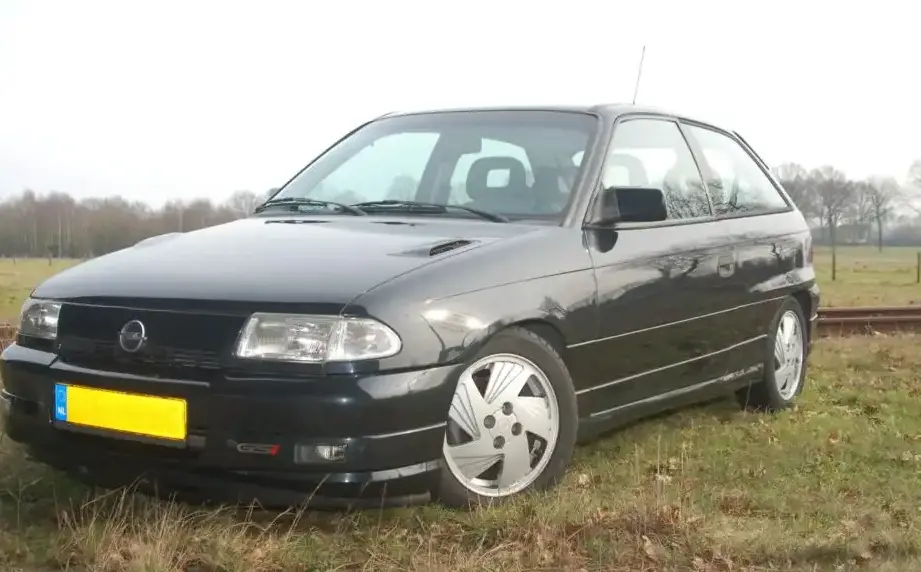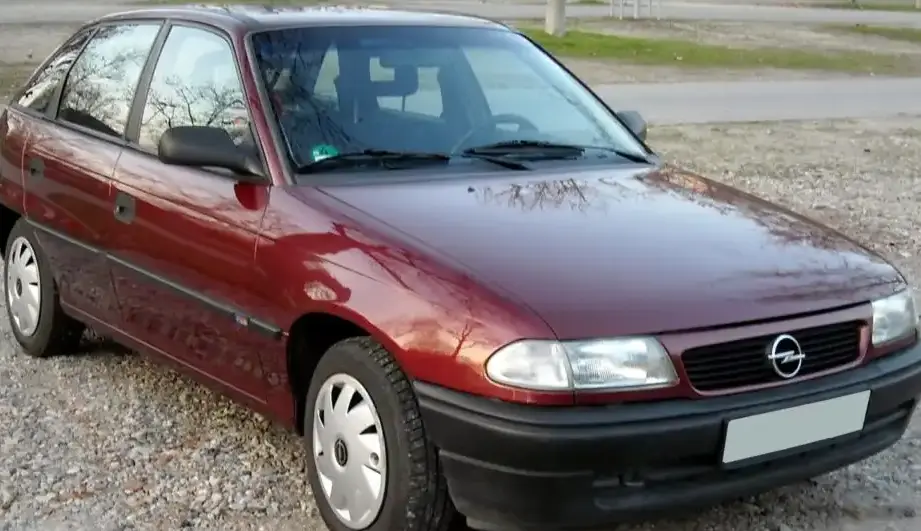
The Opel Astra F GSi 2.0 16V, produced from August 1994 to June 1996, represented the performance-oriented variant of the facelifted Astra F series. Positioned as the flagship model within the Astra F range, it aimed to deliver a sporty driving experience while maintaining the practicality of a compact hatchback. This model was primarily marketed in Europe, offering a more affordable and accessible alternative to rivals like the Volkswagen Golf GTI and Ford Escort RS2000. The “GSi” designation, standing for “Grand Sport injection,” signified Opel’s commitment to performance and handling. It was a key part of the A3 platform vehicles.
Technical Specifications
| Brand | Opel |
| Model | Astra |
| Generation | Astra F (facelift 1994) |
| Type (Engine) | GSi 2.0 16V (150 Hp) |
| Start of production | August, 1994 |
| End of production | June, 1996 |
| Powertrain Architecture | Internal Combustion engine |
| Body type | Hatchback |
| Seats | 5 |
| Doors | 3 |
| Fuel consumption (urban) | 12.7 l/100 km (18.5 US mpg, 22.2 UK mpg, 7.9 km/l) |
| Fuel consumption (extra urban) | 7.6 l/100 km (30.9 US mpg, 37.2 UK mpg, 13.2 km/l) |
| Fuel consumption (combined) | 10.4 l/100 km (22.6 US mpg, 27.2 UK mpg, 9.6 km/l) |
| Fuel Type | Petrol (Gasoline) |
| Acceleration 0 – 100 km/h | 8.5 sec |
| Acceleration 0 – 62 mph | 8.5 sec |
| Acceleration 0 – 60 mph | 8.1 sec |
| Maximum speed | 220 km/h (136.7 mph) |
| Weight-to-power ratio | 7.3 kg/Hp, 136.4 Hp/tonne |
| Weight-to-torque ratio | 5.6 kg/Nm, 178.2 Nm/tonne |
| Power | 150 Hp @ 6000 rpm |
| Power per litre | 75.1 Hp/l |
| Torque | 196 Nm @ 4600 rpm (144.56 lb.-ft. @ 4600 rpm) |
| Engine layout | Front, Transverse |
| Engine Model/Code | C20XE |
| Engine displacement | 1998 cm3 (121.93 cu. in.) |
| Number of cylinders | 4 |
| Engine configuration | Inline |
| Cylinder Bore | 86 mm (3.39 in.) |
| Piston Stroke | 86 mm (3.39 in.) |
| Compression ratio | 10.5:1 |
| Number of valves per cylinder | 4 |
| Fuel injection system | Multi-port manifold injection |
| Engine aspiration | Naturally aspirated engine |
| Valvetrain | DOHC |
| Engine oil capacity | 4.5 l (4.76 US qt | 3.96 UK qt) |
| Coolant | 6.9 l (7.29 US qt | 6.07 UK qt) |
| Kerb Weight | 1100 kg (2425.08 lbs.) |
| Max. weight | 1615 kg (3560.47 lbs.) |
| Max load | 515 kg (1135.38 lbs.) |
| Trunk (boot) space – minimum | 360 l (12.71 cu. ft.) |
| Trunk (boot) space – maximum | 1200 l (42.38 cu. ft.) |
| Fuel tank capacity | 52 l (13.74 US gal | 11.44 UK gal) |
| Length | 4051 mm (159.49 in.) |
| Width | 1696 mm (66.77 in.) |
| Width including mirrors | 1852 mm (72.91 in.) |
| Height | 1410 mm (55.51 in.) |
| Wheelbase | 2517 mm (99.09 in.) |
| Front track | 1430 mm (56.3 in.) |
| Rear (Back) track | 1432 mm (56.38 in.) |
| Drag coefficient (Cd) | 0.32 |
| Minimum turning circle | 10.5 m (34.45 ft.) |
| Drivetrain Architecture | The Internal combustion engine (ICE) drives the front wheels of the vehicle. |
| Drive wheel | Front wheel drive |
| Number of gears and type of gearbox | 5 gears, manual transmission |
| Front suspension | Independent type McPherson |
| Rear suspension | Suspension with traction connecting levers |
| Front brakes | Ventilated discs |
| Rear brakes | Disc |
| Assisting systems | ABS (Anti-lock braking system) |
| Steering type | Steering rack and pinion |
| Tires size | 195/55 R15 |
| Wheel rims size | 6J x 15 |
Powertrain & Engine Architecture
The heart of the Astra F GSi 2.0 16V was the C20XE engine, a 1998cc inline-four cylinder powerplant. This engine was a derivative of Opel’s renowned “E” family of engines, known for their durability and tuneability. The C20XE featured a dual overhead camshaft (DOHC) valvetrain with four valves per cylinder, contributing to its high-revving nature and increased power output. Fuel delivery was managed by a Bosch Motronic multi-port fuel injection system, optimizing air-fuel mixture for efficient combustion. The engine produced 150 horsepower at 6000 rpm and 196 Nm (144.56 lb-ft) of torque at 4600 rpm. The GSi was exclusively offered with a five-speed manual transmission, providing drivers with full control over the engine’s power band. This transmission was chosen to complement the sporty character of the car, offering precise shifts and a direct connection to the drivetrain.
Driving Characteristics
The Astra F GSi 2.0 16V delivered a noticeably more engaging driving experience compared to lower-spec Astra models. The 150 hp engine provided brisk acceleration, with a 0-60 mph time of around 8.1 seconds and a top speed of 136.7 mph. The five-speed manual transmission allowed drivers to exploit the engine’s powerband effectively, while the well-tuned suspension minimized body roll during cornering. Compared to the 1.8L models, the GSi offered a significant performance upgrade, with a more responsive throttle and a higher redline. While not as refined as some of its rivals, the Astra GSi provided a raw and enjoyable driving experience that appealed to enthusiasts.
Equipment & Trim Levels
The GSi trim level came standard with a number of features designed to enhance both comfort and performance. These included sport seats with improved bolstering, a leather-wrapped steering wheel, and a unique instrument cluster with additional gauges. Exterior features included a body-colored front spoiler, side skirts, and a rear spoiler, giving the GSi a more aggressive appearance. Optional extras included air conditioning, electric windows, and a sunroof. The interior typically featured a dark color scheme with sporty accents, reflecting the car’s performance-oriented nature.
Chassis & Braking
The Astra F GSi featured a McPherson strut front suspension and a torsion beam rear suspension. The suspension was tuned for a balance between comfort and handling, providing a relatively compliant ride while still offering good control in corners. The braking system consisted of ventilated disc brakes at the front and solid disc brakes at the rear. Anti-lock braking system (ABS) was standard, enhancing safety and stability during hard braking. The GSi also featured a thicker stabilizer bar compared to lower-spec models, further reducing body roll.
Market Reception & Comparison
The Astra F GSi 2.0 16V was generally well-received by automotive critics, who praised its performance, handling, and value for money. It was seen as a credible alternative to more expensive hot hatches like the Volkswagen Golf GTI and Ford Escort RS2000. Fuel economy was reasonable for a performance car of its era, averaging around 22.6 US mpg in combined driving. Reliability was generally good, although the C20XE engine could be prone to oil leaks if not properly maintained. Compared to the 1.8L Astra models, the GSi offered a significant performance boost but came with a higher price tag and slightly increased running costs.
Legacy
The Opel Astra F GSi 2.0 16V has become a popular choice among classic car enthusiasts. The C20XE engine is known for its durability and potential for modification, making it a favorite among tuners. Today, well-maintained examples of the GSi command a premium in the used car market. While not as technologically advanced as modern hot hatches, the Astra F GSi remains a rewarding and enjoyable car to drive, offering a taste of 1990s performance and handling. Its simple mechanicals and readily available parts make it a relatively easy car to maintain and repair, ensuring its continued presence on roads for years to come.