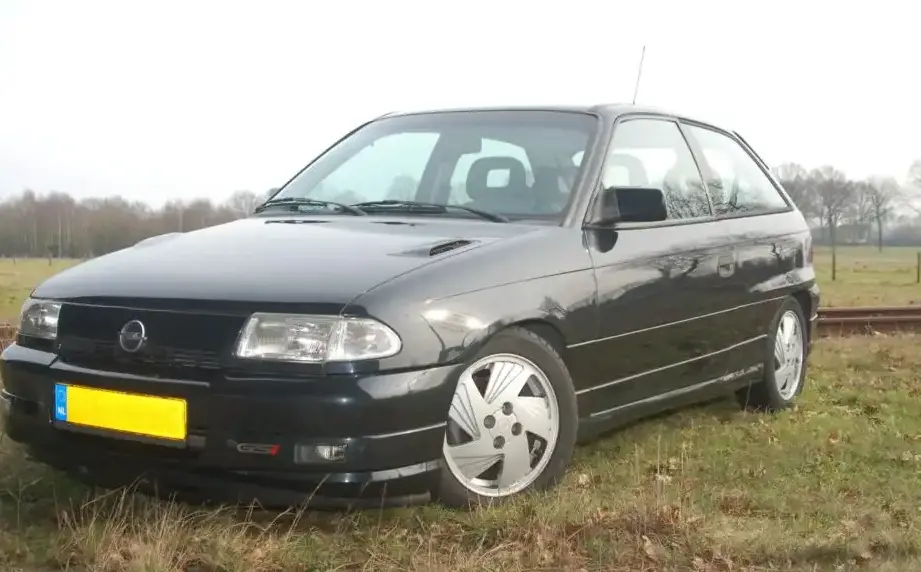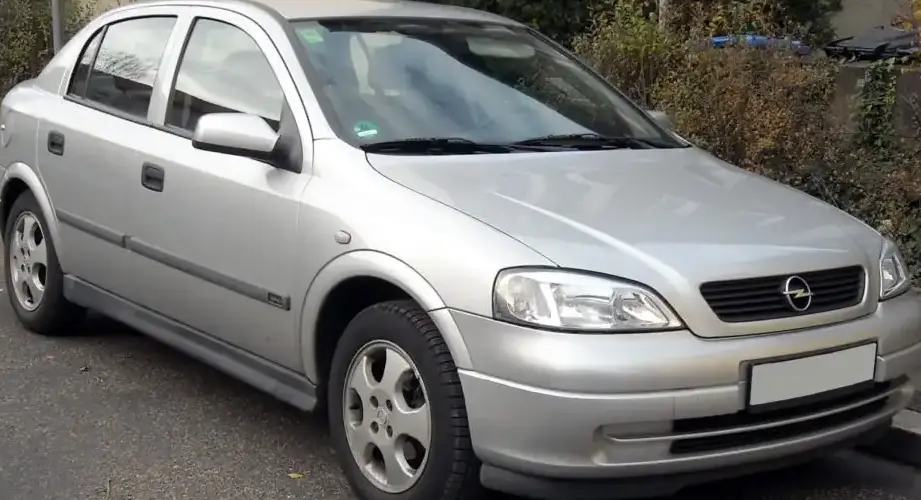
The Opel Astra G 1.6 (85 hp) Automatic, produced between 2000 and 2002, represented an entry-level offering within the broader Astra G range (1998-2004). Positioned as a comfortable and economical option, this variant catered to drivers prioritizing ease of use over outright performance. It was primarily sold in European markets, where the Astra G was a significant competitor in the compact family car segment. This particular configuration, combining the 1.6-liter engine with a four-speed automatic transmission, aimed to provide a convenient driving experience for urban commutes and longer journeys. The Astra G itself was a pivotal model for Opel, building upon the success of its predecessor and introducing a more refined and modern design.
Technical Specifications
| Brand | Opel |
| Model | Astra |
| Generation | Astra G |
| Type (Engine) | 1.6 (85 Hp) Automatic |
| Start of production | July, 2000 |
| End of production | 2002 |
| Powertrain Architecture | Internal Combustion engine |
| Body type | Hatchback |
| Seats | 5 |
| Doors | 3-5 |
| Fuel consumption (urban) | 11.2 l/100 km (21 US mpg, 25.2 UK mpg) |
| Fuel consumption (extra urban) | 6.3 l/100 km (37.3 US mpg, 44.8 UK mpg) |
| Fuel consumption (combined) | 8.1 l/100 km (29 US mpg, 34.9 UK mpg) |
| Fuel Type | Petrol (Gasoline) |
| Acceleration 0 – 100 km/h | 14.5 sec |
| Acceleration 0 – 62 mph | 14.5 sec |
| Acceleration 0 – 60 mph | 13.8 sec |
| Maximum speed | 170 km/h (105.63 mph) |
| Weight-to-power ratio | 12.8 kg/Hp |
| Weight-to-torque ratio | 7.9 kg/Nm |
| Power | 85 Hp @ 5400 rpm |
| Torque | 138 Nm @ 2600 rpm (101.78 lb.-ft. @ 2600 rpm) |
| Engine layout | Front, Transverse |
| Engine Model/Code | Z16SE |
| Engine displacement | 1598 cm3 (97.52 cu. in.) |
| Number of cylinders | 4 |
| Engine configuration | Inline |
| Cylinder Bore | 79 mm (3.11 in.) |
| Piston Stroke | 81.5 mm (3.21 in.) |
| Compression ratio | 9.6:1 |
| Number of valves per cylinder | 2 |
| Fuel injection system | Multi-port manifold injection |
| Engine aspiration | Naturally aspirated |
| Valvetrain | SOHC |
| Engine oil capacity | 3.5 l (3.7 US qt | 3.08 UK qt) |
| Coolant capacity | 5.9 l (6.23 US qt | 5.19 UK qt) |
| Kerb Weight | 1088 kg (2398.63 lbs.) |
| Max. weight | 1640 kg (3615.58 lbs.) |
| Max load | 552 kg (1216.95 lbs.) |
| Trunk (boot) space – minimum | 370 l (13.07 cu. ft.) |
| Trunk (boot) space – maximum | 1180 l (41.67 cu. ft.) |
| Fuel tank capacity | 52 l (13.74 US gal | 11.44 UK gal) |
| Max. roof load | 100 kg (220.46 lbs.) |
| Permitted towbar download | 75 kg (165.35 lbs.) |
| Length | 4110 mm (161.81 in.) |
| Width | 1709 mm (67.28 in.) |
| Width including mirrors | 1989 mm (78.31 in.) |
| Height | 1425 mm (56.1 in.) |
| Wheelbase | 2606 mm (102.6 in.) |
| Front track | 1464 mm (57.64 in.) |
| Rear track | 1452 mm (57.17 in.) |
| Front overhang | 791 mm (31.14 in.) |
| Rear overhang | 713 mm (28.07 in.) |
| Ride height (ground clearance) | 130 mm (5.12 in.) |
| Drag coefficient (Cd) | 0.28 |
| Minimum turning circle | 10.8 m (35.43 ft.) |
| Drivetrain | Front wheel drive |
| Number of gears | 4 |
| Gearbox type | Automatic transmission |
| Front suspension | Independent, McPherson with coil spring and anti-roll bar |
| Rear suspension | Semi-independent, coil spring |
| Front brakes | Ventilated discs |
| Rear brakes | Drum |
| Assisting systems | ABS (Anti-lock braking system) |
| Steering type | Steering rack and pinion |
| Power steering | Hydraulic |
| Tires size | 185/65 R15 H |
| Wheel rims size | 6J x 15 ET49 |
Powertrain & Engine Architecture
The heart of the Astra G 1.6 Automatic is the Z16SE engine, a 1.6-liter inline-four cylinder petrol engine. This engine utilizes a single overhead camshaft (SOHC) valvetrain with two valves per cylinder. Fuel delivery is managed by a multi-port fuel injection system, providing a balance between efficiency and performance. The Z16SE is a naturally aspirated engine, meaning it doesn’t employ forced induction like a turbocharger or supercharger. The engine produces 85 horsepower at 5400 rpm and 138 Nm (101.78 lb-ft) of torque at 2600 rpm. Paired with this engine is a four-speed automatic transmission, designed for smooth and convenient gear changes. This transmission, while offering ease of use, lacks the efficiency and responsiveness of more modern automatic gearboxes or manual transmissions.
Driving Characteristics
The 1.6-liter engine and four-speed automatic combination in the Astra G delivers a comfortable, but not particularly sporty, driving experience. Acceleration from 0 to 100 km/h (0-62 mph) takes around 14.5 seconds, and top speed is limited to 170 km/h (105.63 mph). The automatic transmission prioritizes smooth shifts over rapid acceleration. Compared to the more powerful 1.8-liter or 2.0-liter versions of the Astra G, or even the diesel variants, this setup feels noticeably slower. The gear ratios are tuned for fuel economy and everyday drivability, rather than performance. The automatic transmission can sometimes feel hesitant during overtaking maneuvers, requiring a deliberate kickdown to access more power. However, for drivers seeking a relaxed and uncomplicated driving experience, particularly in urban environments, this configuration proved adequate.
Equipment & Trim Levels
The Astra G 1.6 Automatic typically came with a base level of equipment, reflecting its position as an entry-level model. Standard features generally included power steering, central locking, electric front windows, and an anti-lock braking system (ABS). Interior upholstery was typically cloth, and the dashboard featured a functional, if somewhat basic, design. Optional extras could include air conditioning, alloy wheels, a CD player, and upgraded interior trim. Trim levels varied slightly depending on the specific market, but generally followed a progressive structure with increasing levels of equipment and comfort.
Chassis & Braking
The Astra G 1.6 Automatic utilizes an independent McPherson strut suspension setup at the front, providing a reasonable level of ride comfort and handling. The rear suspension is a semi-independent coil spring arrangement. Braking duties are handled by ventilated discs at the front and drum brakes at the rear. While adequate for everyday driving, the drum brakes on the rear limited overall braking performance compared to models equipped with rear discs. The steering is a rack and pinion system with hydraulic power assistance, offering a light and easy steering feel.
Market Reception & Comparison
The Astra G 1.6 Automatic was generally well-received as a practical and affordable family car. Critics acknowledged its comfortable ride and ease of use, but often noted its lack of performance compared to higher-spec models. Fuel economy was a strong point, with combined fuel consumption figures around 8.1 l/100 km (29 US mpg). Compared to the 1.8-liter or diesel variants, the 1.6-liter automatic offered lower running costs but at the expense of performance and refinement. The 1.8-liter offered a noticeable power increase, while the diesel models provided superior fuel economy and torque.
Legacy
The Z16SE engine, while not known for being particularly groundbreaking, proved to be a relatively reliable unit. Common issues are typically related to age and maintenance, such as oil leaks and wear on suspension components. The four-speed automatic transmission, however, is sometimes prone to issues as it ages. Today, the Astra G 1.6 Automatic can be found on the used car market at very affordable prices. It represents a budget-friendly option for those seeking a simple and reliable compact car, but potential buyers should be aware of the potential for age-related maintenance issues. Its enduring appeal lies in its practicality, affordability, and the relatively straightforward mechanics that make it accessible for DIY repairs.