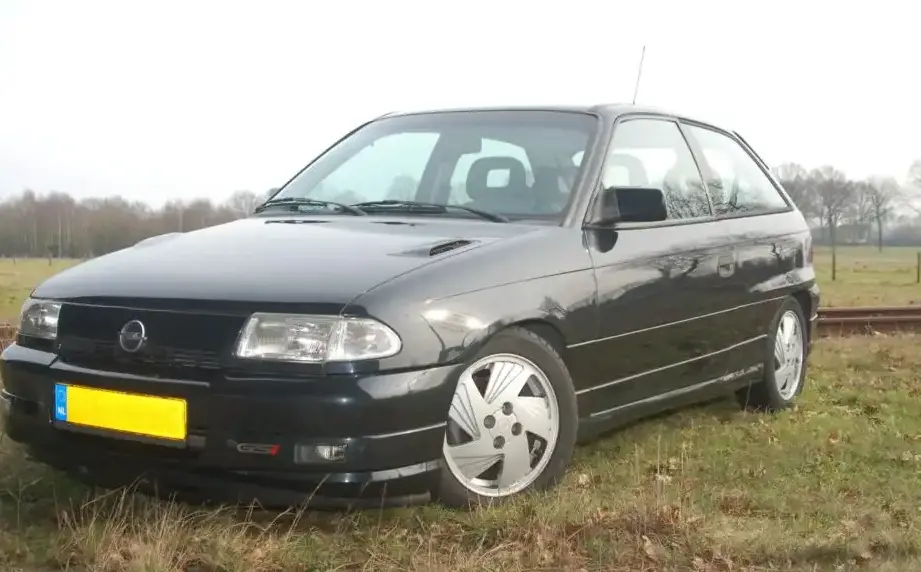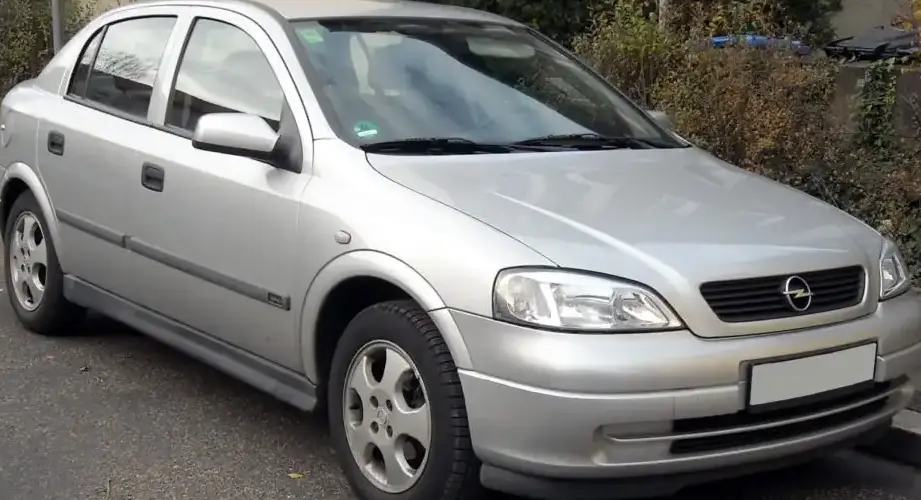
The Opel Astra G 1.6 Ecotec 16V Automatic, produced between March 1998 and June 2000, represented a key entry point into the popular Astra G range (1998-2004). Positioned as a comfortable and practical option, this variant combined a 1.6-liter, 16-valve engine with a four-speed automatic transmission. It was primarily marketed in Europe as a family hatchback, offering a balance between affordability, fuel efficiency, and ease of use. The Astra G itself was a significant model for Opel, building upon the success of its predecessor and introducing a more modern design and improved technology. This specific configuration aimed at buyers prioritizing convenience over outright performance.
Technical Specifications
| Brand | Opel |
| Model | Astra |
| Generation | Astra G |
| Type (Engine) | 1.6 Ecotec 16V (101 Hp) Automatic |
| Start of production | March, 1998 |
| End of production | June, 2000 |
| Powertrain Architecture | Internal Combustion engine |
| Body type | Hatchback |
| Seats | 5 |
| Doors | 3-5 |
| Fuel consumption (urban) | 10.2 l/100 km (23.1 US mpg, 27.7 UK mpg, 9.8 km/l) |
| Fuel consumption (extra urban) | 6.2 l/100 km (37.9 US mpg, 45.6 UK mpg, 16.1 km/l) |
| Fuel consumption (combined) | 7.7 l/100 km (30.5 US mpg, 36.7 UK mpg, 13 km/l) |
| Fuel Type | Petrol (Gasoline) |
| Acceleration 0 – 100 km/h | 13.5 sec |
| Acceleration 0 – 62 mph | 13.5 sec |
| Acceleration 0 – 60 mph | 12.8 sec |
| Maximum speed | 180 km/h (111.85 mph) |
| Emission standard | Euro 2 |
| Weight-to-power ratio | 11.2 kg/Hp, 89 Hp/tonne |
| Weight-to-torque ratio | 7.6 kg/Nm, 132.2 Nm/tonne |
| Power | 101 Hp @ 6200 rpm |
| Power per litre | 63.2 Hp/l |
| Torque | 150 Nm @ 3200 rpm (110.63 lb.-ft. @ 3200 rpm) |
| Engine layout | Front, Transverse |
| Engine Model/Code | X16XEL |
| Engine displacement | 1598 cm3 (97.52 cu. in.) |
| Number of cylinders | 4 |
| Engine configuration | Inline |
| Cylinder Bore | 79 mm (3.11 in.) |
| Piston Stroke | 81.5 mm (3.21 in.) |
| Compression ratio | 10.5:1 |
| Number of valves per cylinder | 4 |
| Fuel injection system | Multi-port manifold injection |
| Engine aspiration | Naturally aspirated engine |
| Valvetrain | DOHC |
| Engine oil capacity | 3.25 l (3.43 US qt, 2.86 UK qt) |
| Coolant | 6.3 l (6.66 US qt, 5.54 UK qt) |
| Kerb Weight | 1135 kg (2502.25 lbs.) |
| Max. weight | 1645 kg (3626.6 lbs.) |
| Max load | 510 kg (1124.36 lbs.) |
| Trunk (boot) space – minimum | 370 l (13.07 cu. ft.) |
| Trunk (boot) space – maximum | 1180 l (41.67 cu. ft.) |
| Fuel tank capacity | 52 l (13.74 US gal, 11.44 UK gal) |
| Max. roof load | 100 kg (220.46 lbs.) |
| Permitted towbar download | 75 kg (165.35 lbs.) |
| Length | 4110 mm (161.81 in.) |
| Width | 1709 mm (67.28 in.) |
| Width including mirrors | 1989 mm (78.31 in.) |
| Height | 1425 mm (56.1 in.) |
| Wheelbase | 2606 mm (102.6 in.) |
| Front track | 1464 mm (57.64 in.) |
| Rear (Back) track | 1452 mm (57.17 in.) |
| Front overhang | 791 mm (31.14 in.) |
| Rear overhang | 713 mm (28.07 in.) |
| Ride height (ground clearance) | 130 mm (5.12 in.) |
| Drag coefficient (Cd) | 0.28 |
| Minimum turning circle | 10.8 m (35.43 ft.) |
| Drivetrain Architecture | The Internal combustion engine (ICE) drives the front wheels of the vehicle. |
| Drive wheel | Front wheel drive |
| Number of gears and type of gearbox | 4 gears, automatic transmission |
| Front suspension | Independent, type McPherson with coil spring and anti-roll bar |
| Rear suspension | Semi-independent, coil spring |
| Front brakes | Ventilated discs |
| Rear brakes | Drum |
| Assisting systems | ABS (Anti-lock braking system) |
| Steering type | Steering rack and pinion |
| Power steering | Hydraulic Steering |
| Tires size | 185/65 R15 H |
| Wheel rims size | 6J x 15 ET49 |
Powertrain & Engine Architecture
The heart of this Astra variant is the X16XEL engine, a 1.6-liter inline-four cylinder powerplant. This engine belongs to Opel’s Ecotec family, known for its focus on fuel efficiency and reduced emissions. The X16XEL features a dual overhead camshaft (DOHC) valvetrain with four valves per cylinder, contributing to its relatively good breathing for its displacement. Fuel delivery is handled by a multi-port fuel injection system, providing precise fuel metering. The engine produces 101 horsepower at 6200 rpm and 150 Nm (110.63 lb-ft) of torque at 3200 rpm. Paired with this engine is a four-speed automatic transmission, offering smooth, if not particularly sporty, gear changes. This transmission was a common choice for drivers prioritizing comfort and ease of driving over performance.
Driving Characteristics
The 1.6 Ecotec Automatic Astra G delivers a comfortable, but unhurried, driving experience. Acceleration from 0-100 km/h (0-62 mph) takes around 13.5 seconds, making it noticeably slower than versions equipped with the 1.8 or 2.0-liter engines, or even the 1.6 with a manual transmission. The automatic transmission’s gear ratios are tuned for fuel economy and smooth cruising, rather than aggressive acceleration. In real-world driving, the engine feels adequate for everyday tasks, such as commuting and city driving, but can struggle when fully loaded or attempting quick overtaking maneuvers. The automatic transmission, while convenient, lacks the responsiveness and driver engagement of a manual gearbox.
Equipment & Trim Levels
The 1.6 Ecotec Automatic typically represented a mid-range trim level within the Astra G lineup. Standard equipment generally included power steering, central locking, electric front windows, and an adjustable steering column. Interior upholstery was typically cloth, with a functional, if somewhat basic, dashboard layout. Optional extras could include air conditioning, alloy wheels, a radio/cassette player, and upgraded interior trim. Safety features, such as ABS (Anti-lock Braking System), were often standard, but airbags could be optional depending on the specific market and year of production.
Chassis & Braking
The Astra G 1.6 Automatic utilizes a McPherson strut front suspension and a semi-independent coil spring rear suspension. This setup provides a reasonable balance between ride comfort and handling. Braking duties are handled by ventilated discs on the front wheels and drum brakes on the rear. While adequate for normal driving conditions, the rear drum brakes are less effective than disc brakes, particularly under heavy braking. The car’s weight of around 1135 kg (2502.25 lbs) contributes to its relatively modest braking performance.
Market Reception & Comparison
The Astra G 1.6 Ecotec Automatic was generally well-received as a practical and affordable family car. Critics praised its fuel efficiency and comfortable ride, but noted its lack of outright performance. Compared to the more powerful Astra variants, such as the 1.8 or 2.0-liter models, the 1.6 Automatic offered significantly less acceleration and driver engagement. However, it was more economical to run and appealed to buyers who prioritized convenience and ease of use. The 1.6 Automatic also offered a more affordable alternative to the diesel-powered Astra models.
Legacy
The X16XEL engine, while not known for being particularly exciting, proved to be a relatively reliable unit. With proper maintenance, these engines can cover high mileages. The four-speed automatic transmission is also generally durable, although it may require servicing or rebuilding after extended use. Today, the Astra G 1.6 Automatic is a relatively affordable used car, appealing to buyers looking for a simple, practical, and economical hatchback. Its age means that maintenance and repair costs are likely to increase, but its simplicity and readily available parts make it a viable option for those seeking a classic European hatchback.