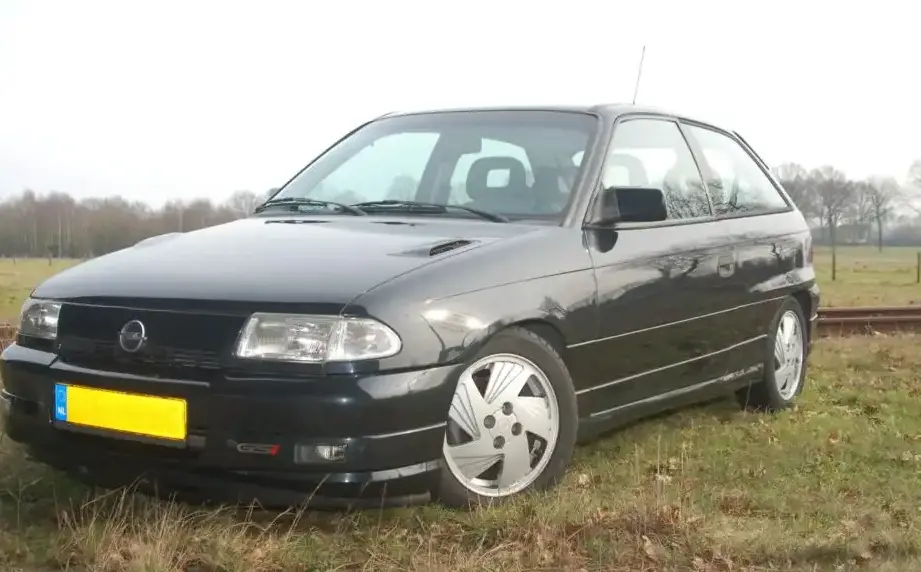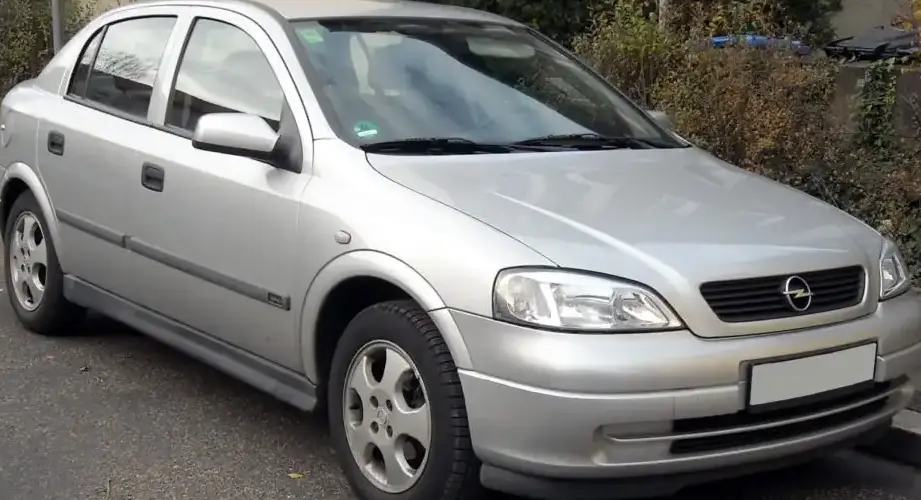
The Opel Astra G 1.7 TD, producing 68 horsepower, was a diesel-powered variant of the Astra G (1998-2000) primarily aimed at the European market. Positioned as an entry-level offering, it provided fuel-efficient transportation for buyers prioritizing economy over outright performance. This model occupied the lower end of the Astra G range, sitting below the more powerful gasoline and higher-output diesel options. It was available in both 3-door and 5-door hatchback body styles, catering to a broad range of customer needs. The 1.7 TD utilized a turbocharged diesel engine coupled with a manual transmission, offering a practical and affordable option within the compact car segment.
Technical Specifications
| Brand | Opel |
| Model | Astra |
| Generation | Astra G |
| Type (Engine) | 1.7 TD (68 Hp) |
| Start of production | March, 1998 |
| End of production | January, 2000 |
| Powertrain Architecture | Internal Combustion engine |
| Body type | Hatchback |
| Seats | 5 |
| Doors | 3-5 |
| Fuel consumption (urban) | 7.7 l/100 km (30.5 US mpg, 36.7 UK mpg, 13 km/l) |
| Fuel consumption (extra urban) | 4.9 l/100 km (48 US mpg, 57.6 UK mpg, 20.4 km/l) |
| Fuel consumption (combined) | 5.9 l/100 km (39.9 US mpg, 47.9 UK mpg, 16.9 km/l) |
| CO2 emissions | 158 g/km |
| Fuel Type | Diesel |
| Acceleration 0 – 100 km/h | 17 sec |
| Acceleration 0 – 62 mph | 17 sec |
| Acceleration 0 – 60 mph | 16.2 sec |
| Maximum speed | 163 km/h (101.28 mph) |
| Emission standard | Euro 2 |
| Weight-to-power ratio | 16.8 kg/Hp, 59.4 Hp/tonne |
| Weight-to-torque ratio | 8.7 kg/Nm, 115.3 Nm/tonne |
| Power | 68 Hp @ 4500 rpm |
| Power per litre | 40.3 Hp/l |
| Torque | 132 Nm @ 2400 rpm (97.36 lb.-ft. @ 2400 rpm) |
| Engine layout | Front, Transverse |
| Engine Model/Code | X17DTL |
| Engine displacement | 1686 cm3 (102.89 cu. in.) |
| Number of cylinders | 4 |
| Engine configuration | Inline |
| Cylinder Bore | 79 mm (3.11 in.) |
| Piston Stroke | 86 mm (3.39 in.) |
| Compression ratio | 18.4:1 |
| Number of valves per cylinder | 4 |
| Fuel injection system | Precombustion chamber injection |
| Engine aspiration | Turbocharger |
| Valvetrain | SOHC |
| Engine oil capacity | 5.5 l (5.81 US qt | 4.84 UK qt) |
| Coolant | 8.7 l (9.19 US qt | 7.65 UK qt) |
| Kerb Weight | 1145 kg (2524.29 lbs.) |
| Max. weight | 1665 kg (3670.7 lbs.) |
| Max load | 520 kg (1146.4 lbs.) |
| Trunk (boot) space – minimum | 370 l (13.07 cu. ft.) |
| Trunk (boot) space – maximum | 1180 l (41.67 cu. ft.) |
| Fuel tank capacity | 52 l (13.74 US gal | 11.44 UK gal) |
| Max. roof load | 100 kg (220.46 lbs.) |
| Permitted trailer load with brakes (12%) | 1000 kg (2204.62 lbs.) |
| Permitted trailer load without brakes | 600 kg (1322.77 lbs.) |
| Permitted towbar download | 75 kg (165.35 lbs.) |
| Length | 4110 mm (161.81 in.) |
| Width | 1709 mm (67.28 in.) |
| Width including mirrors | 1989 mm (78.31 in.) |
| Height | 1425 mm (56.1 in.) |
| Wheelbase | 2606 mm (102.6 in.) |
| Front track | 1464 mm (57.64 in.) |
| Rear (Back) track | 1452 mm (57.17 in.) |
| Front overhang | 791 mm (31.14 in.) |
| Rear overhang | 713 mm (28.07 in.) |
| Ride height (ground clearance) | 130 mm (5.12 in.) |
| Drag coefficient (Cd) | 0.28 |
| Minimum turning circle (turning diameter) | 10.8 m (35.43 ft.) |
| Drivetrain Architecture | The Internal combustion engine (ICE) drives the front wheels of the vehicle. |
| Drive wheel | Front wheel drive |
| Number of gears and type of gearbox | 5 gears, manual transmission |
| Front suspension | Independent, type McPherson with coil spring and anti-roll bar |
| Rear suspension | Semi-independent, coil spring |
| Front brakes | Ventilated discs |
| Rear brakes | Drum |
| Steering type | Steering rack and pinion |
| Power steering | Hydraulic Steering |
| Tires size | 185/65 R15 |
| Wheel rims size | 6J x 15 ET49 |
Powertrain & Engine Architecture
The heart of the Astra G 1.7 TD was the X17DTL engine, a 1.7-liter inline-four cylinder diesel. This engine utilized a precombustion chamber injection system, a common technology for diesel engines of the era. This system involved injecting fuel into a precombustion chamber, which then ignited the main combustion chamber, promoting more complete combustion. A turbocharger was employed to boost power output, compensating for the relatively small displacement. The engine featured a single overhead camshaft (SOHC) valvetrain, operating four valves per cylinder. The X17DTL produced 68 horsepower at 4500 rpm and 132 Nm (97.36 lb-ft) of torque at 2400 rpm. The engine was transversely mounted in the front of the vehicle, driving the front wheels. The transmission was a standard five-speed manual gearbox.
Driving Characteristics
The 1.7 TD-equipped Astra G offered modest performance. Acceleration from 0 to 100 km/h (0-62 mph) took approximately 17 seconds, and top speed was limited to 163 km/h (101.28 mph). The focus was clearly on fuel efficiency rather than spirited driving. The turbocharger helped to mitigate some of the inherent lag associated with diesel engines, providing a usable amount of torque at lower engine speeds. However, compared to the gasoline-powered Astra G variants, or even the more powerful 2.0-liter diesel, the 1.7 TD felt noticeably slower. The manual transmission offered precise shifts, but the relatively long gearing emphasized fuel economy over quick acceleration.
Equipment & Trim Levels
The 1.7 TD typically came with a basic level of equipment. Standard features generally included power steering, central locking, and an adjustable steering column. Interior upholstery was typically cloth, and the dashboard featured a functional, if somewhat spartan, design. Optional extras included air conditioning, electric windows, and an upgraded audio system. Trim levels varied slightly depending on the market, but the 1.7 TD generally represented the entry point into the Astra G range. It was aimed at buyers who prioritized affordability and fuel economy over luxury features.
Chassis & Braking
The Astra G 1.7 TD utilized an independent McPherson strut suspension at the front, providing a comfortable ride and decent handling. The rear suspension was a semi-independent coil spring setup. Front brakes were ventilated discs, offering adequate stopping power, while rear brakes were drums, a cost-saving measure common in this segment. The steering was a rack and pinion system with hydraulic power assistance. The car’s relatively light weight (1145 kg / 2524.29 lbs) helped to offset the modest power output, contributing to reasonable handling characteristics.
Market Reception & Comparison
The Astra G 1.7 TD was well-received in Europe as a practical and economical choice. Critics praised its fuel efficiency and low running costs, but noted its lack of outright performance. Compared to the gasoline-powered Astra G models, the 1.7 TD offered significantly better fuel economy, but at the expense of acceleration and refinement. The 2.0-liter diesel variants provided a noticeable performance upgrade, but also came with a higher price tag. The 1.7 TD appealed to buyers who primarily used their cars for commuting or short trips, where fuel economy was a major concern.
Legacy
The X17DTL engine, while not known for being particularly high-performance, proved to be relatively reliable. With proper maintenance, these engines could accumulate high mileage. In the used car market, the Astra G 1.7 TD remains an affordable option for those seeking a fuel-efficient and practical hatchback. However, potential buyers should be aware of the age-related issues common to older diesel engines, such as turbocharger wear and potential issues with the fuel injection system. Despite its age, the Astra G 1.7 TD continues to be a common sight on European roads, a testament to its durability and practicality.