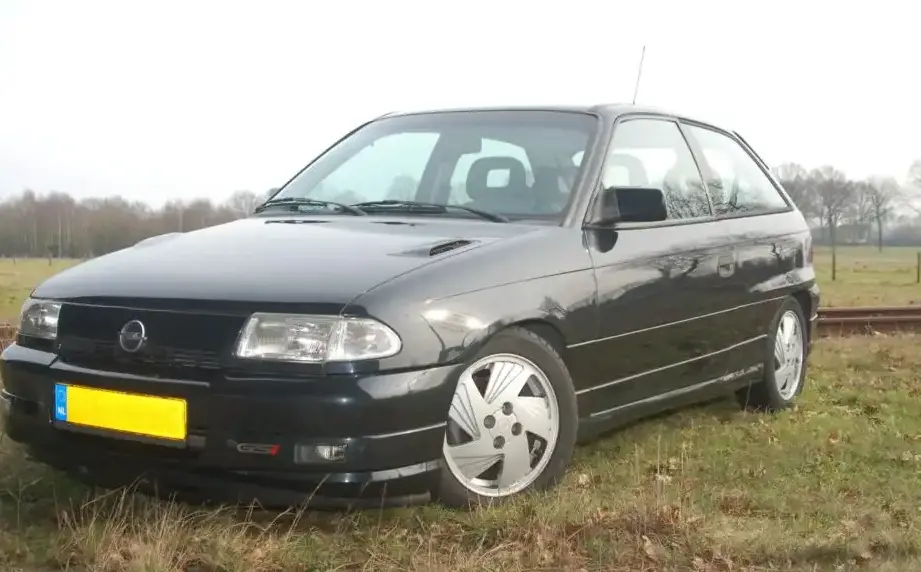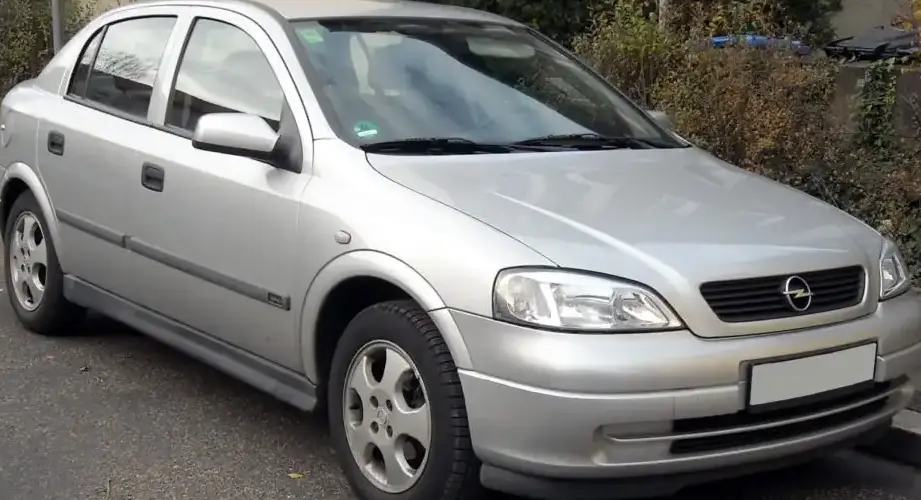
The Opel Astra G 1.8 16V, produced from 2000 to 2002, represented a significant step forward for Opel’s compact offering. Positioned as a mid-range trim within the Astra G lineup (which spanned from 1998-2004, designated as the 1HX0/A3 platform), this variant aimed to balance performance with affordability. It offered a more spirited driving experience than the base models while remaining more accessible than the higher-performance options like the GSi. The 1.8 16V was available in both 3-door and 5-door hatchback body styles, catering to a broad range of buyers in the European market.
Technical Specifications
| Brand | Opel |
| Model | Astra |
| Generation | Astra G |
| Type (Engine) | 1.8 16V (125 Hp) |
| Start of production | July, 2000 |
| End of production | 2002 |
| Powertrain Architecture | Internal Combustion engine |
| Body type | Hatchback |
| Seats | 5 |
| Doors | 3-5 |
| Fuel consumption (urban) | 11 l/100 km (21.4 US mpg, 25.7 UK mpg, 9.1 km/l) |
| Fuel consumption (extra urban) | 6 l/100 km (39.2 US mpg, 47.1 UK mpg, 16.7 km/l) |
| Fuel consumption (combined) | 7.8 l/100 km (30.2 US mpg, 36.2 UK mpg, 12.8 km/l) |
| CO2 emissions | 190 g/km |
| Fuel Type | Petrol (Gasoline) |
| Acceleration 0 – 100 km/h | 9.5 sec |
| Acceleration 0 – 62 mph | 9.5 sec |
| Acceleration 0 – 60 mph | 9 sec |
| Maximum speed | 205 km/h (127.38 mph) |
| Emission standard | Euro 3 |
| Weight-to-power ratio | 9.2 kg/Hp, 108.2 Hp/tonne |
| Weight-to-torque ratio | 6.8 kg/Nm, 147.2 Nm/tonne |
| Power | 125 Hp @ 5600 rpm |
| Power per litre | 69.6 Hp/l |
| Torque | 170 Nm @ 3400 rpm (125.39 lb.-ft. @ 3400 rpm) |
| Engine layout | Front, Transverse |
| Engine Model/Code | Z18XE |
| Engine displacement | 1796 cm3 (109.6 cu. in.) |
| Number of cylinders | 4 |
| Engine configuration | Inline |
| Cylinder Bore | 80.5 mm (3.17 in.) |
| Piston Stroke | 88.2 mm (3.47 in.) |
| Compression ratio | 10.5:1 |
| Number of valves per cylinder | 4 |
| Fuel injection system | Multi-port manifold injection |
| Engine aspiration | Naturally aspirated engine |
| Valvetrain | DOHC |
| Engine oil capacity | 4.25 l (4.49 US qt | 3.74 UK qt) |
| Coolant | 6.3 l (6.66 US qt | 5.54 UK qt) |
| Kerb Weight | 1155 kg (2546.34 lbs.) |
| Max. weight | 1665 kg (3670.7 lbs.) |
| Max load | 510 kg (1124.36 lbs.) |
| Trunk (boot) space – minimum | 370 l (13.07 cu. ft.) |
| Trunk (boot) space – maximum | 1180 l (41.67 cu. ft.) |
| Fuel tank capacity | 52 l (13.74 US gal | 11.44 UK gal) |
| Max. roof load | 100 kg (220.46 lbs.) |
| Permitted trailer load with brakes (12%) | 1300 kg (2866.01 lbs.) |
| Permitted trailer load without brakes | 605 kg (1333.8 lbs.) |
| Permitted towbar download | 75 kg (165.35 lbs.) |
| Length | 4110 mm (161.81 in.) |
| Width | 1709 mm (67.28 in.) |
| Width including mirrors | 1989 mm (78.31 in.) |
| Height | 1425 mm (56.1 in.) |
| Wheelbase | 2606 mm (102.6 in.) |
| Front track | 1464 mm (57.64 in.) |
| Rear (Back) track | 1452 mm (57.17 in.) |
| Front overhang | 791 mm (31.14 in.) |
| Rear overhang | 713 mm (28.07 in.) |
| Ride height (ground clearance) | 130 mm (5.12 in.) |
| Drag coefficient (Cd) | 0.28 |
| Minimum turning circle (turning diameter) | 10.8 m (35.43 ft.) |
| Drivetrain Architecture | The Internal combustion engine (ICE) drives the front wheels of the vehicle. |
| Drive wheel | Front wheel drive |
| Number of gears and type of gearbox | 5 gears, manual transmission |
| Front suspension | Independent, type McPherson with coil spring and anti-roll bar |
| Rear suspension | Semi-independent, coil spring |
| Front brakes | Ventilated discs |
| Rear brakes | Disc |
| Assisting systems | ABS (Anti-lock braking system) |
| Steering type | Steering rack and pinion |
| Power steering | Hydraulic Steering |
| Tires size | 195/60 R15 |
| Wheel rims size | 6.5J x 15 |
Powertrain & Engine Architecture
The heart of the Astra G 1.8 16V is the Z18XE engine, a 1.8-liter inline-four cylinder powerplant. This engine is a member of Opel’s Ecotec family, known for its focus on efficiency and refinement. The “16V” designation indicates the engine features four valves per cylinder, contributing to improved breathing and power output. The Z18XE utilizes multi-port fuel injection, delivering fuel directly into the intake ports. The engine’s double overhead camshaft (DOHC) valvetrain further enhances its volumetric efficiency. The engine produced 125 horsepower at 5600 rpm and 170 Nm (125 lb-ft) of torque at 3400 rpm. The engine was typically paired with a five-speed manual transmission, but a four-speed automatic transmission was also offered, impacting the overall driving experience.
Driving Characteristics
The 1.8 16V with the manual transmission offered a reasonably engaging driving experience. Acceleration from 0 to 100 km/h (0-62 mph) took around 9.5 seconds, making it competitive within its class. The automatic transmission, while providing convenience, noticeably dulled performance. The gear ratios were optimized for fuel economy rather than outright acceleration, resulting in a slightly sluggish feel, especially during overtaking maneuvers. The engine itself was relatively smooth and refined, offering adequate power for everyday driving. The chassis, while not particularly sporty, provided a comfortable and predictable ride.
Equipment & Trim Levels
The Astra G 1.8 16V typically came equipped with features such as power steering, ABS brakes, front airbags, and central locking. Higher trim levels added features like air conditioning, electric windows, and a CD player. Interior upholstery was generally cloth, with options for upgraded materials. The dashboard layout was functional and straightforward, prioritizing usability over flashy design. Optional extras included alloy wheels, a sunroof, and upgraded audio systems.
Chassis & Braking
The Astra G utilized an independent McPherson strut suspension setup at the front, providing a good balance of comfort and handling. The rear suspension was a semi-independent torsion beam arrangement, which was cost-effective but less sophisticated than a fully independent setup. Braking duties were handled by ventilated discs at the front and discs at the rear, providing adequate stopping power for the vehicle’s weight and performance. ABS was standard, enhancing safety by preventing wheel lockup during hard braking.
Market Reception & Comparison
The Astra G 1.8 16V was generally well-received by automotive critics as a practical and well-rounded family car. It offered a good compromise between performance, fuel economy, and price. Compared to the more powerful Astra GSi, the 1.8 16V was less focused on outright performance but more affordable and fuel-efficient. The 1.8L engine was also seen as more reliable than the more complex turbocharged engines offered in some European markets. Fuel economy figures of around 7.8 l/100 km (30.2 US mpg) were considered respectable for its time.
Legacy
The Z18XE engine proved to be a relatively durable and reliable unit, and many Astra G 1.8 16V models are still on the road today. While not known for being particularly exciting, the powertrain’s longevity has contributed to its continued presence in the used car market. Common issues are generally limited to age-related wear and tear, such as oil leaks and sensor failures. The Astra G 1.8 16V remains a popular choice for budget-conscious buyers seeking a practical and dependable compact car.