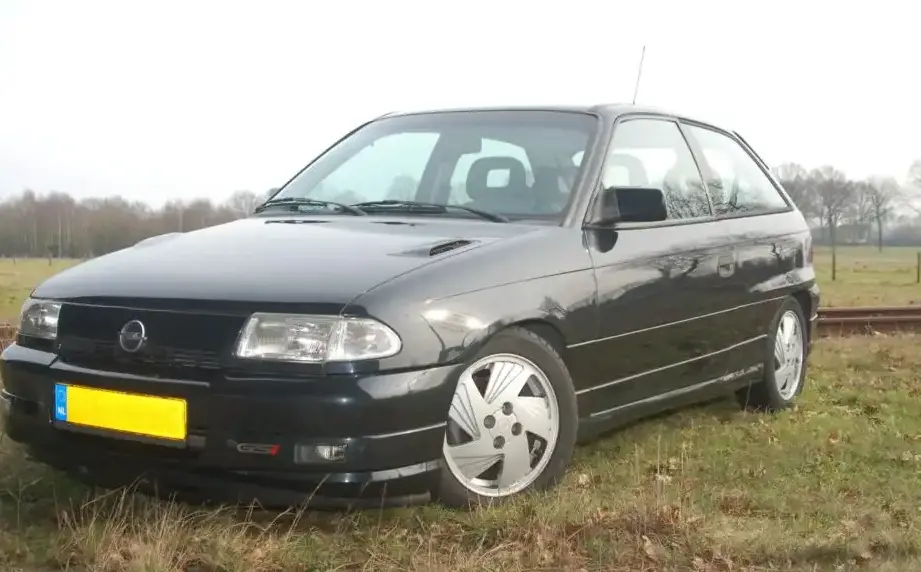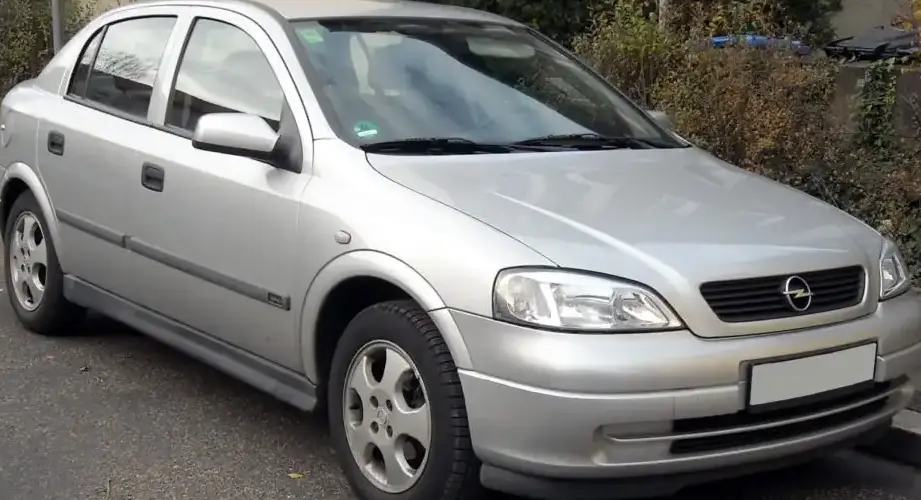
The Opel Astra G 1.8 16V Automatic, produced between July 2000 and 2002, represented a mid-range offering within the popular Astra G (1998-2004) generation. Positioned as a comfortable and practical choice, this variant combined a 1.8-liter, 16-valve gasoline engine with a four-speed automatic transmission. It aimed to provide a balance between performance and ease of driving, appealing to buyers who prioritized convenience over outright sportiness. The Astra G itself was a significant model for Opel, building upon the success of its predecessors and establishing a strong presence in the European compact car segment. It was built on the GM240 platform, also known as the 1HX0/A3 platform, shared with other vehicles like the Zafira and Vectra.
Technical Specifications
| Brand | Opel |
| Model | Astra |
| Generation | Astra G |
| Type (Engine) | 1.8 16V (125 Hp) Automatic |
| Start of production | July, 2000 |
| End of production | 2002 |
| Powertrain Architecture | Internal Combustion engine |
| Body type | Hatchback |
| Seats | 5 |
| Doors | 3-5 |
| Fuel consumption (urban) | 12 l/100 km (19.6 US mpg, 23.5 UK mpg, 8.3 km/l) |
| Fuel consumption (extra urban) | 6.6 l/100 km (35.6 US mpg, 42.8 UK mpg, 15.2 km/l) |
| Fuel consumption (combined) | 8.6 l/100 km (27.4 US mpg, 32.8 UK mpg, 11.6 km/l) |
| Fuel Type | Petrol (Gasoline) |
| Acceleration 0 – 100 km/h | 11 sec |
| Acceleration 0 – 62 mph | 11 sec |
| Acceleration 0 – 60 mph | 10.5 sec |
| Maximum speed | 198 km/h (123.03 mph) |
| Emission standard | Euro 3 |
| Weight-to-power ratio | 9.4 kg/Hp, 106.4 Hp/tonne |
| Weight-to-torque ratio | 6.9 kg/Nm, 144.7 Nm/tonne |
| Power | 125 Hp @ 5600 rpm |
| Power per litre | 69.6 Hp/l |
| Torque | 170 Nm @ 3400 rpm (125.39 lb.-ft. @ 3400 rpm) |
| Engine layout | Front, Transverse |
| Engine Model/Code | Z18XE |
| Engine displacement | 1796 cm3 (109.6 cu. in.) |
| Number of cylinders | 4 |
| Engine configuration | Inline |
| Cylinder Bore | 80.5 mm (3.17 in.) |
| Piston Stroke | 88.2 mm (3.47 in.) |
| Compression ratio | 10.5:1 |
| Number of valves per cylinder | 4 |
| Fuel injection system | Multi-port manifold injection |
| Engine aspiration | Naturally aspirated engine |
| Valvetrain | DOHC |
| Engine oil capacity | 4.25 l (4.49 US qt | 3.74 UK qt) |
| Coolant | 6.3 l (6.66 US qt | 5.54 UK qt) |
| Kerb Weight | 1175 kg (2590.43 lbs.) |
| Max. weight | 1685 kg (3714.79 lbs.) |
| Max load | 510 kg (1124.36 lbs.) |
| Trunk (boot) space – minimum | 370 l (13.07 cu. ft.) |
| Trunk (boot) space – maximum | 1180 l (41.67 cu. ft.) |
| Fuel tank capacity | 52 l (13.74 US gal | 11.44 UK gal) |
| Max. roof load | 100 kg (220.46 lbs.) |
| Permitted towbar download | 75 kg (165.35 lbs.) |
| Length | 4110 mm (161.81 in.) |
| Width | 1709 mm (67.28 in.) |
| Width including mirrors | 1989 mm (78.31 in.) |
| Height | 1425 mm (56.1 in.) |
| Wheelbase | 2606 mm (102.6 in.) |
| Front track | 1464 mm (57.64 in.) |
| Rear (Back) track | 1452 mm (57.17 in.) |
| Front overhang | 791 mm (31.14 in.) |
| Rear overhang | 713 mm (28.07 in.) |
| Ride height (ground clearance) | 130 mm (5.12 in.) |
| Drag coefficient (Cd) | 0.28 |
| Minimum turning circle (turning diameter) | 10.8 m (35.43 ft.) |
| Drivetrain Architecture | The Internal combustion engine (ICE) drives the front wheels of the vehicle. |
| Drive wheel | Front wheel drive |
| Number of gears and type of gearbox | 4 gears, automatic transmission |
| Front suspension | Independent, type McPherson with coil spring and anti-roll bar |
| Rear suspension | Semi-independent, coil spring |
| Front brakes | Ventilated discs |
| Rear brakes | Disc |
| Assisting systems | ABS (Anti-lock braking system) |
| Steering type | Steering rack and pinion |
| Power steering | Hydraulic Steering |
| Tires size | 195/60 R15 |
| Wheel rims size | 6.5J x 15 |
Powertrain & Engine Architecture
The heart of the Astra G 1.8 16V Automatic is the Z18XE engine, a member of Opel’s Ecotec family. This 1.8-liter (1796 cc) inline-four cylinder engine features a dual overhead camshaft (DOHC) valvetrain with four valves per cylinder, contributing to its relatively high output for its displacement. The engine utilizes multi-port fuel injection, delivering fuel directly into the intake ports. The Z18XE is known for its robust construction and relatively simple design, making it reasonably reliable. Paired with this engine is a four-speed automatic transmission, offering smooth gear changes but lacking the efficiency of more modern automatic gearboxes. This transmission was a common choice for Opel vehicles of the era, prioritizing comfort over performance. The engine’s 170 Nm (125.39 lb.-ft.) of torque is delivered at 3400 rpm, providing adequate pulling power for everyday driving.
Driving Characteristics
The 1.8 16V Automatic Astra G offered a comfortable and predictable driving experience. Acceleration from 0-100 km/h (0-62 mph) took around 11 seconds, which was adequate for the time but not particularly sporty. The four-speed automatic transmission, while smooth, resulted in noticeable gear changes and didn’t allow the engine to operate at its most efficient RPMs during cruising. Compared to the manual transmission version of the same engine, the automatic suffered a slight performance penalty. The higher-output 2.0-liter and turbocharged variants offered significantly more performance, but at a higher price point. The automatic transmission did, however, make the Astra G more accessible to drivers who preferred the convenience of not having to shift gears, particularly in urban environments.
Equipment & Trim Levels
The 1.8 16V Automatic trim typically included features such as power steering, central locking, electric front windows, and an anti-lock braking system (ABS). Interior upholstery was generally cloth, with a functional and durable design. Optional extras included air conditioning, alloy wheels, a CD player, and upgraded interior trim. The Astra G offered a range of trim levels, with the 1.8 Automatic generally falling into the mid-range, offering a good balance of features and affordability. Higher trims featured more luxurious appointments, while base models offered a more stripped-down experience.
Chassis & Braking
The Astra G utilized an independent McPherson strut suspension at the front, providing a comfortable ride and decent handling. The rear suspension was a semi-independent torsion beam setup, which was cost-effective but less sophisticated than a fully independent system. Braking consisted of ventilated discs at the front and solid discs at the rear, providing adequate stopping power for the vehicle’s weight and performance. The hydraulic power steering offered light and easy steering, making it easy to maneuver in tight spaces.
Market Reception & Comparison
The Opel Astra G 1.8 16V Automatic was generally well-received by critics as a practical and comfortable family car. Fuel economy was reasonable for its class, averaging around 8.6 l/100 km (27.4 US mpg). However, the four-speed automatic transmission was often criticized for being somewhat dated compared to the five-speed automatics offered by some competitors. Compared to the 1.6-liter base model, the 1.8 offered a noticeable performance improvement, while remaining more affordable than the higher-output 2.0-liter and turbocharged variants. Reliability was generally good, although regular maintenance was essential to prevent issues with the engine and transmission.
Legacy
The Opel Astra G 1.8 16V Automatic remains a relatively common sight on used car markets today. The Z18XE engine is known for its durability, and with proper maintenance, can provide many years of reliable service. However, potential buyers should be aware of the age of the vehicle and the potential for wear and tear on components such as the automatic transmission and suspension. The Astra G’s simple design and readily available parts make it a relatively affordable car to maintain, making it a popular choice for budget-conscious buyers. It represents a solid and dependable compact car from a significant era in Opel’s history.