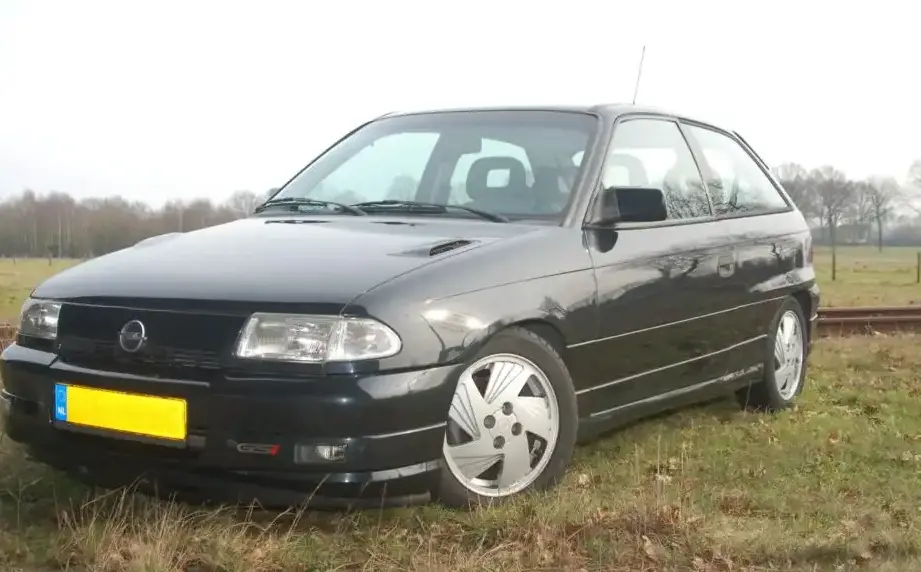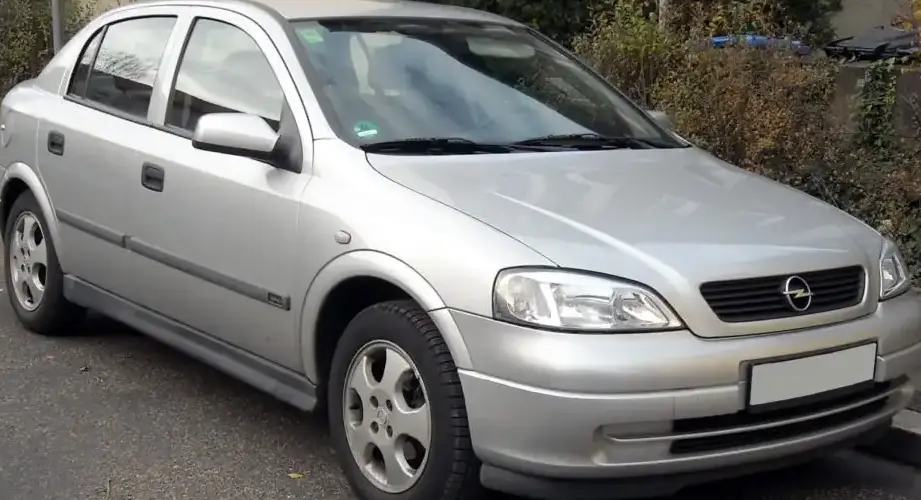
The Opel Astra G 2.0 DTI 16V, produced from July 1999 to 2002, was a diesel-powered variant of the popular Astra G series (1998-2004). Positioned as a fuel-efficient and practical option within the Astra G range, it catered to drivers seeking lower running costs without sacrificing everyday usability. This model utilized the Y20DTH engine, a 2.0-liter direct injection turbocharged diesel, and was available in both 3-door and 5-door hatchback body styles. It played a significant role in the European market, offering a competitive alternative to other compact diesel hatchbacks.
Technical Specifications
| Brand | Opel |
| Model | Astra |
| Generation | Astra G |
| Type (Engine) | 2.0 DTI 16V (101 Hp) |
| Start of production | July, 1999 |
| End of production | 2002 |
| Powertrain Architecture | Internal Combustion engine |
| Body type | Hatchback |
| Seats | 5 |
| Doors | 3-5 |
| Fuel consumption (urban) | 7.5 l/100 km (31.4 US mpg) |
| Fuel consumption (extra urban) | 4.5 l/100 km (52.3 US mpg) |
| Fuel consumption (combined) | 5.6 l/100 km (42 US mpg) |
| CO2 emissions | 151 g/km |
| Fuel Type | Diesel |
| Acceleration 0 – 100 km/h | 12 sec |
| Acceleration 0 – 62 mph | 12 sec |
| Acceleration 0 – 60 mph | 11.4 sec |
| Maximum speed | 188 km/h (116.82 mph) |
| Weight-to-power ratio | 12.4 kg/Hp |
| Weight-to-torque ratio | 6.1 kg/Nm |
| Power | 101 Hp @ 4300 rpm |
| Torque | 205 Nm @ 1650-2500 rpm (151.2 lb.-ft.) |
| Engine layout | Front, Transverse |
| Engine Model/Code | Y20DTH |
| Engine displacement | 1995 cm3 (121.74 cu. in.) |
| Number of cylinders | 4 |
| Engine configuration | Inline |
| Cylinder Bore | 84 mm (3.31 in.) |
| Piston Stroke | 90 mm (3.54 in.) |
| Compression ratio | 18.5:1 |
| Number of valves per cylinder | 4 |
| Fuel injection system | Direct injection |
| Engine aspiration | Turbocharger, Intercooler |
| Valvetrain | SOHC |
| Engine oil capacity | 5.5 l (5.81 US qt | 4.84 UK qt) |
| Coolant capacity | 5.9 l (6.23 US qt | 5.19 UK qt) |
| Kerb Weight | 1250 kg (2755.78 lbs.) |
| Max. weight | 1770 kg (3902.18 lbs.) |
| Max load | 520 kg (1146.4 lbs.) |
| Trunk (boot) space – minimum | 370 l (13.07 cu. ft.) |
| Trunk (boot) space – maximum | 1180 l (41.67 cu. ft.) |
| Fuel tank capacity | 52 l (13.74 US gal | 11.44 UK gal) |
| Max. roof load | 100 kg (220.46 lbs.) |
| Permitted trailer load with brakes (12%) | 1300 kg (2866.01 lbs.) |
| Permitted trailer load without brakes | 650 kg (1433 lbs.) |
| Permitted towbar download | 75 kg (165.35 lbs.) |
| Length | 4110 mm (161.81 in.) |
| Width | 1709 mm (67.28 in.) |
| Width including mirrors | 1989 mm (78.31 in.) |
| Height | 1425 mm (56.1 in.) |
| Wheelbase | 2606 mm (102.6 in.) |
| Front track | 1464 mm (57.64 in.) |
| Rear track | 1452 mm (57.17 in.) |
| Front overhang | 791 mm (31.14 in.) |
| Rear overhang | 713 mm (28.07 in.) |
| Ride height (ground clearance) | 130 mm (5.12 in.) |
| Drag coefficient (Cd) | 0.28 |
| Minimum turning circle | 10.8 m (35.43 ft.) |
| Drivetrain Architecture | Front wheel drive |
| Drive wheel | Front wheel drive |
| Number of gears and type of gearbox | 5 gears, manual transmission |
| Front suspension | Independent, type McPherson with coil spring and anti-roll bar |
| Rear suspension | Semi-independent, coil spring |
| Front brakes | Ventilated discs |
| Rear brakes | Disc |
| Assisting systems | ABS (Anti-lock braking system) |
| Steering type | Steering rack and pinion |
| Power steering | Hydraulic Steering |
| Tires size | 195/65 R15 |
| Wheel rims size | 6.5J x 15 ET45 |
INTRODUCTION
The Opel Astra G 2.0 DTI 16V represented a significant step in offering diesel efficiency within the Astra G lineup. Introduced in 1999, it aimed to provide a more economical alternative to the gasoline-powered models, particularly appealing to drivers covering high annual mileages. The Astra G itself was a crucial model for Opel, representing a move towards more modern design and improved build quality. This variant, utilizing the Y20DTH engine, was primarily sold in European markets, where diesel engines held a larger market share than in North America.
Powertrain & Engine Architecture
The heart of the Astra G 2.0 DTI 16V is the Y20DTH engine, a 1995cc inline-four cylinder diesel. This engine featured direct fuel injection, a technology that significantly improved fuel efficiency and reduced emissions compared to older indirect injection systems. The ‘16V’ designation indicates the engine’s four valves per cylinder configuration, enhancing breathing and contributing to improved power output. A turbocharger with an intercooler was employed to boost power and torque. The fuel injection system was a Bosch EDC16C31 unit, controlling the precise timing and amount of fuel delivered to each cylinder. The engine utilized a single overhead camshaft (SOHC) design. The 5-speed manual transmission was the standard offering, providing a balance between fuel economy and drivability.
Driving Characteristics
The 2.0 DTI 16V, producing 101 horsepower and 205 Nm (151 lb-ft) of torque, offered respectable performance for its class. While not a sports car, the engine’s torque delivery provided adequate acceleration for everyday driving and overtaking maneuvers. The 0-60 mph time of around 11.4 seconds and a top speed of 116.82 mph were typical for a diesel hatchback of this era. The manual transmission allowed for good control over the engine’s power, but the gear ratios were geared towards fuel efficiency rather than outright performance. Compared to the more powerful gasoline variants, such as the 2.0 16V, the DTI felt less responsive, but offered significantly better fuel economy. The turbocharger did introduce a degree of turbo lag, noticeable at lower engine speeds.
Equipment & Trim Levels
The Astra G 2.0 DTI 16V was typically offered in relatively well-equipped trim levels, often positioned as a mid-range option. Standard features generally included central locking, power windows, power steering, and an anti-lock braking system (ABS). Interior upholstery was typically cloth, with options for upgraded materials available. Optional extras could include air conditioning, alloy wheels, a CD player, and electric mirrors. The dashboard layout was functional and straightforward, prioritizing usability over luxury. Trim levels varied slightly depending on the specific market, but generally followed a progressive structure with increasing levels of equipment.
Chassis & Braking
The Astra G 2.0 DTI 16V utilized a McPherson strut front suspension and a semi-independent coil spring rear suspension. This setup provided a comfortable ride quality, suitable for everyday driving. The front brakes were ventilated discs, offering good stopping power, while the rear brakes were solid discs. The steering was a rack and pinion system with hydraulic power assistance, providing precise and responsive handling. Stabilizer bars were fitted to both the front and rear axles to reduce body roll during cornering. The suspension was tuned to prioritize comfort and stability over sporty handling.
Market Reception & Comparison
The Astra G 2.0 DTI 16V was generally well-received by automotive critics as a practical and economical choice. Its fuel efficiency was a major selling point, particularly in Europe where fuel prices were higher. Compared to other diesel hatchbacks of the time, such as the Volkswagen Golf TDI, the Astra G offered a competitive combination of performance, economy, and price. However, some critics noted the engine could be somewhat noisy and lacked the refinement of some of its rivals. Reliability was generally good, although the turbocharger and fuel injection system could require maintenance over time.
Legacy
The Opel Astra G 2.0 DTI 16V remains a relatively common sight on European roads today, testament to its durability and practicality. The Y20DTH engine, while not without its quirks, proved to be a robust and reliable unit when properly maintained. In the used car market, these Astras are often sought after by buyers looking for an affordable and fuel-efficient vehicle. However, potential buyers should be aware of the potential for wear and tear on the turbocharger and fuel injection system, and ensure that regular maintenance has been carried out. The Astra G 2.0 DTI 16V represents a significant chapter in Opel’s history, demonstrating the brand’s commitment to offering practical and economical vehicles to a wide range of customers.